Mijas Pueblo Guide: What to See in the White Village Above the Coast
Plan a short break in Mijas Pueblo: the whitewashed old quarter, Plaza Virgen de la Peña, the fortress viewpoint and the oval bullring above the Costa del Sol.
On this page
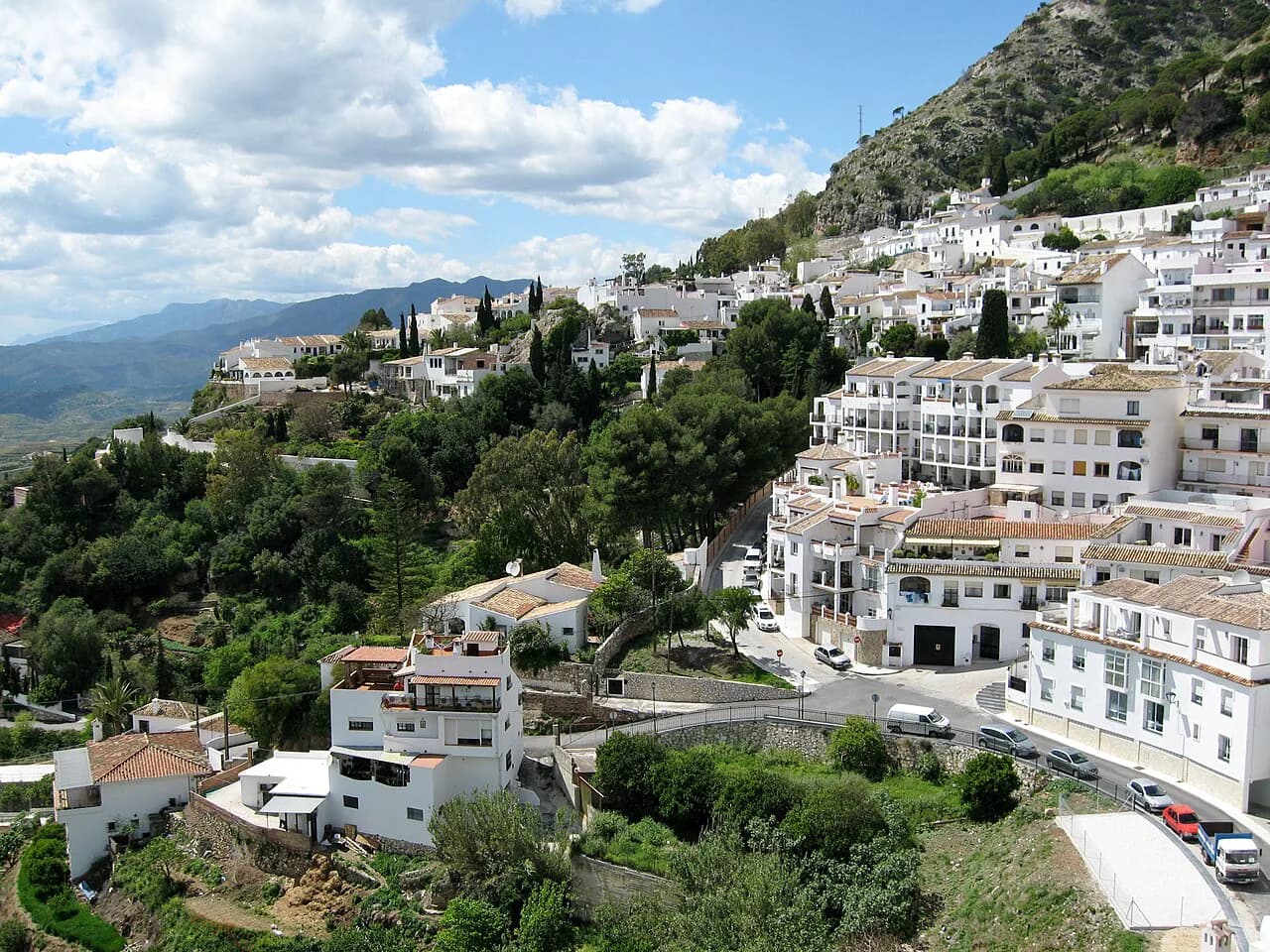
Mijas Pueblo needs half a day, and the historic core itself can be walked in about two hours. The village sits on a slope of the Sierra de Mijas, 34 kilometres by road from Málaga, above the coastal strip and looking out over the Costa del Sol. This guide covers the old quarter and its monuments, a short route through it, and how the village fits a break based on Málaga, Fuengirola or Benalmádena.
The name Mijas covers three distinct places, and confusing them is the commonest mistake visitors make. Mijas Pueblo is the hill village; Las Lagunas is the modern urban part with golf courses and sports facilities; La Cala is the old fishing village on the coast, now the centre of twelve kilometres of beaches. Plan your day around the pueblo unless you specifically want the coast.
Where Mijas Pueblo sits
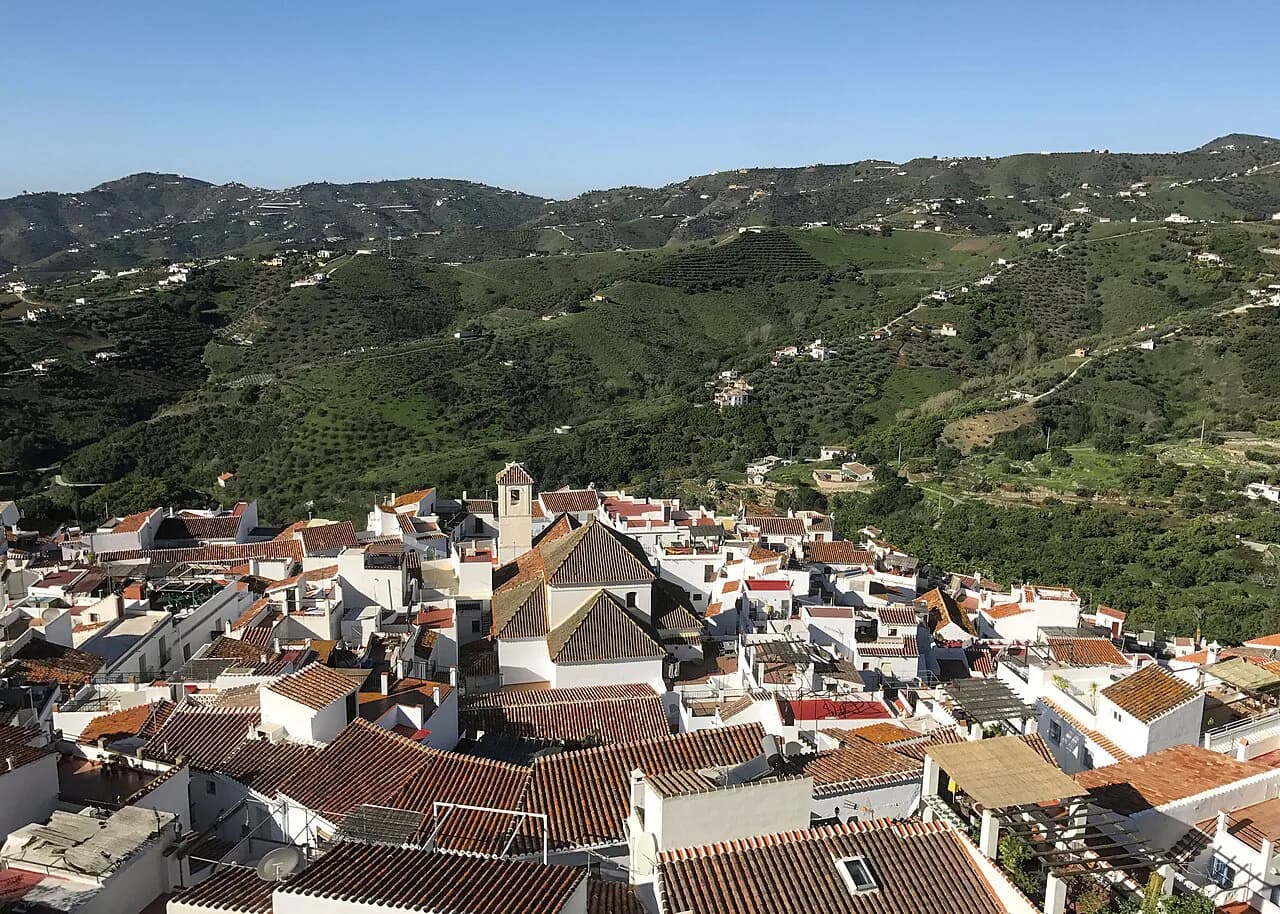
The village occupies a hillside in the interior, sheltered by the sierra that gives it its name, with its whitewashed houses spreading across the slope. Málaga is the obvious gateway, and the road distance of 34 kilometres is the figure to use when judging the drive. Fuengirola and Benalmádena lie below on the coast, which makes the village a natural half-day out from either resort.
Because the village stands above the coast rather than on it, you get sea views without sea-level crowds, and a noticeably cooler position on the slope than the strip below. The trade-off is a climb: the streets rise and fall across the hillside, and the old quarter is best treated as a walk with gradients rather than a flat circuit.
How the village is laid out
The historic centre is a hill village of narrow, whitewashed lanes on an Arab-derived street plan, protected as a Conjunto Histórico-Artístico. Its sights are churches, chapels and the remnants of a fortress, and they cluster closely enough that you can see the main ones on foot in a single loop. Start at the Plaza Virgen de la Peña and work outwards.
Plaza Virgen de la Peña and the chapel
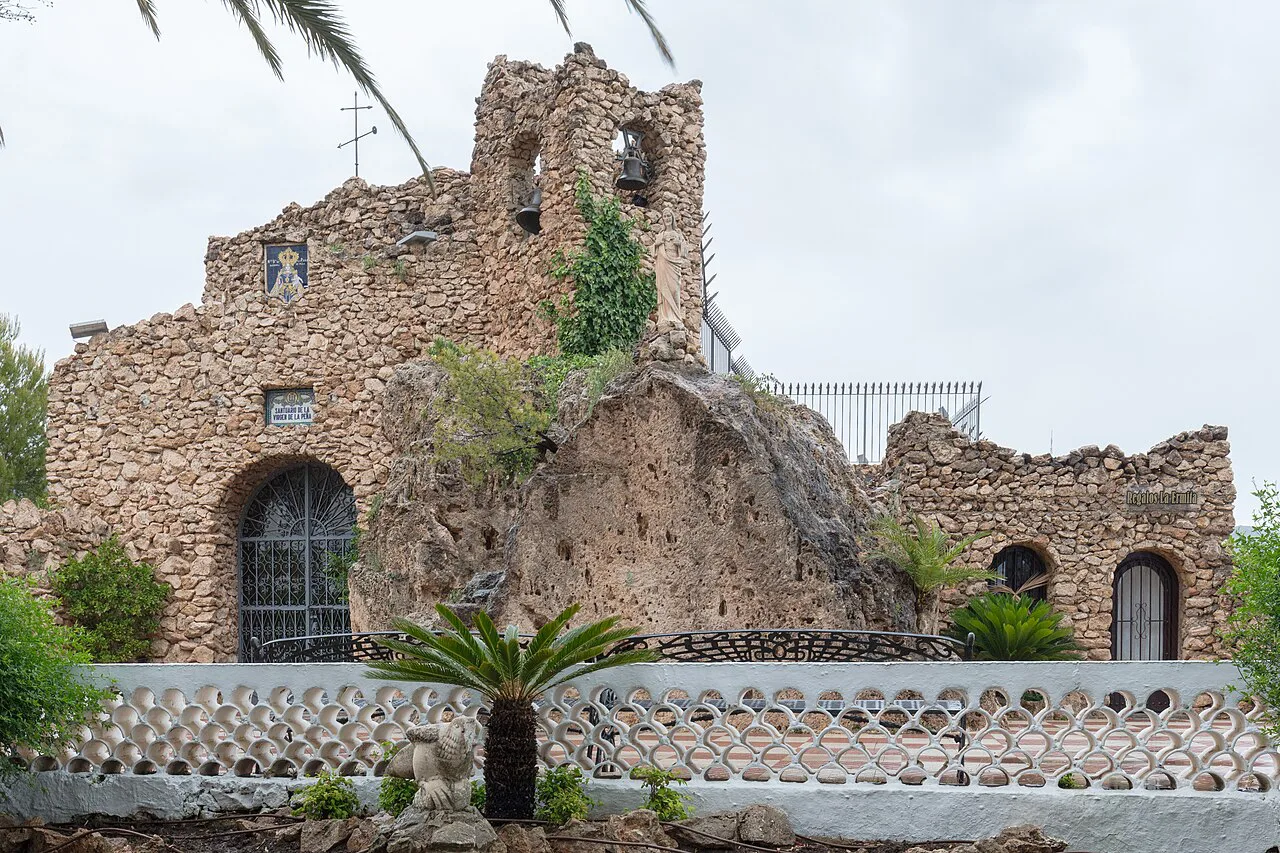
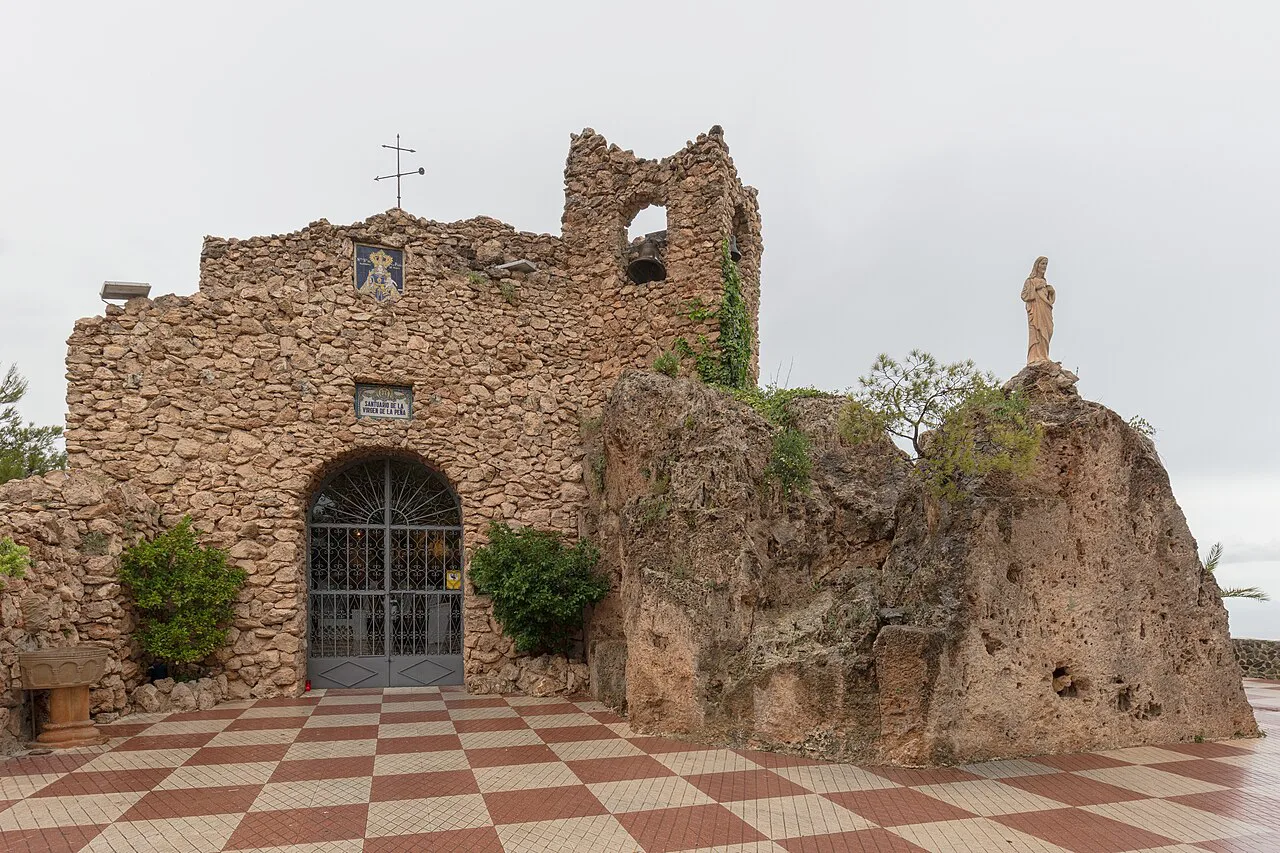
Plaza Virgen de la Peña is the heart of Mijas Pueblo, and it takes its name from the chapel standing beside it. The Ermita de la Virgen de la Peña is a 17th-century sanctuary next to the Mirador del Compás, so the square gives you both the village's main religious building and a viewpoint in one stop. The square was remodelled in works completed in 2016, which widened and tidied the space you see today.
The donkey statue on the square marks the animal that became the village's tourist emblem, and it is the place most visitors photograph first. Use the square to orient yourself: the chapel, the mirador and the lanes leading off towards the fortress and the church all radiate from here.
The Muralla and fortress remains
The Fortaleza de Mijas guarded the village against attack, and its origins are Arab, though the site was abandoned after the conquest by the Catholic Monarchs in 1487. What survives is fragmentary: the bases of a tower and stretches of wall. The real reason to climb up is the view, because the walls now function as a balcony over the Costa del Sol.
The Muralla area is laid out with gardens and terraces that let you look down the coast, and it is the spot to save for clear weather. Go late in the afternoon if you can, when the light softens and the heat of an inland Andalusian midday has eased.
The churches and the Calvario hermitage
The Iglesia de la Inmaculada Concepción dates from the 16th century and stands within the old quarter, so it belongs on the same loop as the square and the fortress. The Ermita del Calvario is a 19th-century chapel outside the core, reached on foot along one of the rural paths that thread through the pine woods above the village. Treat the Calvario as a separate walk rather than part of the two-hour circuit.
The Plaza de Toros
The Plaza de Toros de Mijas is the village's most distinctive building: an oval ring built on a rock, raised in 1900 at the request of a group of residents. The site has been used for bull runs in the past, though those encierros are no longer held. Its form makes it one of the few oval rings in Spain.
Donkey-taxis: a tradition with two sides
The burro-taxis are the village's most photographed feature, a trade that became a draw in the 1960s and has continued since, carrying visitors through the lanes on donkey-drawn carts. If you take one, you are paying for a novelty ride through steep streets rather than transport. Walking gives you the same lanes at your own pace and lets you stop at the viewpoints.
A two-hour route through the old quarter
With two hours, begin at the Plaza Virgen de la Peña, see the chapel and the Mirador del Compás, then follow the lanes to the Iglesia de la Inmaculada Concepción. Continue to the Muralla and the fortress remains for the coastal view, and finish at the Plaza de Toros on its rock. That order keeps the climbs spread out and puts the best viewpoints at the end.
Add the Ermita del Calvario or the old marble quarry paths only if you have a longer half-day, since both involve leaving the compact core. The village rewards slow walking, and the lanes between the monuments are much of the point.
How long to allow and how it fits a short break
Mijas Pueblo works best as a half-day from Fuengirola or Benalmádena, or as a stop between Málaga and the coast. The sights sit within a few minutes of each other, so the village itself does not need a full day; the extra time goes on the journey, on the Calvario walk or on a slow lunch.
If your wider trip is about white villages rather than the coast, Mijas is the Andalusian hill town closest to a major airport, but the classic pueblos blancos routes lie further inland in Cádiz and Málaga provinces. For the cave streets and cliff-side houses of a different tradition, see Setenil de las Bodegas, and for the full picture of the region start with our pueblos blancos guide.
Heat, closures and crowds
This is an inland Andalusian village, and summer middays are hot on the exposed slopes and terraces. Plan the walking for the morning or late afternoon and keep the shadier lanes for the middle of the day. Churches and small shops commonly close for siesta hours, so do not build a tight schedule around them.
Coach traffic brings crowds into the old quarter, most heavily in the middle of the day, and the lanes around the Plaza Virgen de la Peña feel the squeeze first. An early start gives you the square and the mirador close to empty.
Mijas Pueblo within the wider municipality
Mijas Pueblo is only one face of a municipality that stretches down to the sea. Las Lagunas supplies the golf courses and sports facilities, while La Cala, once a fishing village, now anchors the coastal strip and its beaches. Knowing which part you are heading for matters when you book transport or give a driver an address.
Should you give Mijas Pueblo a half-day?
Yes, if you want a white village close to a Costa del Sol base without a long inland drive. Give it two hours for the square, chapel, church, fortress viewpoint and bullring, then decide whether the Calvario path or a slow lunch earns the rest of the day.
If your appetite for whitewashed hill towns is bigger than one village, carry on to Zahara de la Sierra in the Sierra de Grazalema or to Grazalema itself, and treat Mijas as the easy first taste.
Explore more Ronda guides
Frequently Asked Questions
How far is Mijas Pueblo from Málaga?
Mijas Pueblo lies 34 kilometres by road from Málaga, in the Sierra de Mijas above the coast. Allow for the uphill approach on the final stretch, since the village sits on a slope rather than at sea level.
Can you see Mijas Pueblo in two hours?
The old quarter fits into about two hours: Plaza Virgen de la Peña and its chapel, the Iglesia de la Inmaculada Concepción, the Muralla and fortress viewpoint, and the oval Plaza de Toros are all within a short walk of each other. Add time for the Ermita del Calvario, which lies outside the core.
Sources
Notes for your next Spanish town break
Optional updates to our guides.
You might also like
Continue reading
More guides you'll find useful