Frigiliana: What to See in the Moorish Old Town
Plan a short break in Frigiliana, the white village above Nerja: the Barribarto lanes, the ceramic plaque route, the church, the mirador and the old sugar mill.
On this page
Frigiliana deserves a half-day rather than a flying hour: the old quarter is a compact but relentless climb of cobbled lanes, and the sights that reward you sit at different heights. Give it a morning, start low on Calle Real and work upwards through the Barribarto to the church and the viewpoints.
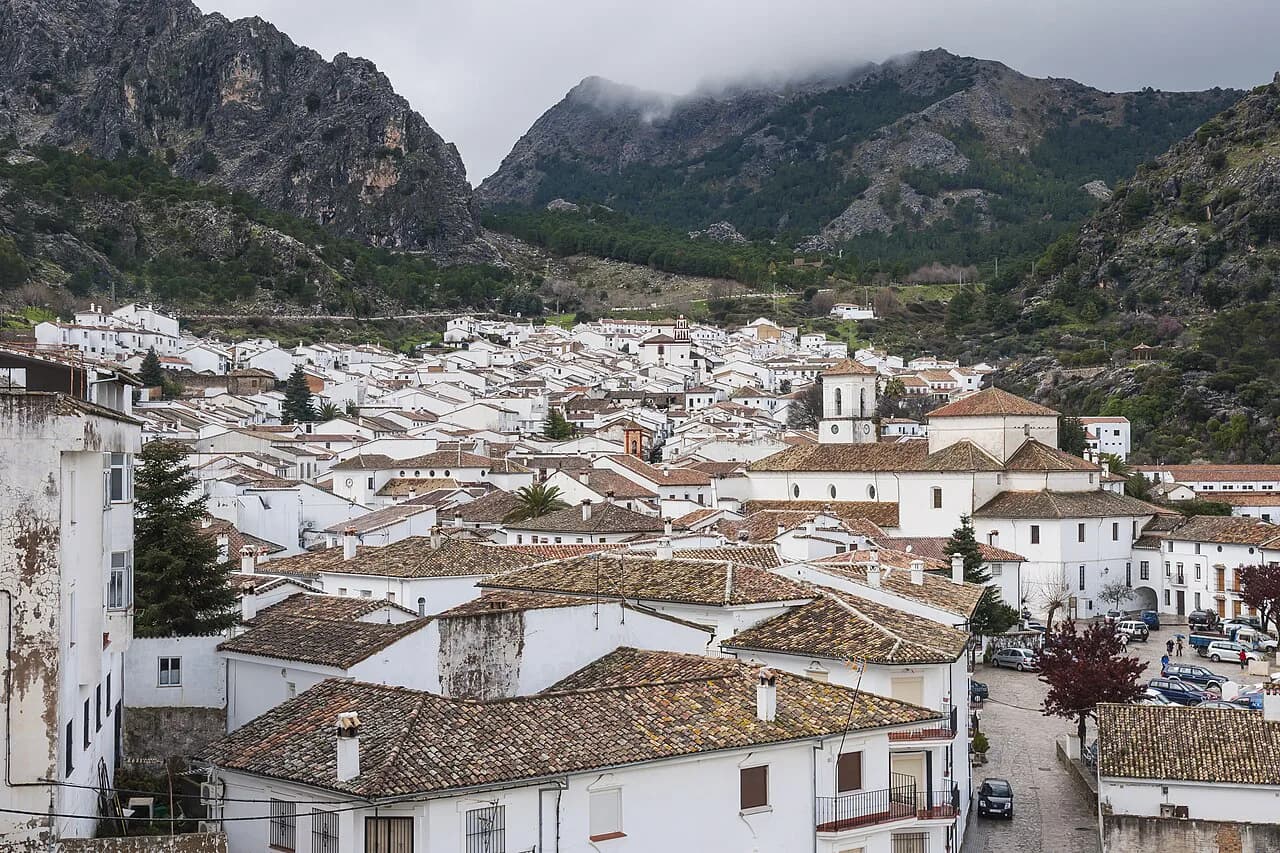
The village sits in the Axarquía hills above the Mediterranean in Málaga province, roughly 50 minutes from Málaga city, on the edge of the Parque Natural de las Sierras de Tejeda, Almijara y Alhama. Its historic centre was declared a Conjunto Histórico-Artístico in 2014, which explains the care taken over the paving, the whitewash and the tile plaques.
This guide covers what to see in the old town and how the layout works, so you can build a route that suits your legs and the heat rather than following a fixed trail.
Where Frigiliana sits and how to approach it
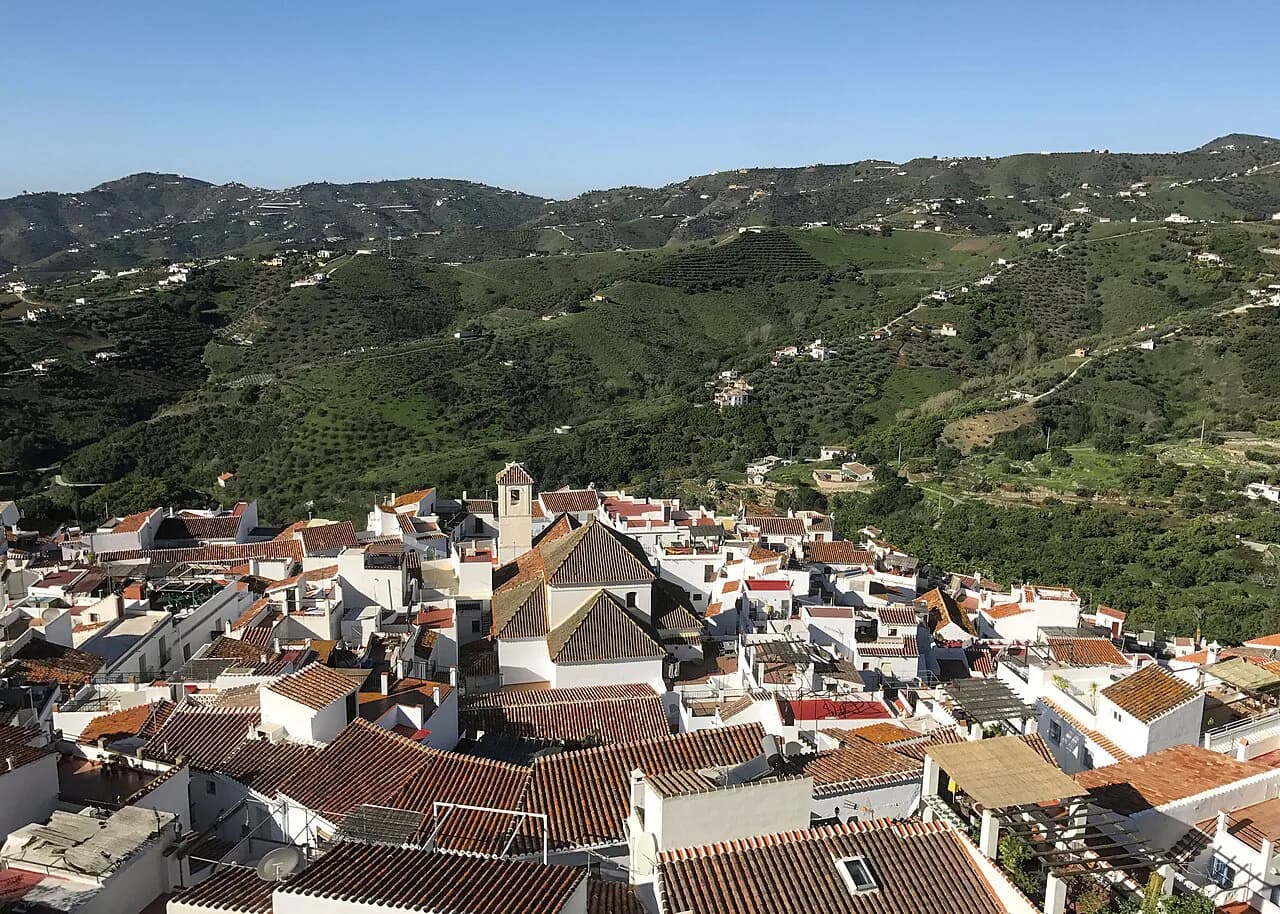
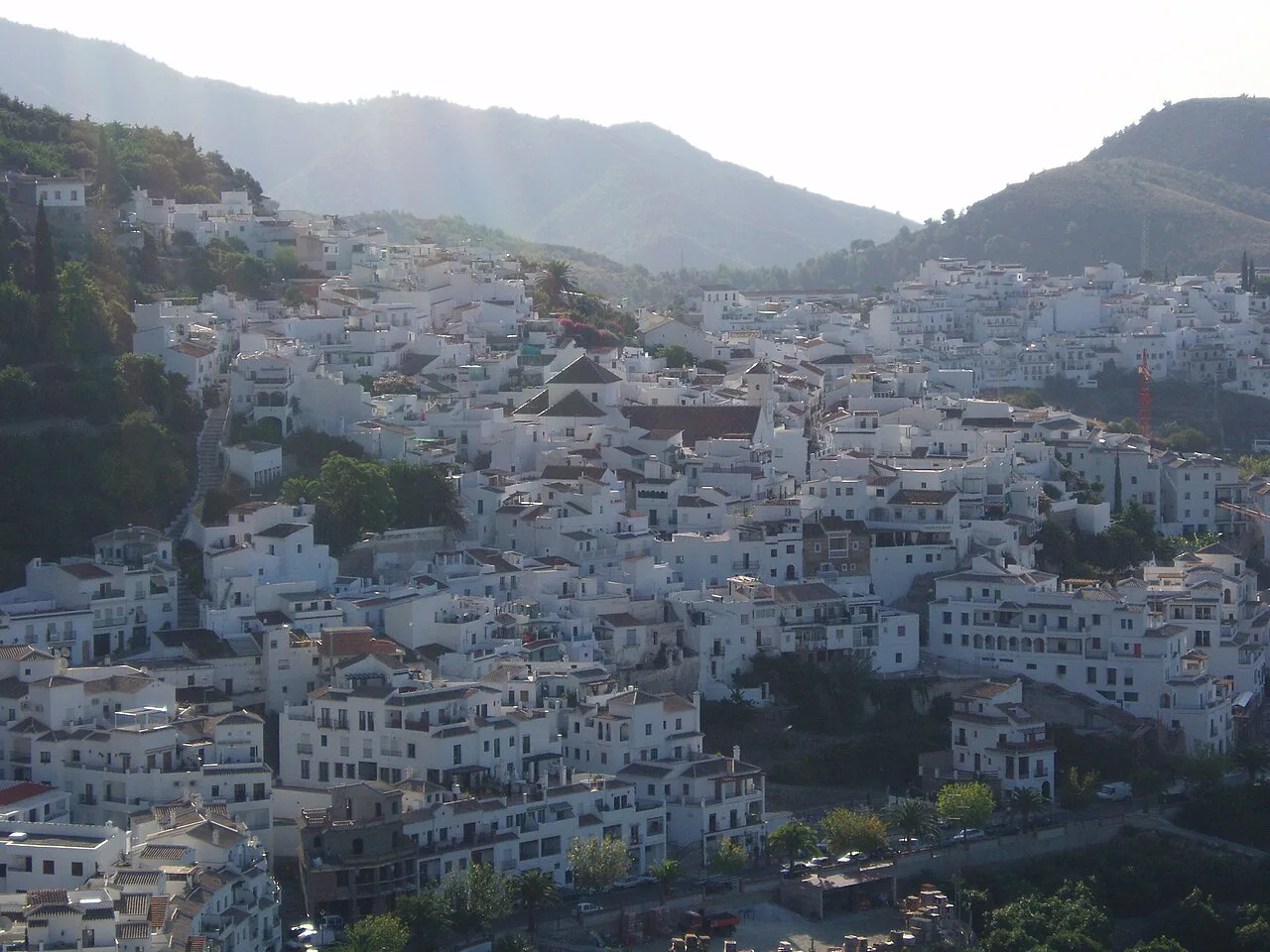
Frigiliana belongs with the white villages of southern Spain, but its setting is unusually green: the village looks over the Higuerón valley with the sea beyond, and the protected sierra rises behind it. That position is why the lanes climb so sharply.
Most visitors reach it from the coast around Nerja, and the road up is short but winding. If you are touring the wider region, the hill villages of Cádiz province such as Setenil de las Bodegas make a natural contrast: carved into rock, while Frigiliana clings to a slope.
Driving brings you to the lower edge of the village, and from there the old centre is on foot. Public transport links to Nerja exist, but times and frequencies change, so confirm the current timetable with the operator before you plan a day around it.
Why the Barribarto looks the way it does
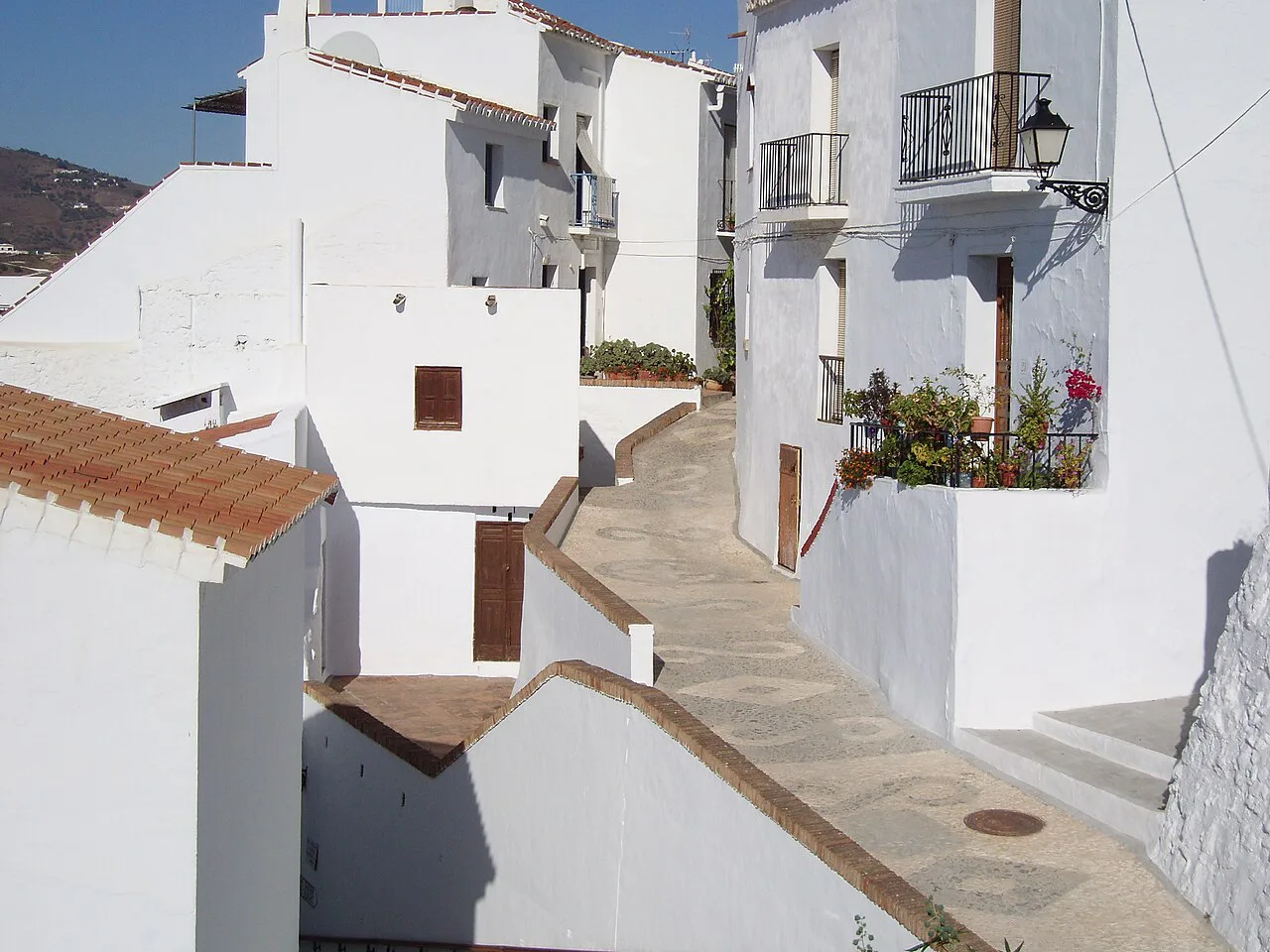
The old quarter is known locally as the Barribarto, a maze of paved alleys, whitewashed houses and flower-filled balconies laid out on a Moorish street plan. Houses turn their backs to the sun and open onto shaded passages, so the walk is a sequence of tight corners and sudden views rather than a single grand square.
Look at the doorways as you go: many are painted in strong blues, greens and yellows, a touch of colour brought by the village's foreign residents rather than inherited from the Moorish period. The whitewash and the ceramic details do the rest of the work.
The ceramic route through the old centre
Glazed tile plaques set into the walls along the streets tell the story of the Morisco–Christian conflict at the Peñón de Frigiliana, turning a simple walk into a readable narrative. Follow them from the lower end of the old town upwards and the lanes stop being decorative and start making sense.
The plaques run through the Barribarto and connect naturally with the church square and Calle Real, so treat them as the spine of your route rather than a separate attraction. Expect to stop often, and wear shoes with grip: the paving is uneven and polished by centuries of feet.
Iglesia de San Antonio de Padua and the Plaza de la Iglesia
The Iglesia de San Antonio de Padua sits in the centre of the village and bears a 17th-century date, with a baroque-Andalusian character and the arms of Iñigo Manrique de Lara, first count of the town, above its door. Local tradition holds that part of the site was an earlier mosque. It faces a small square, the Plaza de la Iglesia, where the climb briefly levels out.
From the square you can carry on along Calle Real towards the Ayuntamiento and the Torreón. The church is a working parish, so visits pause for services; time your stop accordingly rather than expecting open doors all afternoon.
Cuesta del Apero, the tourist office and the mirador
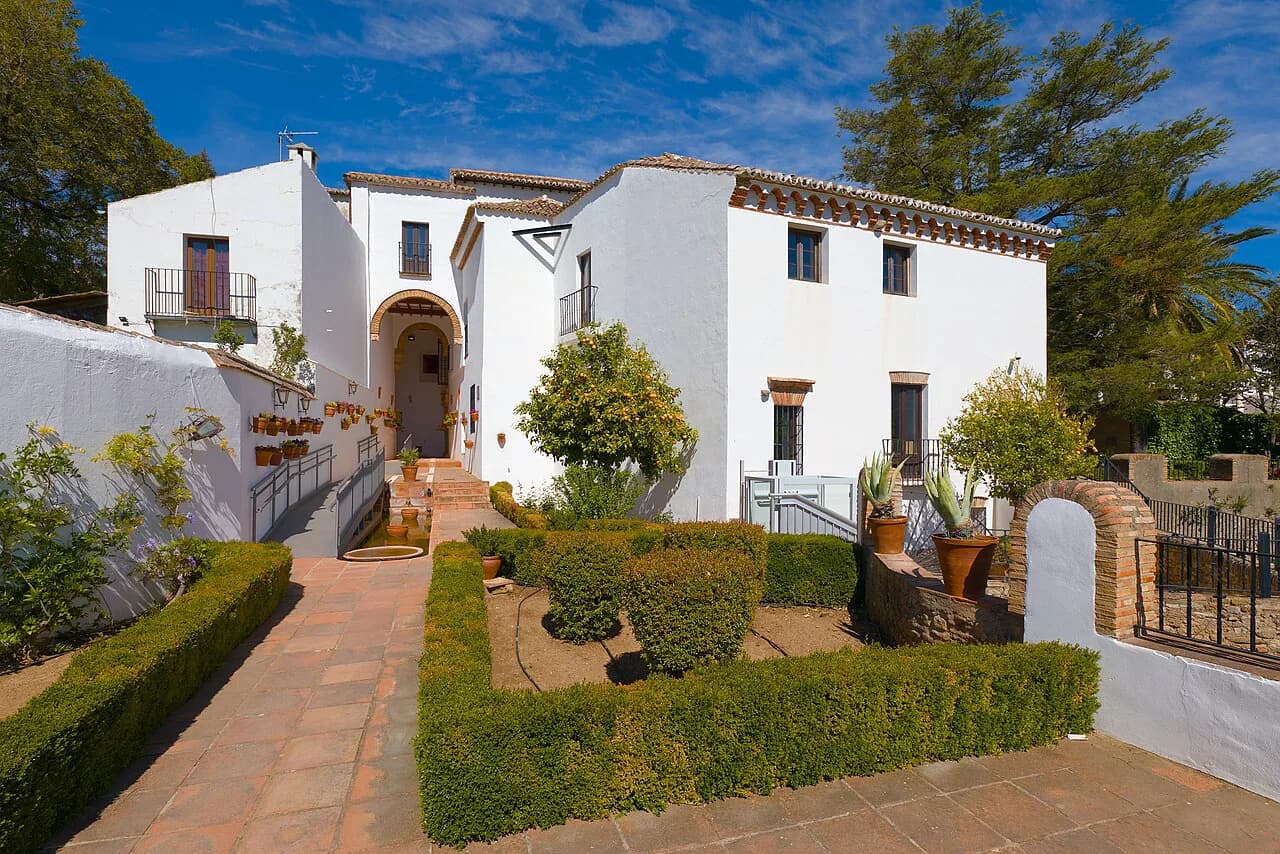
The Cuesta del Apero takes its name from the 17th-century Casa del Apero, once a granary, stable block and farm store, and now home to the tourist office, the archaeological museum and the library. Climb the stairs from the inner patio and you reach a small mirador looking over the village roofs, the Higuerón river and the hillside beyond.
This is the practical first stop of the day: pick up a map, check what is open and get your bearings before committing to the climb. Ask at the desk about current access to the museum and the mirador, since both depend on staffing.
Museo Arqueológico de Frigiliana
The archaeological museum holds finds from the Phoenician, Roman and Morisco periods, including pottery, coins and tools, with a sixth-century BC Phoenician pillar among the highlights.
For a village of this size the collection is a useful primer on why the site mattered long before the whitewash, and it takes far less time than a city museum. Confirm opening days and any entry charge at the tourist office before you count on it.
Calle Real: the cane-syrup factory and Los Reales Pósitos
At the end of Calle Real stands the Fábrica de Miel de Caña Nuestra Señora del Carmen, which continues the cane-syrup tradition that the Arabs introduced to Spain. The dark syrup, closer to caramel than honey, turns up in local cooking and makes a sensible edible souvenir.
Further along Calle Real is Los Reales Pósitos, the granary the Condes de Frigiliana built in 1767 to store cereal from their lands, selling and redistributing it between good and bad years. The building is now in private use, so admire the facade from the street rather than expecting to go inside.
Calle Real is also where the climb into the Barribarto begins in earnest, so plan your visit to the factory and the granary before or after the upper lanes rather than doubling back up the slope.
Mirador del Calvario and the views
The Mirador del Calvario is the village viewpoint, with views over Frigiliana and the Málaga countryside, and it makes a natural end point for a walk uphill. Come late in the day for softer light and fewer people on the terrace.
If you have time for a second viewpoint, the small terrace above the Cuesta del Apero patio is closer and quieter. Either way, the reward is the same landscape seen from a different height.
How long to allow and how to pace the climb
The old town, the church, the museum and one viewpoint fill a morning comfortably, with extra time for the lower shops or a long stop on a terrace. The lanes are steep and cobbled, and the climb between Calle Real, the Plaza de la Iglesia and the upper viewpoints is what takes the time.
Walk up first thing, take the sights in descending order, and leave the flatter lower streets for the hottest part of the day. Inland Axarquía summers are punishing at midday, so spring and autumn are far kinder for a route that is essentially a staircase.
Frigiliana on a short break from the coast
Frigiliana works best paired with Nerja and the coast: a morning in the village, an afternoon back at sea level. Treat it as a half-day rather than a full excursion so the climb stays enjoyable.
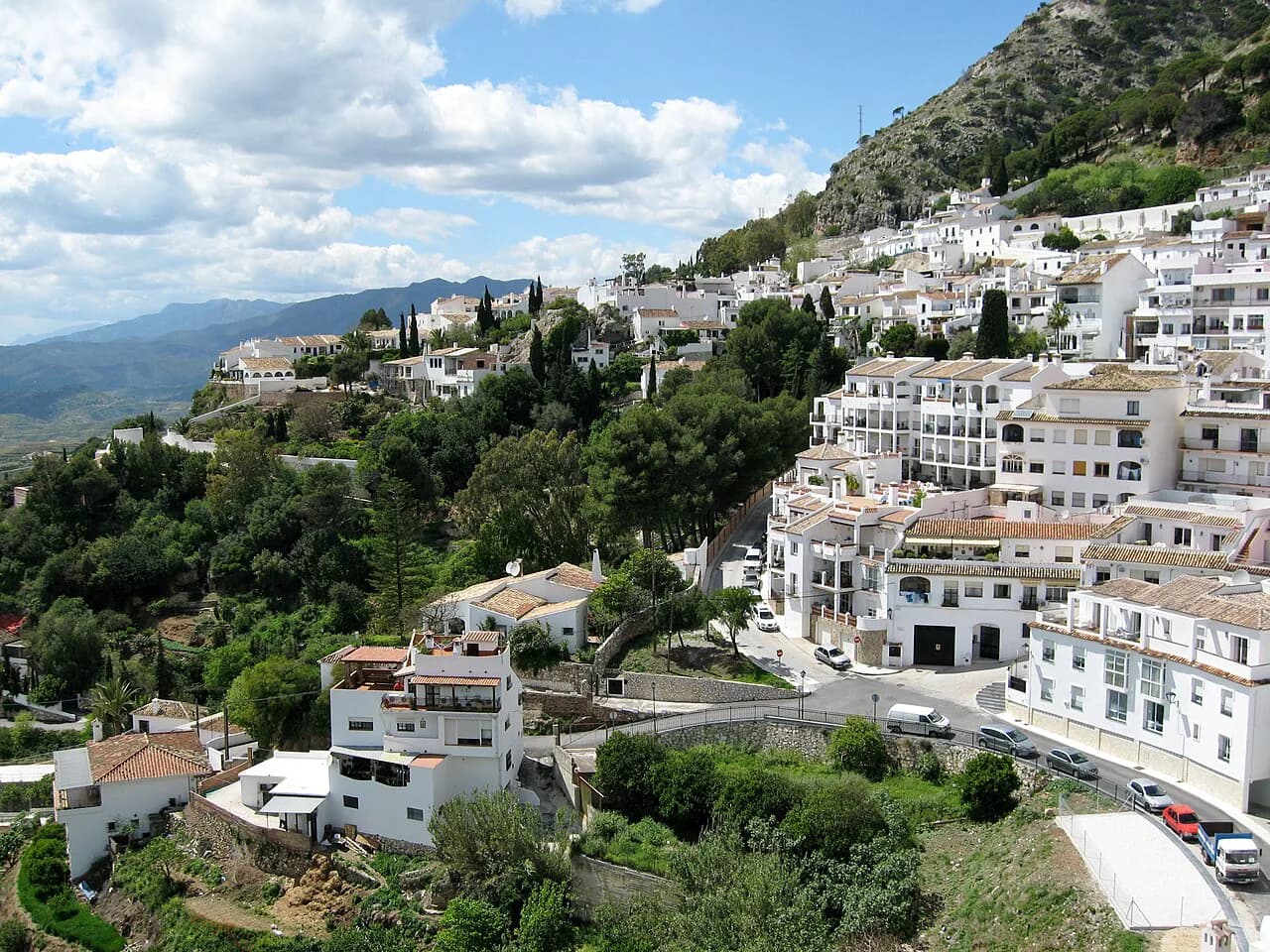
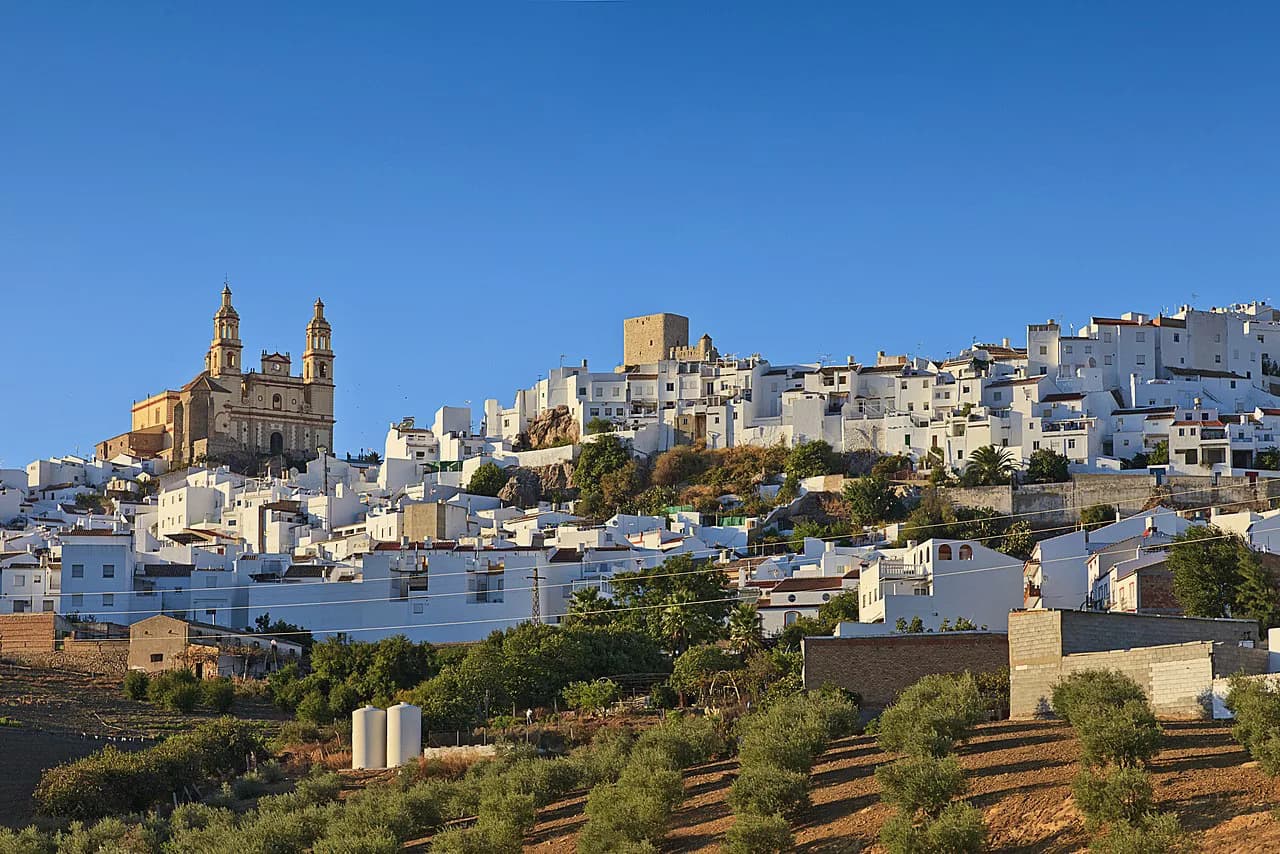
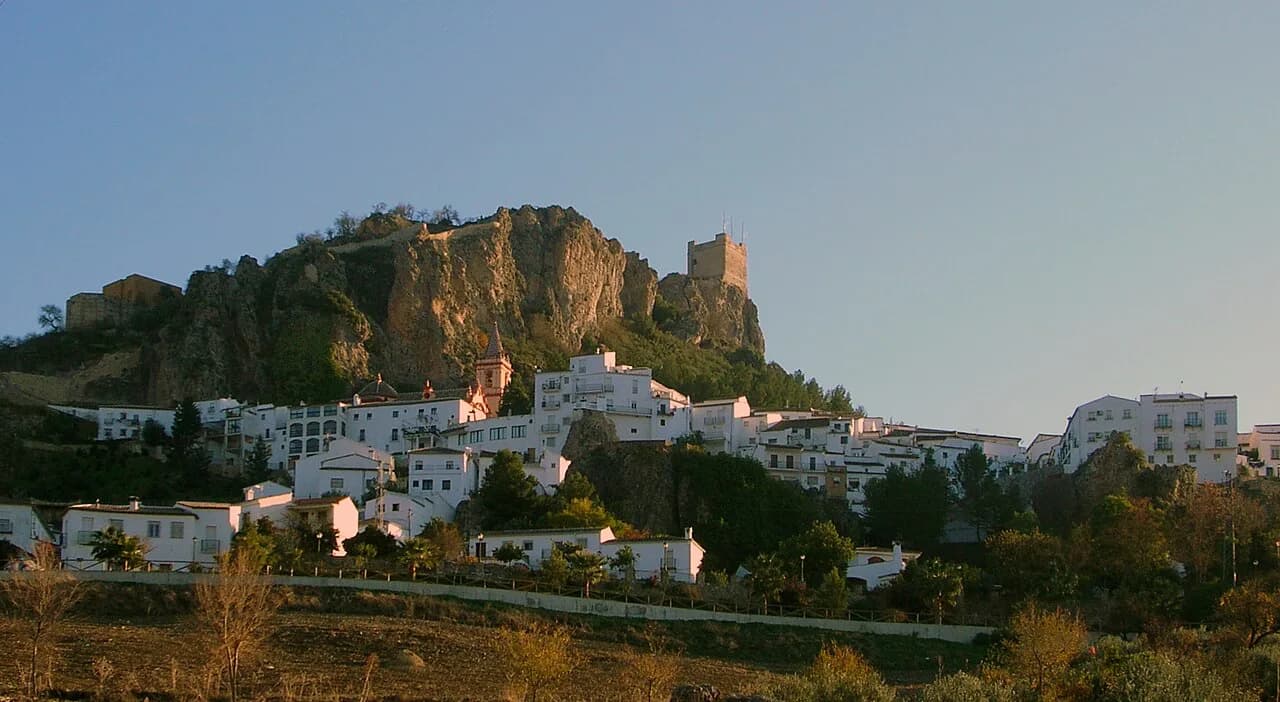
If your wider trip runs through the hill villages of Cádiz, the rock-roofed lanes of Setenil de las Bodegas and the cliff-top streets of Zahara de la Sierra in the Sierra de Grazalema offer a different kind of white village. Mijas Pueblo, closer to Málaga, is the easier comparison for anyone based on the western Costa del Sol.
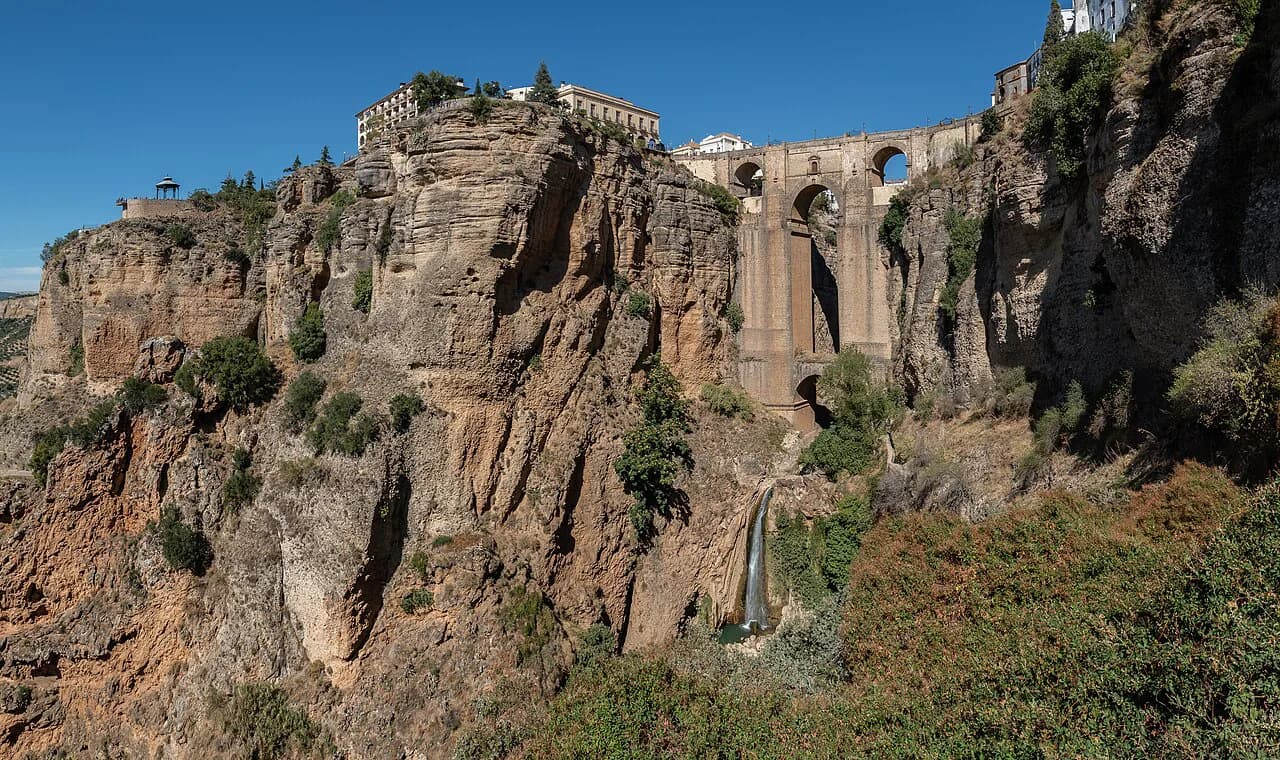
For a fuller Andalusian town with Roman and Moorish layers, Ronda makes a natural longer day out from the same coast.
Which Frigiliana route suits your day
Choose the full climb if you have a morning and good shoes: Calle Real, the factory, the Cuesta del Apero mirador, the ceramic plaques, the church square and the Mirador del Calvario. Choose a shorter loop around the lower Barribarto and the church if time is tight, heat is high or stairs are a problem.
Either way, start at the tourist office for a map and current details on the museum and church, and keep the walking slow: the village rewards looking rather than covering ground.
Explore more Ronda guides
Frequently Asked Questions
Are Nerja and Frigiliana worth visiting?
Yes, and they work well together: Frigiliana supplies the steep whitewashed old quarter and the views, while Nerja gives you the coast at the foot of the same hills. Give Frigiliana a morning rather than an hour, because the sights are spread across a climb.
What region of Spain is Málaga in?
Málaga is a province of Andalusia in southern Spain, and Frigiliana sits in its eastern Axarquía district above the Mediterranean. The village is roughly 50 minutes from Málaga city and close to Nerja.
Is there a bus from Frigiliana to Nerja?
A local bus connection exists, but timetables and frequencies change, so check the current schedule with the operator before planning around it. The road up from the coast is short and winding.
What is the history of Frigiliana?
Frigiliana has Phoenician, Roman and Morisco layers, and its old quarter preserves a Moorish street plan with the church built on the site of the mosque. The ceramic plaques through the Barribarto recount the Morisco–Christian conflict at the Peñón de Frigiliana.
Sources
Notes for your next Spanish town break
Optional updates to our guides.
You might also like
Continue reading
More guides you'll find useful