Ronda History: A Short Timeline Tied to the Town's Monuments
A short Ronda history timeline, from Arunda and the Moorish taifa to the 1485 siege and the Puente Nuevo, tied to monuments you can still visit today.
On this page
Ronda's story can be read on foot in an afternoon: a Celtish name, a Roman neighbour at Acinipo, a Moorish kingdom, a 1485 siege decided by a water channel, and a bridge finished in 1793. The town's two halves explain the rest, with La Ciudad on the southern lip of the Tajo gorge and El Mercadillo spread north of it. This guide ties each period to a named building, gate or bridge you can still find, and points to the ticketing route the town uses for its monuments.
La Ciudad and El Mercadillo: a town split by a gorge
The Guadalevín cuts the town in two, and the split is historical rather than decorative. The old core, the Madinat, became known as La Ciudad, while San Francisco and Mercadillo grew outside the walls as separate quarters. In the 15th century higher taxes on goods entering Ronda pushed suppliers to trade beyond the gates, and those outside markets became the origins of both districts.
That matters when you plan a walk, because the two halves feel different. La Ciudad holds the churches, palaces and gates of the medieval town, while El Mercadillo became the service and commercial quarter and later took in the northern side of the Tajo. Start south of the gorge for the oldest fabric and cross for the Plaza de Toros and the newer streets.
Celts, Phoenicians and Romans: Arunda and Acinipo
Ronda is one of Spain's oldest towns, with prehistoric remains in the cave paintings of the Cueva de la Pileta nearby. The Celts settled in the 6th century BC and gave the town its original name, Arunda. The Phoenicians later founded Acinipo, the now-ruined site in the hills outside town, and in the 2nd century BC the Romans arrived and fought the Carthaginians for the region.
Acinipo flourished under Rome to the point of minting its own coins, while Ronda served as a fortified post and grew into a municipality in its own right. Both declined with the empire, and Acinipo was abandoned by the 6th century. If you want the Roman layer of Ronda's story, Acinipo is the place to look for it rather than the town centre.
The Moorish era from 711: castle, taifa and the Arab Baths
The Moorish invasions began in 711 when the Moors captured Gibraltar, and Ronda's castle was taken soon after. Under Muslim rule Roman and Visigoth buildings gave way to mosques, the walls were strengthened over the centuries, and Ronda became an independent kingdom, the Taifa of Ronda, during which it flourished. The Arab Baths and the Mondragón Palace date from this period, and both survive.
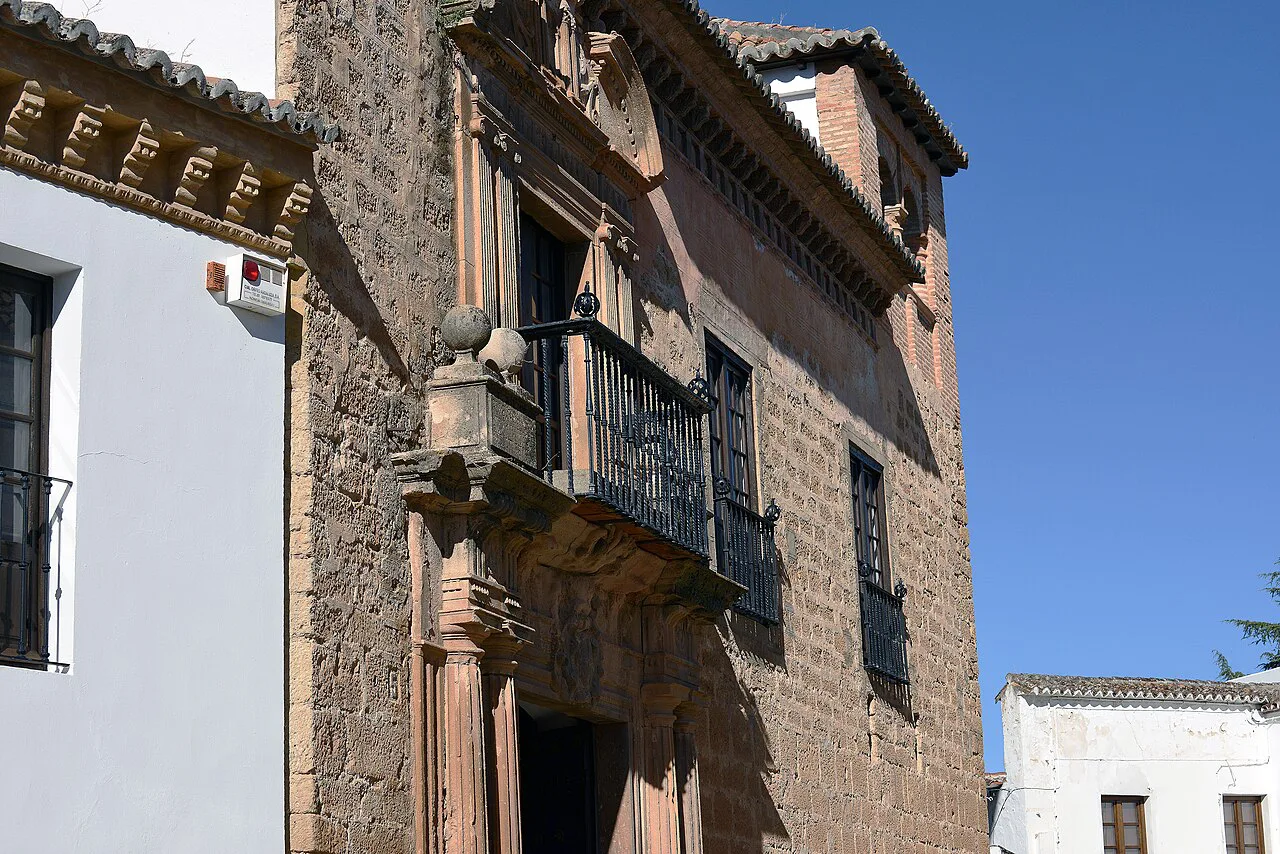
The baths were built in the 13th century and are among the best preserved in Spain, a useful stop for understanding daily life under Muslim rule. The Mondragón Palace mixes Islamic and Christian architecture and now houses the municipal museum, so one building carries two periods. Pair the two on the same morning, since both sit in La Ciudad.
1485: the siege and the water mine
In the 13th century the Christians pushed south in the Reconquest, and Ronda's position near Castilian territory made it strategically vital. The Christian army surrounded the city in 1485 and occupied the water mine, leaving Ronda without a water supply, and the city surrendered after a brief siege. The water mine, not the fighting, was the siege's decisive point.
Surrender brought a reorganisation rather than a rebuild. Land was distributed among the knights and noblemen of the conquest, mosques were converted into churches, and the town was divided into five parishes named for their churches. The expulsion of the Moors followed in 1570, after which Ronda was a wholly Christian town.
Five parishes and the growth of Mercadillo
The 16th and 17th centuries gave Ronda the structure you still walk through. Churches, hospitals and convents went up in La Ciudad, while shops, inns and taverns clustered in Mercadillo, which developed enough to occupy the whole northern area of the Tajo. San Francisco became the agricultural quarter, and Mercadillo the commercial one.
The oldest of Ronda's three river bridges belongs to this phase. The Puente Viejo was built in the early 17th century and is the oldest and smallest of the three crossings of the Guadalevín. It gets a fraction of the attention given to the great bridge downstream, which makes it a quiet place to read the town's earlier layout.
The 18th-century building boom and the Puente Nuevo
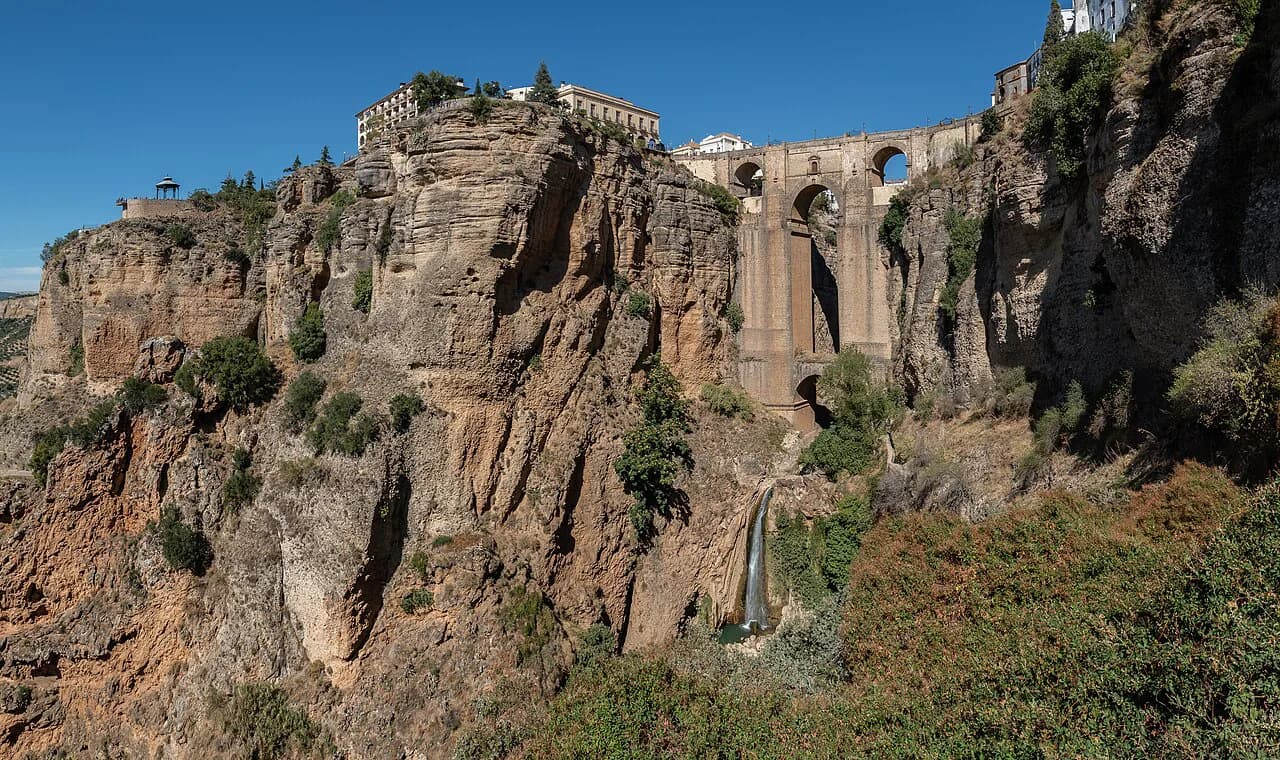
The 18th century was Ronda's great era of construction: the Puente Nuevo, the Plaza de Toros and the aqueduct of La Hidalga were all built, and Plaza de España was laid out as the site of a new market. The bridge connected La Ciudad with El Mercadillo and allowed the town to expand with new streets. Construction began in 1759 and took 34 years, under the architect José Martín de Aldehuela, with the bridge completed in 1793.
The figures attached to it are worth knowing before you photograph it: the El Tajo gorge drops 120 metres, the tallest arch reaches 98 metres, and stone for the bridge was cut from the gorge itself. A chamber at its centre later served as a prison. The Plaza de Toros was inaugurated in 1785 and ranks among the oldest and most elegant bullrings in Spain. Across the gorge, Ronda Old Town holds the churches and palaces of La Ciudad.
French occupation, bandoleros and Romantic travellers
The early 19th century brought French occupation, with hunger, misery and political instability for the townspeople. When the French retreated they destroyed much of value, including the castle, aqueducts, walls and paths. The same period produced the bandolero legend, bands of highwaymen descended from the guerrilla fighters who resisted the French, who robbed travellers through the region and inspired Romantic novelists.
By the 19th century Ronda had become a stop on the Grand Tour of Europe for young upper-class travellers, the viajeros románticos who gave the town its romantic reputation. The economy stayed weak into the 20th century, with a poor agricultural situation in Andalusia and a drought in 1905. That contrast, between a dramatic setting and a hard living, explains why so much of the town's fabric survived intact.
What survives from each period
The Moorish layer is the easiest to see: the Almocábar Gate is a striking piece of Moorish defensive architecture, the Arab Baths are 13th-century, and the Mondragón Palace holds both Islamic and Christian work. The walls that were fortified over the centuries still shape the streets of La Ciudad. Set aside a couple of hours for this cluster rather than treating each stop separately.
The Christian centuries left churches by the parishful, the Plaza de España, and the three bridges over the Guadalevín. The Puente Viejo is the oldest, the Puente Nuevo the most photographed, and the chamber inside it the detail most summaries leave out. If you want the practical list, our Things to Do in Ronda guide picks up the monuments in sequence.
For orientation before you set out, a map of the gorge and the two quarters makes the chronology easier to follow on the ground. The viewpoints along the Tajo are where the town's defensive logic becomes obvious, with the drop doing the work the walls could not.
Tickets for the monuments
Ronda sells a Bono Turístico covering the city and its principal monuments, alongside a Bono Premium that bundles more, and both can be bought through the municipal tourism office. Guided visits with accredited official guides are also bookable there. Ticket prices change, so check the current rate on the official tourism site or at the office rather than budgeting from memory.
Which part of the story to see first
Start with the Puente Nuevo and the gorge, because the drop and the two halves of town make every earlier period legible. Then work south into La Ciudad for the Almocábar Gate, the Arab Baths and the Mondragón Palace, and finish in El Mercadillo, which exists because of taxes levied at the gates. That route follows the chronology without turning the day into a lecture, and a map of Ronda makes the gorge and the two quarters easier to picture before you go.
Explore more Ronda guides
Frequently Asked Questions
Is Ronda the oldest city in Spain?
Ronda is described as one of the oldest towns in Spain, with prehistoric settlement remains nearby in the Cueva de la Pileta cave paintings. The Celts settled in the 6th century BC and named it Arunda. Claims of the single oldest city in Spain are better treated with caution.
What happened at Ronda in 1485?
The Christian army surrounded the city and took the water mine, cutting off the supply. Ronda surrendered after a brief siege. Land was then distributed among the knights and noblemen who had taken part, mosques became churches, and the town was divided into five parishes.
How long did the Puente Nuevo take to build?
Construction began in 1759 and took 34 years, with the bridge completed in 1793 under the architect José Martín de Aldehuela. It spans the El Tajo gorge, which drops 120 metres, and its tallest arch reaches 98 metres.
Sources
Notes for your next Spanish town break
Optional updates to our guides.
You might also like
Continue reading
More guides you'll find useful