Olvera, Spain: Castle, Church and Old Town Guide
Plan a short break in Olvera in the Sierra de Cádiz: the Arab castle and parish church on the crag, the whitewashed old town and the Vía Verde de la Sierra.
On this page
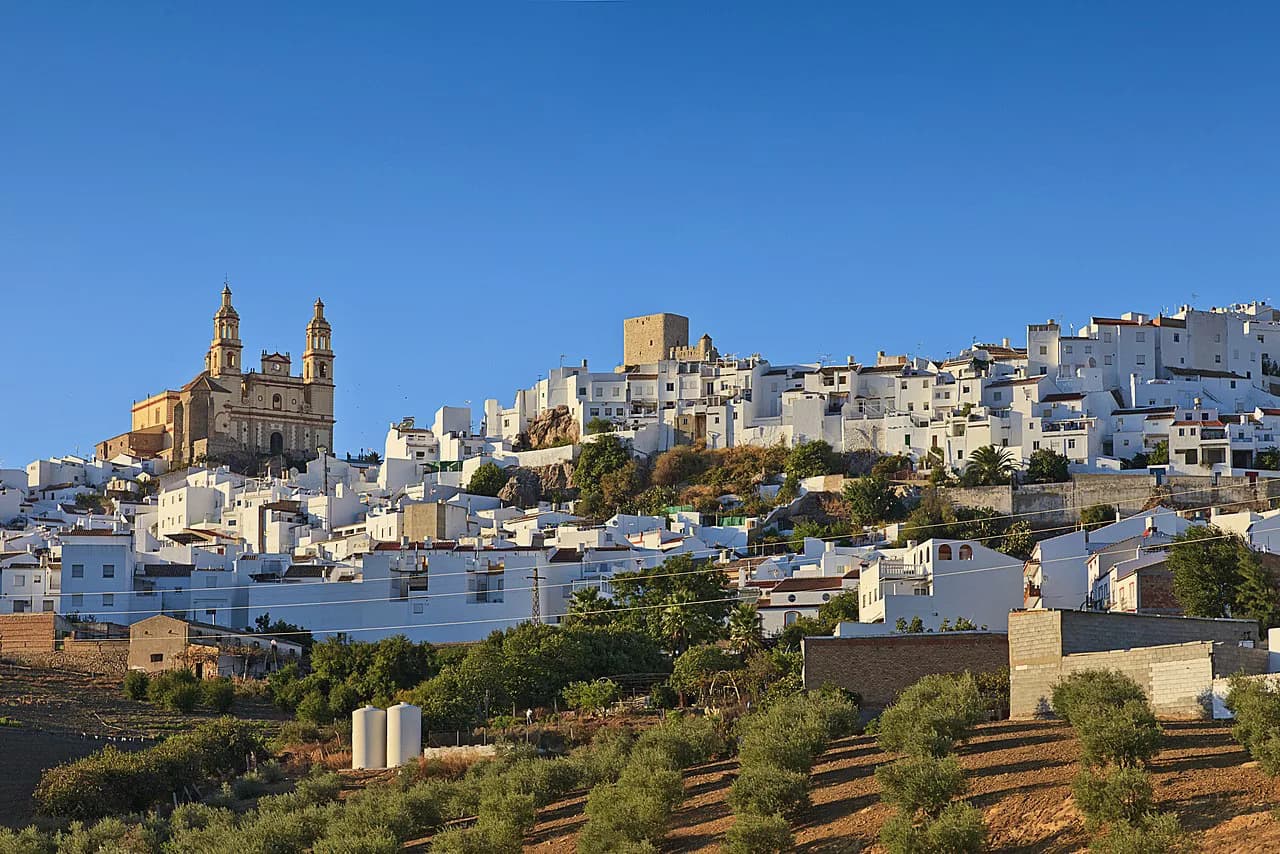
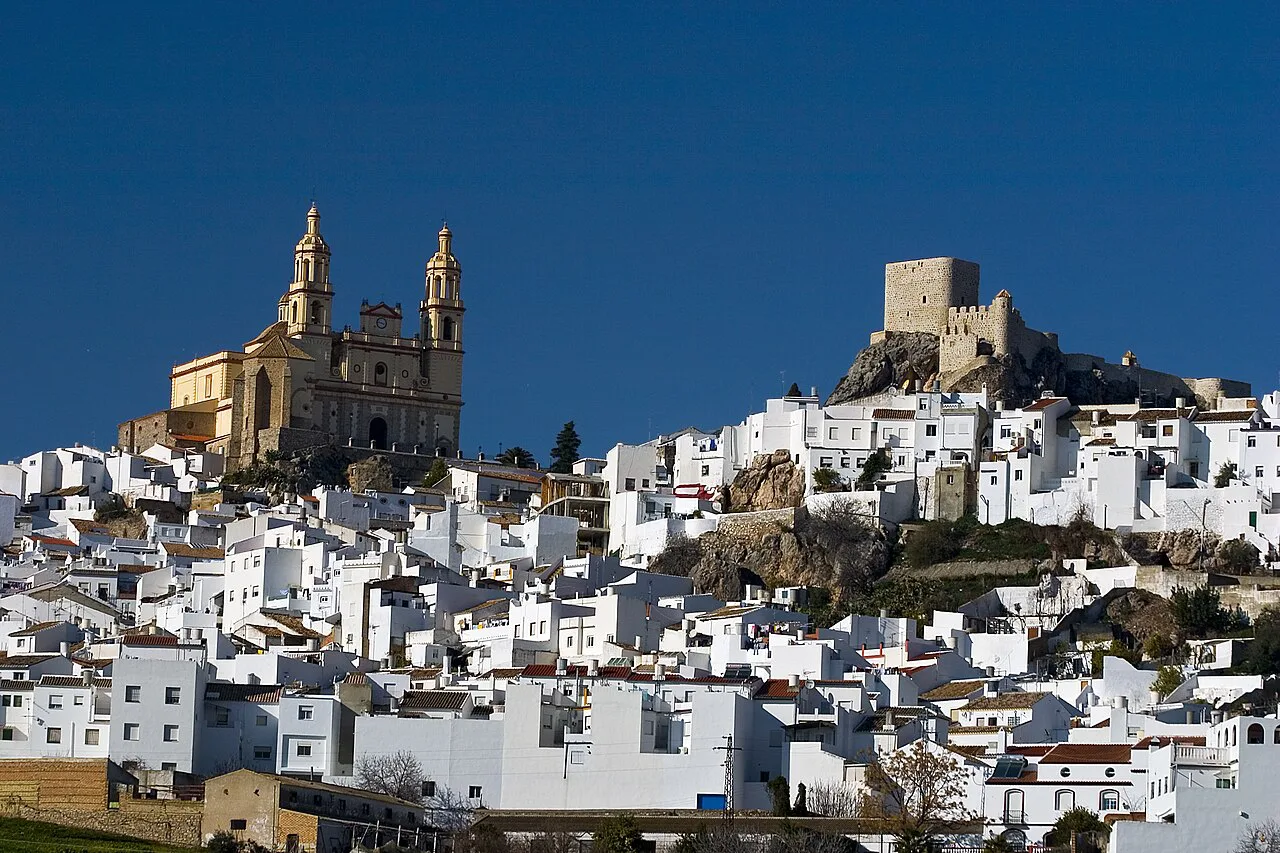
Olvera is worth a half day, and the town is essentially one climb: the Castillo Árabe and the Iglesia Parroquial sit together on the crag, with the whitewashed streets of the Conjunto Histórico spilling down the hillside beneath them. Base yourself at the top, work downwards, and you see everything the town's tourist office names without doubling back on the slope.
This guide follows the order of the hillside: the castle and church first, then the lanes, the Museo La Cilla and the lower churches, then the outlying Santuario Los Remedios, the Peñón de Zaframagón and the Vía Verde de la Sierra. It also explains how Olvera slots into a trip based in Ronda rather than pretending the town supports several nights on its own.
What Olvera is and where it sits in the Sierra de Cádiz
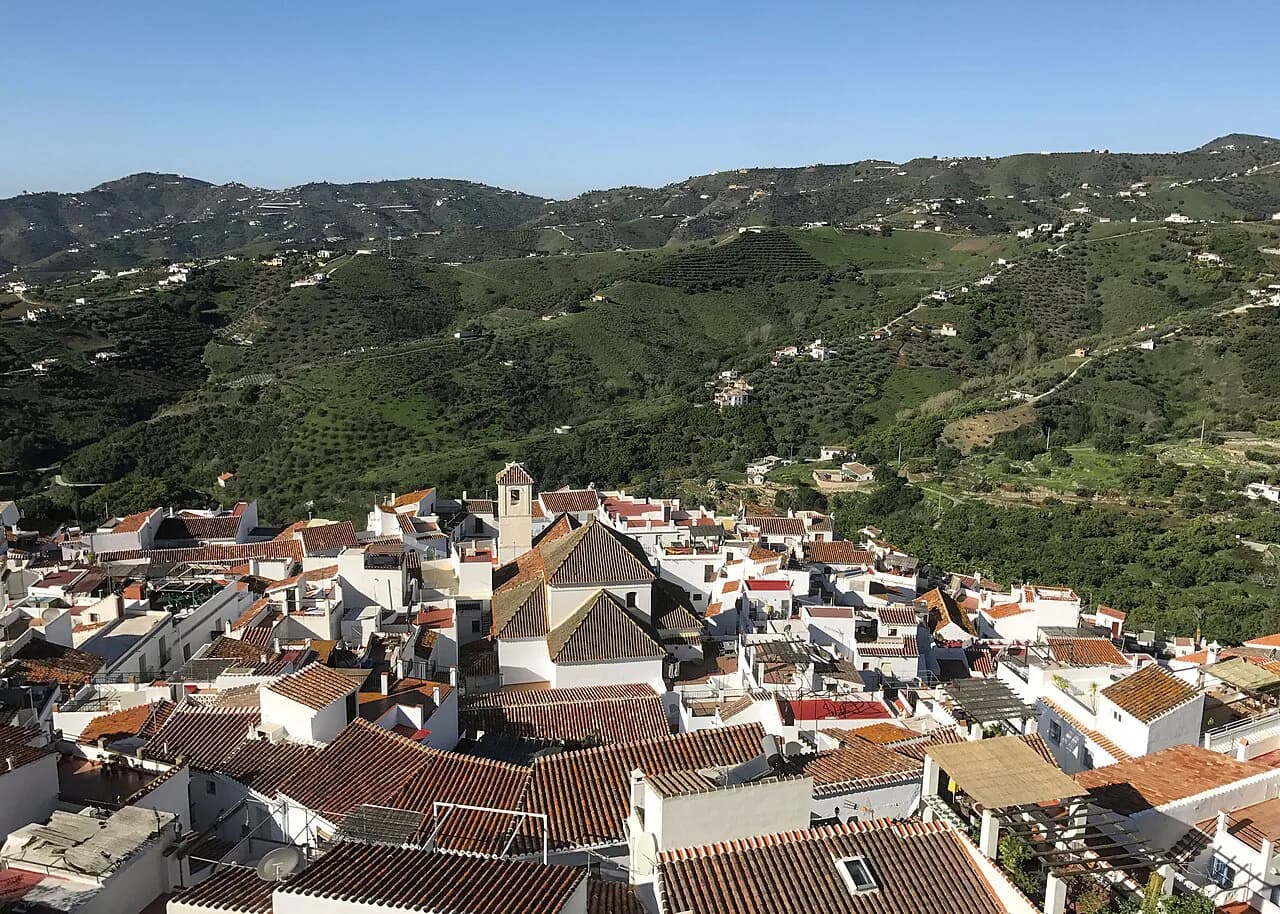
Olvera belongs to the Sierra de Cádiz, the inland white-town country north-east of the city of Cádiz, and the tourist office describes it as a slope of whitewashed houses and narrow lanes raised among olive groves and crowned by the church and castle ensemble. That single sentence explains the layout: whatever you came to see is above you, and the streets twist to cope with the gradient.
Treat the town as a compact historic centre rather than a spread-out destination. The official sight list is short and walkable in principle, but the vertical drop between the monuments and the newer town is the thing that decides your pace, especially in summer. For the wider picture, see the Pueblos Blancos, and note that Olvera sits naturally alongside Arcos de la Frontera and Setenil de las Bodegas, both built on similarly dramatic sites.
The hilltop set: Castillo Árabe and Iglesia Parroquial
The Castillo Árabe and the Iglesia Parroquial form the town's signature image, the castle and church built one above the other on the crag that dominates every view from below. Start here, because everything else in Olvera reads as a descent from this point, and the climb is the visit rather than an approach to it.
Plan the ascent for the cooler part of the day. The lanes up are steep and exposed, and inland Cádiz province gets genuinely hot at midday in summer, so a morning start makes the climb comfortable and leaves the afternoon for the flatter lower town. There is no shortcut worth hunting for; the gradient is the town's structure, not an obstacle to be avoided.
Walking the Conjunto Histórico: lanes, walls and whitewashed slopes
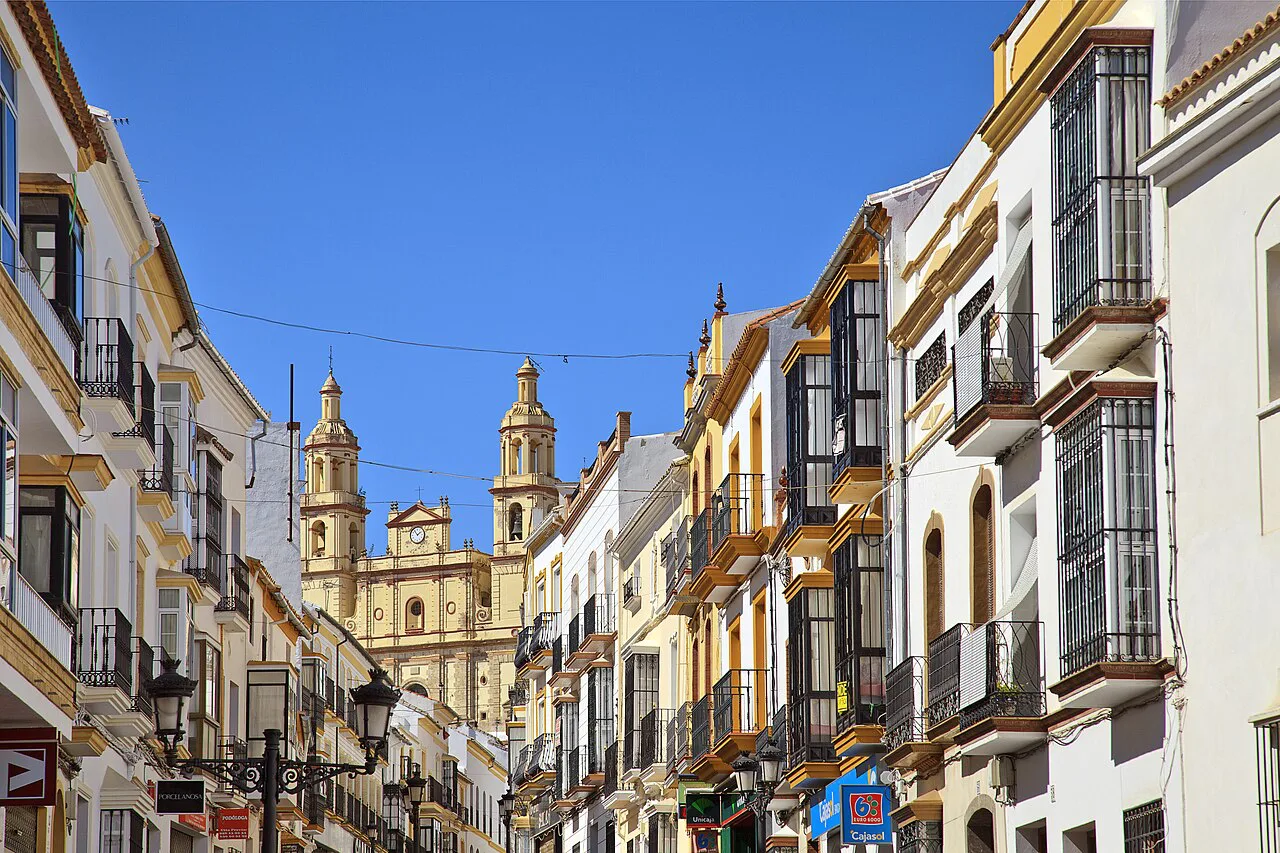
The Conjunto Histórico is the protected old centre, and the tourist office's description of streets that twist with the slope and carry the scent of plants on walls and windows is a fair picture of what you walk through. Come for the streets themselves rather than for a checklist of façades: whitewash, iron grilles, pot plants and sudden views back up to the castle.
Allow for the simple fact that an uphill-and-downhill town eats time. Shops and churches in Andalusian towns of this size often keep limited daytime hours, so front-load the walking and keep the museum for the middle of the day when the lanes are quietest. If you want a second white town with a very different streetscape, Setenil de las Bodegas, where houses are built into the rock overhang, makes an obvious contrast.
Museo La Cilla and the Centro Cultural
Museo La Cilla and the Centro Cultural are both named on the tourist office's list of what to visit, and they give the old town an indoor option that does not depend on the weather or the heat. Slot them into the middle of a walking day rather than treating them as a separate outing.
The tourist office does not set out opening times, closing days or admission charges in its public listing, so settle those with the office before you build a day around either building. The office publishes a telephone number and email address on its site, which is the sensible way to confirm before travelling.
Muralla Urbana, Ayuntamiento and the parish cemetery
The Muralla Urbana, the Ayuntamiento and the Cementerio Parroquial complete the official sight list, and each belongs to a different layer of the town. The town wall and the town hall sit within the historic fabric you are already walking through, while the parish cemetery is a separate stop on the edge of the centre.
These are short visits, not destinations in their own right, and they work best folded into the walk down from the castle rather than scheduled as their own block. Their combined value is the sense of a working Andalusian town behind the postcard view, which is what distinguishes Olvera from a village with one monument and nothing else.
Churches lower down: Socorro, San José, Victoria and the Capilla del Arte
Below the hilltop set, the tourist office lists the Iglesia del Socorro, the Iglesia de San José, the Iglesia de la Victoria and the Capilla del Arte. Group them by position as you descend instead of climbing back up between them, and treat the churches as waypoints on the walk rather than as a second itinerary.
Parish churches across Andalusia commonly close to visitors around services and keep restricted daytime opening, so expect some doors to be shut and do not build the day around getting inside all four. The exterior towers are part of the skyline the tourist office describes, so the walk holds up even when the interiors are not available.
Santuario Los Remedios and the Peñón del Sagrado Corazón
The Santuario Los Remedios and the Peñón del Sagrado Corazón are the town's outlying stops, away from the castle cluster, and the tourist office names both. The sanctuary is a devotional site rather than a historic-centre sight, and the Peñón is a viewpoint landmark, so together they justify a separate short excursion rather than a detour mid-climb.
Decide about these two on the day: if the heat or your available time is tight, the old town deserves priority, because Olvera's identity is the castle and church on the crag. Save the sanctuary for a cooler hour or for a return visit in a slower frame of mind.
Peñón de Zaframagón and the Vía Verde de la Sierra
The Vía Verde de la Sierra and the Peñón de Zaframagón are a half-day decision in their own right, and the tourist office lists both as things to visit from Olvera. The Vía Verde follows a former railway line through the sierra, and the Peñón is the limestone crag that dominates the route; this is countryside, not town, and it wants different shoes and a different frame of mind.
Do not try to bolt this onto a rushed old-town morning. Either give the greenway and the Peñón their own block, or leave them for another day and keep Olvera's streets as the day's single purpose. Opening arrangements, bike hire and access points change, so confirm the practical details before setting out.
How long Olvera needs and how to pace the climb
Half a day covers the castle, the parish church, the old-town lanes and the Museo La Cilla at a civilised pace, with the lower churches taken in as you descend. A full day adds the sanctuary or the Peñón del Sagrado Corazón comfortably; the Vía Verde and the Peñón de Zaframagón realistically need a second day.
The pacing rule for Olvera is one climb up and one walk down. Start at the castle in the morning, drift through the Conjunto Histórico, take the museum in the hot middle of the day, and finish with the lower churches and the Ayuntamiento. That sequence avoids the mistake of shuttling between the top and the bottom of a hillside town two or three times.
Getting there and fitting Olvera into a Ronda-based trip
Olvera works best as a stop on a white-towns circuit rather than as a base for several nights. Ronda, roughly an hour or so away by road in the same inland country, is the natural anchor for a trip that also takes in Grazalema and Zahara de la Sierra, and Olvera earns its place as a half-day on that loop.
If you are travelling from the coast, Málaga is the common arrival airport for this corner of Andalusia, and the drive inland climbs steadily into the sierra. Rail and bus connections to Olvera are limited and timetable-dependent, so check current services with the operator before committing to a car-free plan.
Setenil de las Bodegas and Arcos de la Frontera make the obvious companions on the same day or the next, and Ronda Attractions covers the bigger sights if you are spending real time in the area. Order the loop so Olvera comes in the morning, when its climb is at its kindest.
What to expect at midday and on closed days
Inland Cádiz is hot at midday from June to September, and Olvera's layout maximises exposure on the climb. Plan the ascent for the morning, keep the middle of the day for the museum, the Centro Cultural or a shaded square, and save the descent and the lower churches for late afternoon.
Small Andalusian towns commonly see churches and shops shut for part of the day, and individual monuments can be closed for services or restoration. The tourist office is the reliable point of contact for the day you plan to arrive, so confirm the practical details before setting out.
Should Olvera be morning or afternoon?
Make Olvera a morning. The castle and parish church on the crag are the reason to come, and the climb up through the Conjunto Histórico is far more pleasant before the inland heat builds. Follow that with the museum in the middle of the day and the lower churches and town hall on the way down.
Build the rest of the day around the white towns rather than around Olvera itself: Zahara de la Sierra and the Parque Natural de la Sierra de Grazalema sit within easy reach of a Ronda-based loop. Add the Vía Verde de la Sierra and the Peñón de Zaframagón only if you have a spare half day to give them properly.
Explore more Ronda guides
Frequently Asked Questions
Is Olvera Street in Los Angeles the same place as Olvera in Spain?
No. Olvera Street is a street in Los Angeles, while Olvera is a white town in the Sierra de Cádiz in Andalusia. The Spanish town is known for its Arab castle and parish church stacked on a crag above whitewashed lanes.
What does Olvera mean in Spanish?
Olvera is a place name rather than a dictionary word, so it has no everyday meaning in Spanish. It is simply the name of the town and of families who take it as a surname.
Can you see Olvera's main sights in a few hours?
Yes. The castle, parish church, old-town lanes and Museo La Cilla fit into a half day. The lower churches, the sanctuary and the greenway and Peñón de Zaframagón need extra time on top of that.
Sources
Notes for your next Spanish town break
Optional updates to our guides.
You might also like
Continue reading
More guides you'll find useful