Puerto de la Cruz Old Town: What to See and How to Walk It
Walk Puerto de la Cruz old town from the Plaza del Charco to La Ranilla and San Telmo, with the streets, squares and stopping points that shape the route.
On this page
Puerto de la Cruz old town fits into a half-day on foot: start at the Plaza del Charco, drop down through the La Ranilla lanes to the harbour, then return along the San Telmo promenade. The historic core is small and largely free, so the walk is about order rather than distance. This guide sets out the route, the squares and streets that hold it together, and where the old town gives way to the Lago Martiánez and the coast beyond.
The town grew around its small port on Tenerife's north coast, with wide avenues and lush garden spaces layered over the older maritime streets. That layout matters: the seafaring half sits at the bottom of the town, so a walk that stops at the main square misses the Casa de la Aduana, the old quay and the fishermen's quarter entirely.
What the old town covers
The old town is the cluster of streets between the Plaza del Charco and the water, taking in the harbour area, the La Ranilla quarter and the church square of Nuestra Señora de la Peña de Francia. It is not a walled or pedestrianised historic zone in the manner of an inland Castilian town; it is a working coastal town whose older buildings sit among later ones.
That mixed fabric is the point. You walk past the Casa de la Aduana and the old quay, still wearing its maritime air, and a few minutes later you are in low, brightly coloured houses hung with murals. Treat the old town as a loop of roughly a kilometre rather than a single street.
How the town is laid out and which direction to walk it
The town steps down towards its small port, so walk downhill first and save the climb back for the end. A sensible order runs from the Plaza del Charco through La Ranilla to the harbour, then west along the Paseo de San Telmo towards the Mirador de La Paz.
Keep the Puerto de la Cruz map open on your phone while you walk, because several of the lanes between the square and the harbour look alike and the signposting is modest. The old town rewards drifting, but the loop above keeps the two halves — commercial square and maritime edge — in a logical sequence.
Plaza del Charco as the starting point
The Plaza del Charco is the natural place to begin: a broad, tree-shaded square with palms and Indian laurels, ringed by streets that stay busy through the day. It has been the social heart of the town since its fishing days, and it still works as a meeting point before you head downhill.
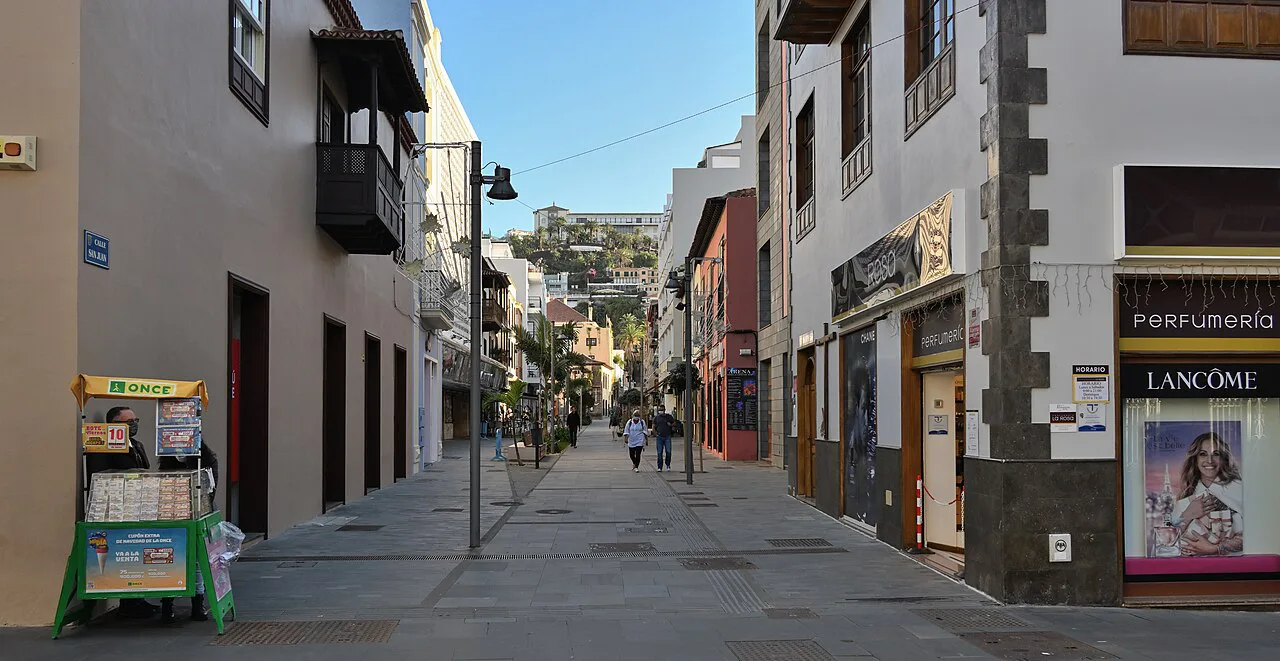
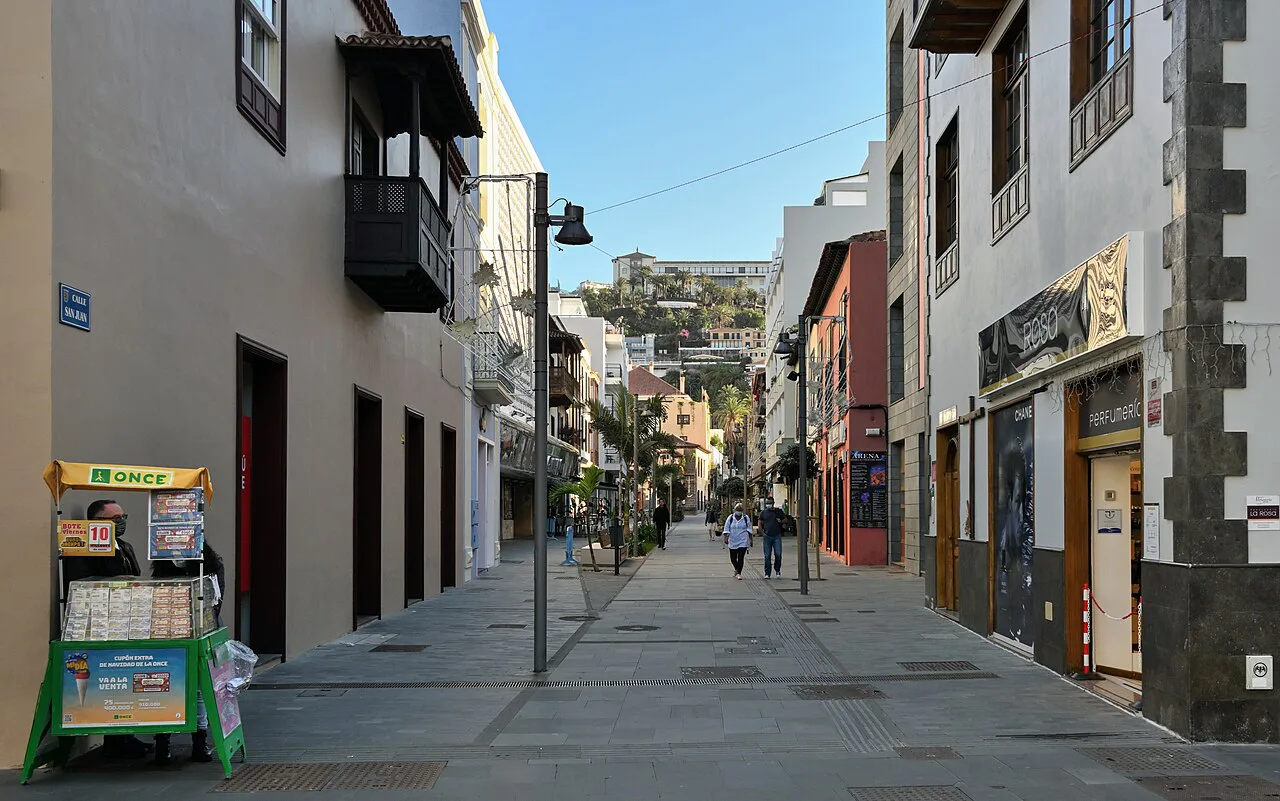
The streets that fan out from the square are where the old town's everyday life shows: small shops, low houses with wooden balconies, and a steady flow of people cutting between the square and the port. If you want to fold browsing into the walk, the side streets off the square are the place for shopping in Puerto de la Cruz rather than the waterfront.
La Ranilla: the old fishermen's quarter
A few steps from the Plaza del Charco, La Ranilla was the fishermen's neighbourhood and is now the most colourful part of the old town. Its low houses are painted in strong shades, and the lanes carry the Puerto Street Art project, large-scale murals by international artists on the gable ends and side walls.
Walk it slowly and look up: the murals are spread across the quarter rather than gathered in one place, so the reward comes from turning corners. Allow twenty minutes or so to cover the lanes properly, more if you photograph each wall.
The harbour end: the Casa de la Aduana, the old quay and the Batería de Santa Bárbara
At the bottom of the town the old town turns maritime. The harbour area holds the Casa de la Aduana and the Viejo Muelle, the old quay, which keeps its working, weathered character; this is the historical core of the town as much as the square uphill.
The quay area also gathers the town's contemporary waterfront attractions, including the Lago Martiánez pools and the seafront promenade, so the harbour half of the walk flows naturally into the resort coast. If you would rather see the coastline from the water than from the quay, a Puerto de la Cruz boat trip sets off from this same port area.
The Iglesia de Nuestra Señora de la Peña de Francia and its square
Inland from the harbour, the Iglesia de Nuestra Señora de la Peña de Francia presides over a calm, tree-lined square with stone fountains, a complete change of pace from the busy lanes below. The church is a seventeenth-century building and the square in front of it is the old town's quietest corner.
The square is also the best place to pause between the harbour and the western end of the walk, and its benches catch shade through the middle of the day. Treat it as a breathing point rather than a sight to tick off.
San Telmo: the promenade, the Ermita and the Mirador de La Paz
West of the centre, the Paseo de San Telmo runs along the water past the Ermita de San Telmo, a small chapel that marks the old shoreline route. The promenade is the town's sea-facing public space, and the walk along it is the most open stretch of the loop.
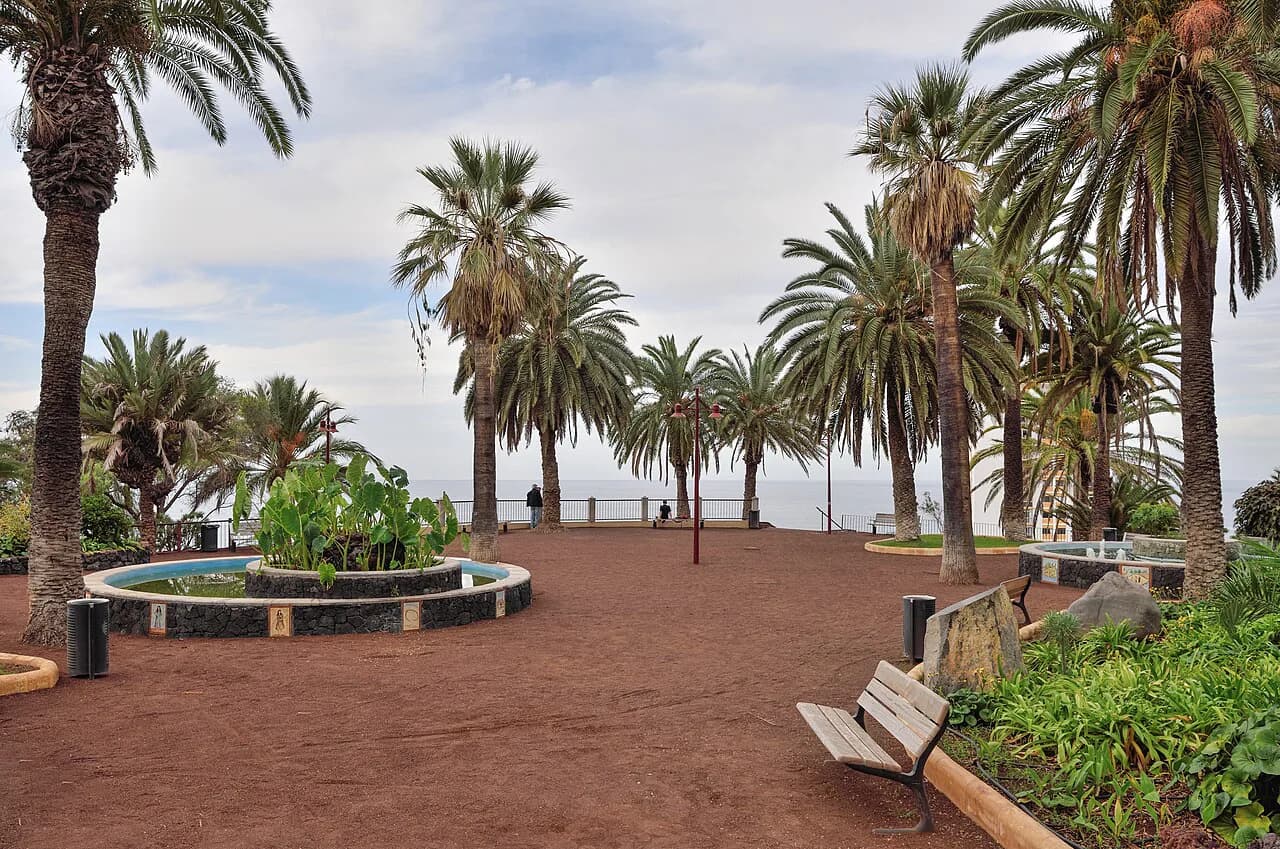
At the end of it, the Mirador de La Paz gives the payoff: a viewpoint over the volcanic coast and the Atlantic breaking against the rocks. Time the final stretch for late afternoon so the light falls on the water rather than behind it.
Where the old town stops being old: Lago Martiánez and the Castillo de San Felipe
The Lago Martiánez marks the boundary between the historic town and the modern resort coast. Designed by the Lanzarote architect César Manrique, it is a complex of saltwater pools, artificial islands, caves and sculptures built into the volcanic shoreline, and it charges for entry rather than being open public ground. General admission is €5.50 and includes a sunbed, so it suits a swimming stop rather than a stroll-through.
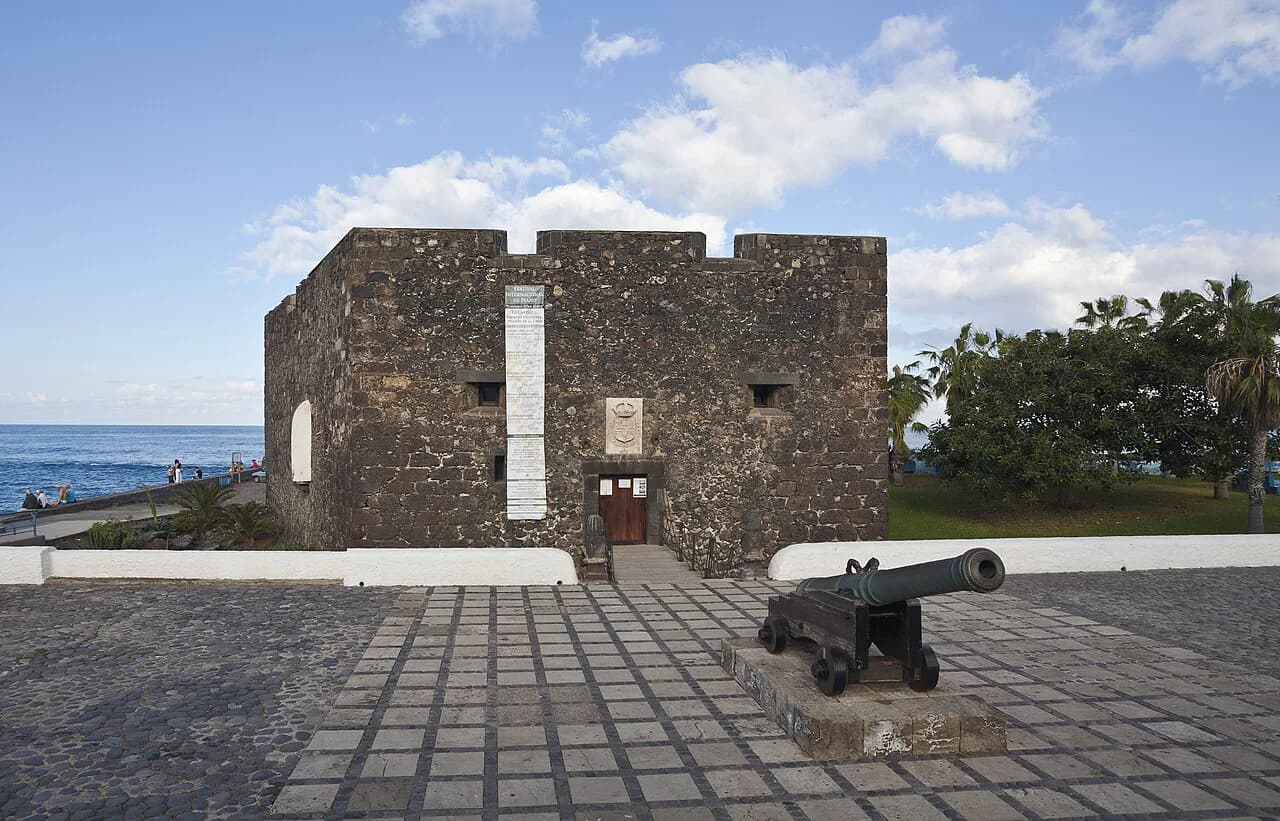
Further west, at the end of Playa Jardín, the Castillo de San Felipe is a squat seventeenth-century stone fort built to fend off corsairs. It now works as a municipal cultural space, and its outer esplanade gives a wide view of the breakwater in the evening.
How much of the old town fits into a short break
The core loop — Plaza del Charco, La Ranilla, harbour, church square, San Telmo — comfortably fills a half-day at an unhurried pace, with the mirador as the natural end point. Add Lago Martiánez or the Castillo de San Felipe only if you want the walk to end with a swim or a fort.
Two things change the shape of the day: summer heat in the middle of the day, and rain, which is more common on this green northern coast than on the south of the island. On a wet morning the old town still works, because the murals, church and covered lanes are close together; a hot afternoon is better spent on the shaded square at the church than climbing back up from the quay.
What the old town costs
The historic core costs nothing: the Plaza del Charco, the La Ranilla lanes and murals, the harbour, the church square and the San Telmo promenade are all public ground. The paid sights begin where the old town ends, at Lago Martiánez and, further out, the Jardín de Aclimatación de la Orotava, the botanical garden, where admission is €3.
For the botanical garden or the Castillo de San Felipe, check the ticket or opening details directly with the operator on the day, as they can change by season.
Where to go after the old town
If the walk leaves you wanting the inland version of the same pleasure — a proper plaza, a church square, streets to wander — La Orotava sits just up the Valle de La Orotava from Puerto de la Cruz and shares its history. Its Iglesia de la Concepción and steep old streets make an easy contrast to the coastal loop.
Where to Start and Where to End
Start at the Plaza del Charco in the morning, drop through La Ranilla to the quay, take in the church square, and finish at the Mirador de La Paz with the light on the water. That order gives you the old town's two halves — its commercial heart and its maritime edge — without retracing your steps uphill.
Keep the paid stops for a second visit or a different mood: Lago Martiánez for a swim, the botanical garden for shade and trees, the Castillo de San Felipe for the view back along the coast. The old town itself needs no ticket, only a comfortable pair of shoes and enough time to get a little lost in the lanes.
Sources
Notes for your next Spanish town break
Optional updates to our guides.
You might also like

Continue reading
More guides you'll find useful