Pamplona Old Town: The Casco Antiguo, Street by Street
Pamplona's old town is three medieval Burgos fused into one walkable quarter. Here is how the lanes, squares, walls and cathedral quarter fit together.
On this page
Pamplona's old town is compact enough to cross on foot in a morning, but its street pattern only makes sense once you know it is three separate medieval settlements fused together. The Casco Antiguo rewards a loose loop rather than a checklist: start at the Plaza del Castillo, work north through the cathedral quarter, and come back along the walls. This guide covers the Burgos and their boundaries, the main streets and squares, the churches, the city walls and the practical rhythm of the day.
Three medieval Burgos, one city
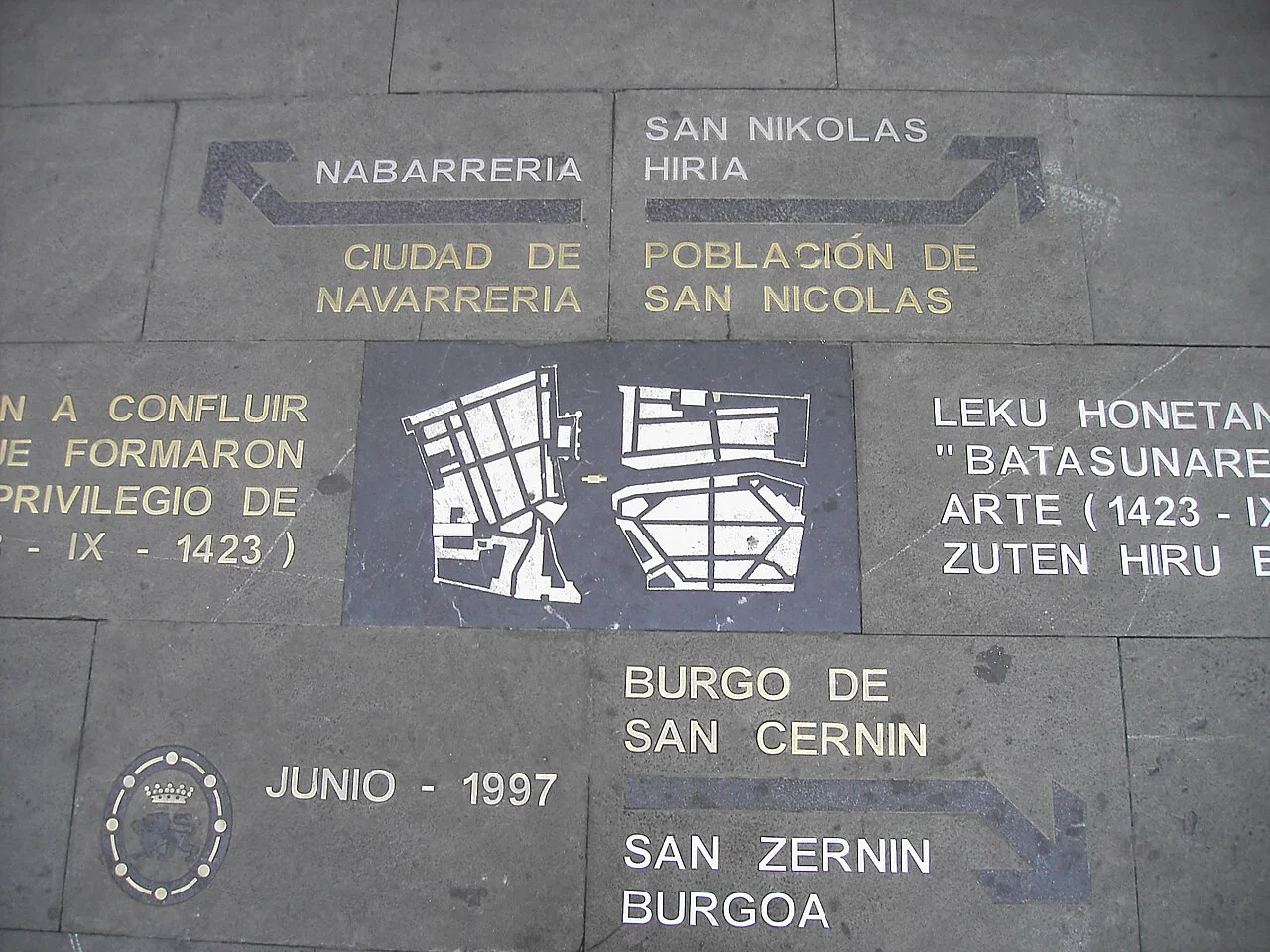
Medieval Pamplona was not one town but three neighbouring ones: the Ciudad de la Navarrería, the Burgo de San Cernín and the Población de San Nicolás. Their relations were not always friendly, and Carlos III of Navarra issued the Privilegio de la Unión in 1423 to merge them into a single entity, which is how the city of Pamplona as you walk it today came about.
That triple origin explains the odd geometry. Each burgo grew around its own church and its own stretch of street, so the lanes change direction and width where one settlement ended and the next began. The Navarrería occupies the highest ground, around the cathedral, which is also the oldest part of the city.
Once you hold that map in your head, the Casco Antiguo stops feeling like a maze and starts reading like a set of joined villages. Walk it as one circuit of roughly three to four hours at an unhurried pace, allowing extra time for the cathedral and any church you want to see inside. The full menu of things to do in Pamplona, old town and beyond, follows the same three-burgo logic.
How to walk the Casco Antiguo in a loop
A sensible loop begins in the Plaza del Castillo, cuts east along Calle Estafeta to the cathedral, climbs into the Navarrería, then returns west past San Saturnino and San Nicolás before dropping down to the walls. The advantage of a loop over an out-and-back is that you keep meeting new streets instead of retracing the same shopfronts.
Distances inside the old town are short: the walk from the plaza to the cathedral is a matter of minutes, not an expedition. What stretches the day is the stopping, so decide in advance which interiors matter to you and treat the rest as street-level viewing. Comfortable shoes matter more than a detailed plan, because the whole quarter is paved and largely pedestrian.
If you would rather follow a fixed route with turn-by-turn directions, a self-guided Pamplona Walking tour covers the same ground in a logical order. Either way, keep the northern edge for whenever you want the walls and the Portal de Francia to yourself.
Plaza del Castillo: the hinge of the city
The Plaza del Castillo is the natural starting point and the seam between the old town and the Ensanche, the nineteenth-century extension to the south. It takes its name from a castle that once stood here and disappeared as new defensive systems were built around the city. Today it is a broad, arcaded square whose buildings date from different periods, so the facades vary as you walk the perimeter.
Because it links the medieval quarter to the newer streets, the plaza works as a reference point you will cross several times in a day. Use it to reset your bearings: the old town lies north and east of it, the Ensanche south and west. A Pamplona map that separates the two halves saves you from drifting into the modern grid by accident.
Calle Estafeta without the bulls
Calle Estafeta runs parallel to the Plaza del Castillo and is the street most visitors already know from television, because the encierro of San Fermín passes along it. Outside the festival it is an ordinary, pleasant lane of small shops and bars, and walking it takes only a few minutes.
The contrast is the point. During San Fermín the same street is lined with spectators on every balcony; on an ordinary Tuesday you can stroll its full length without noticing anything dramatic. If you want to understand the run, look at the street's width and the corners it turns rather than expecting any marker of the event.
At the far end of Estafeta, look to the right and the towers of the cathedral come into view. That sightline is your cue to leave the commercial street and enter the oldest part of the city.
The cathedral quarter and Santa María la Real
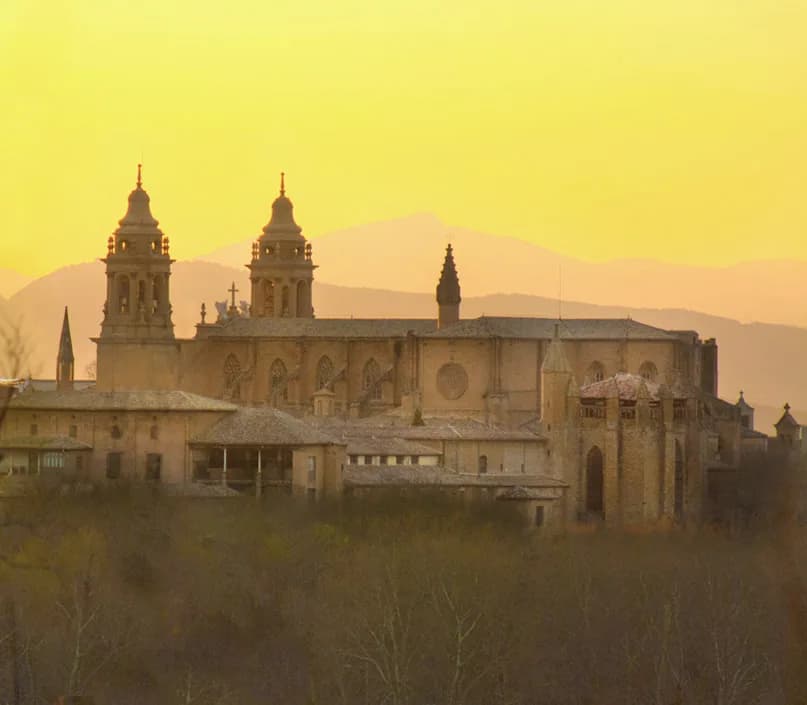
The Catedral de Pamplona, dedicated to Santa María de la Asunción, is the most important Gothic ensemble in Navarra and sits on the highest ground in the city, in the heart of the old Navarrería. It stands over what was once the centre of the Roman town, and its existence is documented from at least the tenth century, although the present building is the result of successive enlargements and restorations. The main facade is neoclassical, designed in the eighteenth century, which is why the exterior does not prepare you for the Gothic interior.
Inside, the fourteenth-century Gothic cloister is one of the most significant of its style in Europe, and the church holds the tomb of King Carlos III El Noble of Navarra and his wife Leonor de Trastámara. Allow a proper block of time here rather than treating it as a quick photo stop.
The cathedral has a tower, the Campana María, whose climb runs on a specific schedule, and some interiors elsewhere in the city keep limited hours, so it is worth deciding early whether those are part of your day and planning the rest of the loop around them. Opening times should be confirmed with the cathedral before you travel.
The streets immediately around the cathedral, including Calle Redín, are quieter than the Estafeta side and make a good place to slow down. This is the part of the old town where the medieval street plan is easiest to feel.
The northern edge: Calle Redín and the Portal de Francia
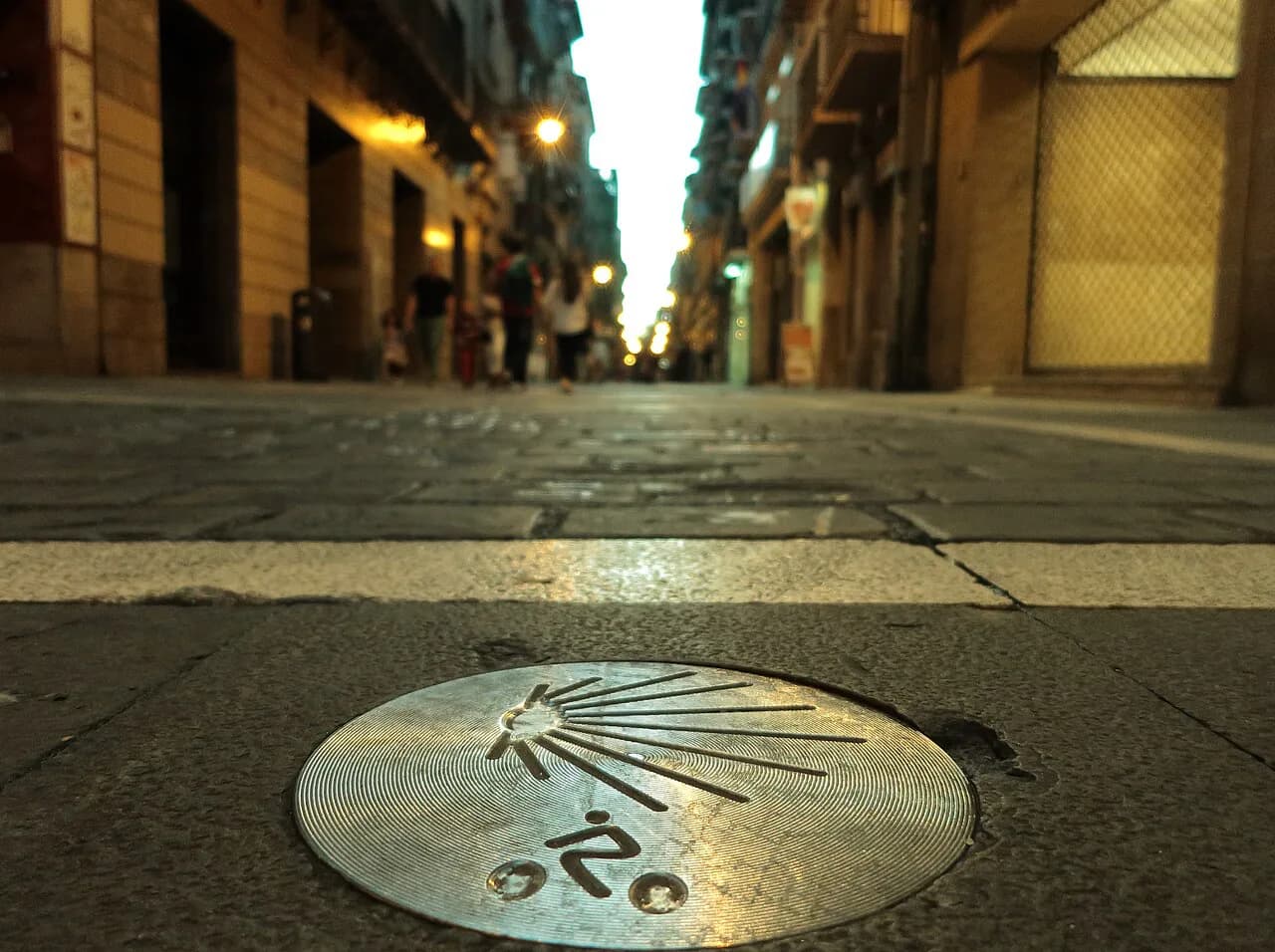
Calle Redín leads towards the northern boundary of the old town, where the Portal de Francia, also known as the Portal de Zumalacárregui, marks one of the historic entrances through the walls. The gate is a reminder that this was a fortified city before it was a tourist one, and the Camino de Santiago passed through these streets.
Walking the northern edge gives you the clearest sense of the old town as an enclosed place, with the ground falling away beyond the walls. It is also the least crowded part of the circuit on an ordinary day, which makes it a good place to pause.
The parish churches of each burgo
Each of the three medieval settlements had its own parish church, and visiting them one after another is the simplest way to see the burgo structure with your own eyes. The Iglesia de San Saturnino, also known as San Cernín, served the burgo of the same name and stands near the Plaza del Castillo side of the old town.
The Iglesia de San Nicolás de Bari anchors the Población de San Nicolás, while the Iglesia de San Lorenzo, with its chapel of San Fermín, lies on the western side of the quarter. Their positions explain why the old town's main streets run where they do: each community built its own axis towards its own church.
Church interiors in Spain open and close around services, and Pamplona is no exception, so treat these as optional stops rather than fixed appointments. If a door is shut, the exterior and the street around it still tell you which burgo you are standing in.
Museo de Navarra and the Palacio de los Reyes de Navarra
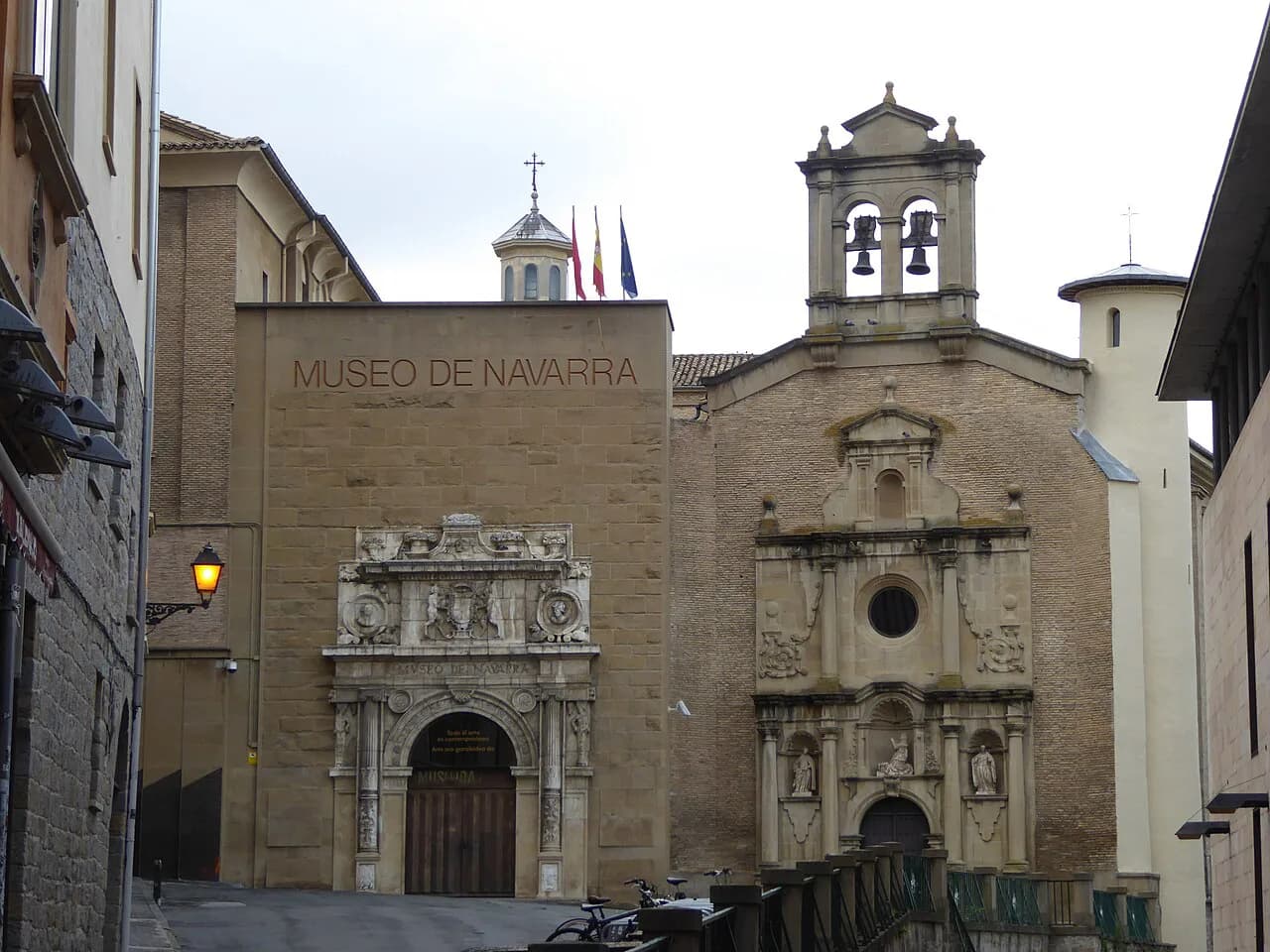
The Museo de Navarra holds the region's archaeology, art and history, and the Palacio de los Reyes de Navarra is one of the old town's notable civil buildings. Both are indoor stops, which makes them useful when the weather turns or when you want a break from walking.
Rather than trying to fit every collection into one day, pick one and give it proper time; a fuller survey of the city's collections sits in the guide to museums in Pamplona. Opening days and admission charges vary and should be confirmed with each museum, as Monday closures are common in Spain.
Walls, the Ciudadela and the green belt
Pamplona is, in essence, a great fortress, and the defensive system built after the conquest of Navarra in 1512 still shapes the modern city. The walls were rebuilt in the sixteenth and seventeenth centuries to resist artillery, with sloped ramparts, bastions and outworks, and large areas outside them were kept clear of buildings for military reasons. Those cleared zones are the reason the city has so much green space close to its centre, including the Vuelta del Castillo, which follows the old ditch of the bastion.
The Ciudadela de Pamplona is the centrepiece of that system and lies a short walk west of the old town, beyond the Plaza del Castillo and the Ensanche. Combining the Casco Antiguo with the Ciudadela in one day is realistic because the distances are short, but it makes for a long walk overall.
The Parque de la Taconera, further west again, is where the green belt meets the city in a more ornamental form. It works best as an evening detour after the old town rather than a stop in the middle of the loop.
If you want the walls and the Ciudadela given their proper context alongside the old town, the broader plan for Pamplona attractions sets out how the pieces fit together.
Timing your day around the pintxo hours
Pamplona's daily rhythm will shape your visit as much as any opening time. Because of the pintxo culture, the centre fills between roughly half past one and half past seven, so that is the window to avoid if you want the streets and bars without the crush.
Use that quieter window before or after the pintxo rush for the parts of the day that need no services: the cathedral quarter, the walls and the northern gate. The Plaza del Castillo and Estafeta are worth seeing at any hour, but at lunchtime they belong to the pintxo crowd.
San Fermín turns the same streets into something else entirely, with the encierro route through Estafeta and the city packed for the festival. Outside those days the old town is calm, and the difference between the two versions of the same lane is one of the most striking things about Pamplona.
Getting into the old town and away again
Pamplona sits on the Camino de Santiago Francés and is well connected by train and bus, with the station and bus services lying outside the old town itself. From either, the Casco Antiguo is a walk or a short city journey, and once inside it you will not need transport again.
Driving into the medieval quarter is not sensible: the lanes are narrow and largely pedestrian, so park outside and walk in. Local bus and train timetables are the only reliable source for connections onward to other towns in Navarra.
Which part of the old town to see first
Start at the Plaza del Castillo, walk east along Calle Estafeta to the cathedral, then loop north to the Portal de Francia and back through San Saturnino and San Nicolás. That order follows the three Burgos rather than fighting them, and it lets you reach the cathedral quarter outside the busy pintxo window.
If you have only a couple of hours, cut the museums and the Ciudadela and keep the loop inside the walls; if you have a full day, add the walls and the green belt on the western side. A one-day Pamplona itinerary built on that logic shows how far the additions stretch the afternoon. Either way, the old town rewards looking up at the facades and down at the street pattern as much as it rewards any single monument.
Sources
Notes for your next Spanish town break
Optional updates to our guides.
You might also like
Continue reading
More guides you'll find useful