Museums in Pamplona: Navarra Museum and Cathedral Museum
Pamplona has two museums worth a slot in a short break: the Museo de Navarra and the cathedral museum. Here is what each holds and what it costs.
On this page
Pamplona has two museums that repay a slot in a short break: the Museo de Navarra, a regional collection running from prehistory to Navarran painting, and the Museo de la Catedral, whose ticket opens up the cloister, refectory and royal tombs of the cathedral complex. Both sit in the old town within a few minutes of each other, so one morning and one afternoon cover them without rushing. This guide sets out what each holds, how long to allow, the cathedral museum's seasonal timetables and rates, and which monuments sit close enough to pair with each visit.
The two museums that suit a short break
Think of the pair as complementary rather than competing. The Museo de Navarra gives you the region in sequence: archaeological finds, Roman pieces, Romanesque and Islamic art, Gothic and Renaissance works, then painting by Navarran artists across the nineteenth, twentieth and twenty-first centuries. The cathedral museum gives you one building in depth, with the cloister, the canons' refectory and kitchen, and the alabaster tombs of Carlos III el Noble and Leonor de Trastámara.
If you have time for only one, pick by taste. Choose the Museo de Navarra for objects and painting across many centuries, and the cathedral museum for architecture and sculpture read as a single ensemble, with a working church attached. Both are indoor stops, which matters in a Navarran winter and gives you a midday refuge when summer sun is at its strongest.
Museo de Navarra: Calle Santo Domingo and the old town
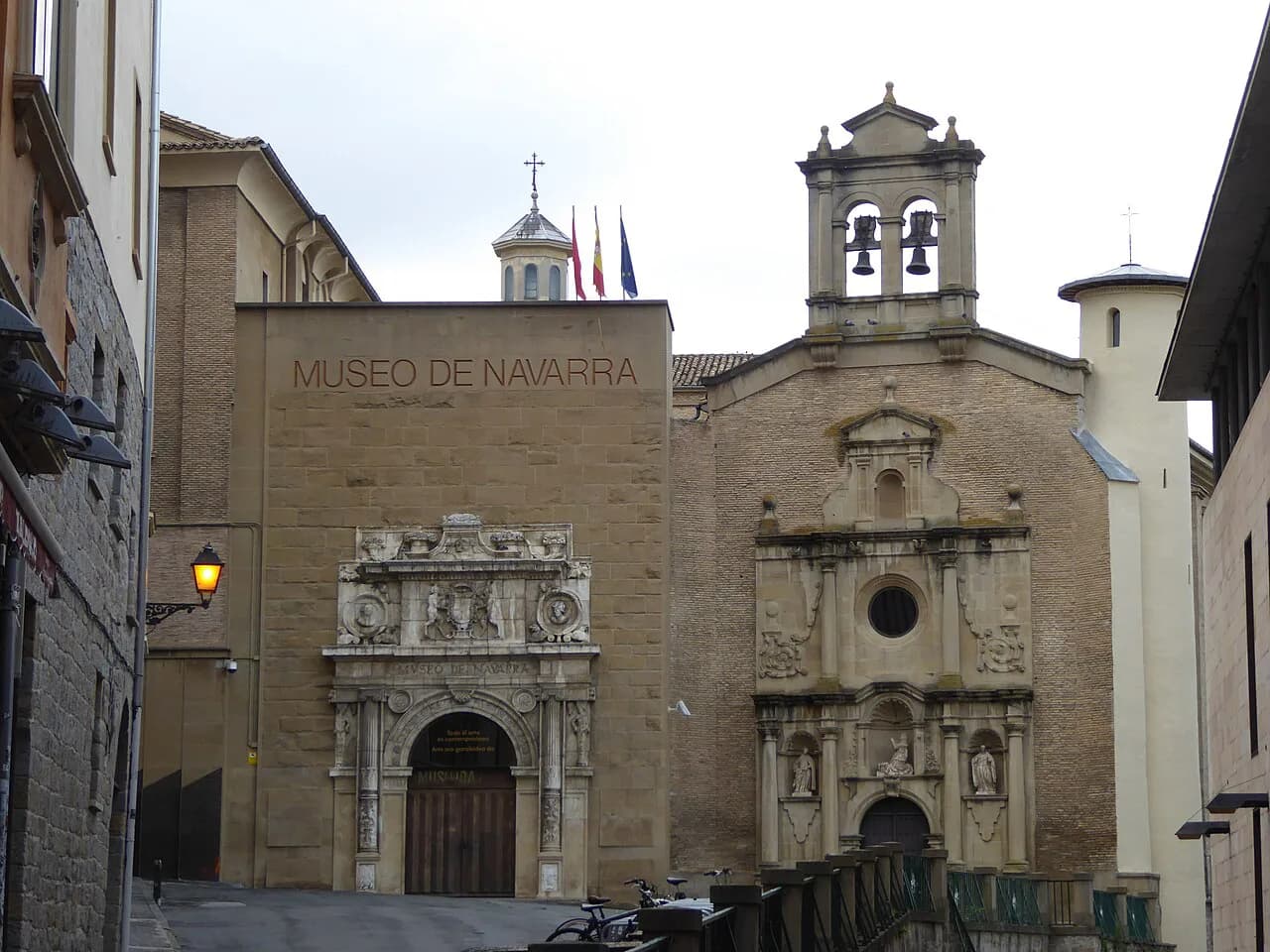
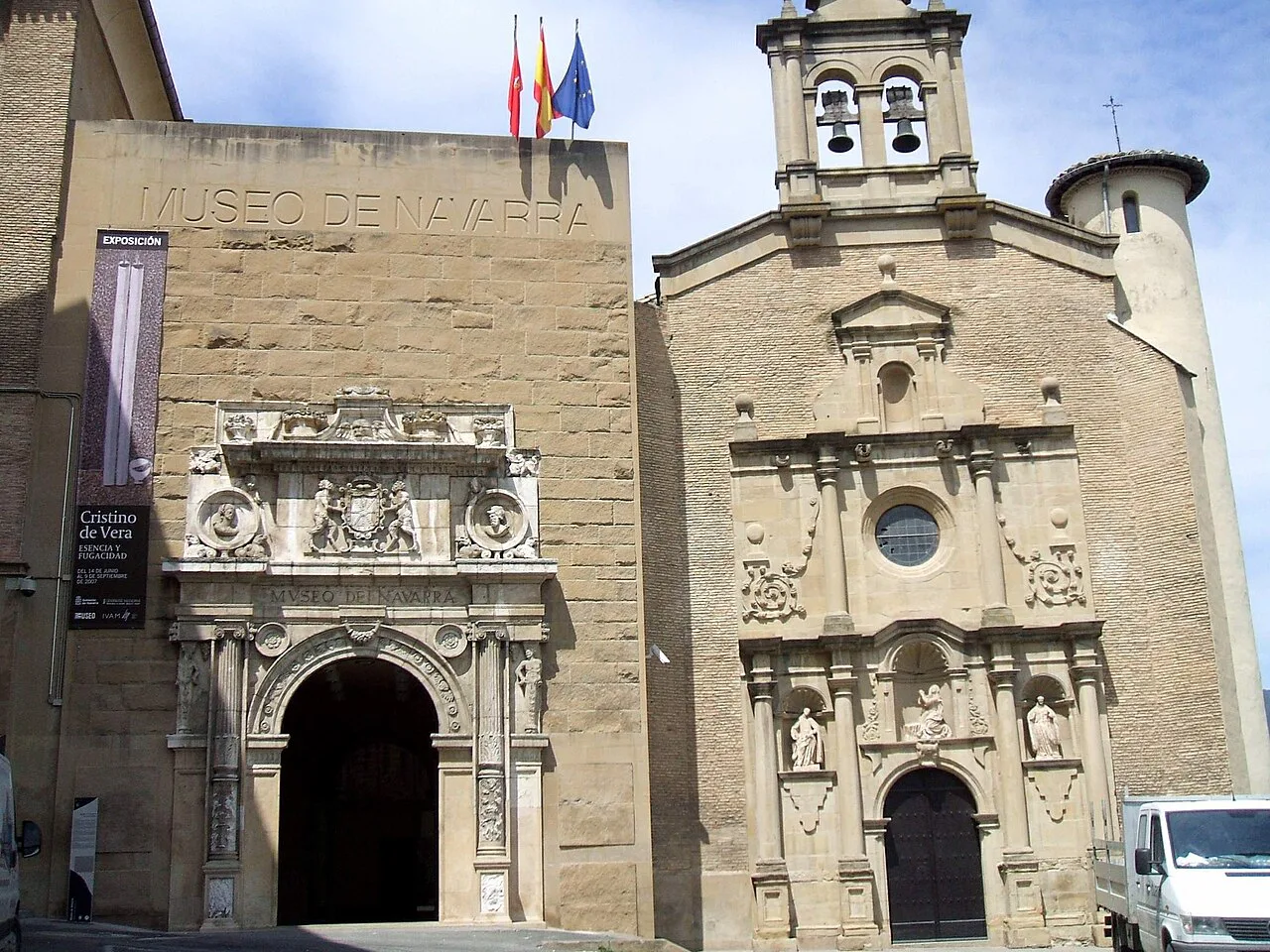
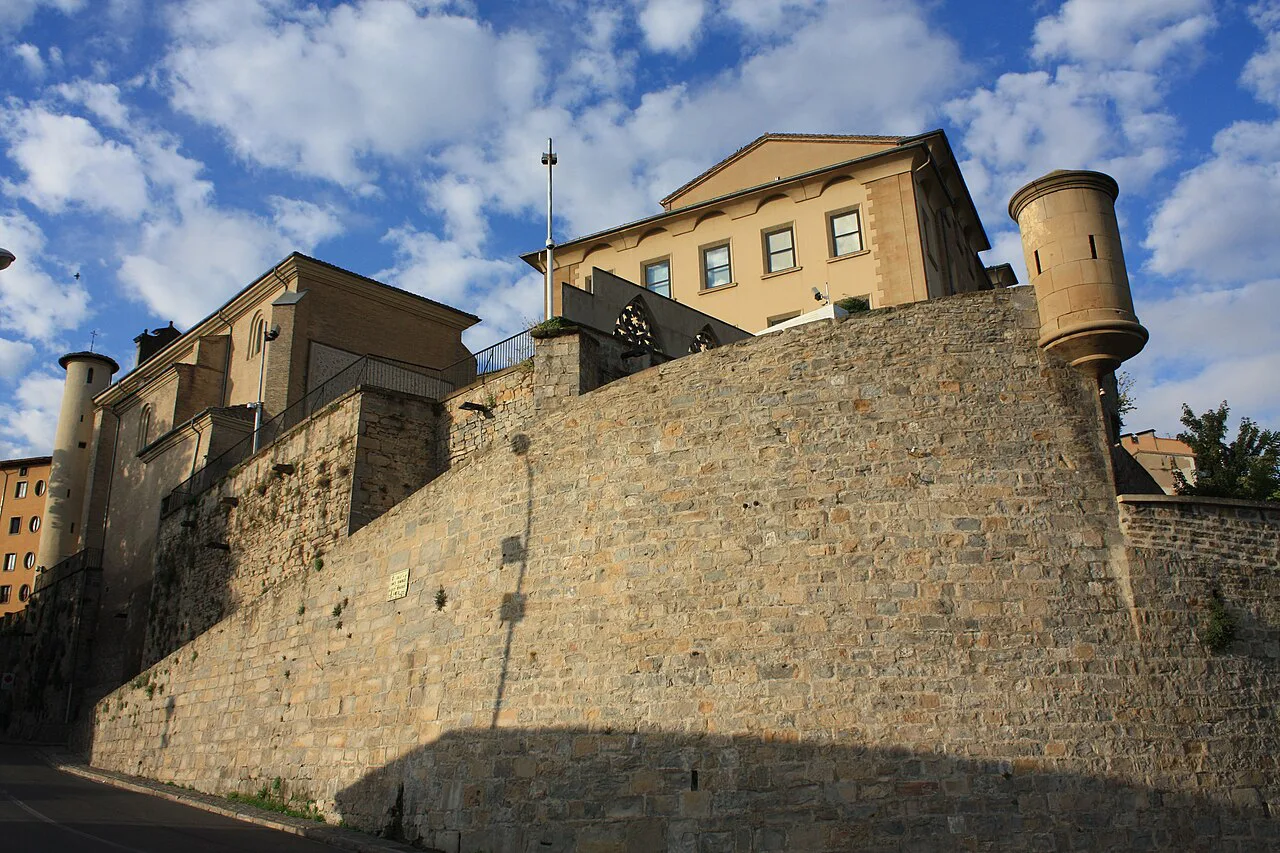
The Museo de Navarra stands at Calle Santo Domingo 47 in the Pamplona-Iruña old town, close to the murallas and the Ayuntamiento. The surrounding streets hold the Palacio Condestable, the Cámara de Comptos, the Iglesia de San Saturnino and the Archivo Real y General de Navarra, so the museum works best as one stop on a wider wander through the Casco Viejo.
What the Museo de Navarra collection covers
The collection moves chronologically through Navarra's heritage. Prehistoric archaeological remains come first, followed by Roman pieces, Romanesque and Islamic art, then Gothic and Renaissance works, a group of seventeenth- and eighteenth-century paintings and canvases by nineteenth-century Navarran painters. A reform carried out in 2019 brought Navarran artists of the twentieth and twenty-first centuries into view and added a small collection of large protohistoric stelae.
Read the rooms as a regional story rather than a survey of Spanish art. The strength is in the local material, from the archaeological layers under Navarra to painters who worked in the region in the last two centuries, and the stelae add a distinctive note you will not find in a cathedral treasury.
How long the Museo de Navarra needs
Budget a focused hour and a half to two hours if you read the labels and follow the chronology, and half a day if the painting rooms hold you. Because the walls and the Ayuntamiento are a few minutes away, you can split the visit around a coffee and still fit both into one morning.
The museum publishes contact details and a web address for current visiting information, which is where opening days and any admission charge are confirmed. The day you choose matters for the rest of the old town, because several of Pamplona's smaller ecclesiastical and civic sites keep restricted hours, so check before you build a loop around them.
Museo de la Catedral de Pamplona: what the ticket includes
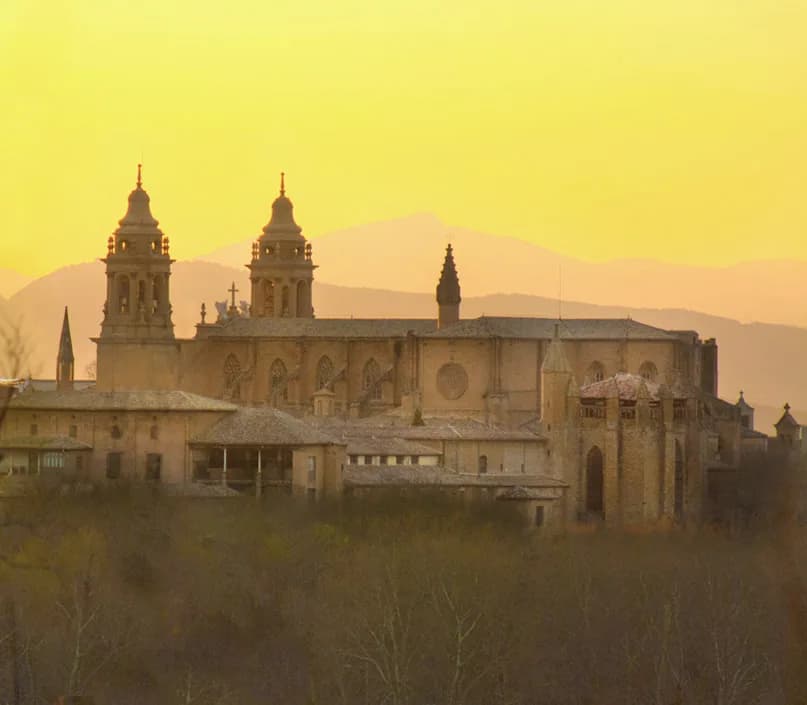
The cathedral museum is not a gallery bolted on to a church. The route runs through the building's historic spaces, from the Claustro, begun in 1280 and finished around 1330 and counted among the best-preserved cloisters in Europe, to the Refectorio where the canons ate and the royal Cortes sometimes met. The adjoining Cocina, built around the same years, keeps four side smoke outlets plus a central flue some twenty-seven metres high.
Sculpture is the core of the visit. The Mausoleo Real, carved in alabaster and black marble by Jehan Lome de Tournay between 1413 and 1419, holds Carlos III el Noble and Leonor de Trastámara, and the Capilla Barbazana, originally the chapter house, contains the fourteenth-century tomb of Bishop Arnaldo de Barbazán. Do not overlook the Capilla de San Juan Bautista, where Juan de Anchieta's Crucified Christ of around 1577 stands as one of the great sculptures of the Navarran Renaissance.
The visit continues into the older fabric of the complex. The Cillería, built at the end of the eleventh century as a residence for the canons, is the oldest building in the cathedral, and the Sacristía Mayor of the sixteenth century was redecorated in rococo style between 1760 and 1770. The Puerta de San José, from around 1425, is the only Gothic doorway preserved on the exterior.
Cathedral museum prices in EUR
Adults pay 5 euros, children under seven enter free, and ages seven to thirteen pay 3 euros. Pilgrims pay 3 euros, pensioners and young-person card holders 4 euros, groups of more than fifteen people 4 euros and school groups 2.50 euros. The range of reduced rates means a family or a walker on the Camino pays less than the headline figure.
Cathedral museum opening hours by season
The museum works to two timetables and both close on Sundays. From the last week of March, spring and summer hours run Monday to Saturday from 10:30, with the last entry and ticket sales at 18:00 and the building closing at 19:00. From the last week of October, autumn and winter hours keep the same 10:30 opening but move the last entry to 16:00 and close at 17:00, so an afternoon arrival in February needs to be far earlier than one in July.
Rooms begin to clear fifteen minutes before closing, so plan to be out of the deepest spaces before then. Guided visits in Spanish run at 12:00 when the museum is open, capped at twenty-five people, which is the simplest way to get the tombs and chapel explained rather than read from labels. If your Spanish is limited, the self-guided route still works well because each main space is labelled with its name, date and contents.
The Campana María tower climb
The climb up the Campana María runs every day at 11:15, with a number collected in advance, and does not operate on Sundays. The fixed slot and the need to queue for a number make this the one element of the cathedral visit you cannot decide on the spur of the moment, so arrive early enough to secure a place. The north tower holds the hour bells, the quarter bells and the María itself, and a separate set of bells hangs in the south tower.
Fitting both museums into one day
The obvious shape is the Museo de Navarra in the morning and the cathedral museum after lunch, but Sundays break that plan because the cathedral museum is closed. On a Sunday, give the Museo de Navarra the attention it deserves and use the rest of the day on the walls and the streets of the Casco Antiguo. On any other day, check the season before fixing the cathedral slot, since the winter last entry at 16:00 rules out a late-afternoon start.
Summer heat is the other constraint. Both museums are indoor, which makes them sensible midday stops in July and August, when the old town's stone streets hold the sun. Build the day so the walking happens early or late and the museums take the hottest hours; fixing only the Campana María at 11:15 keeps enough flexibility to swap the order if one museum holds you longer than expected.
Where the two museums sit in relation to each other
The Museo de Navarra is on Calle Santo Domingo in the western part of the old town, close to the walls and the Ayuntamiento, while the cathedral complex and its museum occupy the higher ground a short walk east. Between them lie the Cámara de Comptos, the Palacio Condestable and the Iglesia de San Saturnino, so the walk from one museum to the other is itself a sequence of monuments. Allow ten to fifteen minutes on foot and stop as you go.
That geography lets you plan by district. Base the morning around the walls, the Ayuntamiento and the Museo de Navarra, then cross to the cathedral for the afternoon, finishing with the cloister and the Capilla Barbazana while the light is softer.
Which museum to book first
Book the cathedral around the 11:15 tower slot, because the Campana María is the only element with a number to collect and a fixed time, and work the Museo de Navarra around it. Keep Sunday free of the cathedral museum, and in autumn and winter move the cathedral visit earlier so you are through the doors well before the 16:00 last entry.
The cathedral museum publishes its timetable and rates online, so confirm the season you are travelling in before you set out, particularly around the last week of March and the last week of October when the hours change.
Explore more Pamplona guides
Frequently Asked Questions
What can you see in Pamplona's cathedral museum?
The route covers the cathedral's historic spaces, including the fourteenth-century cloister, the canons' refectory and kitchen, the Mausoleo Real of Carlos III el Noble and Leonor de Trastámara, and the Capilla Barbazana with the tomb of Bishop Arnaldo de Barbazán. Sculpture includes Juan de Anchieta's Crucified Christ in the Capilla de San Juan Bautista.
Is the cathedral museum in Pamplona open on Sundays?
No. The museum opens Monday to Saturday only, and the Campana María tower climb also does not run on Sundays. Plan a Sunday around the Museo de Navarra and the city walls instead.
Sources
Notes for your next Spanish town break
Optional updates to our guides.
You might also like
Continue reading
More guides you'll find useful