Pamplona Itinerary: A One-Day Walking Plan for the Old Town
A one-day Pamplona itinerary on foot: Plaza del Castillo, the cathedral cloister, the walls and the Ciudadela, with a free nave slot and a lunch pause.
On this page
Pamplona is a small, walkable city and one well-planned day covers its core: Plaza del Castillo, the cathedral and its Gothic cloister, the walls, and the Ciudadela park. Leave the car parked and forget buses, because the historic centre is compact and everything below sits within a comfortable morning-and-afternoon loop. This plan orders the day by geography, old town first, then the walls, then the Ciudadela, so you never cross the centre twice.
It is written for the eleven months that are not San Fermín. The fiesta appears here only as a passing note about street names, and nothing in the plan depends on event dates, opening hours or ticket prices beyond the cathedral slot explained below.
Start at Plaza del Castillo, the city's social centre
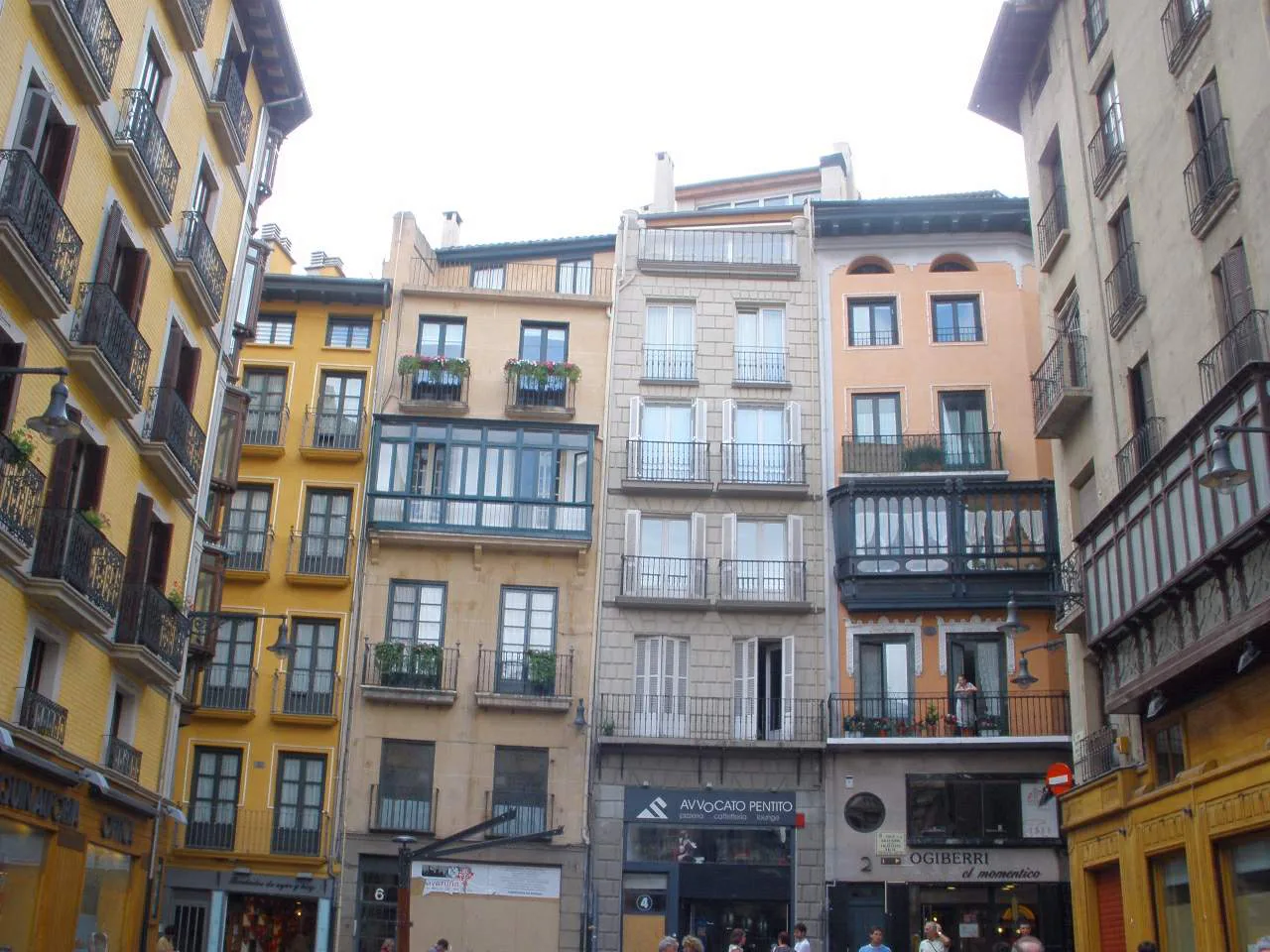
Begin where Pamplona gathers. Plaza del Castillo is the city's main square, ringed by arcaded buildings and terraces, and it has hosted markets and celebrations for centuries. Café Iruña, opened in 1888 and long associated with Hemingway, keeps its classic interior on the square and makes a natural first stop. From here Calle Estafeta, the Paseo Sarasate and the Plaza Consistorial are all within a couple of minutes on foot.
Treat the square as your anchor rather than a sight to tick off: you will pass through it again in the evening. Arrive early enough to sit down before the arcades fill, then head north into the old town streets. If you want the history and street layout explained before you wander, a guided Pamplona walking tour of roughly two hours covers the square, the town hall, the walls and the cathedral exterior.
Calle Estafeta, Plaza Consistorial and the Ayuntamiento in ten minutes
From the square, Calle Estafeta runs north-east through the Casco Viejo, and it takes about ten minutes to link it with the Plaza Consistorial and the Ayuntamiento, Pamplona's town hall with its ornate facade. Outside fiesta week these are ordinary shopping and residential streets, which is exactly why they are worth a look; the encierro route is a fifteen-minute curiosity, not a morning's activity.
Use this stretch as your orientation walk and note the shops and cafés you might return to later. The town hall square is also where the old town's grid becomes legible: the cathedral sits a few minutes further east, and the wall sections are downhill to the north.
The Cathedral of Santa María la Real: plain outside, exceptional within
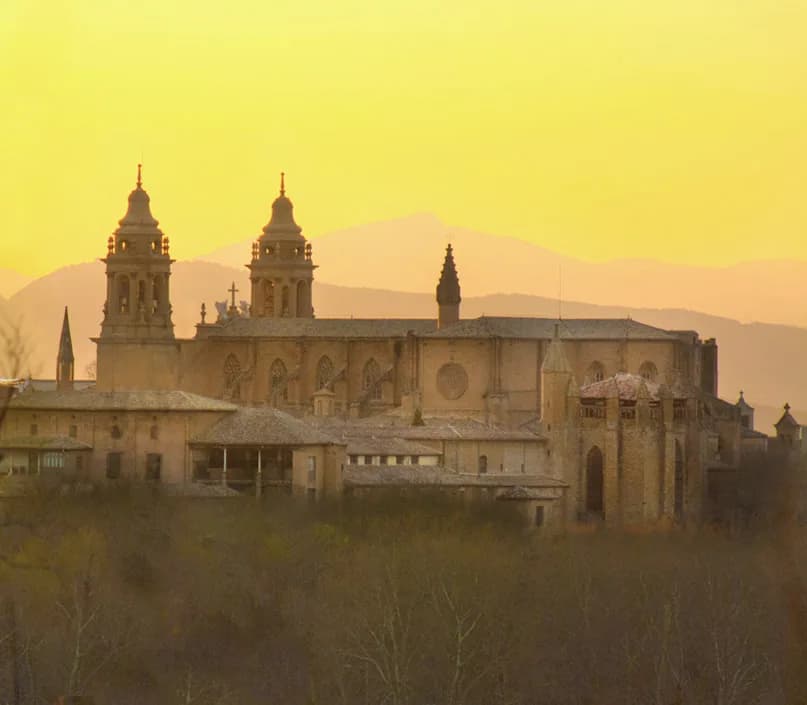
The cathedral's exterior is sober enough to be missed, but the interior is the reason to come. The Gothic naves open into a cloister widely regarded as one of the finest of its period in Europe, and inside you also find the alabaster Mausoleum of Carlos III el Noble and the great bell María, the largest bell in Spain still in use.
The trade-off is the ticket. Organised visits end at 19.00, and in the half-hour before the 19.30 Rosario the naves can be entered free of charge, though the cloister, museum and other dependences stay closed. If the cloister is the point of your visit, plan to pay for the full circuit earlier in the day rather than settle for the free half-hour.
Two guided options exist if you want structure: a history-and-architecture visit that includes the museum, and a separate tour built around curiosities and legends. On Sundays the cloister is sometimes opened to visitors after midday mass, which gives a second free look at that space. Check the cathedral's own timetable before you build the day around any of these.
Walls and gates: Portal de Francia, Ronda Barbazana and Baluarte del Redín
Pamplona still keeps much of its defensive wall, and walking a stretch of it is one of the best free ways to spend an hour in the city. The sections that repay the detour are the Portal de Francia, the Ronda Barbazana and the Baluarte del Redín: stone paths with vegetation, benches and panels explaining the fortifications, and views over the Casco Antiguo from above.
For a different framing of the same stone, the Rincón del Caballo Blanco near the Baluarte del Redín appears on introductory walks through the city. Allow around forty-five minutes for the wall circuit rather than treating it as a quick photo stop.
Palacio Real on Plaza de los Burgos: crypt and city model
The Palacio Real, now home to the Archivo General de Navarra, stands on Plaza de los Burgos and is one of the oldest civil buildings in Pamplona. It served as the residence of the kings of Navarre from the twelfth century until the kingdom was absorbed into the Crown of Castile in the early sixteenth, and it has since been a barracks and an administrative building before becoming an archive.
Inside, a twelfth-century vaulted crypt and a scale model of Pamplona as it looked in 1900 sit alongside thousands of documents and temporary exhibitions. It stays quiet even when the old town is busy, which makes it a sensible midday stop when the streets are hottest.
Lunch and the afternoon pause
Inland Navarra keeps Spanish hours, so the middle of the day is for sitting still rather than sightseeing. Build in a proper lunch after the cathedral and the walls, and expect smaller shops and some churches to shut for part of the early afternoon. That gap is the reason this plan puts the Palacio Real before lunch and the parks after it.
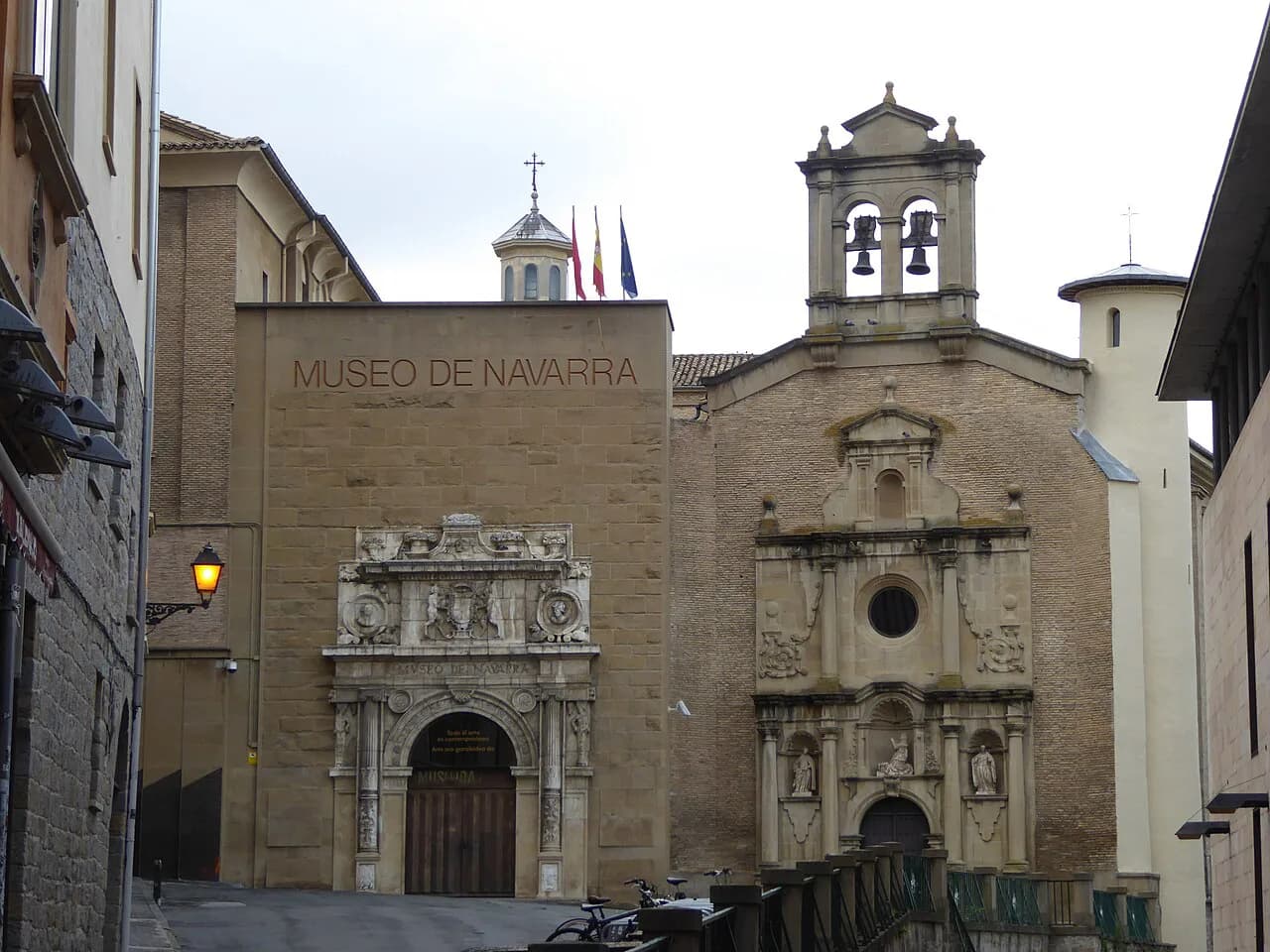
If you would rather keep moving, the museums in Pamplona fill the pause neatly, and the Museo de Navarra is the obvious single pick if you only have time for one. Either way, aim to be back outside by mid-afternoon so the Ciudadela and the Taconera get your best light.
Ciudadela and Parque de la Vuelta del Castillo
The star-shaped outline you notice on any map of Pamplona is the Ciudadela, a Renaissance fortress built on the orders of Felipe II to guard against attack from France. Its bastions and pavilions survive in good order, and it now functions as a green lung, hosting open-air exhibitions, concerts and summer festivals within the Parque de la Vuelta del Castillo.
Go in expecting a park you walk through, not a monument you tour. Organised visits are not regularly offered, so the pleasure here is the ramparts, the old trees and the space itself; private operators sometimes run their own visits, and the tourist office is the place to ask.
Parque de la Taconera and the evening paseo
Finish the daylight in the Parque de la Taconera, the oldest park in the city and a gentler counterpoint to the Ciudadela's scale. From there, walk back into the old town as the shops reopen and the arcades of Plaza del Castillo fill again. The evening paseo is the right ending to this day: a slow loop past the square, the town hall and the cathedral's floodlit exterior, with no queue and no ticket.
Two days instead: what to add on a second morning
With a second morning, leave the city. Olite, south of Pamplona, is a medieval town dominated by its royal castle-palace, built on a scale that Carlos III did not stint on, and the restored interior is open to visitors. The Castillo de Javier, the fortified birthplace of Saint Francis Xavier, is the other standout within about an hour of the capital.
Both work as half-day outings rather than full days, and each is easy to pair with a stop at a smaller village such as Ujué or Sangüesa on the same loop. Check the castle's opening days before committing, since seasonal timetables change, and drive rather than rely on infrequent local services.
Practical points: on foot, no car, and the tourist office
Pamplona's centre is genuinely pedestrian territory: the distance from Plaza del Castillo to the Ciudadela is a walk of well under half an hour, and leaving the car parked saves you the old town's one-way streets entirely. Comfortable shoes matter more than any transport planning.
The tourist office sits at Calle San Saturnino 2, a couple of minutes from the Plaza Consistorial, and is the place for current cathedral timetables, map pickups and questions about guided visits. Start there if you have not booked anything in advance.
Which part of the day to book first
The one thing worth fixing before you arrive is the cathedral. Decide whether you want the free half-hour in the naves before the 19.30 Rosario or the full paid visit with the cloister and museum, and shape the rest of the day around that choice. Everything else in this plan, from Plaza del Castillo to the Ciudadela, is a self-guided walk that needs no advance booking.
Explore more Pamplona guides
Frequently Asked Questions
Is Pamplona walkable in a day?
Yes. The old town, the walls, the Palacio Real and the Ciudadela all sit within a compact area and can be linked on foot with a midday pause, which is why this plan leaves the car parked and skips public transport entirely.
When can you enter the cathedral naves without paying?
In the half-hour before the 19.30 Rosario, with organised visits ending at 19.00. That free window covers the naves only; the cloister, museum and other dependences remain closed unless you pay for the full visit earlier in the day.
Where is the Pamplona tourist office?
At Calle San Saturnino 2 in the old town, a short walk from the Plaza Consistorial. It is the practical stop for current cathedral timetables, maps and questions about guided visits to the Ciudadela.
Sources
Notes for your next Spanish town break
Optional updates to our guides.
You might also like
Continue reading
More guides you'll find useful