La Orotava: Old Town Sights, Wooden Balconies and a Walking Route
Plan a visit to La Orotava in Tenerife: the Casa de los Balcones, the Iglesia de la Concepción, the Victoria gardens and a short walking route through the old town.
On this page
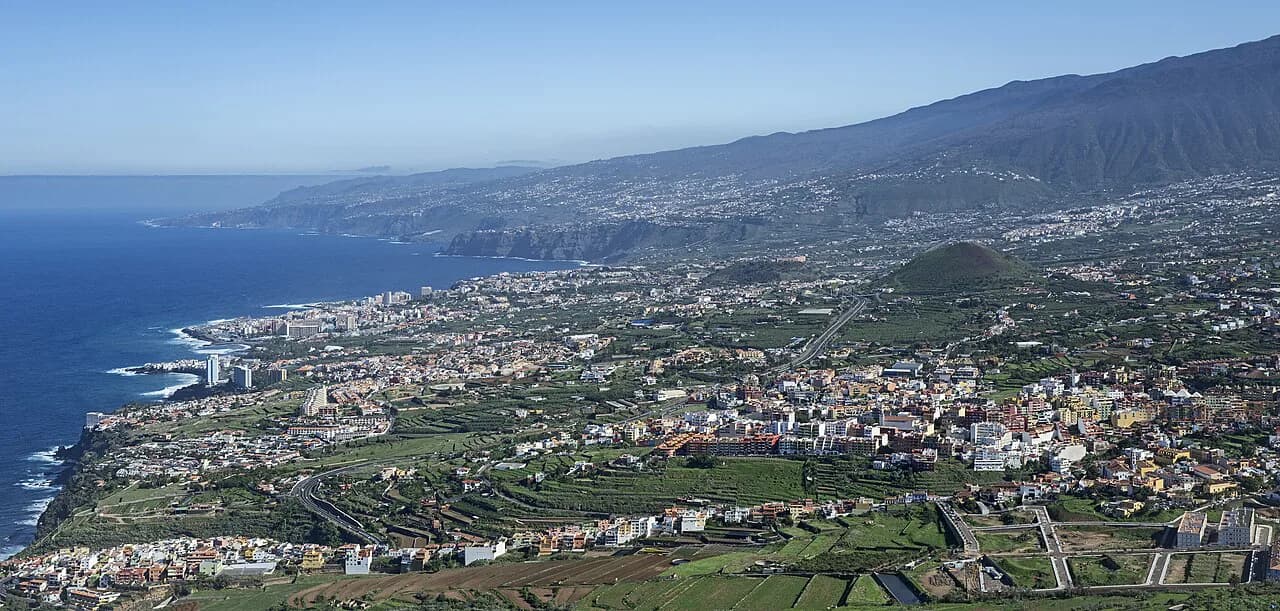
La Orotava is a historic hill town in the Valle de La Orotava on Tenerife's north side, roughly ten minutes by road uphill from Puerto de la Cruz and about an hour by car from the southern resorts. It rewards a half-day: a compact old centre of cobbled slopes, colonial townhouses with carved pine balconies, a domed parish church and formal gardens looking down the valley to the Teide massif, according to the town's own tourism pages. This guide covers how the old town is laid out, which sights to prioritise, how long it needs and how it fits a break based at lower altitude.
What La Orotava is and where it sits in the valley
The town fills a shelf of the Valle de La Orotava, a fertile agricultural valley whose slopes run from the northern coast up towards the Parque Nacional del Teide. That position explains both its history as an important agricultural centre from the sixteenth century and its present character: substantial mansions built on merchant wealth, churches with tall towers, and streets that climb.
For a traveller, the useful point is that the town sits above Puerto de la Cruz rather than beside the sea. It is a place to walk rather than a beach stop, and its altitude makes it noticeably cooler and greener than the coast. Come for the streets, the architecture and the views, not for a shoreline.
How the old town is laid out, and how to walk it
The historic centre is a sloping grid best handled in one direction. Start high and walk down, so the climbing happens once, and leave the return to a local guagua or a taxi rather than retracing every street uphill in the afternoon heat.
A practical order is: the Iglesia de la Concepción at the top of the core, the Casa de los Balcones and the Casa Lercaro nearby, then the Ayuntamiento and the Jardines Victoria lower down, with the Liceo de Taoro on the way. That sequence strings the headline sights into a single descending line.
A suggested route on foot through the old town follows the same logic, with a stop for the Casa de los Balcones and the gardens. Keep the day's shape loose: churches close for services, shops pull down shutters at midday, and a town on a slope punishes an over-packed list.
Iglesia de la Concepción: the dome, the towers and where to see it from
The Iglesia de la Concepción is the town's architectural marker: an eighteenth-century baroque building raised on the site of an earlier church, with two towers and an octagonal tiled dome said to take inspiration from Florence's cathedral. The dome is visible from much of the town, which makes the church a useful orientation point as you descend.
The best-known view of the church itself is from the nearby Iglesia de San Agustín, where the dome and twin towers line up for a photograph. If you only chase one image of La Orotava, make it this one, then continue downhill rather than turning back.
Casa de los Balcones: the carved pine balconies
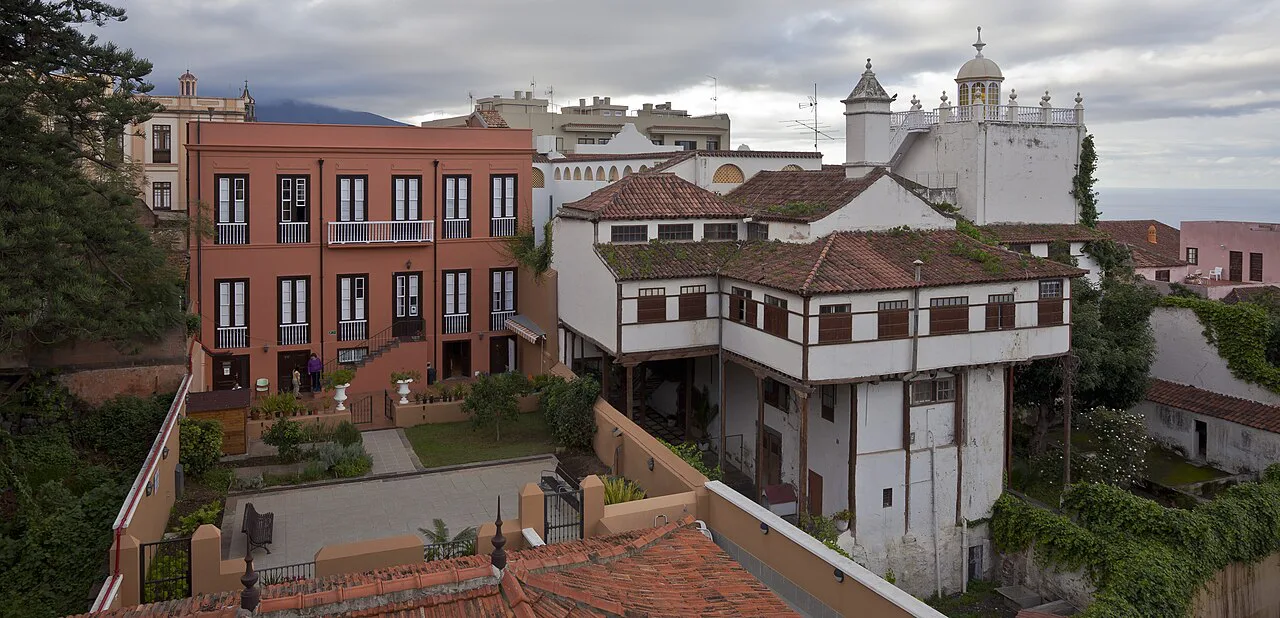
The Casa de Los Balcones is the town's most visited address: a seventeenth-century mansion built in 1632 for the Méndez-Fonseca family, now a house-museum with a traditional Canarian courtyard, period furniture and a craft shop selling local calados embroidery. Its carved pine balconies are the reason La Orotava is nicknamed the town of balconies.
Published details give opening hours of 8:30 to 18:30 daily and an entry charge of roughly five to seven euros, with an audio guide and free parking. Treat those as the current published figures rather than a promise: confirm the day's hours and ticket before you commit, especially if you are building the rest of the walk around it.
The honest trade-off is this: the Casa is busy and chargeable, while the streets of free-standing balconies around it are not. If your interest is the woodwork itself, a slow walk along the surrounding lanes gives more of it than one ticket does.
Jardines Victoria, the Liceo de Taoro and the Ayuntamiento
The Jardines Victoria, also known as the gardens of the Marquesado de la Quinta Roja, are a formal terraced garden on the town's slope, and they come with a small pantheon built for the Marqués de la Quinta Roja. The terraces give one of the clearest framed views over the valley and out towards the Teide massif.
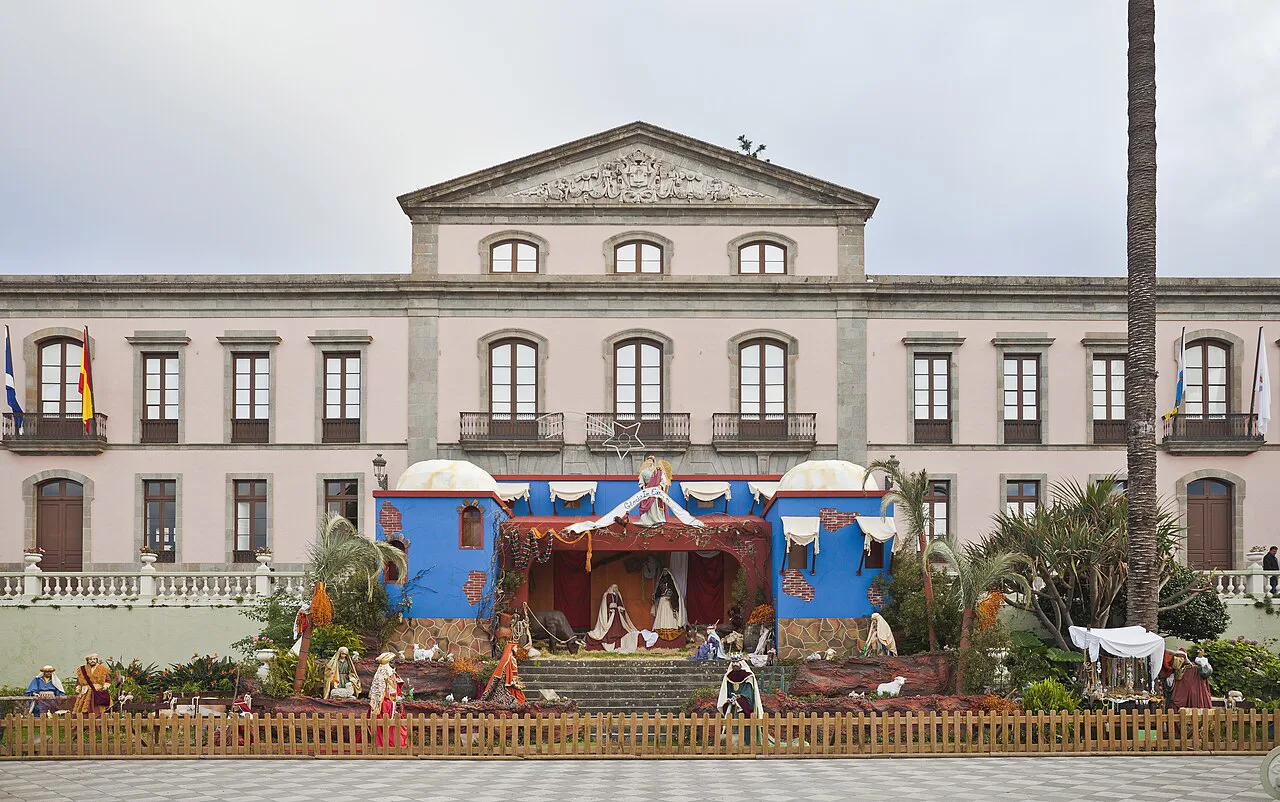
Nearby, the Liceo de Taoro is a cultural society housed in a building of its own, and the Ayuntamiento, the town hall, sits among the main civic buildings on the walking circuit. Both are quick stops rather than destinations; the value is in seeing a working town rather than a museum set.
Casa Lercaro, the Molino de gofio del Hoyo and the Hijuela del Botánico
Three quieter stops fill out the middle of the walk. The Casa Lercaro is another of the town's old mansions, the Molino de gofio del Hoyo is a surviving mill that shows how gofio, the toasted-flour staple of the Canary Islands, was ground, and the Hijuela del Botánico is a small botanical garden of trees linked to the wider Canarian botanical tradition.
For travellers with a limited half-day, these three are the right things to drop if time tightens. For anyone with an interest in daily life rather than architecture alone, the mill and the garden give the town context that the mansions do not.
The Ruta de Miradores and the viewpoints over the valley
The town promotes its own Ruta de Miradores, a signposted set of viewpoints across the municipality. Use it to turn a streets-only visit into something with altitude: the viewpoints look back over the valley and up towards the Teide slopes, and they explain why the town was built where it was.
Pair the viewpoints with the Centro de Interpretación del Teide in town if you plan to go higher later; it sets out the geography of the national park before you see it. The park itself is UNESCO World Heritage and sits directly above the valley.
Corpus Christi and the flower carpets
La Orotava is known for the Corpus Christi flower and sand carpets that cover the streets each June, an event the town treats as one of its defining traditions. It is a genuine reason to time a visit, but the carpets are made for a religious feast and the town does not publish a fixed visitor schedule far ahead.
If the carpets are your priority, check the town's own events calendar close to the date and expect the old centre to be extremely busy. On any other day, the streets themselves are open and much calmer.
How long La Orotava needs, and how it fits a break in Puerto de la Cruz
Allow a half-day for the centre including one ticketed house and one garden, and a full day if you add the viewpoints and the Teide interpretation centre. That is enough to see the named sights without turning the slope into a chore.
The natural base is Puerto de la Cruz on the coast below, which has its own historic quarter to explore and makes La Orotava an easy half-day change of altitude. If you are planning the rest of the stay around it, the wider list of things to do covers what sits alongside the town on the same trip.
Getting up from Puerto de la Cruz and around the town on foot
The standard approach is by road from Puerto de la Cruz, either by local guagua or by taxi, or by car if you are touring the north of the island. The town's tourism pages set out the car, guagua and taxi options, and the climb is short enough that the journey is not the obstacle; parking in the old centre is.
Within the centre, walking is the only sensible mode. Cobbles and gradients mean comfortable shoes matter more than a detailed plan, and a map of the streets before you set off saves doubling back.
What things cost: free streets, chargeable houses
The streets, the balconies on the surrounding lanes and the viewpoints cost nothing, and they are the core of a La Orotava visit. The Casa de los Balcones is the main chargeable sight, while the churches operate on their own terms and the gardens and molino are best confirmed on arrival.
Budget for one ticket, a coffee and the bus or taxi back down, and you have the shape of the day's spending. Crafts and calados embroidery in the town's shops are the obvious extra, and worth a look if you want something made locally.
Should La Orotava be your next half-day from the coast?
Yes, if you want a historic town rather than a resort afternoon: the carved balconies, the domed church and the terraced gardens deliver more per hour than most coastal stops on Tenerife. Go early, walk downhill, take one ticket and leave the rest of the day free.
If the coast is already your base, slot La Orotava in between a boat trip and an evening in the old town, and use the town's own tourism pages for the day's transport and event details.
Explore more Puerto de la Cruz guides
Frequently Asked Questions
Is La Orotava worth visiting?
It is, for a half-day. The historic centre is one of the best-preserved in the Canary Islands, with carved balconies, colonial mansions, the Iglesia de la Concepción and formal gardens looking down the valley. It is genuinely different from the resort coast, and the main cost is the climb.
Do you need a car to reach La Orotava from Puerto de la Cruz?
No. The town's tourism pages list car, guagua and taxi as the ways up, and the distance is short, so a local bus or taxi works for most visitors. A car helps if you are continuing into the Teide national park afterwards, but parking in the old centre is the constraint.
Sources
Notes for your next Spanish town break
Optional updates to our guides.
You might also like

Continue reading
More guides you'll find useful