
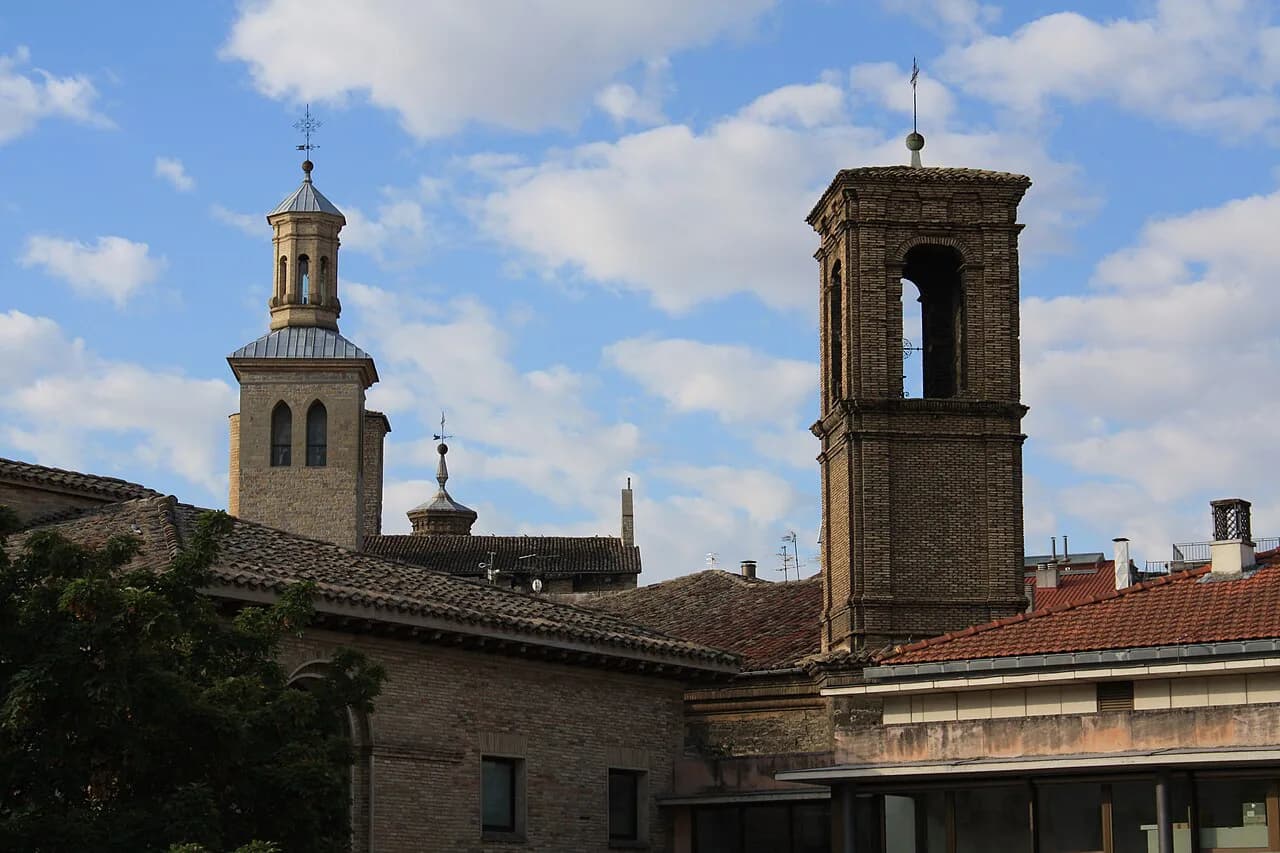
Iglesia de San Saturnino, Pamplona: A Visitor's Guide

Iglesia de San Saturnino is a parish church in Pamplona's casco histórico and a solid 20–30 minute stop on an old-town walk, not a half-day destination. Its twin towers and unusually thick walls make it one of the city's most recognisable silhouettes. This guide covers what to see outside and inside, how to reach it on foot, and how to slot it between the Ayuntamiento and the Museo de Navarra; for the wider set of city sights, see Pamplona Attractions: 6 Visitor Guides.
Also known as San Cernin, the church stands in the old town on the route between the Ayuntamiento and the Museo de Navarra. The points worth your time are the porticoed atrium, the twin towers, the broad single nave, the Baroque Capilla de la Virgen del Camino and the pocico in the ground outside. The rest of this page takes them in order, with the practical points you need to know before you set off, and you can pair the visit with Plaza del Castillo, Pamplona.
What San Saturnino is and why it stands out
The church is dedicated to San Saturnino, Pamplona's patron, and is also called San Cernin. Its two high towers form a very personal profile in the city skyline, and the thick, powerful walls make it easy to understand its other old function: a military and defensive stronghold in the frequent quarrels between the medieval Burgos of Pamplona.
That mix of parish church and fortress explains why the building feels heavier than the other churches in the old town. Look at the tower bases and the wall thickness before you go in; they tell the story of medieval Burgos rivalry better than any label. It is not a monument that needs a lengthy visit, but it is one that rewards a little attention to the outside as well as the interior.

Where it is and how to get there
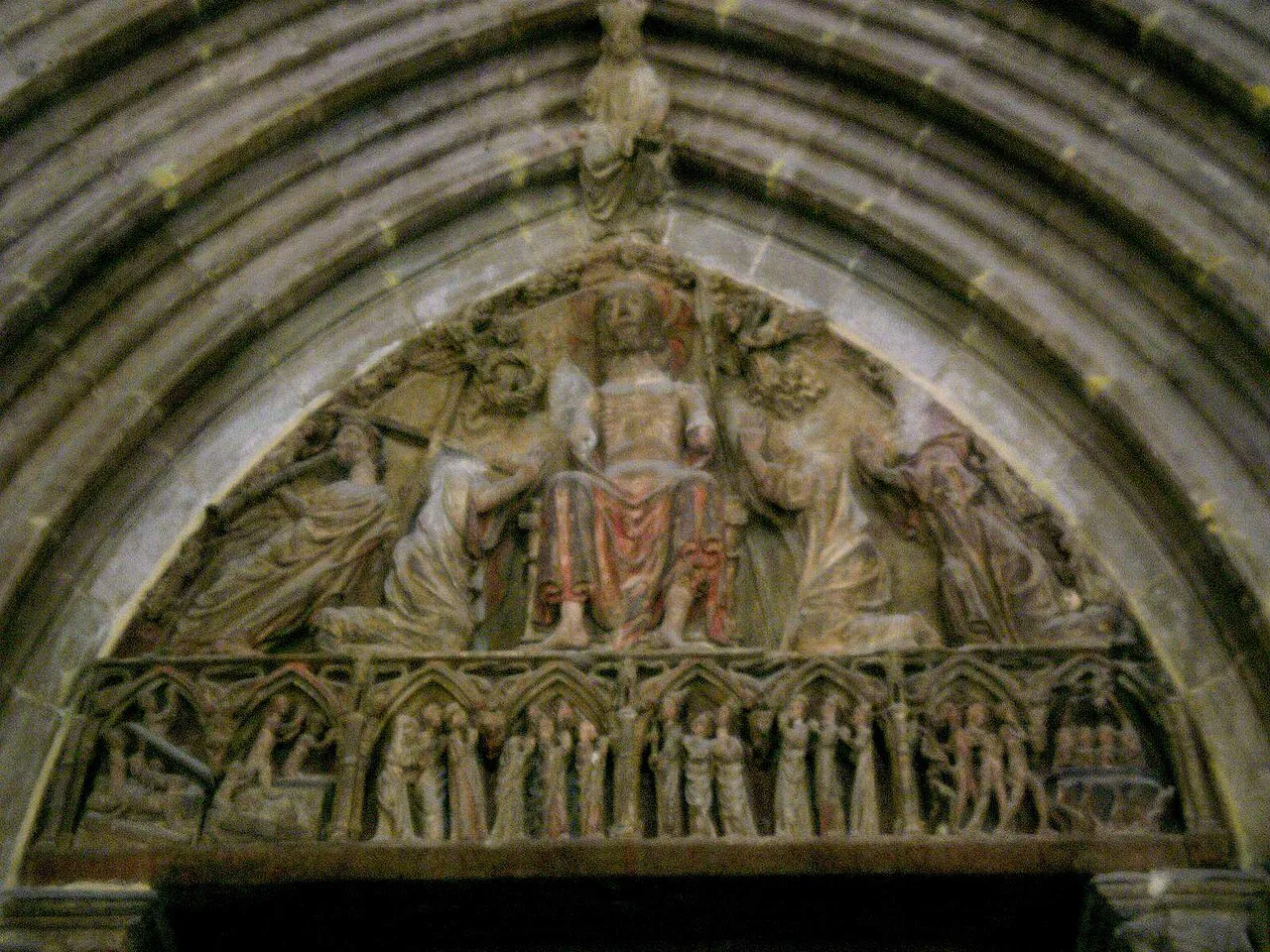
San Saturnino sits in the casco histórico, on the route between the Ayuntamiento and the Museo de Navarra, so you can reach it on foot from the centre of the old town with no bus or taxi. It is easily recognised by a wide porticoed atrium that comes before the entrance.
The simplest approach is on foot through the old-town lanes, and you will see the towers before you reach the atrium. Allow a few extra minutes for the narrow streets and the possibility of a detour, especially on a first visit.
The exterior: atrium, towers and the pocico
Start outside under the porticoed atrium, which frames the entrance and gives you the best view of the twin towers. Then look for the pocico set in the ground, the well where San Saturnino is said to have baptised San Fermín and the first Christians of Pamplona. It is easy to walk past without noticing, so look down before you leave.
The pocico is a small feature rather than a monument, but it ties the church to the city's wider religious traditions and to the story of San Fermín. After you have seen it, walk around the base of the towers to see the thickness of the walls from close up.
Inside: the wide nave and the Capilla de la Virgen del Camino
Inside, the church is a single, very broad nave with a fine interior. The feature to seek out is the Baroque Capilla de la Virgen del Camino, Señora y Reina de la Ciudad, a decorated side chapel worth a few quiet minutes. Sit for a moment in the nave if you can; its width is what makes the interior feel different from other old-town churches.
How long to allow
Give San Saturnino 20–30 minutes including the exterior, the atrium, the pocico and the chapel. That makes it an easy addition to an old-town walk between the Ayuntamiento and the Museo de Navarra, rather than a visit in its own right. If you are already heading to the Pamplona Cathedral, the two visits combine comfortably in one morning.
The best moment to slot it in is when you are passing through the old town anyway; it does not need a special trip. If you want a fuller morning of churches and monuments, start at the cathedral and work back through the lanes towards San Saturnino. Either order keeps walking distances short.

Practical points: Mass times, opening hours and visiting around services
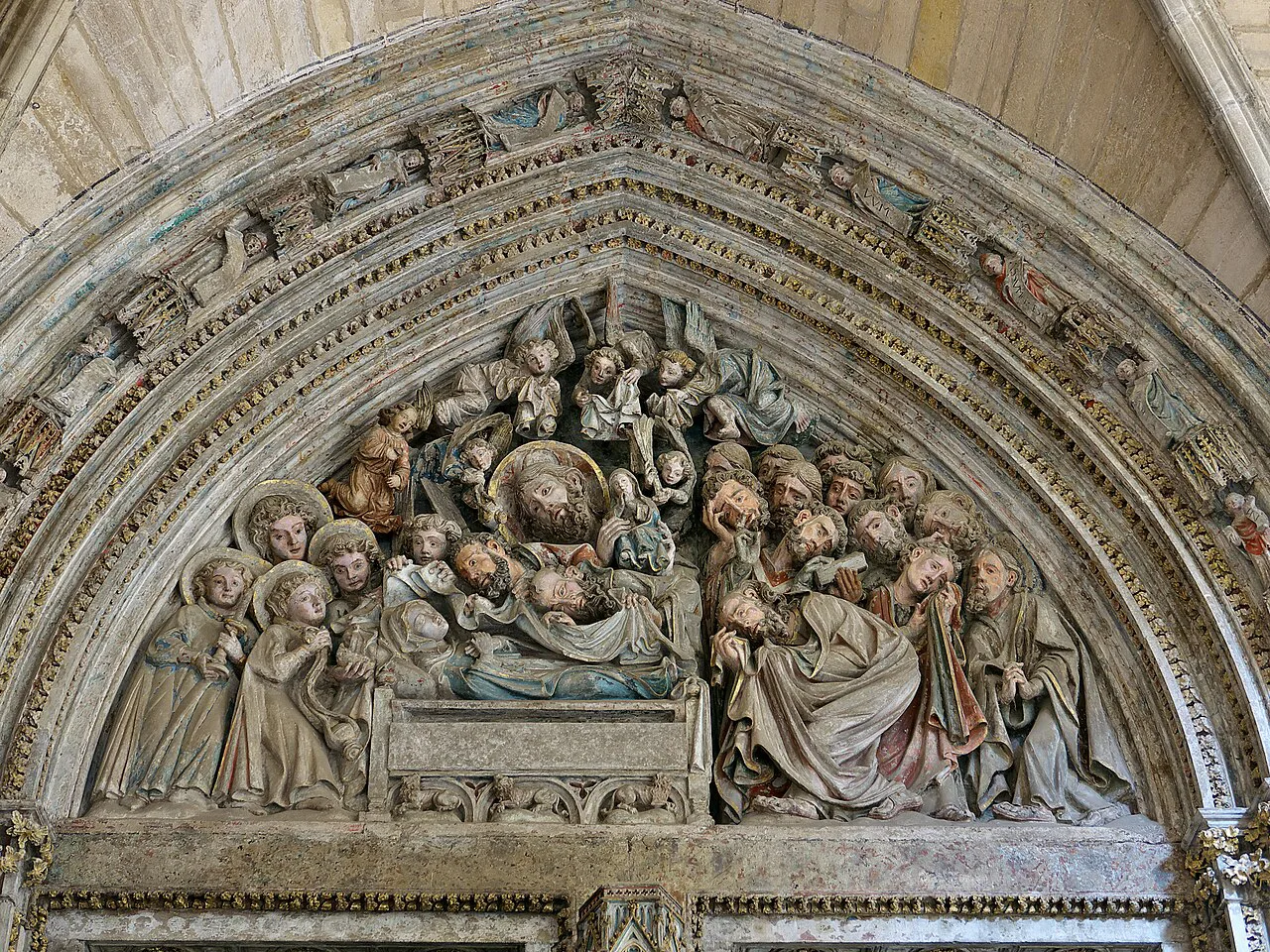
San Saturnino is an active parish church, so sightseeing has to work around services. Mass times and opening arrangements are not fixed for visitors, so confirm them locally or through the parish before you plan the rest of your walk. If a service is under way when you arrive, wait outside and see the atrium and the pocico first, then go in when it finishes.
The city's patronal day is 29 November, when the Ayuntamiento organises events in Pamplona. Those celebrations can affect access to the church and the surrounding streets, so check locally on the day if you are in town then.
Nearby: what to see within a few minutes' walk
The Ayuntamiento and its Plaza Consistorial are a short walk away, and the Museo de Navarra is close too. Also nearby is the Plaza del Castillo, the broad central square where the old town opens out. Together they make a natural circuit with San Saturnino in the middle.
To the west, the murallas de Pamplona and the Ciudadela de Pamplona are a longer but still walkable extension of an old-town day. Add them only if you have a full afternoon and reasonable weather.
Is San Saturnino worth the detour?
Yes, if you are already walking through the old town; it is a compact, atmospheric stop that adds texture to a day of plazas and museums. The twin towers, the porch, the broad nave, the Baroque chapel and the pocico are the things to see, and 20–30 minutes is enough. If a service is on, wait or return later rather than treating the visit as a fixed appointment.
Explore more Pamplona guides
Frequently Asked Questions
¿Cuál es la Iglesia más antigua de Pamplona?
The surviving medieval churches of the old town each tell a different part of Pamplona's story, and it is hard to date them precisely. San Saturnino's heavy walls and twin towers reflect its defensive role during conflicts between the city's medieval Burgos rather than a single founding date.
¿Qué día es el día de San Saturnino?
San Saturnino is celebrated in Pamplona on 29 November. Check with the Ayuntamiento for the year's programme before travelling, since the celebrations can affect access to the church and the surrounding streets.