
Plaza del Castillo, Pamplona: Pamplona's Main Square

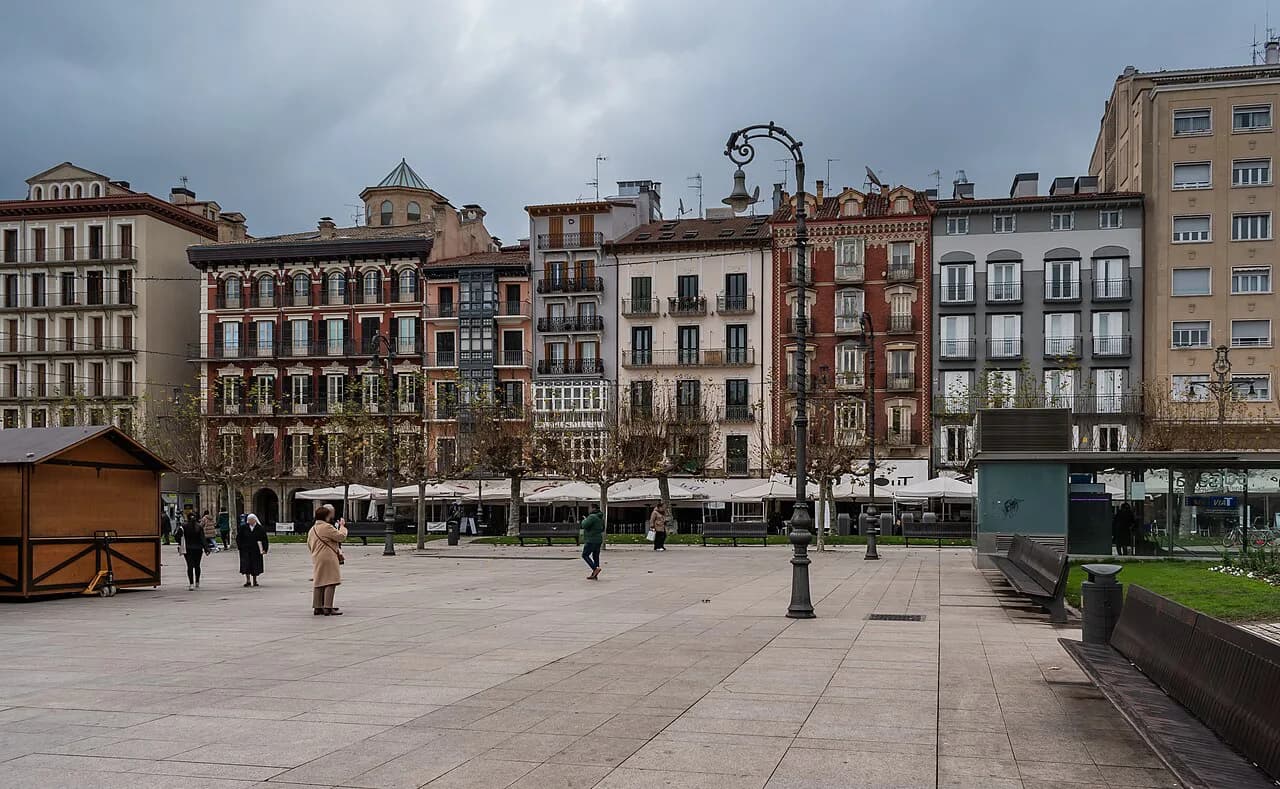
Plaza del Castillo is Pamplona's main square and the easiest place to get your bearings in the city. It needs 20 to 40 minutes on foot unless you sit down under the arcades, and it costs nothing to walk through. This page covers where the square sits, how to reach it from the old town and the stations, what to look at around its edges, and how it slots into a short break in Navarra.
Treat it as an orientation point rather than a ticketed sight. The square is the hinge between the old town and the nineteenth-century streets beyond, so the useful decisions are about approach and timing, not admission. From here the cathedral quarter, the city walls and the rest of the centre are all within a walk.
What Plaza del Castillo is and why it anchors Pamplona
This is a broad, open plaza rather than a monument: paving, arcaded frontages and a perimeter of buildings that frame the space. Its role in the city is civic and social — a central meeting point where the old town's streets converge. You come here to read the shape of Pamplona, not to queue for a ticket.
Because it is an open public square, there is no admission charge and no set visiting window. Place it at the start of a morning or the end of an afternoon, when you can use it to fix your route before walking deeper into the old town. Pamplona's fame rests on San Fermín and on Hemingway's association with the city, both of which hang over the square without defining a visit to it.

Where the square sits in Pamplona and how it connects to the old town
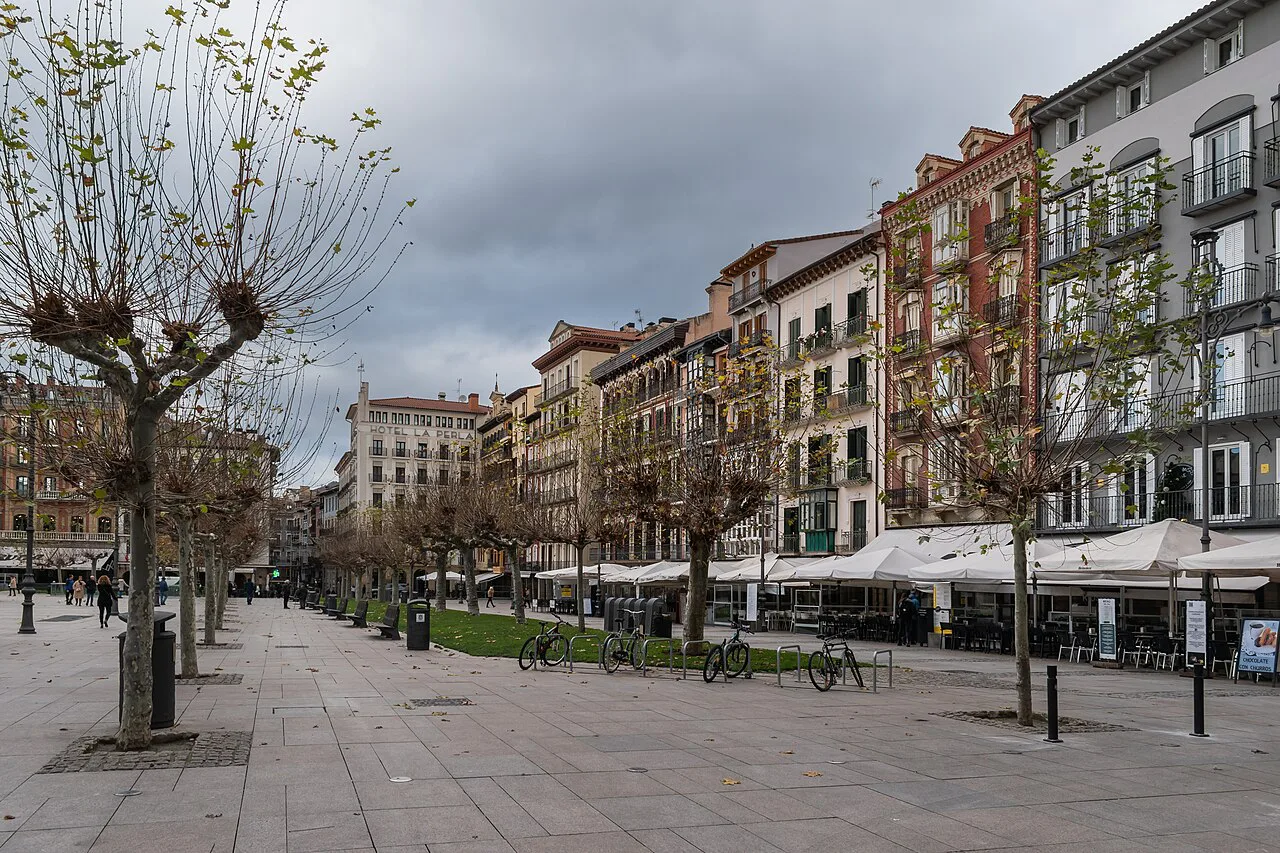
Plaza del Castillo occupies the middle of the historic centre, with the old town's lanes pressing in on its northern and eastern sides. Streets run off it in several directions, so it works as a roundabout for pedestrians: pick the wrong exit and you drift towards the modern city, pick the right one and you are in the medieval grid within a minute or two.
The layout rewards a simple routine. Walk the perimeter once to see which arcades lead where, then choose a single direction — towards the cathedral quarter or towards the walls — rather than circling the square repeatedly. The old town streets immediately around it are narrow and largely pedestrian, so distances feel shorter than they look on a map.

How to reach Plaza del Castillo on foot from the old town and the stations
From anywhere in the old town, the square is a short walk of a few minutes; you will usually arrive without noticing the final turn. From the bus and train stations, the approach is longer but straightforward through the city streets, and a taxi or local bus covers it more comfortably with luggage. Allow more time on foot than the straight-line distance suggests once you factor in the climb and the one-way streets.
If you are arriving for a short break, note that Pamplona has its own airport, so you do not need to fly into a larger Spanish base and transfer overland. Check the airport's own site for which airlines currently serve it before booking, since routes change by season.
Getting there by car and using the underground car park beneath the square
The square sits above a large underground car park, which is the practical answer for anyone driving into the centre. The council lists 948 spaces in total, of which 496 are reserved for residents, and the facility is run by Saba Aparcamientos; it opened in June 2004. The council gives two access points: Carlos III, restricted to residents, and Avenida San Ignacio.
Tariffs are published by the council as an annual schedule rather than a fixed price, and the 2026 schedule carries a separate, higher full-day rate for 6 to 15 July, when the city fills for San Fermín. Confirm the live charge at the car-park payment machine or on the council page before you commit the car, and budget accordingly if your dates fall in that July window.
If you are only visiting the square itself, driving into the centre is hard to justify: parking costs money, the surrounding streets are slow, and the whole point of the plaza is that it is a walking junction. Use the car park when the square is one stop on a wider drive through Navarra, not as a destination in its own right.
What to see around the square: arcaded fronts, facades and open-air life
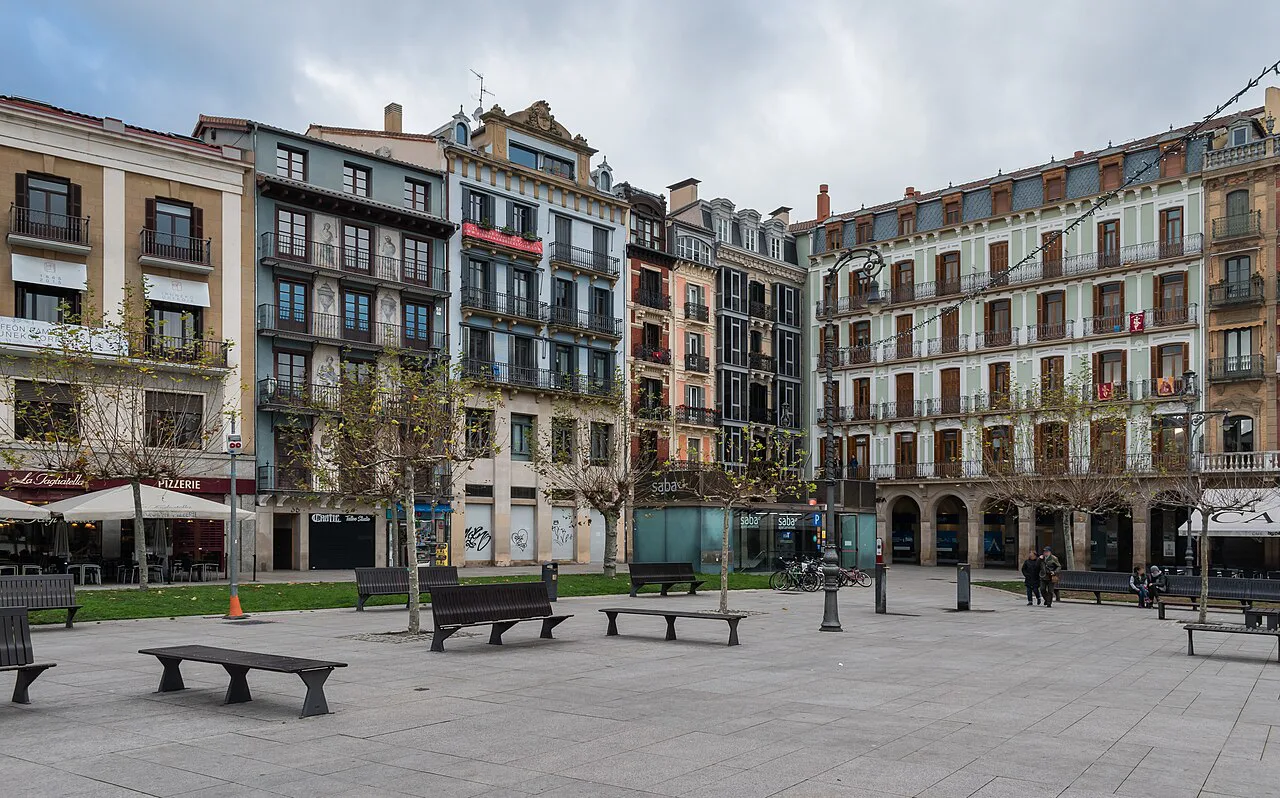
The pleasure here is architectural and social rather than didactic. Look up at the range of facades above the arcades — different periods, different window rhythms — and down at the arcade itself, which gives shelter from sun and rain and makes the edge of the square usable in almost any weather. The centre is open pavement, which is why the square reads as a room for the city rather than a garden.
Because it is a public space with cafés and shops around the perimeter, the atmosphere shifts through the day; the square is busiest when the city is out on its feet. Keep the visit observational and you will get more from it than from any plaque. For the city's indoor collections, the Museo de Navarra is the obvious complement to an hour spent outdoors.
How long to allow and the best time of day to see it
Twenty to 40 minutes is enough to walk the perimeter, look at the facades and get oriented; add time only if you plan to sit down. Mid-morning and late afternoon give the best light on the frontages and the most life under the arcades. In high summer, the middle of the day is best spent in shade.
The square is level and paved, and the arcades make it usable for most visitors without a specific route. There are no gates, no closing time and no ticket to buy, so the only timing decision is how it fits around the places that do keep hours.
What is nearby: the old town streets, the city walls and the cathedral quarter
From the square, the cathedral quarter is a short walk through the old town's lanes, and a look at the Catedral de Santa María la Real de Pamplona is the obvious detour; check the cathedral's visitor hours before setting out, as services take priority at times. Calle Curia, the street linking the square towards the cathedral side, is the natural line of approach.
In the other direction, the murallas de Pamplona — the old city walls and the citadel — sit beyond the nineteenth-century streets of the Primer Ensanche, and the walk there takes you out of the medieval grid into a greener, more open city. The Ciudadela de Pamplona is the strongest single stop on that side, and it pairs well with the square as a half-day of walking.
Closer in, the Iglesia San Saturnino, one of the old town's churches, sits within easy reach of the square and slots naturally into a circuit of the centre. Together these give a simple shape to a day: square first, then church and cathedral, then the walls if your legs hold out.
Should Plaza del Castillo start your Pamplona walk?
Yes, if you are new to the city: it is free, central and level, and half an hour here saves you from wandering the old town without a plan. Come on foot, look up at the facades, then pick one direction — cathedral or walls — rather than trying to see everything from the same spot.
Drive in only if the square is one stop on a wider trip, and check the council's current car-park schedule before relying on a figure, especially for dates in early to mid July. Confirm cathedral and church hours separately, because those are the places where a closed door actually costs you something.
Explore more Pamplona guides
Frequently Asked Questions
Do you need tickets for Plaza del Castillo in Pamplona?
No. It is an open public square with no admission charge and no gate, so you can walk through at any time of day. What you should plan around is the opening hours of the ticketed sights nearby, such as the cathedral, which are separate.
Which airport do you fly into for Pamplona?
Pamplona has its own airport, so a short break does not require flying into Málaga, Alicante or another larger Spanish base first. Routes change by season, so confirm current destinations and airlines on the airport's own website before booking.
How long should you spend at Plaza del Castillo?
Twenty to 40 minutes covers the perimeter, the arcades and the facades with time to get your bearings. Add more only if you want to sit under the arcades or use the square as a base for a longer walk through the old town.