
Museo de Navarra: What to See and How to Visit

The Museo de Navarra is worth 90 minutes of any Pamplona short break: a compact provincial collection in a Renaissance former hospital, with a prehistoric engraved map, a Hispano-Muslim casket, Romanesque cloister capitals and a Goya portrait in the same building. It sits on Calle Santo Domingo at the north-west edge of the old town, against the city walls, so it slots naturally into a walk between the cathedral quarter and the centre. This guide covers where it is, the cited opening hours and ticket prices, the works to look for and how the building shapes the visit.
Budget for a split day rather than a long afternoon. The museum opens in the morning and again in the late afternoon on weekdays and Saturdays, with a shorter Sunday and public-holiday session, and it closes entirely on Mondays. That pattern decides which day of a short break you put it on, and the free slots give budget travellers a cheaper route in than the standard ticket.
Where the Museo de Navarra is
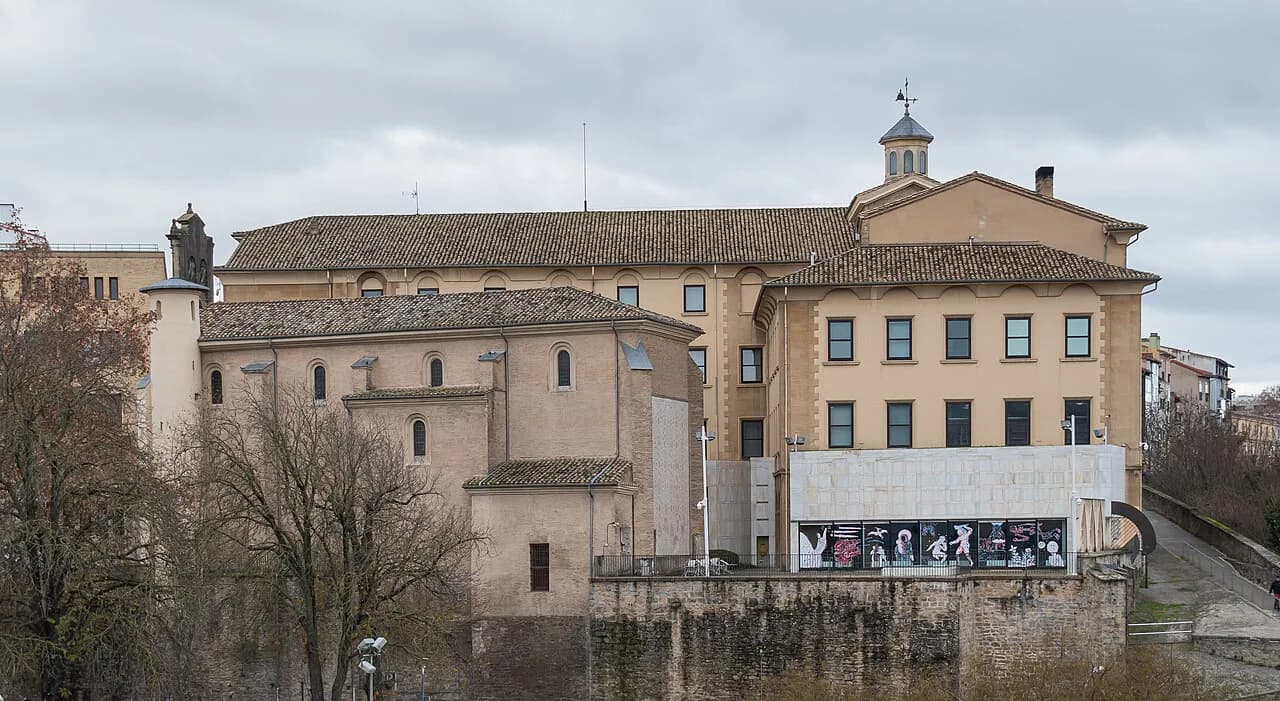
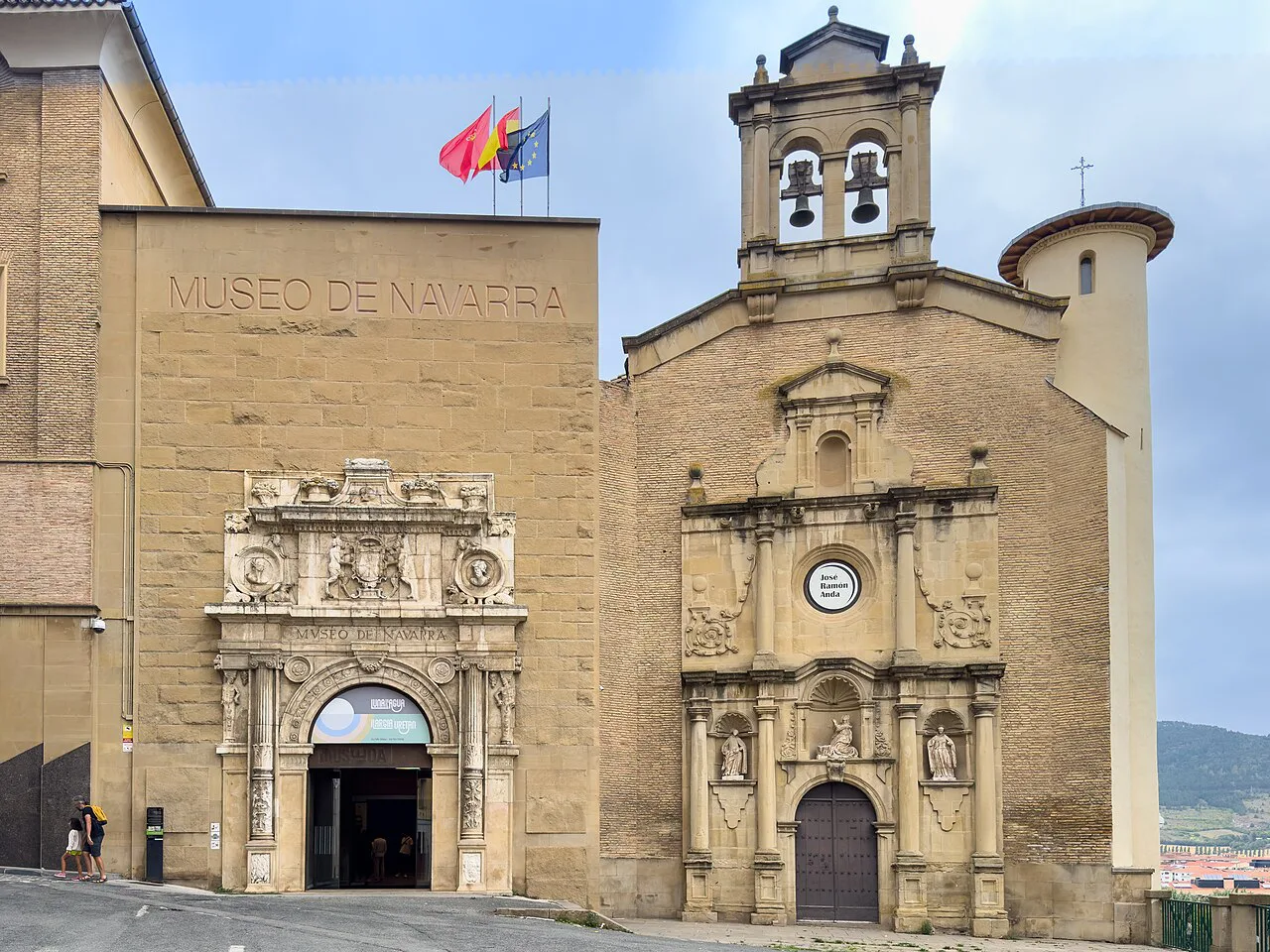
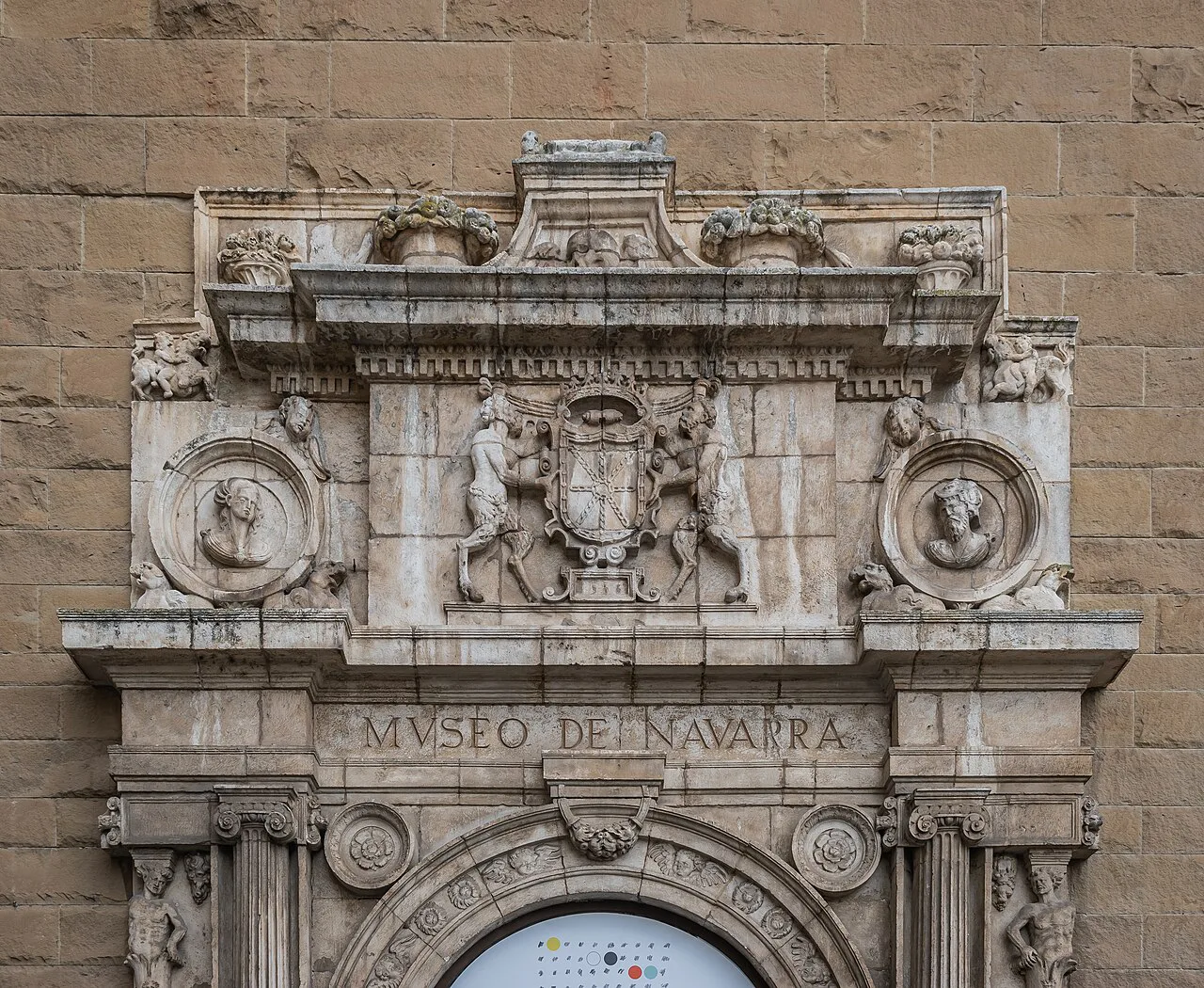
The address is Calle Santo Domingo, 47, in the old town of Pamplona, in the north-west corner of the casco antiguo next to the city walls. The building is the former Hospital de Nuestra Señora de la Misericordia, a Renaissance structure, and the institution has occupied it for more than half a century. Arriving on foot from the Navarrería streets, you meet the museum at the point where the old town thins out against the fortifications.
Coming from the modern city, the walk in through the Primer Ensanche and past the murallas de Pamplona brings you to the same corner, which makes the museum a sensible first or last stop on a circuit of the old town. If you are working through several sights, the Pamplona Attractions: 6 Visitor Guides map the cathedral, the walls and the squares around this edge of the centre.

Opening hours and closures
Opening hours run Tuesday to Saturday, 9:30-14:00 and 17:00-19:00, with Sundays and public holidays limited to 11:00-14:00. The museum is closed on Mondays. The two-hour midday gap is the detail that catches people out: an arrival at 14:30 finds the doors shut until the evening session, so plan the visit as a morning or a late-afternoon block rather than an all-day ambling stop.
Because Monday is the closure day, it is the one morning of a Pamplona break when this museum cannot be your wet-weather or heat-escape option. Put the Museo de Navarra on a Tuesday-to-Saturday morning or a Sunday morning, and keep Monday for the cathedral, the walls or the squares, which follow their own timetables.

Tickets and free entry
General admission costs 2 euros. Entry is free on Saturday afternoon and on Sunday, and also on 18 May, 27 September and 12 October, with free admission for various groups. Those dates are the ones the museum service publishes, so treat them as recurring calendar markers and confirm them for the year you travel before building a trip around one.
The cheapest sensible plan is a Sunday morning visit, arriving at 11:00 when the doors open and taking the core collection in one continuous stretch before the 14:00 close. The Saturday-afternoon free window suits anyone who has spent the morning on the walls and wants an indoor hour before dinner. A weekday morning costs the standard ticket but is the calmest option for anyone who dislikes sharing galleries.
What to see in the collection
The collection runs from prehistory to contemporary art, and a handful of pieces anchor the visit. Look for the Magdalenian map of Abauntz, the Hispano-Muslim casket of Leire, the Romanesque capitals from the cloister of the primitive Cathedral of Pamplona, the collection of Navarrese Gothic mural painting, and Goya's portrait of the Marqués de San Adrián. Each is a specific reason to come rather than a general reason to like provincial museums.
Temporary exhibitions are threaded through the permanent rooms rather than quarantined in a side hall, so modern and contemporary works turn up in dialogue with the older pieces and even with the archaeology. A recent programme of this kind brought in eleven artists, including Francis Bartolozzi and Amaia Molinet, and put a seventeenth-century colonial folding screen from the Palacio de los Condes de Guenduláin at the centre of the conversation. The screen is not on permanent display for conservation reasons, so its appearance is tied to a specific show.
The museum also holds a specialist library and media library and a documentary archive of contemporary Navarrese artists, which matter to researchers and less to a two-hour visitor. Treat them as background to the galleries rather than as a reason to extend the visit.
How the building shapes the visit
The Renaissance hospital plan gives the museum its character: rooms arranged around the old wards and courtyards, with the walls of Pamplona visible at the edge of the site. You are reading the collection inside a piece of the city's own fabric, which is part of why the museum feels tied to the old town rather than dropped into it. Allow a little time simply to register the building between galleries.
That layout also means the museum works well as a short, dense stop rather than a half-day commitment. An hour covers the highlights; ninety minutes lets you read labels and take in a temporary display without hurrying. If a large temporary exhibition is running, add time for it on top of the permanent rooms.
How long to allow and when to go
For a first visit, 60 to 90 minutes is the right allowance for the core collection, with extra time if a temporary show is threaded through the rooms. The split timetable means you cannot drift in at will, so fix the museum to a morning or an evening session and build the rest of the day around it.
Quietest are weekday mornings after the 9:30 opening, when the galleries are calm and the ticket is the only cost. Sunday mornings are free but shorter, with a hard 14:00 close and a public-holiday crowd mix. Saturday afternoon is free and open until 19:00, which makes it the best free slot for anyone who wants time rather than a rushed walk-through.
What is nearby
The old town walls are immediately outside, and the cathedral quarter is a short walk back through the Navarrería streets. The Pamplona cathedral, the Catedral de Santa María la Real de Pamplona, is the obvious pairing with the museum, not least because the Romanesque capitals in the museum came from the primitive cathedral cloister. Its own visiting arrangements follow a separate timetable, so check them before setting out.
For a change of scale, Plaza del Castillo, Pamplona's main square, is the natural place to end a museum morning, with the older streets of the centre radiating off it. The citadel of Pamplona lies the other way, out through the Primer Ensanche, if you want to continue on the fortification theme after the walls.
Pamplona has other museums worth knowing about, including the Museo Universidad de Navarra on the campus edge, which runs its own hours and seasonal timetable and should be checked separately rather than assumed to match the Museo de Navarra.
Fit the Museo de Navarra into your Pamplona day
The Museo de Navarra earns its place on a Pamplona short break because it delivers specific, memorable objects in a building that is itself part of the old town's edge. Pick a Tuesday-to-Saturday morning or one of the free slots, allow an hour and a half, and treat the Monday closure and the midday gap as fixed points rather than nuisances.
Pair it with the city walls and the cathedral quarter for a coherent half-day, and finish in the centre around the square. Check the museum service's page for the current free-entry dates and ticket list before you rely on them, then build the rest of the day around the museum's split timetable.
Explore more Pamplona guides
Frequently Asked Questions
Is the Museo de Navarra free on Sundays?
Yes. Entry is free on Sunday, and also on Saturday afternoon and on the free dates the museum service lists, including 18 May, 27 September and 12 October. Sunday opening is 11:00-14:00, so a free visit is a short one and needs to start at opening time.
How much does it cost to get into the Museo de Navarra?
The museum service publishes a standard admission charge, and entry is free on Saturday afternoon, Sunday and a set of free dates. The current figure, along with concession and group arrangements, is on the Museo de Navarra listing on the Navarre museums website, so check it there before you go.
Can I visit the Museo de Navarra on a Monday?
No. The museum is closed every Monday. Tuesday to Saturday it opens 9:30-14:00 and 17:00-19:00, and on Sundays and public holidays 11:00-14:00, so the midday gap rules out an early-afternoon arrival on any open day.