
Pamplona Cathedral: Gothic Interior, Cloister and Tower

Pamplona Cathedral is worth an hour of anyone's time in the old town, and two if you pay for the museum and climb the tower. The Catedral de Santa María la Real presents an austere neoclassical face to Calle Curia, yet most of what you come for — the tall Gothic nave, the cloister, the chapter rooms and the Occidens exhibition — sits behind that facade. This guide covers what each part contains, how the museum ticket and church entry differ, when the museum opens by season, and how the tower climb is arranged.
Pamplona itself rewards a short break: the old town's plazas, the walls and the Camino de Santiago all sit within walking distance of the cathedral door. If you are building a couple of days around the city, browse the full set of Pamplona Attractions: 6 Visitor Guides before fixing your order of sightseeing.
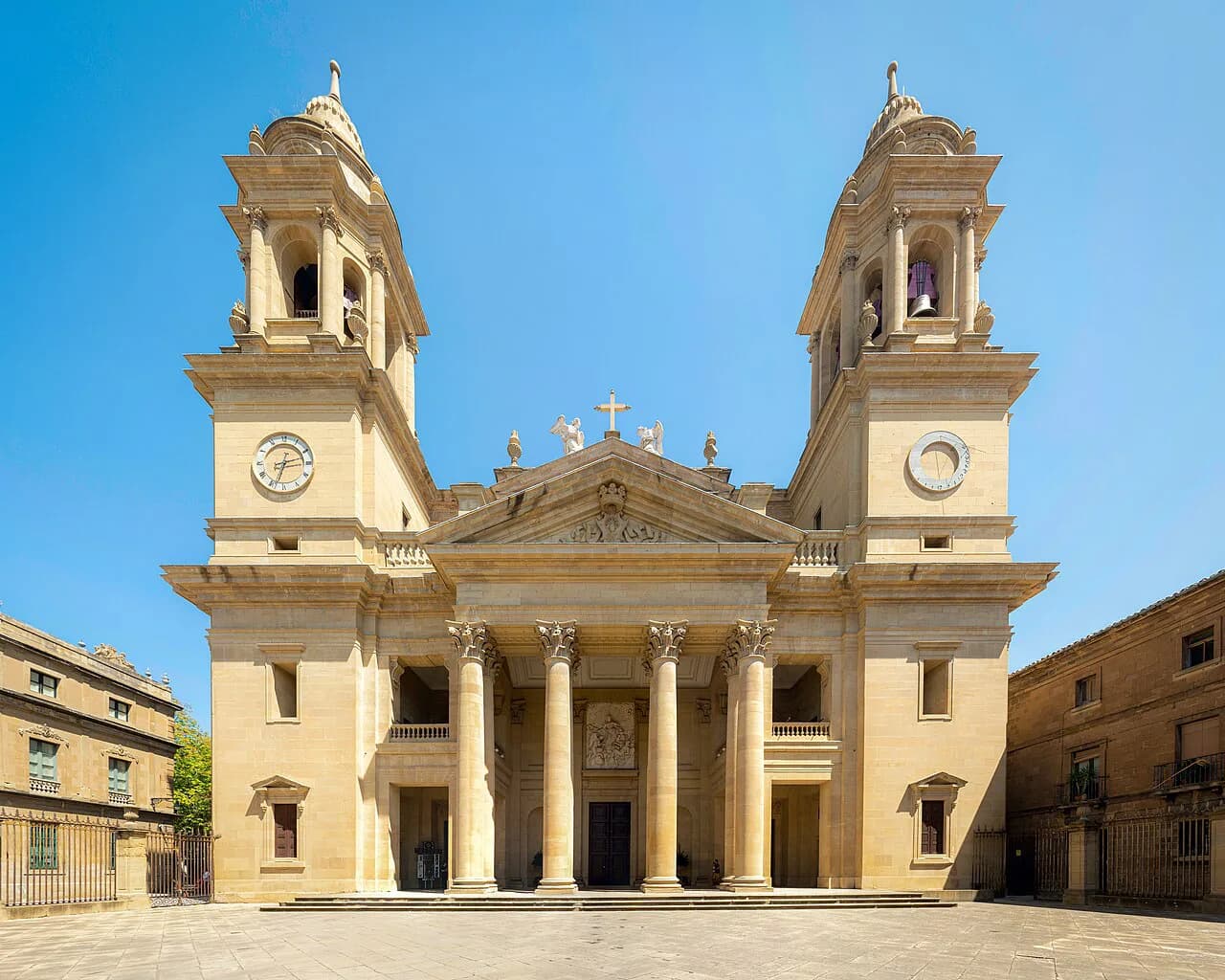
A neoclassical shell around a Gothic interior
The mismatch is the point. The cathedral's west front was rebuilt in a neoclassical style at the end of the 18th century, replacing a Romanesque facade that had survived the collapse of the earlier church. Inside, the building you walk through is Gothic, raised after the choir vault fell in the late 14th century. Travellers who judge the cathedral from the street and walk on miss the best of it.
The cathedral stands in the old town on Calle Curia, close to the Camino de Santiago route through the city; it is the first cathedral on the pilgrim road after Roncesvalles. That position makes it an easy stop between the old town's plazas rather than a separate excursion, and the square outside gives you a clear view of the exterior before you go in.

The church: nave, side chapels and the royal tombs
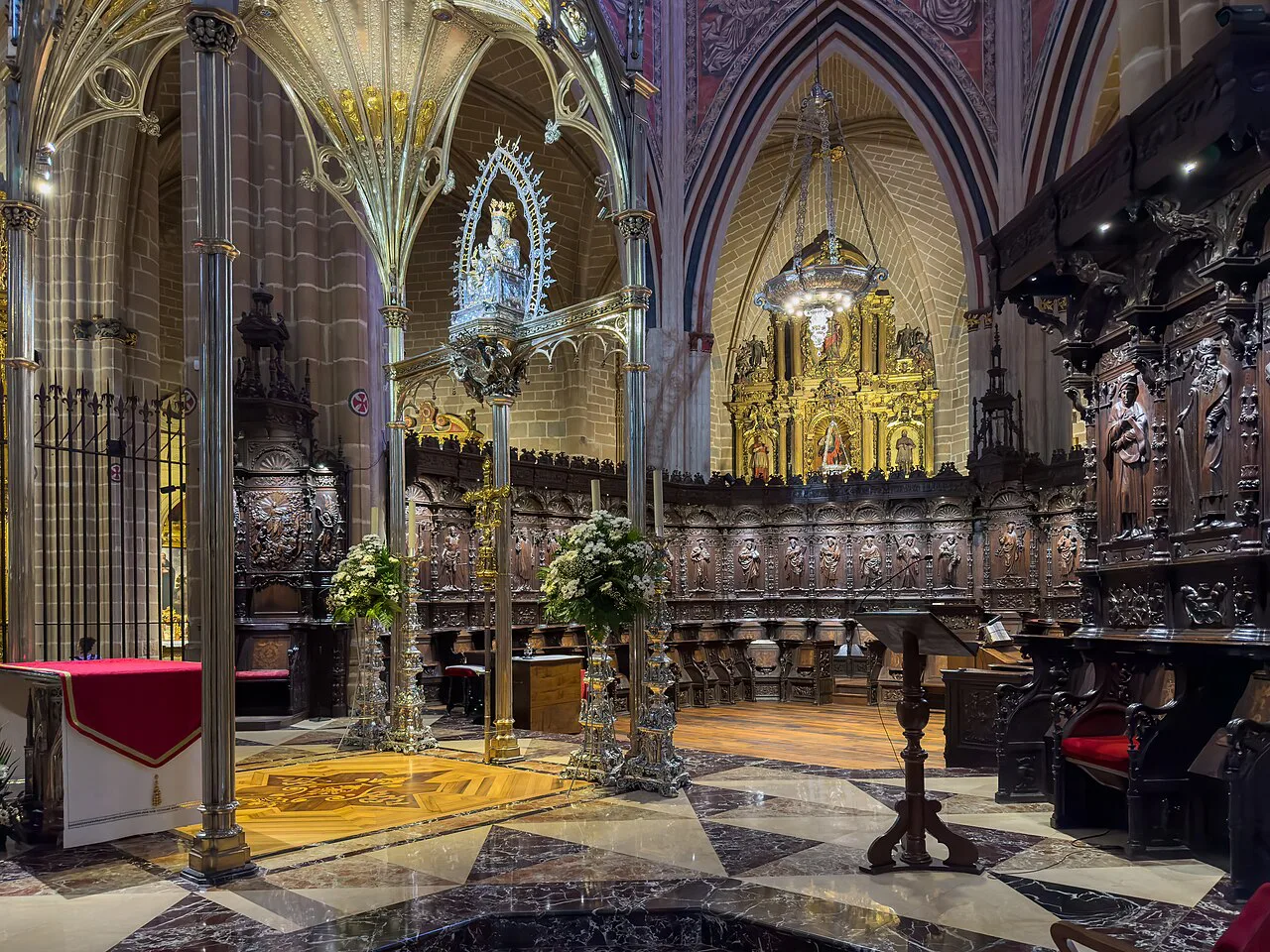
Allow the first half hour for the church alone. The nave columns rise more than 25 metres, and the side chapels carry their own altars and retablos, so a slow walk down the aisles is more rewarding than a glance from the west door. Look for the Santa María del Sagrario figure in the presbytery and, above all, the royal mausoleum, with the recumbent statues of Carlos III el Noble and Leonor de Trastámara.
The church was where the kings of Navarre were crowned, baptised and buried, which explains why they funded the Gothic rebuild from their own revenues. Entry to the church is free; the cloister, chapter rooms and tower need the museum ticket. If you only have twenty minutes, the church is the part to see.

The cloister and the chapter-house rooms
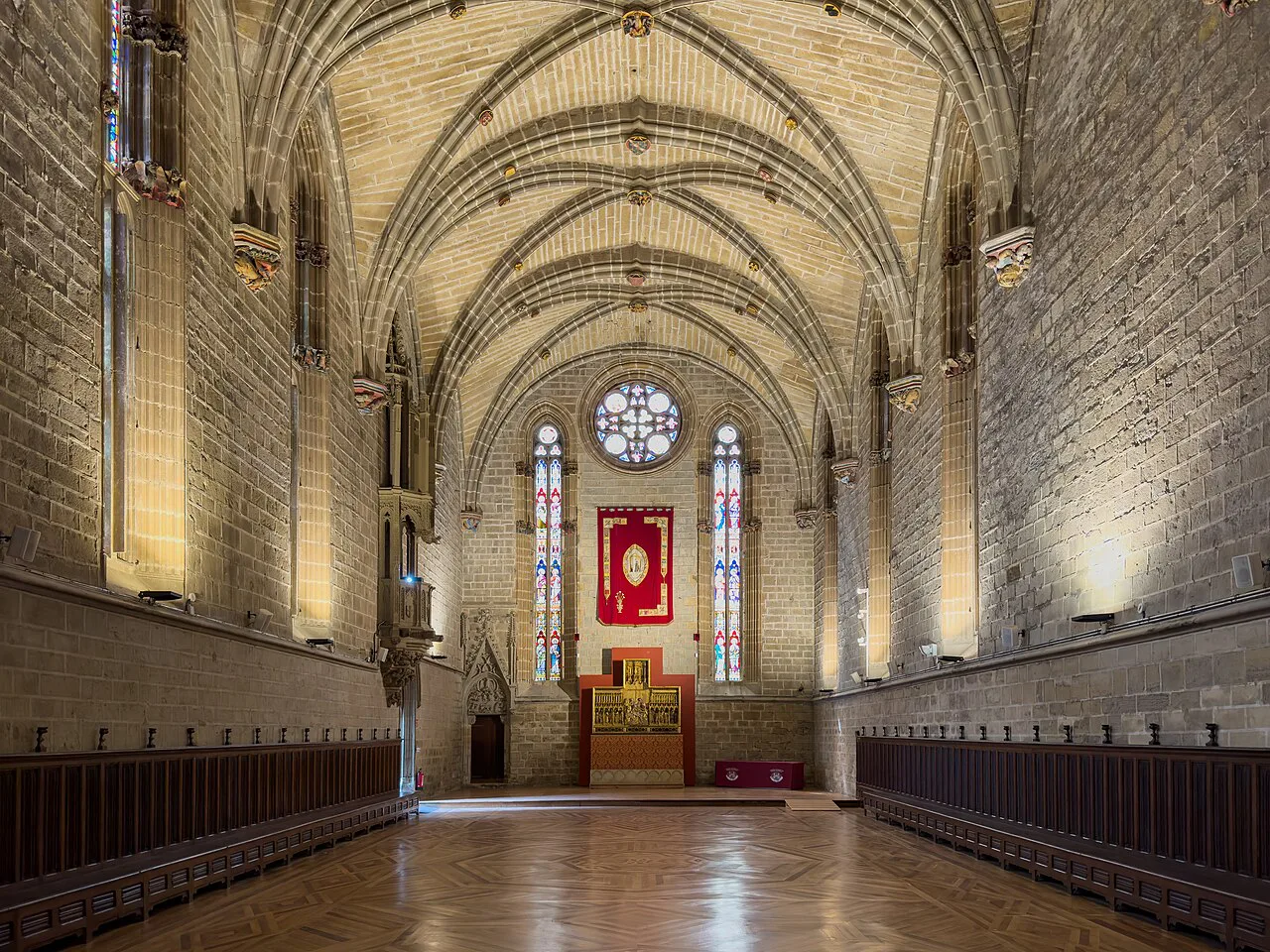
Beyond the church, the Gothic cloister and the rooms built for the cathedral chapter make this one of the most complete cathedral complexes in Spain. The circuit takes in the kitchen, the refectory, the dormitories and the chapter house — domestic spaces that most cathedrals no longer show visitors. Budget most of your museum hour for this stretch.
The Occidens exhibition occupies part of these historic rooms, tracing the development of Western thought from antiquity to the present. It is included in the museum visit rather than sold separately, so plan the chapter rooms and Occidens as one continuous walk-through.
Climbing the north tower and the Campana María
The tower climb is arranged around a fixed daily slot rather than open turn-up access. The Campana María goes up at 11:15 each day, with a number collected in advance, and the tower is closed on Sundays. Plan your morning around the 11:15 slot if the roof-level view matters to you.
The climb also takes in the bellringer's house, one of the domestic spaces preserved in the complex. Go up before lunch if the day is clear: the tower gives you the old town's rooftops and the surrounding hills, which you cannot see from street level.
Museum hours, Sunday closure and last admission
The museum runs on two seasonal timetables and closes on Sundays in both. From the last week of March to the last week of October it opens Monday to Saturday at 10:30, with the last admission and ticket sales at 18:00 and closing at 19:00. From the last week of October it opens at the same time, takes its last admission at 16:00 and closes at 17:00.
The Spanish-language guided visit runs at 12:00 while the museum is open, capped at 25 people, so arriving early secures a place. The church has its own timetable of masses and services, which is separate from visitor access. Sunday is the day to keep free of museum plans in Pamplona.
Tickets and how the costs split
The museum ticket covers the cloister, the chapter rooms and the Occidens exhibition; the tower climb is arranged separately, with a number collected in advance for the 11:15 ascent. The cathedral publishes current tarifas on its own site, so check the price for your dates rather than relying on a guidebook.
If you are balancing a short break's budget across several Pamplona sights, the cathedral is one of the places where the free option genuinely delivers: the Gothic nave and the royal mausoleum cost nothing. Paying for the museum is worthwhile for the cloister and chapter rooms.
How long to allow and adding it to a short break
Give the cathedral a full two hours if you are doing the museum and the tower, and about an hour for the church and museum only. That makes it a half-morning rather than an all-day anchor, which suits a Pamplona weekend well. Slot the climb for 11:15 and build the rest of the day around it.
The old town sits within easy walking distance, so pair the cathedral with the Plaza del Castillo, Pamplona's main square, for a coffee and a breather between sights. The city walls, which ring the historic centre, are also within walking distance of the cathedral.
Nearby in the old town
Outside the cathedral, the city's fortified edge is worth an afternoon of its own. The murallas de Pamplona ring the old town with grass-topped ramparts and clear views over the newer city, and walking a stretch of them gives you a sense of how tightly the historic centre is bound.
Among the smaller churches, the Iglesia San Saturnino, Pamplona sits close by in the old town and is a natural add-on before or after the cathedral. The Museo de Navarra, Pamplona is a further option if you want the region's art and archaeology rather than more religious architecture.
Should the cathedral be your first stop in Pamplona?
Yes, if you are in town for a weekend and want one monument that explains Navarre's history. Start with the free church, then buy the museum ticket for the cloister and chapter rooms, and collect a number for the 11:15 tower ascent if you want the rooftops. Keep Sunday out of your plans for the museum and the tower.
The cathedral and the old town fit together naturally, and the Camino passes the door, so it can bookend a walk along the walls. If your time is tight, choose the Gothic interior and cloister over a longer excursion outside the city.
Explore more Pamplona guides
Frequently Asked Questions
Is Pamplona Cathedral free to enter?
The church itself is free, and you can see the Gothic nave and the royal mausoleum without paying. The cloister, the chapter rooms and the Occidens exhibition require the museum ticket. Check the current rates on the cathedral's own website before you go.
Is the cathedral open on Sundays?
The museum closes on Sundays in both the spring–summer and autumn–winter timetables, and the tower ascent to the Campana María is also closed on Sundays. The church keeps its own timetable of masses and services, which is separate from visitor access.
How is the tower climb arranged?
Access to the Campana María goes up at 11:15 each day, with a number collected in advance, and the tower is closed on Sundays. If you want the rooftop view, plan your morning around that slot.
How long should I spend at Pamplona Cathedral?
Allow about an hour for the church and museum, and around two hours if you add the tower climb. That makes it a half-morning, which fits easily alongside the Plaza del Castillo and a stretch of the city walls.