
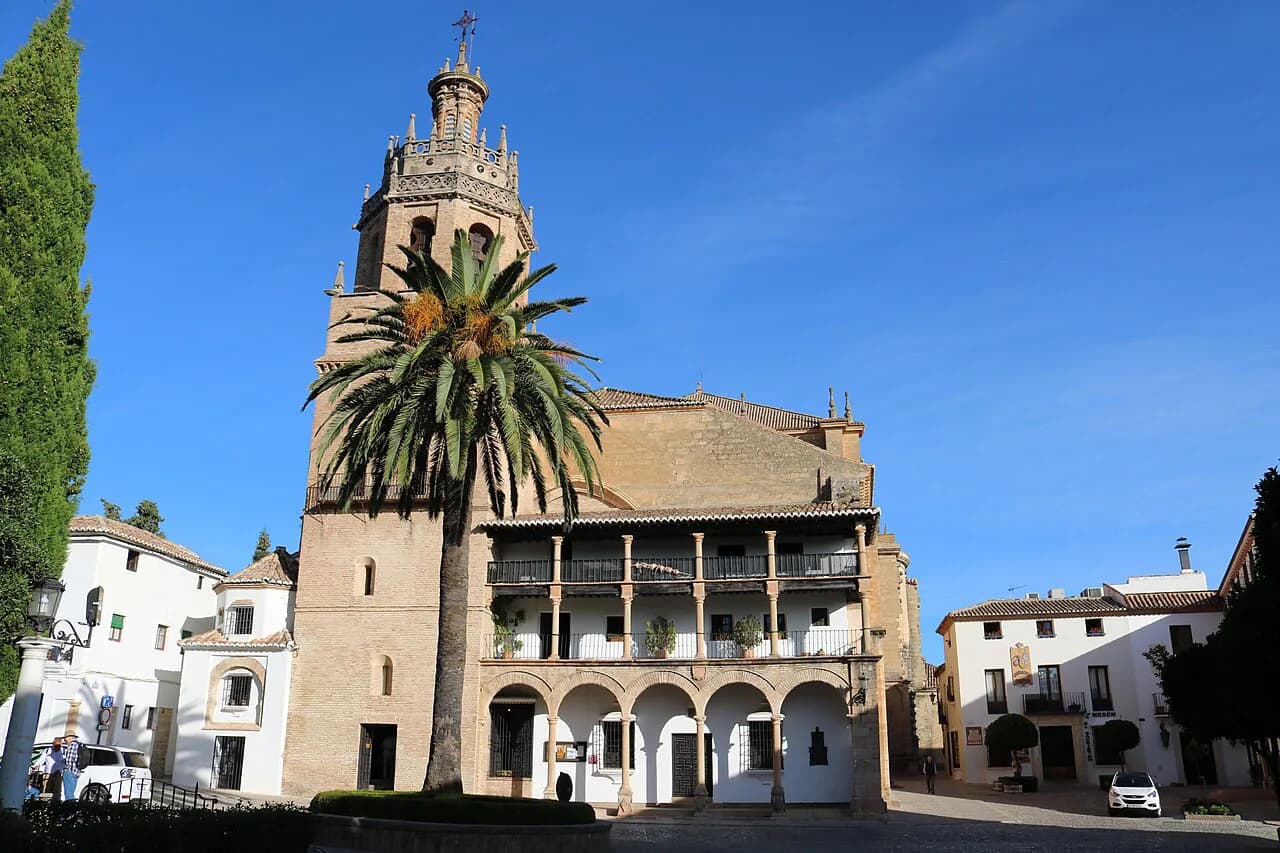
Santa María la Mayor, Ronda: what to see inside the Colegiata

Santa María la Mayor is the collegiate church on the highest ground of Ronda's old town, and the one building where you can read the town's whole religious history in a single visit. It rises on the site of the city's old aljama mosque, and a mihrab arch and a Mudéjar tower still anchor the Christian fabric that grew around them. This guide walks you through the mosque remains, the Gothic naves and the Renaissance head in turn, then places the church on a practical old-town route.
What Santa María la Mayor actually is
The building was elevated to the status of Colegiata by Fernando el Católico and is listed as a monument, which is why you will see it called the Colegiata rather than simply a parish church. Its fabric stacks three periods on one footprint: the mosque it replaced, the Gothic church begun after the Christian reconquest, and the Renaissance remodelling that followed the 1580 earthquake. Knowing that order is the difference between wandering a dim nave and noticing which wall belongs to which century.
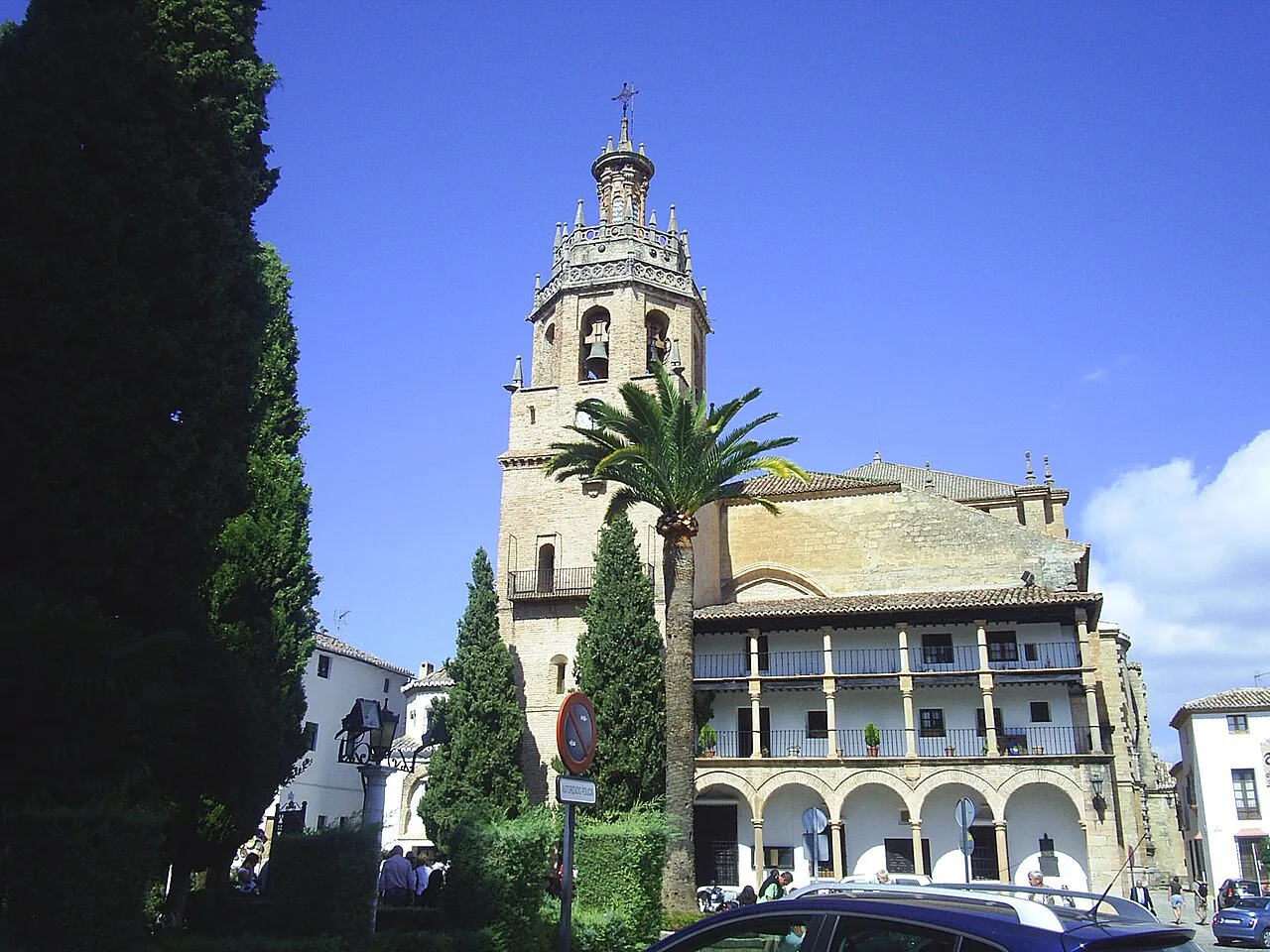

Where it is: Plaza Duquesa de Parcent in La Ciudad
The church faces the Plaza Duquesa de Parcent in La Ciudad, the old Moorish quarter on the ridge above the gorge. The square is one of the still, shaded spaces of the old town, ringed by convents and civic buildings rather than bars, and the church façade with its brick tower closes one side. Coming from the Puente Nuevo you climb into progressively narrower streets; the square opens suddenly and the tower is your landmark for the last stretch.

Getting there and how long to allow
Most visitors reach the church on foot from the Puente Nuevo, crossing the new town bridge and following the old-town lanes uphill for roughly fifteen to twenty minutes at an unhurried pace, with steps and cobbles on the way. Treat the walk as part of the visit rather than transport, because you pass shopfronts and chapel fronts that are easy to miss in a hurry. Allow around 45 minutes to an hour inside if you read the panels and linger in the Renaissance area, and rather less if you are pressed.
The mihrab arch and the Mudéjar tower
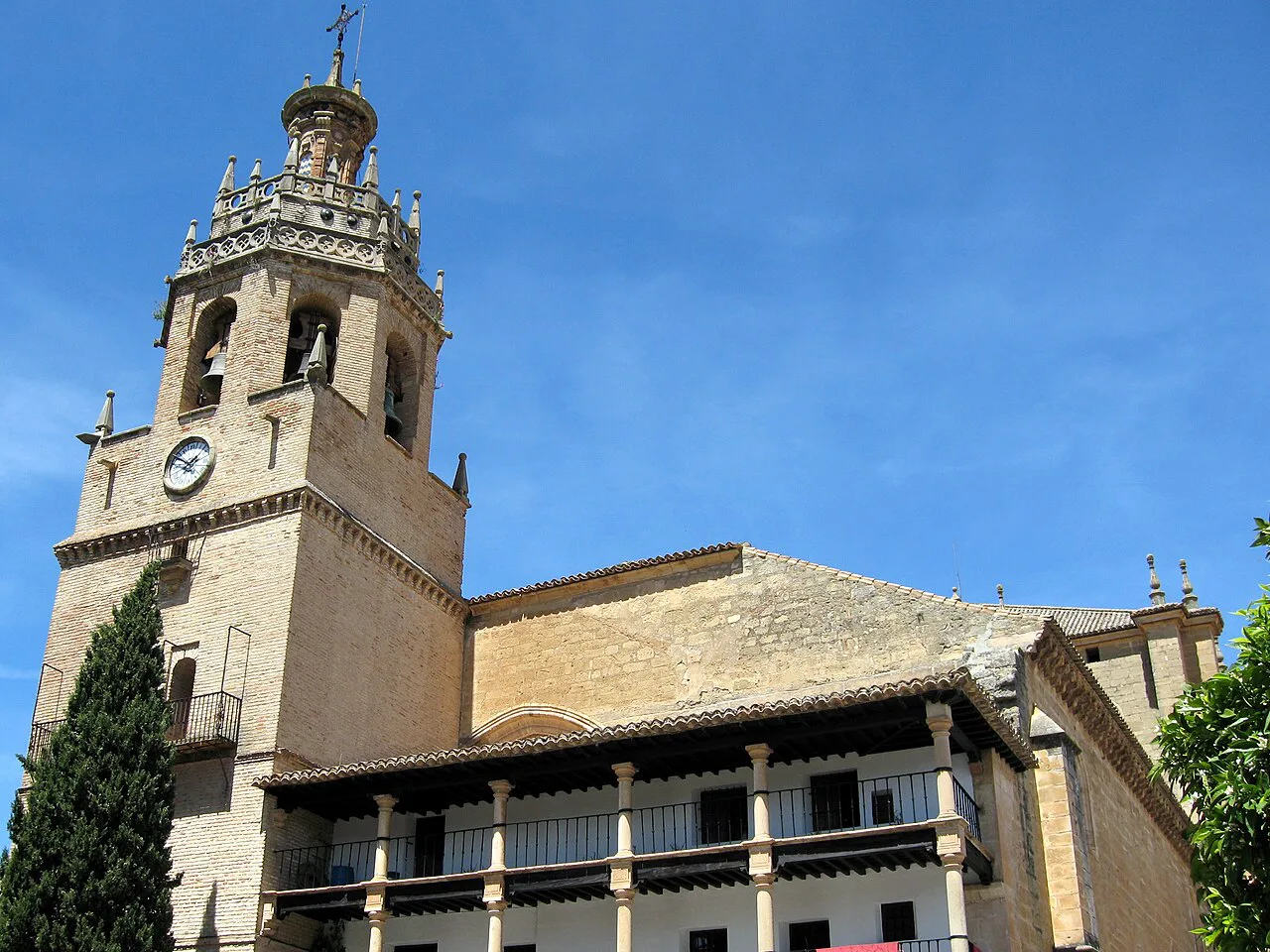
Start at the entrance hall, where an arch survives from the mosque's mihrab, carved in the Nasrid manner with calligraphic, vegetal and geometric decoration of the thirteenth and fourteenth centuries. Above the building, the Mudéjar tower stands on the remains of the old minaret and is topped by a bell stage in the Gothic style of the Catholic Monarchs. This is the part of the church most often walked past, so look up before you go in and again once you are inside the doorway.
The Gothic zone: three naves and the San Cristóbal mural
The Gothic church occupies the older, western end: three naves divided by pointed arches carried on clustered pillars, a deliberately broad and open space broken only by the choir body in the centre. The Tabernáculo altar sits here, a baroque altarpiece with twin salomonic columns and a central niche, and on the left-hand access door a large mural of San Cristóbal by the Ronda painter José Ramos covers the wall. San Cristóbal was the city's patron until 1954, which explains why so prominent a figure sits where you would expect a decorative panel.
The Renaissance area after the 1580 earthquake
The head of the church was rebuilt after the 1580 earthquake in a Renaissance mode, and the first thing you notice is height: the nave lifts and the two central columns are classically proportioned and slender. Behind the altar stands the choir, 24 seats on two tiers carved in cedar, chestnut and oak, with sixteenth-century choir books displayed on the lectern. If you have already seen the flat Gothic roof timber, the contrast here is the clearest illustration of the two building campaigns.
Balconies and the Casita de la Torre on the square side
On the façade facing the plaza, a two-storey arcade of rounded arches runs beside the tower, with the upper level enclosed as a balcony. It was built from the end of the seventeenth century so that the city's nobility could watch celebrations in the square, which is why it reads as civic architecture grafted onto a church. Next to it, the Casita de la Torre is a small Mudéjar oratory with blind horseshoe arches, now a separate room worth a minute of your time.
Tickets, opening hours and worship times
Santa María la Mayor is a working parish church as well as a cultural visit, and the town's tourist office posts Masses and patronal events at the church, such as the Mass for the Gala Folkloric groups and the visit to Ronda's patron, held at 12:30 on 31 August 2025. Those are one-off diocesan and fiesta events rather than tourist opening hours, but they show that the church's diary fills with services, so settle the timing before you climb up. Check the Colegiata's own visitor page for the cultural visit arrangements and the parish page for service times the week you travel.
Etiquette when a service is on
If you arrive and find the church given over to a congregation, treat the closure as the answer, not an obstacle to negotiate at the door. Dress as you would for any working church, keep voices low in the chapels, and leave the nave promptly if a service is starting rather than photographing the procession. Sunday mornings and the evening before a patronal feast are the moments most likely to squeeze out a cultural visit, so put the church early in an old-town walk on those days.
Nearby in the old town
The Palacio de Mondragón is on the same square as the church, so the two usually come as one stop; the Arab baths and the Casa del Rey Moro are a short walk down towards the gorge. For the town as a whole, including the bullring and the bridge viewpoints, work from the Ronda Attractions: 6 Visitor Guides collection and pick the pieces that fit your morning. The Alameda del Tajo and the Puente Nuevo viewpoints are back across the bridge, best left for the end of the day when the light drops into the gorge.
Build the old-town morning around the Colegiata
Give Santa María la Mayor a proper hour rather than a photo stop, and sequence it first in the old town: the mosque arch, then the Gothic naves, then the Renaissance choir, in the order the building was made. Pair it with the Palacio de Mondragón on the same square and save the Puente Nuevo and the plaza de toros for the other half of the day.
Before you set out, confirm the cultural visit and any service that might interrupt it through the parish and the town's tourist office. The climb from the bridge is short but steep in summer heat, so go early and keep the shaded square for the middle of the day.