
Baños Árabes de Ronda: What to See at the Arab Baths

The Baños Árabes de Ronda are the town's 13th-century Nasrid bathhouse, standing in the old Islamic suburb outside the fortified centre and a short step from the Puente Nuevo, and the Andalusian tourism board describes them as the best preserved in the Iberian Peninsula. Allow around 30 to 45 minutes inside, then walk on to the bridge or the Casa del Rey Moro while you are on this level. This page covers the layout, the room sequence, ticket checks and the nearest sights.
What the Baños Árabes de Ronda are
The baths date from the Nasrid period and sit in what was the Islamic suburb of Ronda, a short step from the gorge rather than up in the later Christian town. It is a historic monument, not a working spa, and the architecture itself is the exhibit. Use the town's official portal to confirm the baths are open on your dates and whether a combined monument pass suits you.
A separate modern bathing experience in Ronda trades as Aguas de Ronda, offering hot and cold water circuits, a sauna and massage, which is an entirely different proposition from the medieval monument. If you want the vaults and skylights, book the monument; if you want a water circuit, deal with the spa on its own terms.

Where the baths sit in Ronda
The bathhouse is on the lower side of town, close to the Puente Nuevo and the Casa del Rey Moro, in the suburb that grew up outside the fortified centre. Ronda attractions are spread across two levels, so grouping the low-lying sights saves a climb back up later.
The Puente Nuevo is Ronda's symbol and the town's most photographed structure, spanning the Tajo gorge on the edge of the old town. Stand on it after the baths and the relationship between the old Islamic suburb, the gorge and the later town becomes obvious.
Above the baths, the old town holds Santa María la Mayor, the Palacio de Mondragón and the Casa del Gigante, all packed into a compact area around the Plaza Duquesa de Parcent. Walking up from the baths takes you into that centre directly, so plan the climb once rather than shuttling back and forth.

Getting there on foot
Aim for the Casa del Rey Moro and the Puente Nuevo on the map and the baths are minutes away on the lower street; anyone arriving from the new town descends from the bridge area rather than climbing up from the deep gorge side. The town's tourism portal publishes a map with its monuments plotted, which is the clearest way to fix the route before you set out.
The streets on the approach are steep and stepped in places, so shoes with grip matter more than distance. If anyone in your group has mobility limits, drop them near the bridge and let them wait at the viewpoint while the rest of you walk down; the gradient is what people underestimate, not the length.
What survives inside the bathhouse
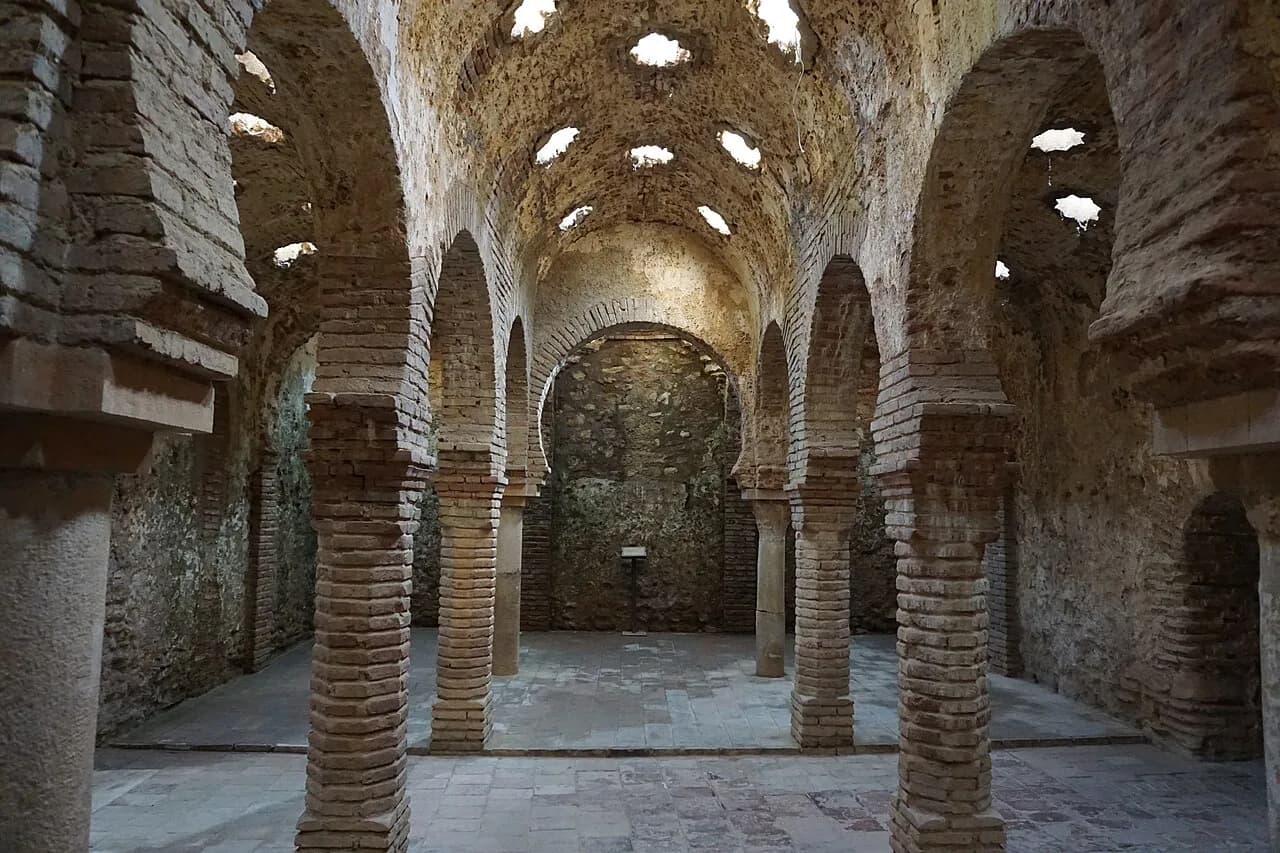
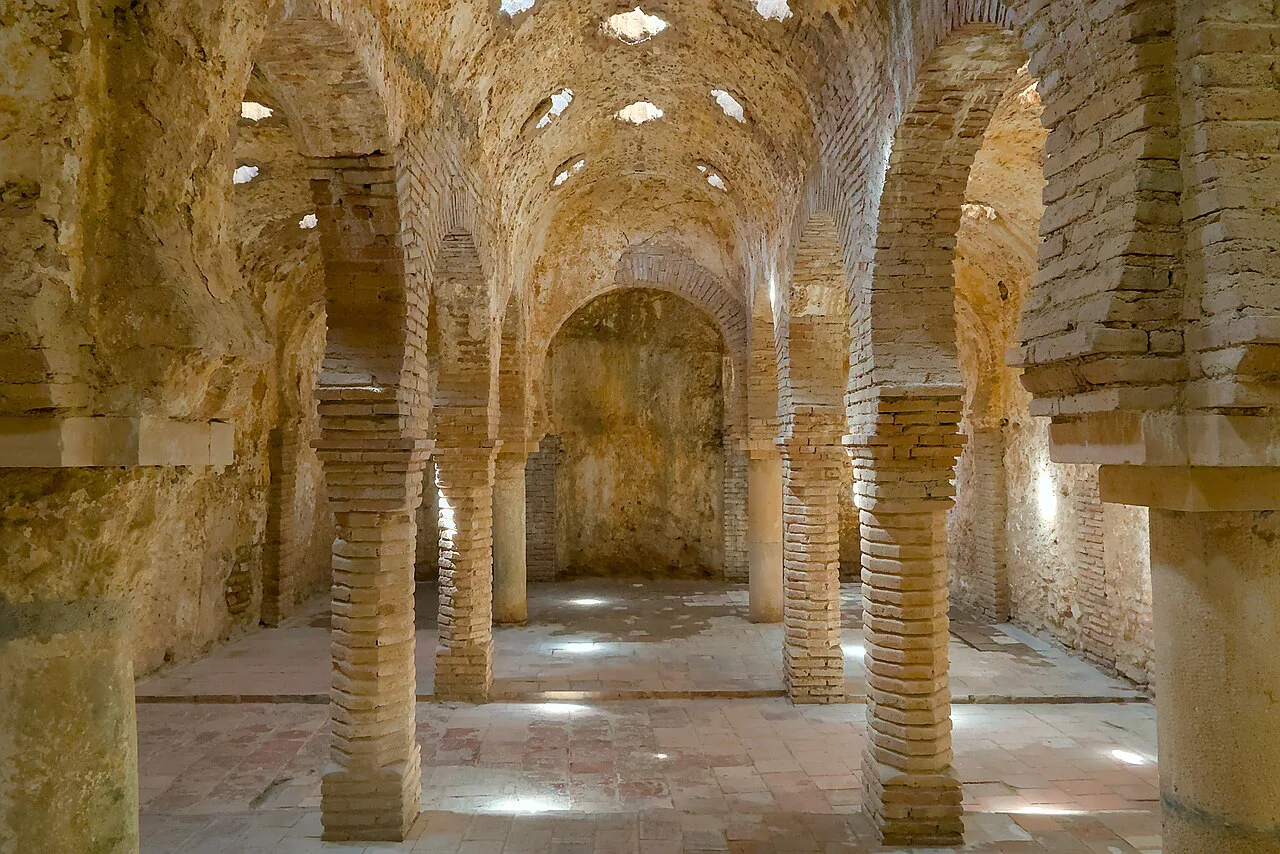
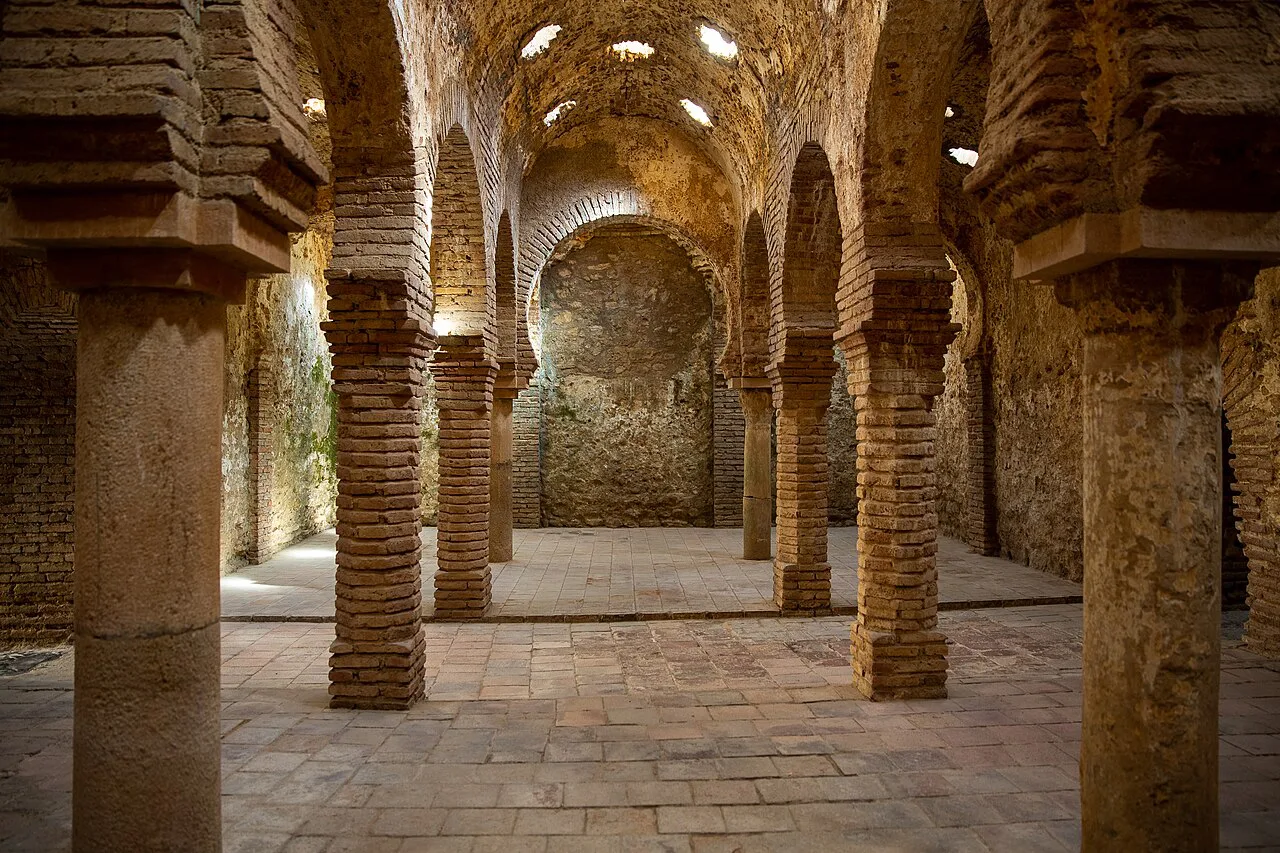
Inside, the building keeps its barrel vaults, with octagonal brick columns and star-shaped openings in the roof that let shafts of light fall into the rooms. These skylights are the detail most people remember, throwing geometric patches of daylight onto the floor and walls, so look up as you move through.
The structure follows the classic Islamic bathhouse sequence of cold, warm and hot rooms, each in its own chamber, which is why the building reads as a series of vaulted spaces rather than a single hall. The brick columns carry the vaults, and the arrangement of the openings controls both light and steam.
How the rooms worked in sequence
Historically a bather moved from the cold room through the warm room to the hot room and back again, with the temperature rising as you went deeper inside. Read the chambers that way as you walk: the first cool vault looks least decorated, and the inner rooms are where the columns and skylights do their work. The building's logic is thermal rather than decorative.
Look for the changing details between rooms rather than treating the vaults as one repeated hall: the octagonal brick shafts, the position of the openings above, and the way the chambers step down or rise. The monument is a preserved shell rather than a furnished interior, so half an hour of attentive looking beats an hour of drifting through.
How long to allow and how it fits a short break
Give the baths 30 to 45 minutes if you want to study the vaults and the room sequence, and rather less if you already know Islamic bathhouse architecture. On a one-day visit to Ronda the slot fits easily between the Puente Nuevo and the old town, because all three sit on one walking line. Treat the baths as a short deliberate stop rather than a destination in themselves.
The Plaza de Toros de Ronda, home of the Real Maestranza, is in the new town by the Alameda del Tajo, a straightforward walk uphill from the bridge. Its museum and squared-off exterior deserve a separate slot rather than being squeezed into the same half-hour as the baths.
Tickets, opening hours and closing days
The town's official tourism portal carries the current opening times, ticket prices and any reduced or free-entry slots for the Baños Árabes, and it also sells a combined monument pass if you plan to see several sights in one day. Check that page for the day you intend to go, since Ronda's monuments do not all keep the same schedule.
Some Ronda monuments close for the mid-afternoon break typical of Andalusian inland towns, and churches can shut their doors to visitors during mass, so build the day around one confirmed slot rather than a tight chain of them. Reserve in advance where the portal allows it, particularly at busy times of year.
What else is close by
The Casa del Rey Moro sits on the cornice of the Tajo near the baths, built into the cliff and known for its garden and the water mine cut down through the rock. It is a natural pair with the bathhouse, since both belong to the Islamic history of this lower part of town, and the Puente Nuevo viewing platforms are a few minutes further on.
The Murallas de Ronda, the old defensive walls, and the Casa del Gigante, a listed Mudéjar house, sit up in the old town and show a completely different side of Ronda. The Palacio de Mondragón, now the municipal museum, and the church of Santa María la Mayor are there too.
The Puerta de Almocábar marked the gateway into the old Islamic suburb outside the walls on this side of town, and it still shows where the fortified city ended. Walking between the gate, the bathhouse and the bridge traces the same medieval edge of town, with no need to drive between any of them.
Timing around Ronda's inland heat
Ronda lies inland in Málaga province and the streets around the gorge collect heat at midday in summer, so the shaded bathhouse interior suits the middle of the day while exposed viewpoints are better in the morning or late afternoon. Plan the day around shade rather than around a fixed checklist.
Take water and a hat, and pace the short, steep climb from the baths back up to the old town; in August it slows anyone down, while in cooler months the same walk is entirely comfortable. Use the viewing points along the way as breaks.
White towns around Ronda
The Serranía de Ronda is the mountain country around the town, and the white villages beyond it are the obvious next step if you have a car. Setenil de las Bodegas draws attention for its houses built directly under the overhanging rock, while Grazalema stands out for white walls against the green of its surrounding natural park. Both sit within the wider network of white towns that Spain.info sets out for the Cádiz side of the route.
Arcos de la Frontera earns its place on the same circuit for its dramatic viewpoints, and Casares for its Arab-origin castle at the top of the village. These are separate outings with their own travel times, so treat them as a second day rather than an afternoon extension.
The baths or the bridge first?
Start at the Puente Nuevo for the gorge view, drop straight down to the Baños Árabes while you are on the lower level, then climb once into the old town. That order saves a steep walk back down and keeps the shaded monument for the hottest part of the day.
The baths are a half-hour stop with real substance rather than a headline sight, so build the day around the bridge and the old town and let them fill the gap between.
Frequently Asked Questions
Are the Baños Árabes in Ronda the same as Aguas de Ronda?
No. The Baños Árabes are the 13th-century Nasrid bathhouse preserved as a historic monument in the old Islamic suburb. Aguas de Ronda is a separate modern spa with water circuits, a sauna and massage, booked on its own terms.
Which other sights are within walking distance of the baths?
The Puente Nuevo and the Casa del Rey Moro are minutes away on the same lower level. The Murallas de Ronda, the Casa del Gigante, the old-town churches and the Palacio de Mondragón sit up in the old town and need a short climb. The bullring is a longer but still walkable stretch across the new town.