
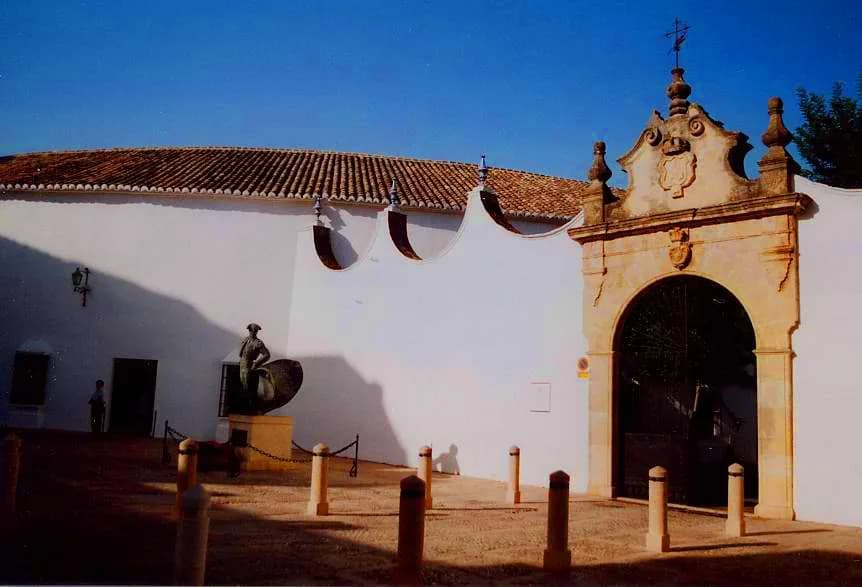
Plaza de Toros de Ronda: what to see inside the bullring and museum

The Plaza de Toros de Ronda is worth an hour of your morning if you want the architecture and the museum rather than a spectacle: a stone arena with tiered seating, run by the Real Maestranza de Caballería de Ronda, with a museum attached. It sits on Calle Virgen de la Paz in the old town, a short walk from the Puente Nuevo, which makes it easy to pair with the gorge and La Ciudad. This guide covers what is inside, how the ticket system works, and how to pace the stop.
What the Plaza de Toros de Ronda is and why it draws visitors
This is a working heritage site rather than a standalone attraction: the bullring, museum, riding school and archives all belong to the Real Maestranza de Caballería de Ronda, founded in 1573 at the request of King Philip II and still a non-profit cultural institution. That matters for how you read the place, because the visit is presented as heritage and education, not entertainment. The building is the draw for most travellers: a circular arena ringed by stone seating, with the museum filling the spaces around it.
Go for the structure and the collection, not for a show. The arena's tiers and the weight of the stonework are what people photograph, and the museum gives the building a context you would otherwise miss. Asking whether a bullfight is scheduled is a separate question from whether the bullring and museum are open.

Where it is: Calle Virgen de la Paz in Ronda's old town
The address is Calle Virgen de la Paz 15, in the old town on the southern side of the gorge. That puts it within a few minutes of the Puente Nuevo, the bridge that spans the Tajo, and on the natural walking line towards La Ciudad, the oldest quarter. If you are building a half-day, start here while the light is still soft, then cross the bridge and work down into the narrow streets.
Ronda's old town is compact enough to cover on foot, which is the point: the bullring, the bridge and the Arab baths all sit within a walk of each other rather than requiring transport. The streets around the Puente Nuevo get busy in the middle of the day, so an early slot at the bullring buys you quieter photographs from the bridge afterwards.

How to get there on foot from the old town and from Ronda station
From the old town, walk to Calle Virgen de la Paz and look for the entrance to the bullring and museum complex; the Alameda del Tajo park is the nearest open space and a useful landmark from the new town side. From Ronda's railway station, the route climbs through the new town and crosses to the old, so allow a relaxed walk rather than a dash, especially with luggage.
Trains and buses into Ronda run on published timetables that change by season, so check the operator's own schedule for your date rather than a remembered departure. Once you are in the old town, everything here is walkable, including the Baños Árabes de Ronda a short walk away. Arriving by train from Málaga puts you within walking distance of the bullring.
The bullring itself: the arena, the seating tiers and the stone stands
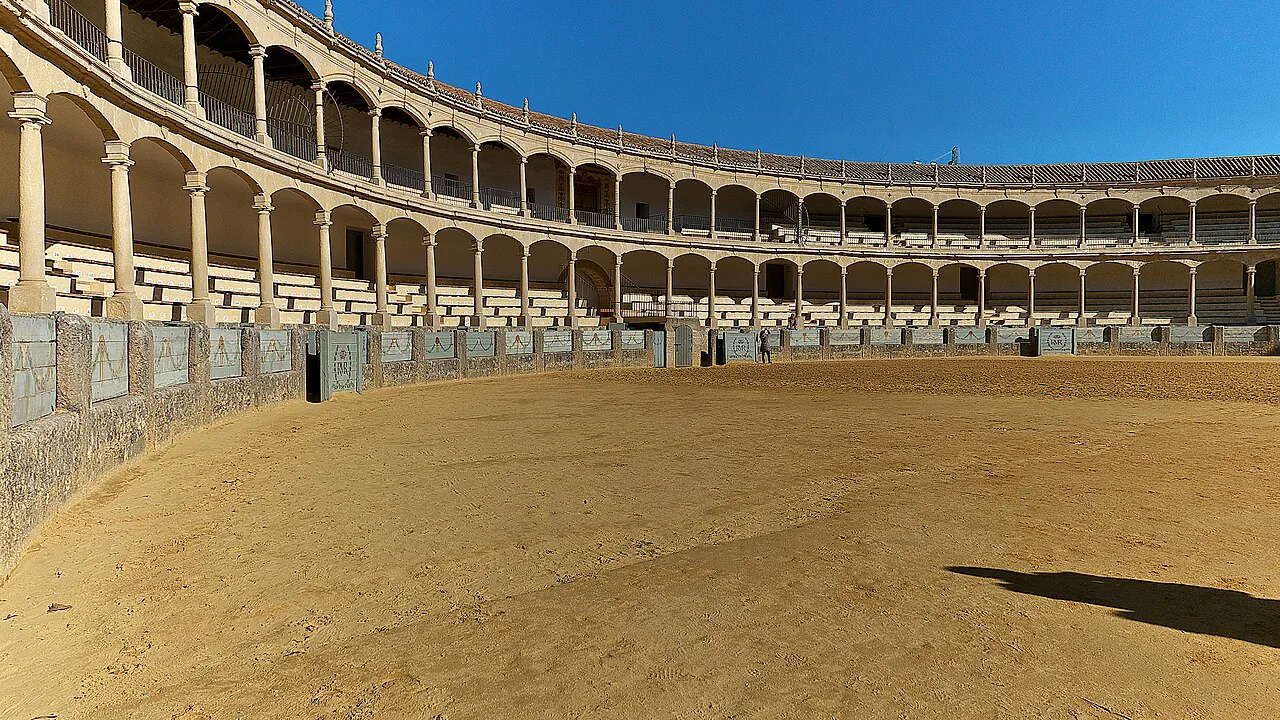
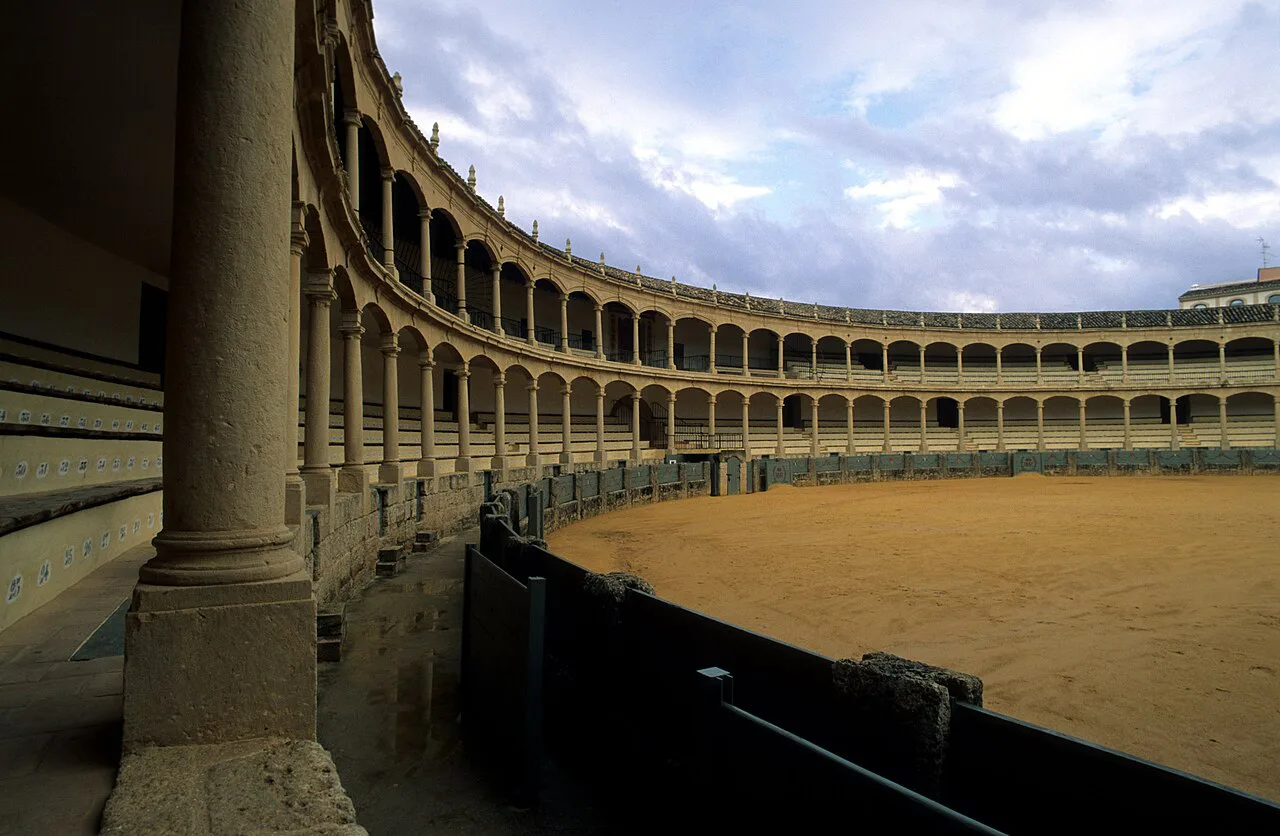
Inside, the visit takes you around the arena rather than into a single room. Look at how the seating rises in concentric rings of stone, and at the relationship between the ring and the stands, which is what gives the building its shape in photographs. The Real Maestranza presents its bullring and museum spaces as the heritage site open to visits, with the museum alongside the arena.
Allow time to stand in the stands and look across, rather than treating the arena as a single photo stop. The stonework and the shade patterns change as you move around the circuit, and that circuit is the main pleasure of the visit. The Real Maestranza's ticket site carries a notice that consolidation works on the bullring are under way, which can affect how much of the building you see up close.
The Museo Taurino: what the museum collection covers
The museum explains the bullring's place in Ronda's history through objects, documents and artworks rather than a single narrative line. The Real Maestranza holds an archive and library whose collections support research as well as display, which is why the museum has more depth than a set of costumes. Read the panels as you go around; they do more work than any single object.
Budget your time here against the arena: many visitors linger in the stands and then rush the museum, which is the wrong way round if the history is what brought you. If you have only an hour in total, give the museum the last twenty minutes and read selectively.
The Real Maestranza de Caballería de Ronda: the institution behind the bullring
The Real Maestranza is a 1573 institution with a riding school, an archive and a cultural programme of lectures, music and publishing, all run on a non-profit basis. Your entry supports a cultural body rather than a private attraction, and the site is presented as heritage to be conserved. Its offices are at the same Calle Virgen de la Paz address as the bullring.
Tickets and opening times: buy online in advance and check the official visit page
Tickets are sold through the Real Maestranza's online system in four steps: choose the date, choose the ticket type from what is on offer, enter your details, then pay by card through a bank gateway. Available dates and times are whatever the Real Maestranza has scheduled, so the booking calendar is the authority for your day. Print the PDF ticket with its barcode before you travel, and check your spam folder if the confirmation email does not arrive.
Online tickets are non-refundable, and not being able to attend is not grounds for a refund. The Real Maestranza cancels and refunds only when it cancels a visit itself, so fix your date before buying rather than hedging with a speculative booking.
Before you pay, check the booking calendar for your date and read the ticket site's current notice about consolidation works on the bullring and improvements to the facilities, rather than relying on a guidebook's times.
Time to allow and how to pace it against the rest of Ronda
Give the bullring and museum about an hour, and stretch it to ninety minutes if you read the museum properly. That fits a morning: bullring first, then the Puente Nuevo, then down into La Ciudad while you still have energy for the climb back. The old town's slopes are the main physical cost of the day.
For a second stop, the Baños Árabes de Ronda are a short walk away and pair naturally with the bullring, since both are about structure rather than display. Check their hours separately, because they keep their own schedule. The Casa del Rey Moro and the Palacio de Mondragón are also in the old town if you have a full day rather than a morning.
Nearby: Puente Nuevo, La Ciudad and the Alameda del Tajo
The Puente Nuevo is the obvious next stop, a few minutes from the bullring door, and the views down into the Tajo are the reason most people come to Ronda at all. Walk across it and find a viewpoint on the far side for the classic photograph back towards the bridge and the white houses on the cliff edge. La Ciudad, the old Moorish quarter, lies beyond, with the church of Santa María la Mayor as its centrepiece.
The Alameda del Tajo, the tree-lined promenade above the gorge, is the easiest place to sit down after the visit and connects the bullring area to the new town; it is on your way back towards the station. For the rest of the town, work through the Ronda Attractions: 6 Visitor Guides collection before you fix your route.
Practical points: conservation works, refunds and closures
The single most useful thing to check before booking is the ticket site's notice about consolidation works on the bullring and improvements to the facilities. It can affect what you see and how you move around the arena, and the Real Maestranza updates it, so read it on the day you buy.
The no-refund rule deserves repeating: once bought, the ticket stands unless the Real Maestranza cancels. An error in purchase is not a valid reason for return, so treat the booking as fixed once you pay.
How to plan the bullring visit around the conservation works
The bullring earns its hour because the building is handsome and the museum gives Ronda's history a spine; it is not a filler stop between the bridge and lunch. Check the ticket site's works notice and the calendar first, book for a date you are sure of, and print the ticket. Then walk out to the Puente Nuevo while the light still works for you.
Explore more Ronda guides
Frequently Asked Questions
Do they still have bullfighting in Ronda?
Bullfighting is part of the building's history and the museum explains it, but whether a corrida falls during your dates is a separate question from whether the bullring and museum are open. Check the Real Maestranza's own listings for what is scheduled rather than assuming either way.
Is the Ronda bullring the oldest in Spain?
The Real Maestranza de Caballería de Ronda dates from 1573, but the institution's age is not the same claim as the arena being Spain's oldest. Treat any such ranking with care and rely on the official site's own description of the site.