Málaga Port and Muelle Uno: Waterfront Walk and Pompidou Cube
Walk Málaga port from Muelle Uno past the Pompidou cube and palm-lined promenade, with distances and routes into the old town.
On this page
Málaga port is the waterfront district between the cruise berths and the edge of the old town, and the stretch worth your time is Muelle Uno with the Centre Pompidou Málaga and the palm-lined Palmeral de las Sorpresas. The cruise port sits about 2 km from the city centre, and the edge of the old town is roughly a 15-minute walk away, so it slots into a city break as a short stroll rather than a separate outing. This guide covers what the port is, how to walk it, where the Pompidou and the palm grove sit, and how the cathedral, Alcazaba and Picasso Museum line up around it.
What Málaga port is and where it sits in the city
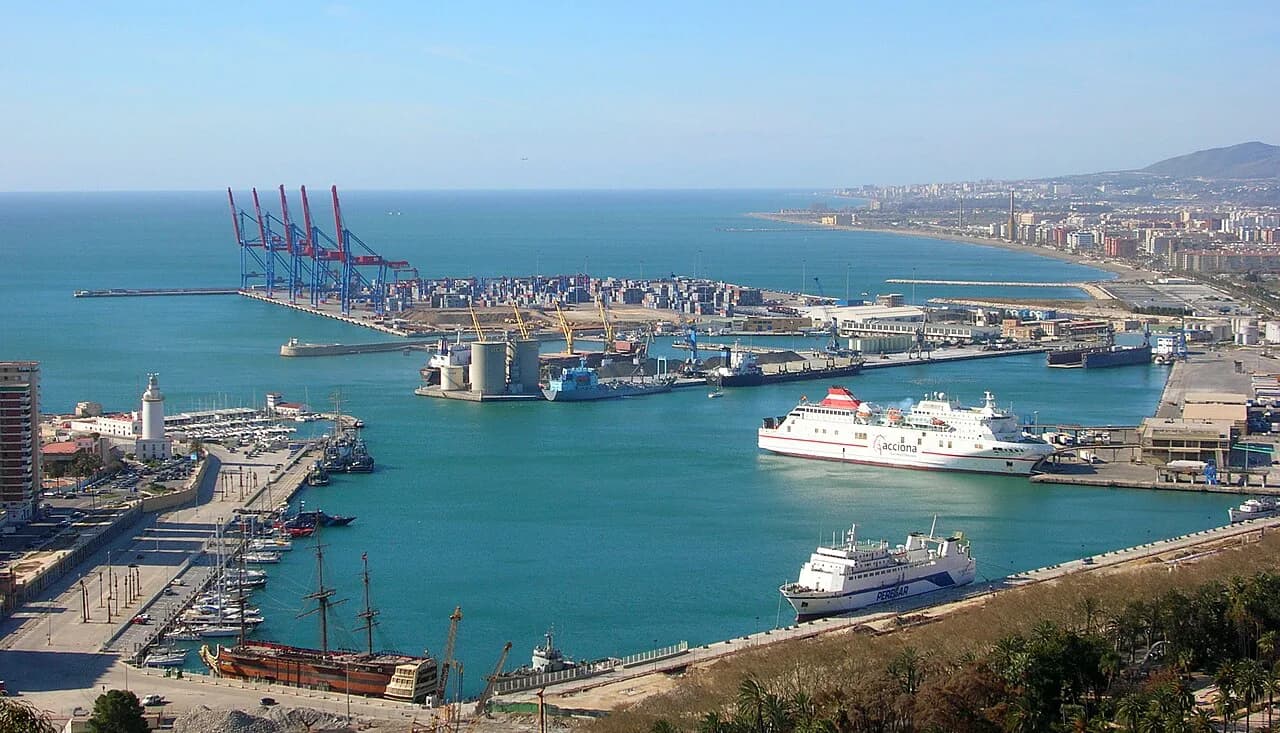
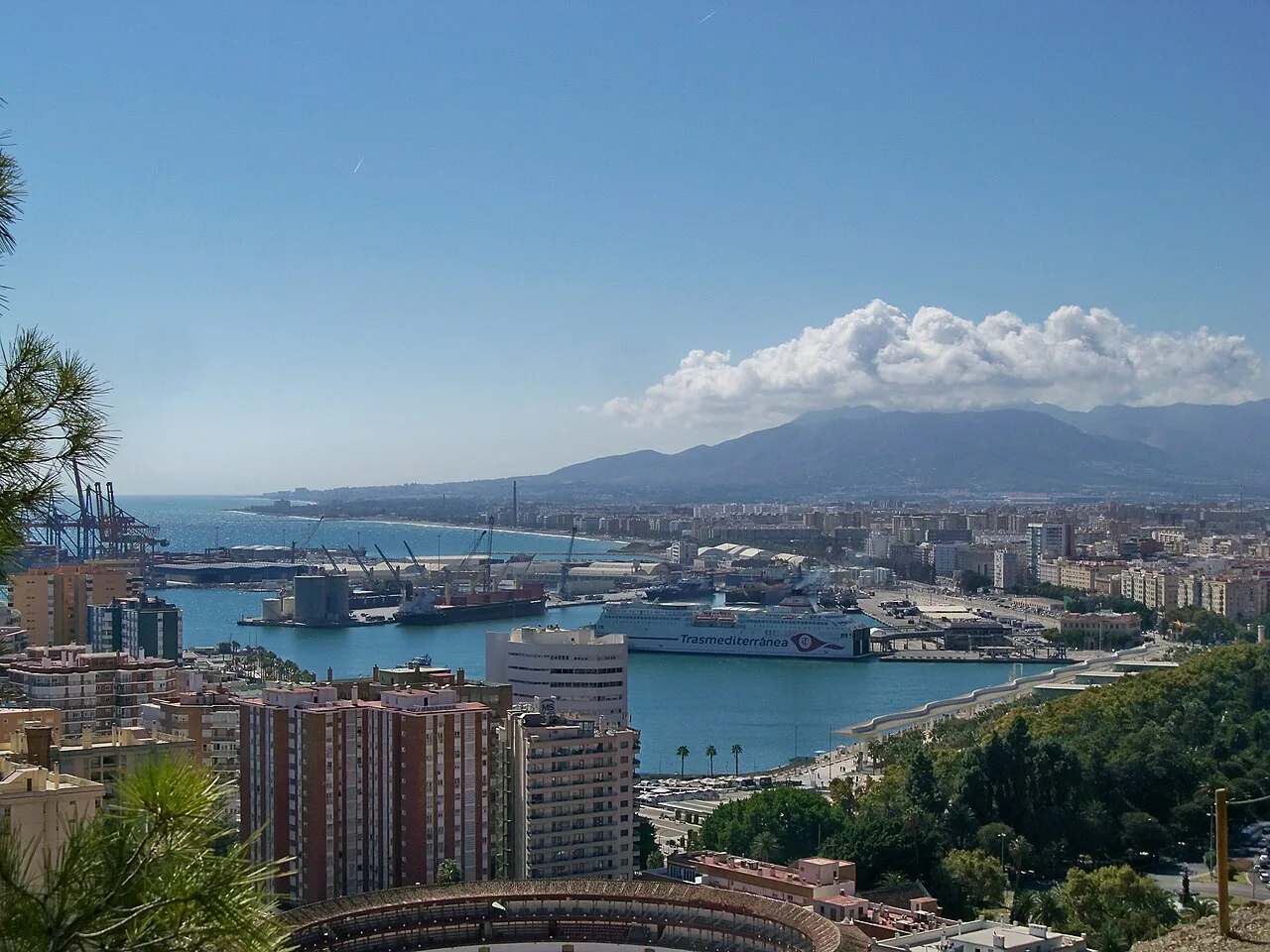
Málaga is a working Mediterranean port on the Costa del Sol in Andalucía, handling cargo, ferries and cruise traffic rather than functioning as a sight in itself. The port area lies on the southern edge of the historic centre, which is why the leisure strip along Muelle Uno feels bolted onto the city rather than set apart from it. Treat the harbour as the southern boundary of your walk and the old town as the northern one.
The port runs roughly two kilometres from the city centre, so the confusion most visitors hit is which end of it they are standing on. Large cruise liners use the eastern area, while smaller ships come into the inner basin beside the Palm Grove waterfront, a five-minute walk from the cathedral. Knowing which berth you are at changes the plan: eastern berths mean a longer walk or the shuttle, the inner basin means you step almost straight into the old town.
How to walk from the port into the old town
On foot, the edge of the old town is about a 15-minute walk from the cruise port, which makes walking the default rather than the fallback. The route runs inland from the harbour front, past the palm planting, and into the grid of streets around the cathedral. Wear something you can walk in for an hour or more, because the return leg is the same distance again.
If you are arriving by ship, the port authority runs a wheelchair-accessible shuttle bus between the port and the city centre, departing every 15 to 20 minutes. The trade-off is straightforward: the shuttle saves the walk in summer heat or with luggage, while walking gives you the Muelle Uno strip and the Pompidou cube on the way in. Use the shuttle one way and walk the other if you want both.
Muelle Uno: shops, restaurants and the waterfront promenade
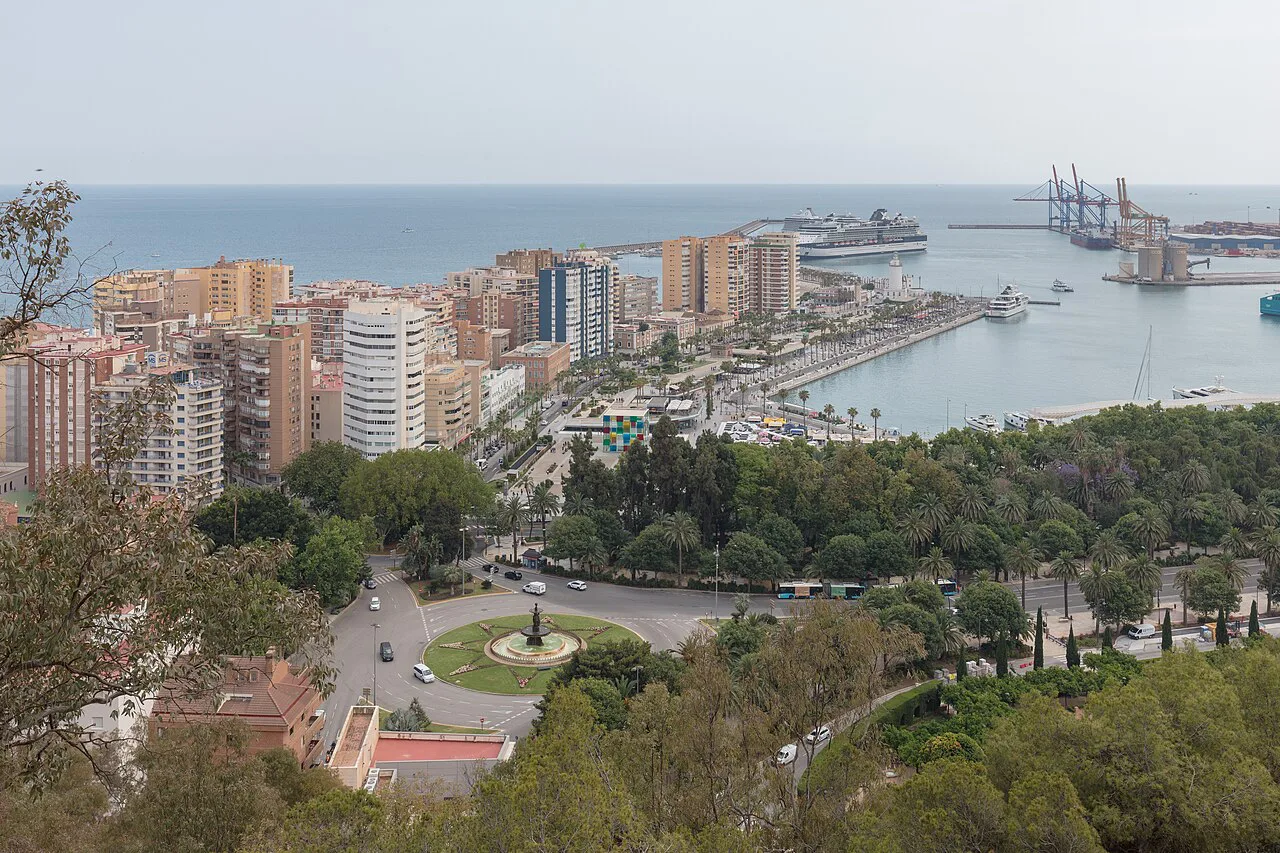
Muelle Uno is the redeveloped quay that turns the working harbour into a place to spend an afternoon, with shops, restaurants and a promenade running along the water. It is the part of the port with a leisure purpose, distinct from the cargo and ferry berths elsewhere in the harbour. Come here for the walk and the outlook, not as a substitute for the old town.
The strip works best as a hinge between the port and the historic centre: start at the water, follow the quay, then turn inland when the cathedral tower comes into view. Because Muelle Uno is a promenade rather than a single sight, time it for the cooler part of the day and keep the old town for when you want shade and narrow streets.
The Centre Pompidou Málaga cube at the port
The Centre Pompidou Málaga is the landmark on the port waterfront at Muelle Uno, and it is the building that tells you where the leisure strip begins. It is a branch of the Paris institution, so you can use it as a meeting point or a bearing even if you skip the galleries. Go in only if modern and contemporary art is on your list.
The Pompidou gives you a reason to walk the port in the first place, and the Muelle Uno shops and cafés around it make the stop comfortable. If you want more galleries of the same kind, the city's wider set of collections is covered in the guide to museums in Málaga, and the Pompidou fits naturally into a Málaga itinerary that keeps the waterfront for the afternoon.
The Palmeral de las Sorpresas and the Muelle Uno waterfront walk
The Palmeral de las Sorpresas is the palm-planted promenade along the port, and it is the section that makes the walk feel like a waterfront park rather than a quay with a view. The palms give you shade at the edge of the water, and the walk continues along Muelle Uno towards the Pompidou. It is the stretch to choose if you only have half an hour.
Follow the quay along Muelle Uno and you get long views back over the city, with the cathedral and the Alcazaba rising behind the port. The walk is flat and open, which means it is pleasant in the morning and exposed at midday in summer. Take water and use the palms as shade stops rather than pressing on without a break.
Arriving by cruise ship: terminals, shuttle bus and walking times
Most ships dock at the El Palmeral terminal outside the city centre, and the port's cruise piers span 1,350 metres, which is why some berths feel close and others do not. Larger liners use the eastern area; smaller ships come into the inner basin near the palm grove, five minutes from the cathedral on foot. Check your berth before deciding between the shuttle and the walk.
If you want to cover the terminal, the Alcazaba, the Picasso Museum and Malagueta beach on foot, allow about 1 hour 30 minutes of walking. That figure is a route length, not a visiting time, so add the hours you want inside each monument on top. On a short call, pick two of those stops and do them properly rather than racing all four.
Around the port on foot: cathedral, Alcazaba and Picasso Museum
The cathedral sits closest to the inner basin, about five minutes from the waterfront on the palm-grove side, so it is the natural first stop when you walk in from the port. The Alcazaba rises behind it on the hillside, and the Picasso Museum sits within the same compact old-town block. That proximity is what makes the port such a practical base for a short city break.
Plan the loop as port, cathedral, Alcazaba, Picasso Museum, and you have a morning that stays within a few streets. If you want the story behind the castle walls before climbing, the guide to Málaga history covers the layers from Phoenician foundations to the Christian reconquest, and the Málaga walking tour sets out a street-level route. Churches in Málaga are worth adding if you want quieter interiors between the big sights.
For the city's headline sights and how they fit together, the guide to things to do in Málaga gives the wider map. Calle Larios is the obvious inland target once you leave the waterfront, and a Málaga boat trip from the port is the other way to see the harbour from the water.
Getting to the port from Málaga airport and across the city
Málaga–Costa del Sol airport is the closest airport to the city, which makes the port an easy first stop on arrival day. From the airport, trains, buses and taxis run into the centre, and the port is then a walk or a short ride from the old town edge.
Within the city, the port is walkable from the historic centre, and cycling is another option along the waterfront. The harbour layout means you can use the Pompidou cube and the palm grove as fixed points to navigate by. Allow more time than you think on port days, when shuttle queues build.
Should the port be your first stop in Málaga?
Make the port your first stop if you are arriving by ship or want a flat, open walk with the Pompidou cube and the palm promenade as landmarks. Skip it first if your priority is the Alcazaba and the cathedral, which sit closer to the old-town core and reward an early start. Either way, the waterfront and the historic centre are close enough to combine in one unhurried day. For the practical details, see the things to do in Málaga.
Explore more Málaga guides
Frequently Asked Questions
Is Málaga walkable from the cruise port?
Yes. The edge of the old town is roughly a 15-minute walk from the cruise port, and a wheelchair-accessible shuttle bus also runs between the port and the city centre every 15 to 20 minutes.
Which part of Spain is Málaga in?
Málaga is in Andalucía, on the Costa del Sol in southern Spain. The port sits on the southern edge of the historic centre.
What is there to see at Málaga port?
The main draws are Muelle Uno, the Centre Pompidou Málaga cube and the palm-lined Palmeral de las Sorpresas, with the cathedral, Alcazaba and Picasso Museum a short walk inland.
Sources
Notes for your next Spanish town break
Optional updates to our guides.
You might also like
Continue reading
More guides you'll find useful