Málaga Old Town: Streets, Plazas and Monuments to Walk
Walk Málaga's old town from Calle Larios and the Plaza de la Constitución to the Alcazaba, Roman theatre and cathedral, with hours and ticket prices.
On this page
Málaga's old town is a tight grid of pedestrian streets between the Alameda Principal, the port and the hill of Gibralfaro, and you can walk its core in half a day. Do the Calle Larios and Plaza de la Constitución spine, the western market edge and the cathedral before you climb to the Alcazaba, which is the steepest and hottest part. This guide covers the quarter's squares and streets, what each monument includes, and the ticket prices and free slots that shape a short break.
The whole of it sits in the centre of Málaga, the port city that anchors the Costa del Sol, with the Alameda Principal and the Mercado de Atarazanas marking the western edge and the harbour close to the south. The Phoenician, Roman and Moorish layers are stacked on top of each other rather than spread out, so most of what you want to see is within a few minutes of the next stop.
Where the old town starts and finishes
The historic centre runs from the Alameda Principal and its flower stalls up through Calle Larios to the Plaza de la Constitución, then east towards the cathedral and the foot of the Alcazaba. The Alameda Principal feeds straight into Calle Larios, the pedestrian street most visitors use as their compass through the quarter, and the Plaza de la Constitución sits at its inland end with the Pasaje de Chinitas and the Casa del Consulado close by.
Treat the Alameda and the Mercado de Atarazanas as the western gate, the cathedral as the middle, and the Alcazaba, Roman theatre and Castillo de Gibralfaro as the eastern climb. That order means you never double back for a sight you skipped, and it puts the hill at the end of the walk rather than the middle.
The harbour sits just south of the cathedral, so the port and the Centre Pompidou can close a circuit that began at the Alameda without retracing your steps. Between the port and the Alameda the quarter is almost entirely flat and paved, which makes the walking easy until you start the ascent.
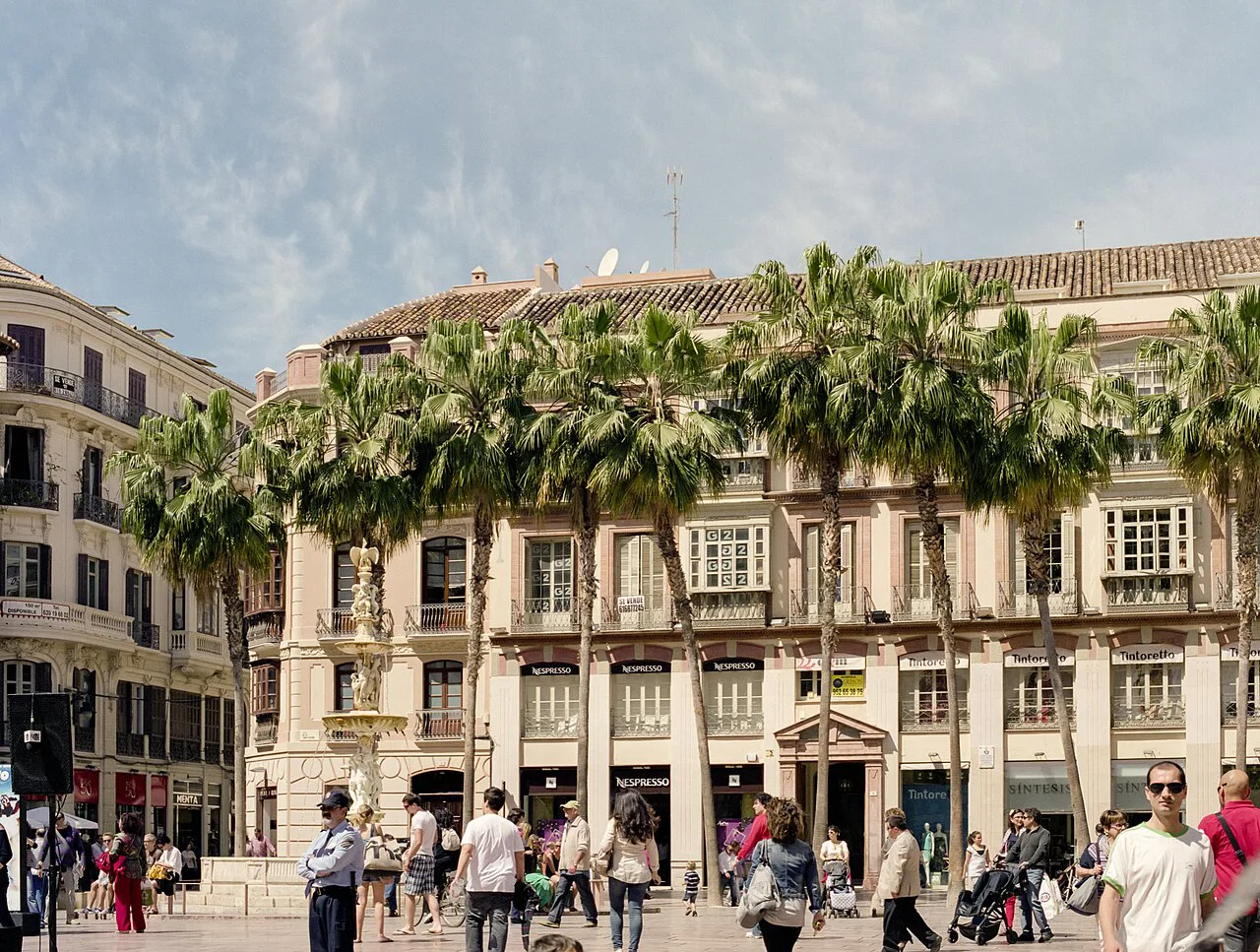
Calle Larios and the Plaza de la Constitución
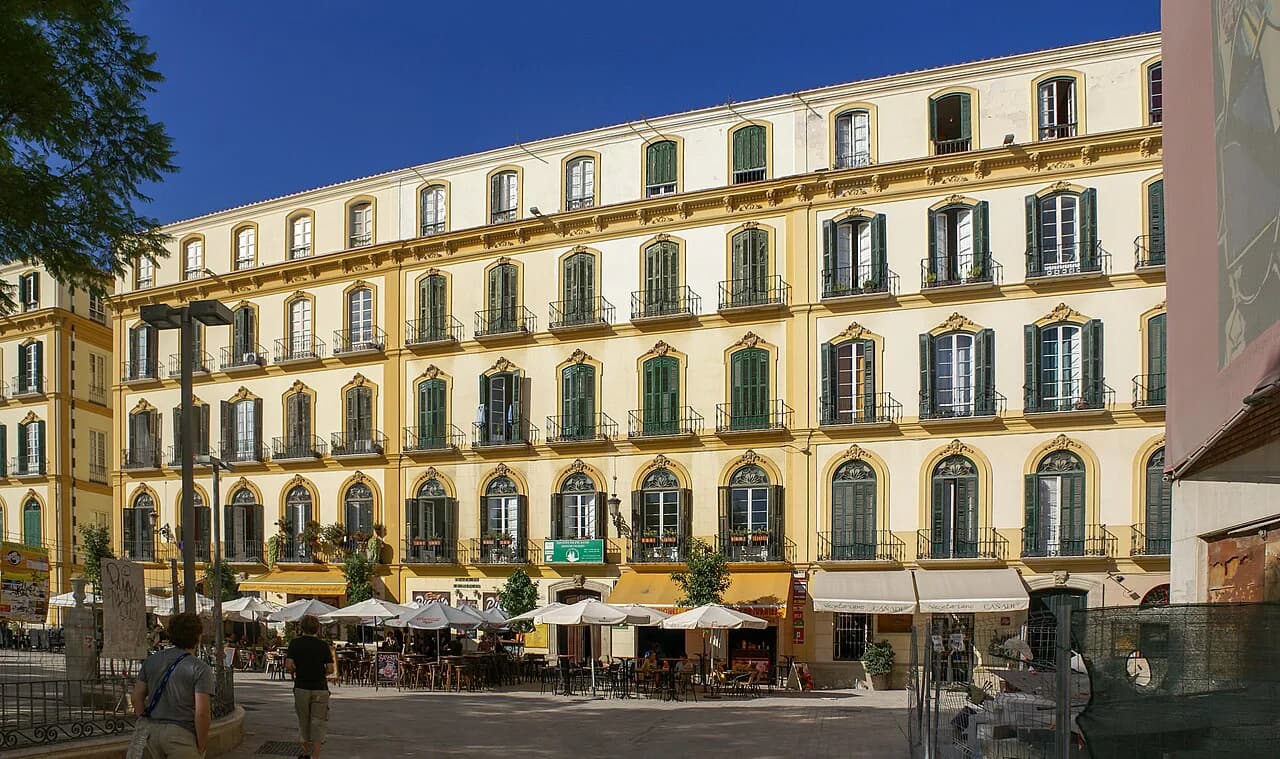
Calle Larios is the city's best-known shopping street, lined with the nineteenth-century buildings and cafés that connect the Plaza de la Constitución with the port. Walk it once end to end to orient yourself, noting the side streets that run off towards the cathedral and the Alameda.
The plaza at the top is the natural pause in the walk, framed by the Pasaje de Chinitas, the Casa del Consulado and the Ateneo de Málaga. From here the old town's streets are narrow and shaded enough to walk without a plan, but the cathedral is only a few minutes east and worth aiming for before the light shifts.
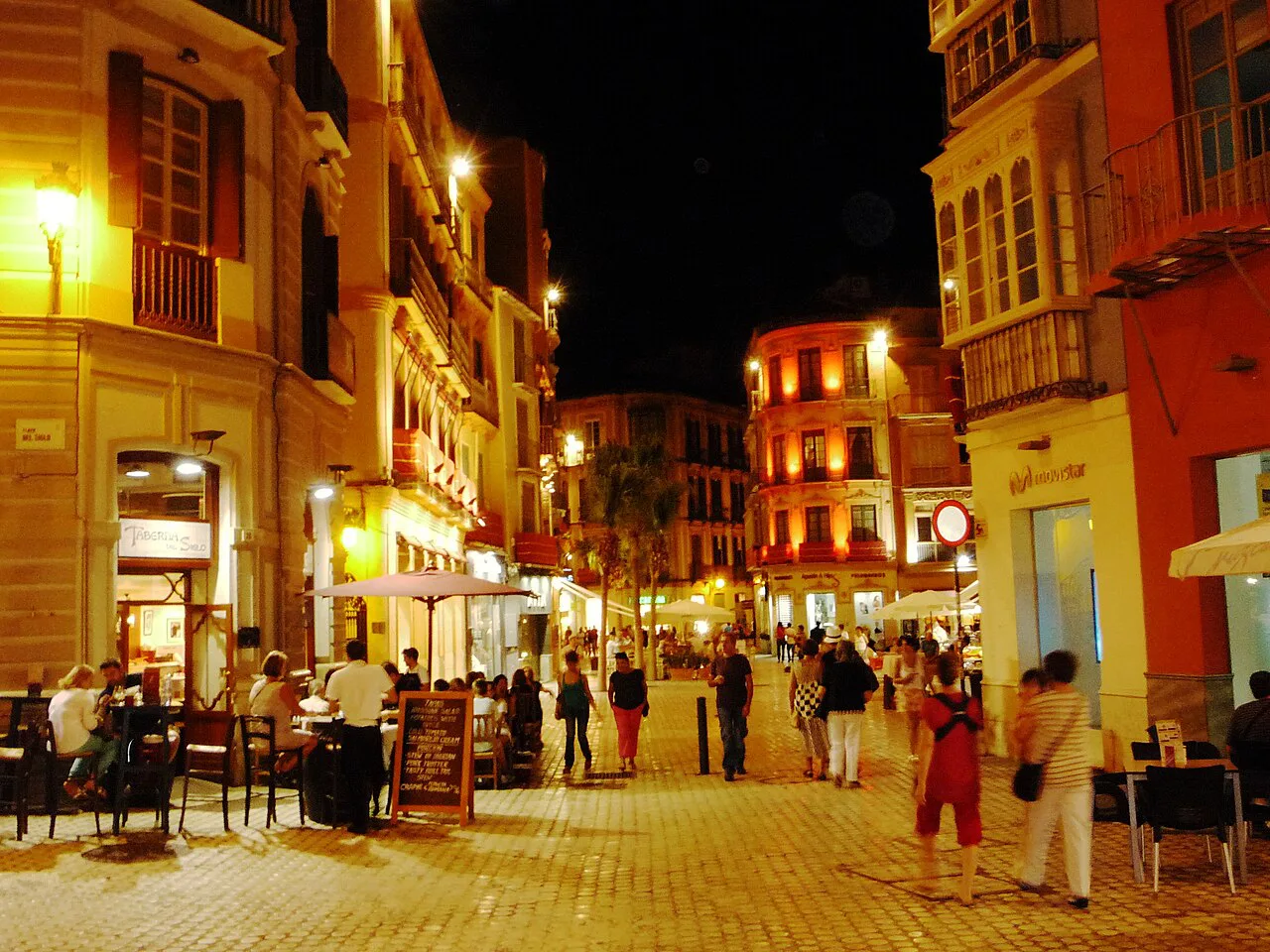
La Alameda Principal and the Mercado de Atarazanas
La Alameda Principal, recently remodelled, is a broad promenade with wide pavements, shops and small flower stalls that marks the western edge of the historic centre. Use it to approach the old town rather than to walk through it, since it is a thoroughfare with more traffic than the lanes beyond.
The Mercado de Atarazanas is a nineteenth-century market built on the site of older Arab shipyards, and its stained-glass window and produce stalls make it the one working building on this side of the quarter worth detouring for. Visit it as a building and a market, on a morning when the stalls are busy, rather than as a stop in the monument trail.
The Alcazaba, the Roman theatre and the climb to Gibralfaro
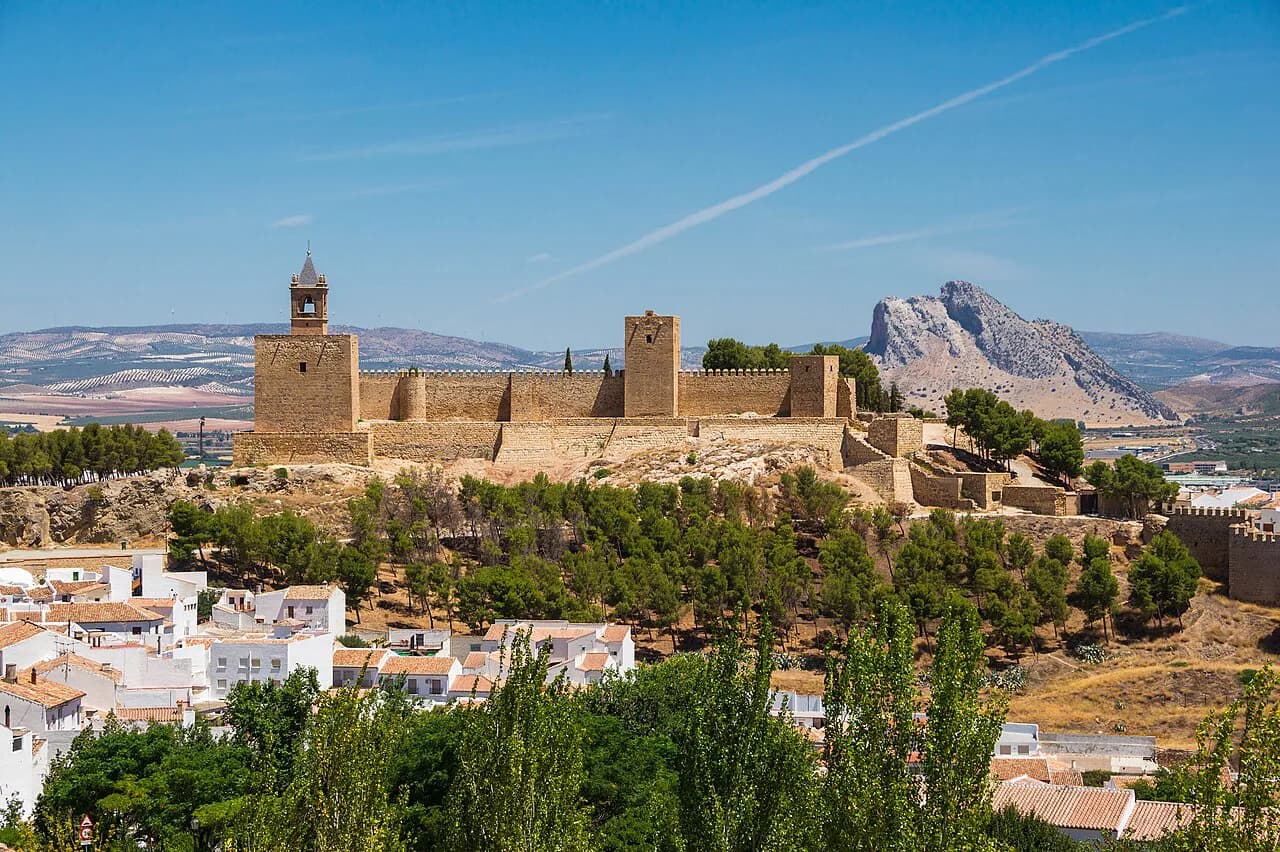
The Alcazaba is a palace-fortress begun in the eleventh century on the slopes of Gibralfaro, with a double wall, fortified gates, courtyards and reflecting pools, and it is the single sight that most rewards a visit in Málaga. The Roman theatre sits at its foot, a first-century BC structure rediscovered in 1951 that you can see without buying a ticket.
Allow roughly one and a half to two hours for the Alcazaba and the theatre together, and treat the Castillo de Gibralfaro above as a separate climb reached by bus 35 from the Paseo del Parque or on foot by a long, exposed path. Gibralfaro was built in the fourteenth century to protect the Alcazaba, and its double walls and eight towers look down on the city and the Mediterranean.
The order that works is theatre first, then the Alcazaba, then Gibralfaro if you still have the legs for it, because the two fortresses sit on the same hillside. The climb is steep and unshaded in the middle of the day, so an early start or a late afternoon is the better choice in summer.
The cathedral, La Manquita, in the street plan
The Catedral de la Encarnación, nicknamed La Manquita because its second tower was never finished, sits between the Plaza de la Constitución and the Alcazaba, and it began as a project on the site of the city's former main mosque in 1528. The build ran for more than 250 years, which explains the mix of Renaissance, Gothic and Baroque work you see inside and out.
Plan on about an hour inside, where the tall columns, the choir stalls carved by Pedro de Mena and the side chapels carry the visit. The cathedral opens to visitors on weekday and weekend schedules that change through the season, so check the current times and any services before you set out.
Museums to slot in: the Picasso and the Pompidou
The Museo Picasso Málaga occupies the sixteenth-century Palacio de Buenavista and holds more than 200 works spanning Picasso's long career, donated by his family, and it is the museum to pick if you want one art stop in the old town. Opening times vary through the year, including longer hours in July and August, and entry is free for the last two hours on Sundays, which brings the biggest crowds.
The Centre Pompidou Málaga, the colourful glass cube at the port, is the contemporary alternative and fits neatly at the end of a walk that finishes near the harbour. The Museo de Málaga, the largest museum in Andalucía, combines fine art and archaeology in an eighteenth-century palace and waives its entry on Sundays.
If museums are the main reason for the trip, the Picasso and the Pompidou are the two to build a day around, with the smaller collections filling the gaps.
Ticket prices and free entry, with the time windows
The Alcazaba costs 3.50 euros on its own or 5.50 euros combined with Gibralfaro, and entry is free on Sundays from 14.00 at both fortresses. The theatre below is free to visit, which makes the courtyard outside the Alcazaba a good stop even if you skip the paid interior.
The cathedral ticket is 10 euros, with reductions for older visitors, students and teenagers, and free entry on Saturday mornings from 8.30 to 9.00 and Sunday mornings from 8.30 to 9.30. The Picasso museum charges 7 euros for the permanent collection, 6 euros reduced, or 12 euros for a combined ticket, and is free for the last two hours on Sundays.
Expect the Sunday-afternoon Alcazaba slot and the Picasso's final hours to be the busiest of the week, since free entry pulls in both locals and visitors. If you are paying anyway, a weekday morning buys you quieter courtyards and shorter queues.
When the quarter gets hot and crowded
Málaga has a Mediterranean climate with mild winters and summers in the high twenties and low thirties, sometimes above, and the old town's paving and stone walls hold the heat through the middle of the day. Walk the flat lanes and the cathedral in the morning, retreat for the hottest hours, and climb to the Alcazaba when the light softens.
The busiest stretches are Calle Larios and the Plaza de la Constitución at shopping hours, and the Alcazaba and Gibralfaro on free-entry Sunday afternoons. Side streets such as those around the cathedral are quieter, and the port end opens up when the day-trippers head back.
Fitting the old town into a short break
A single day covers the spine, the cathedral and the Alcazaba at an unhurried pace, and two or three days let you add the Picasso, the Pompidou and Gibralfaro without rushing. The quarter is compact enough that you can return to the same plaza in the evening without a plan.
Flights land at Málaga airport on the Costa del Sol, and the port sits at the southern edge of the old town, so a harbour walk doubles as the arrival or departure route. Trains and buses to the rest of Andalucía run from the city's transport hubs, and you should check current timetables rather than assume a frequency.
Which end of the old town to start from
Start at the Alameda Principal or the Mercado de Atarazanas, walk Calle Larios to the Plaza de la Constitución, see the cathedral, and finish at the Alcazaba and the Roman theatre. That order keeps the hill for the coolest part of the day and leaves the port and the Pompidou as an easy final stretch.
Check the cathedral, Alcazaba and Picasso museum times before you go, since the free slots and seasonal hours decide how the day fits together.
Explore more Málaga guides
Sources
Notes for your next Spanish town break
Optional updates to our guides.
You might also like
Continue reading
More guides you'll find useful