Things to Do in Las Palmas de Gran Canaria: Vegueta, Triana and the Coast
Plan a Las Palmas break around Vegueta's cathedral and plazas, Triana's shopping street, the city museums and the Atlantic promenade at Las Canteras.
On this page
Las Palmas de Gran Canaria works best as two halves: the historic centre of Vegueta and Triana, where the cathedral, plazas and museums sit within a few minutes of each other, and the Atlantic front at Las Canteras, where the city meets the ocean. Give the old town a morning and the seafront an afternoon rather than trying to tick off both at once. This guide maps what to see, how the two halves connect on foot and how the city fits a short break or a port stop.
The five things that define the city are the Catedral de Santa Ana and its plaza, the Casa de Colón, El Museo Canario, the pedestrian Calle Mayor de Triana and the long promenade at Las Canteras. Everything else, from the CAAM to the Pueblo Canario, slots around those five. Start with the first four, which cluster together, and keep the seafront for when the day warms up.
Vegueta, the founding neighbourhood
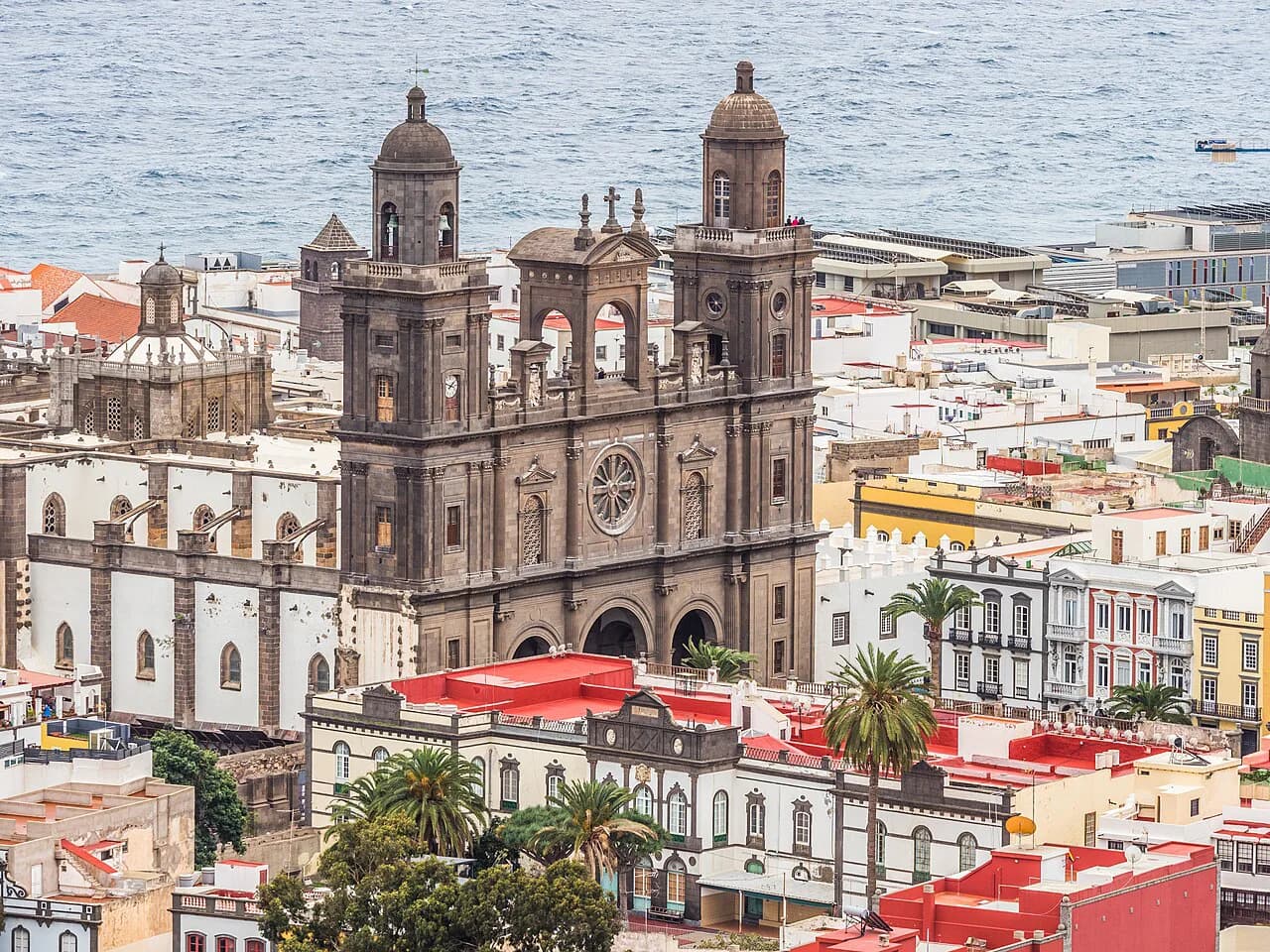
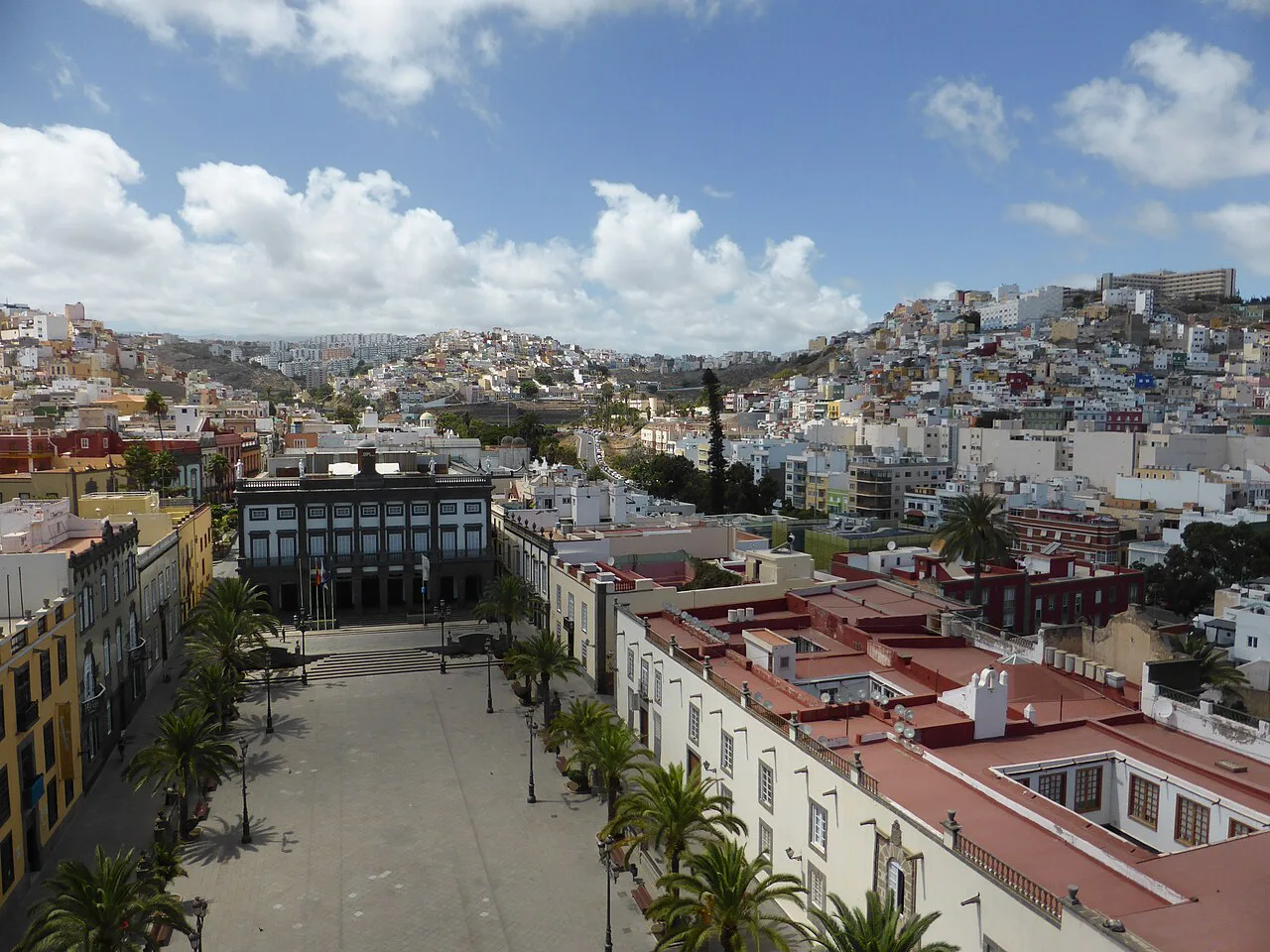
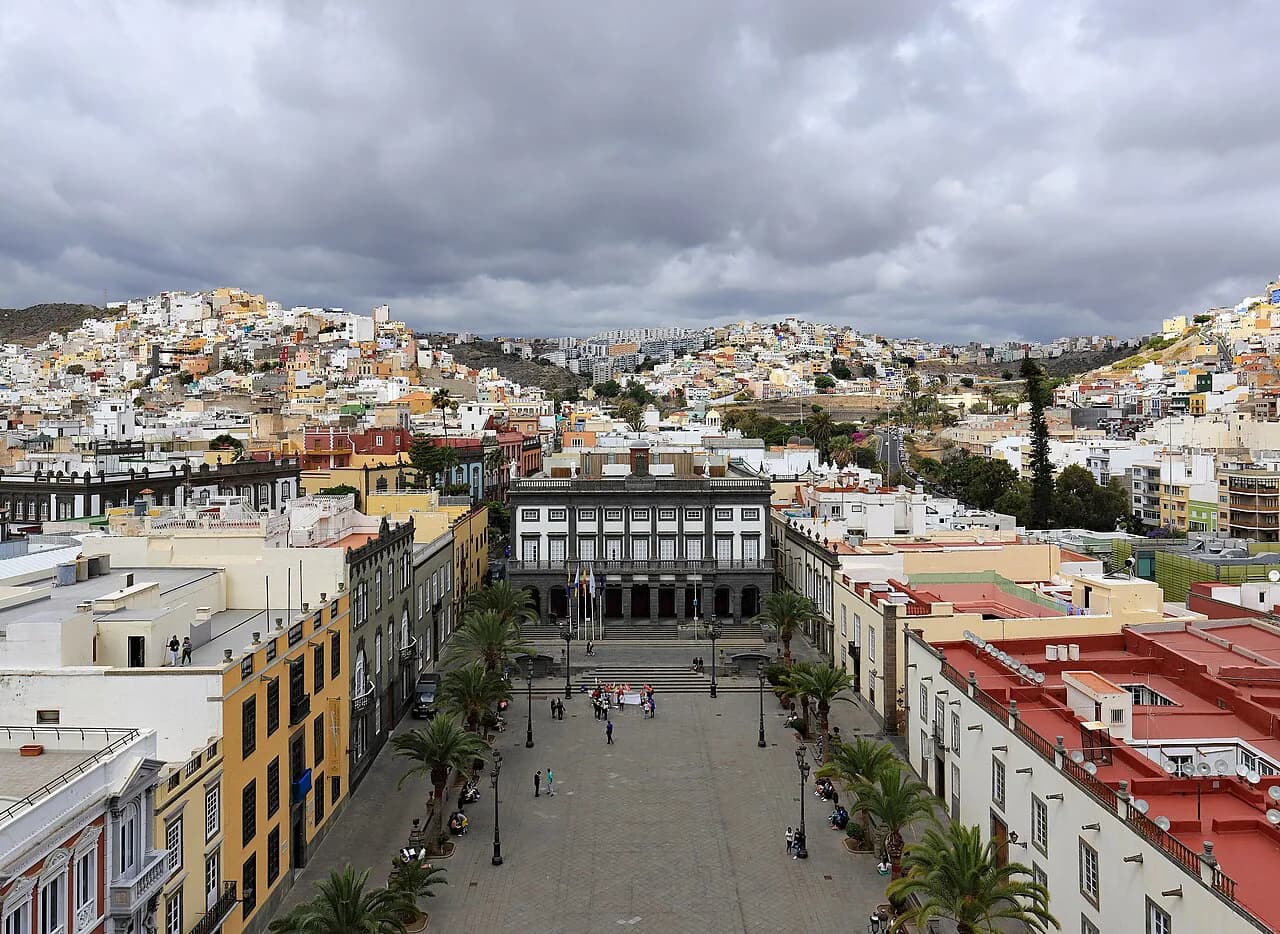
Vegueta is the oldest part of the city, and its centre of gravity is the Plaza de Santa Ana, where the bronze dogs at the foot of the cathedral steps mark the entrance to the barrio. Around it, the cobbled streets, small squares, chapels and townhouses with traditional Canarian balconies make up the core of any first visit. Aim for the plaza first and let the surrounding lanes pull you outwards.
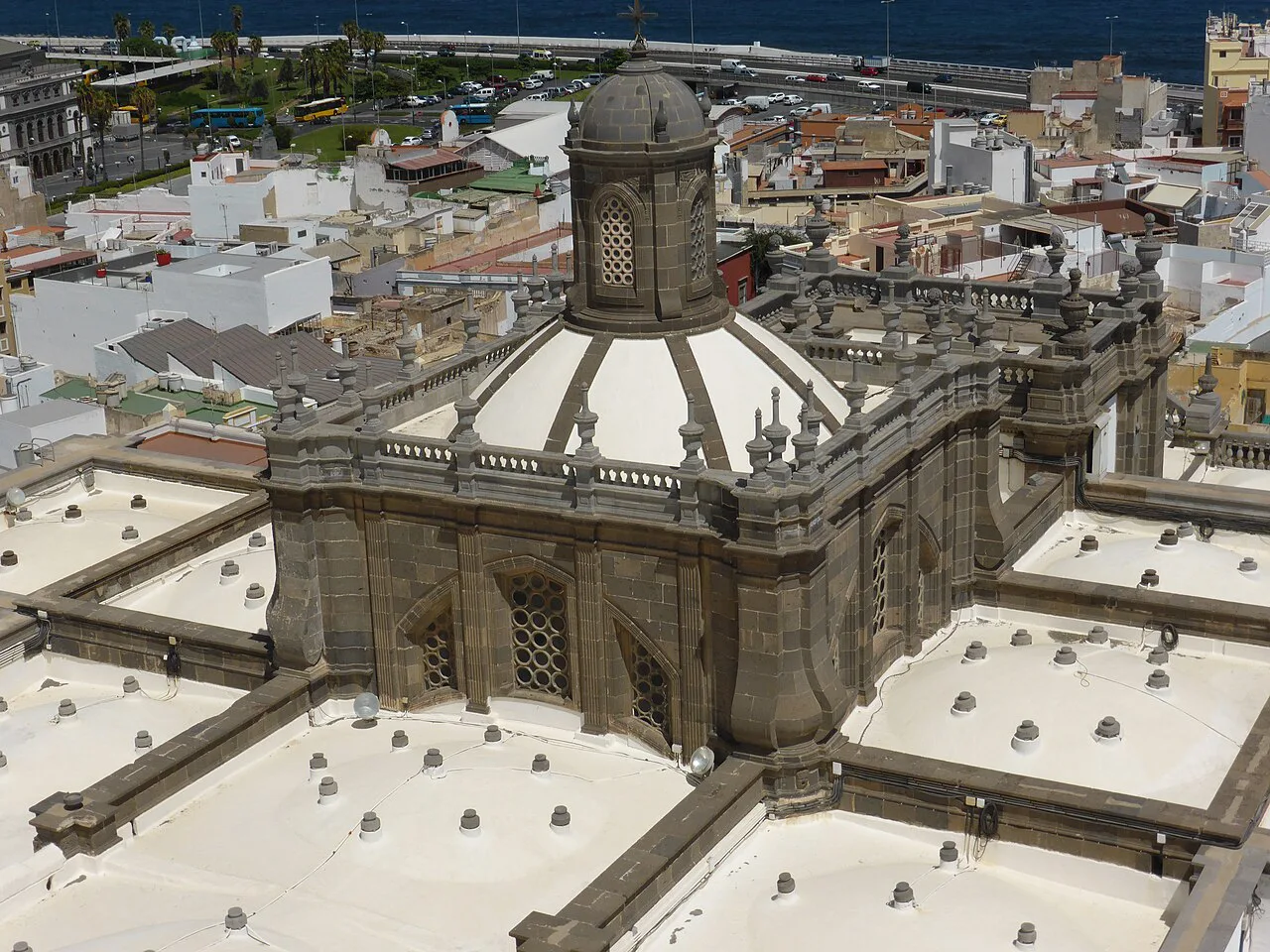
The Catedral de Santa Ana has presided over the Plaza de Santa Ana for five centuries and was built on the orders of the Catholic Monarchs, though the building was never finished, which is why several architectural styles sit side by side. The Museo Diocesano de Arte Sacro occupies one side, arranged around the Patio de los Naranjos. From the top of the cathedral you get the city and the bay laid out below you.
The Casa de Colón, a museum and centre for Americanist studies in a singular historic building, takes the story of the Canary Islands and its relationship with the Americas as its subject, and Christopher Columbus runs through the whole neighbourhood. It sits naturally into a loop of the old town rather than being a separate trip. If you enjoy this kind of Atlantic-history stop, the things to do in a Coruña cover a comparable maritime heritage in another Spanish port. Allow it real time: this is one of the city's substantial collections, not a single-room stop.
The Ermita de San Antonio Abad and the Columbus connection
The Ermita de San Antonio Abad is a small chapel in Vegueta where a plaque records that Columbus prayed before setting out for the New World. Treat it as a short pause on the way between the cathedral and the Casa de Colón, not a destination in its own right. The appeal is the connection rather than scale.
Pairing the chapel with the Casa de Colón makes sense because the two explain the same story from different angles: one is a place of memory, the other a museum of Atlantic history. Walk between them while you are already in the old town and you avoid a second trip back. If you only have time for one, take the museum.
El Museo Canario and the René Verneau room
El Museo Canario answers the question of how the island's aboriginal population lived, covering a people of Berber origin who inhabited Gran Canaria from around the change of era until the fifteenth-century Castilian conquest and colonisation. The best-known room, the René Verneau, displays a large collection of skulls and several mummies in its cabinets. It is the most direct history lesson in the city, and it sits in the casco histórico, so it fits neatly between the cathedral and Triana.
Budget more time here than for the churches if the pre-Hispanic period interests you, and less if you are short of hours and want the cathedral and Casa de Colón to carry the day. The museum rewards slow reading of its displays rather than a quick sweep. Check the museum's own published information for opening days and ticket terms before you build the day around it.
The CAAM on Calle de Los Balcones
The Centro Atlántico de Arte Moderno occupies a historic building on the Calle de Los Balcones in Vegueta and is devoted to contemporary art and culture. Its particular character comes from a tricontinental brief, with exhibitions and thinking that rotate around Africa, America and Europe. That makes it the natural counterweight to El Museo Canario: one explains the island's deep past, the other its modern place in the Atlantic world.
Slot the CAAM into an old-town morning rather than saving it for later, since it sits on the same short stretch as the cathedral and the Casa de Colón. Contemporary art is not to everyone's taste, so judge it against your remaining hours; if you would rather spend them on the cathedral roof and a plaza, do that instead. The building's position on Calle de Los Balcones is worth the walk past regardless.
Triana and Calle Mayor de Triana
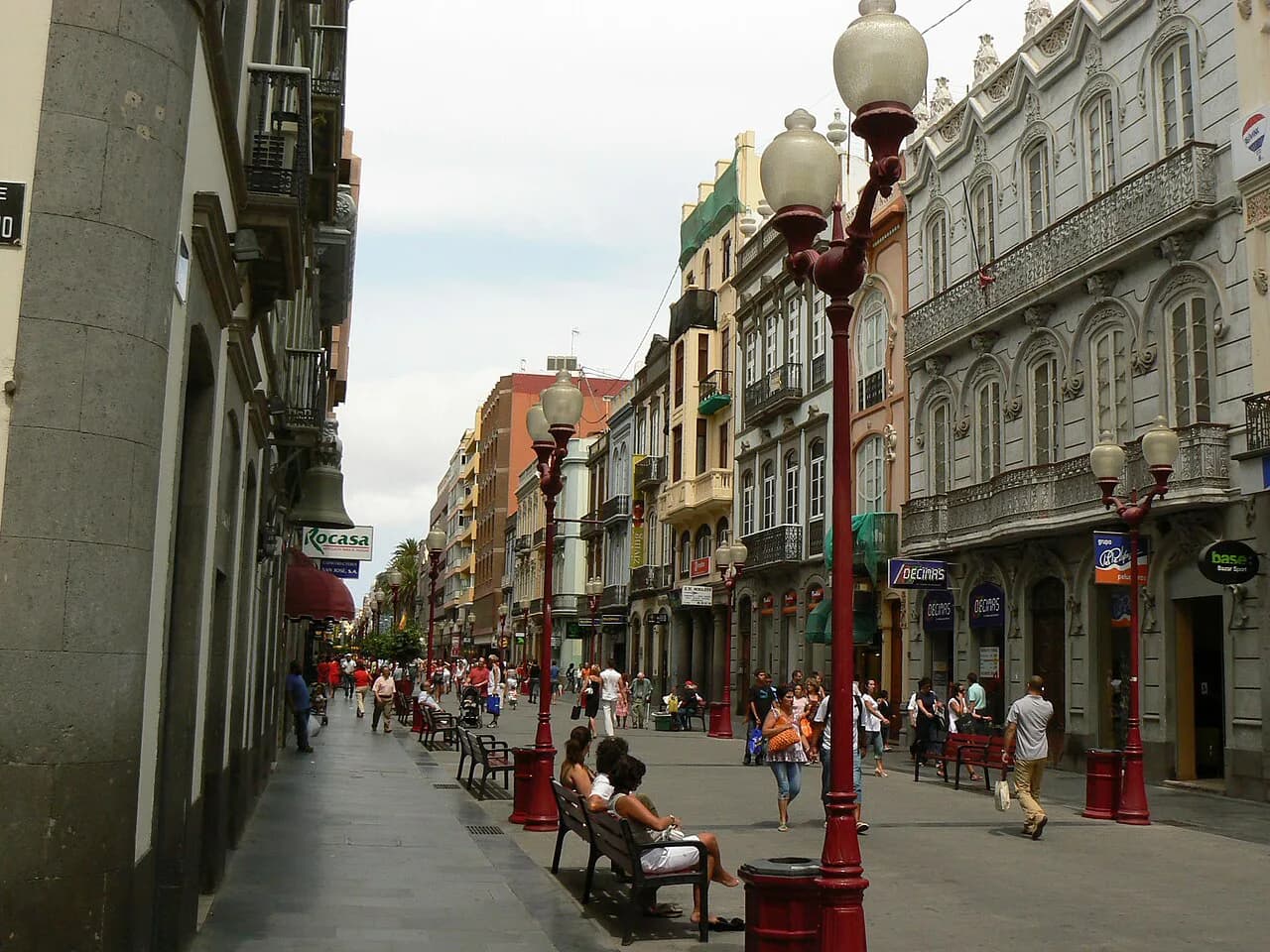
Triana is the busy pedestrian heart of the city, and the Calle Mayor de Triana is its spine, lined with shops and with a striking run of modernista facades. It is a street for strolling, browsing and architecture rather than a sight with a ticket. The Teatro Pérez Galdós sits at one end, with the Teatro Cuyás a couple of steps away.
Come to Triana after Vegueta rather than before: the two quarters run into each other, so you can leave the stone lanes, cross into the shopping streets and finish at the theatre end without any transport. Shops keep Spanish city hours, so a late-afternoon visit is more useful than an early-morning one.
Plaza de Cairasco and the Gabinete Literario
The Plaza de Cairasco, at the start of Triana, is one of the loveliest corners in the city, framed by the modernista Gabinete Literario and the century-old Hotel Madrid. It has repeatedly served as a film set for Spanish and international productions, which tells you how intact the square looks. It is a genuine five-minute stop on the walk between the two quarters.
Parque Doramas and Pueblo Canario in Ciudad Jardín
The Parque Doramas in Ciudad Jardín is a lush garden of palms, fountains and ponds that gives the city a quiet green pause away from the old town. Inside it sit the Hotel Santa Catalina and the Pueblo Canario, both designed by the architect Miguel Martín-Fernández de la Torre with his brother, the artist Néstor. The Pueblo Canario is a group of buildings modelled on traditional Canarian architecture, with a terrace for sitting out.
Treat the park as a slow hour rather than a full sight: it is worth the detour if you want gardens and Canarian-style buildings in one place, and it is easy to skip if your time is short and the old town still has gaps. It sits outside the historic centre, so plan it as a separate hop rather than a walk-through.
The Atlantic front at Las Canteras
Las Canteras is the city's great open-air room, a long promenade where people walk, stop at a terrace, sit and watch the Atlantic, or step down to the sand. It is not a separate resort tacked onto the city; it is part of how Las Palmas lives, which is why it deserves proper time rather than a quick photograph. Walk the promenade end to end for the sense of the place.
Plan the seafront for the afternoon, after the stone streets of Vegueta have had the cooler morning. The change of register is the point: from churches and museums to salt air, a wide promenade and the horizon. That rhythm, old town early and coast later, is the most useful decision you will make in Las Palmas.
El Confital and Las Alcaravaneras
El Confital is the counterpoint to Las Canteras: the city turns wilder, more open and more volcanic, and the landscape and the feel of the place change with it. It is the side of Las Palmas where the scenery takes over, and it rewards going with time to spare rather than squeezing it in before dinner.
Las Alcaravaneras is the quieter urban alternative, calmer and less scenic than Las Canteras but pleasant for an unhurried walk and a glimpse of everyday city life. Choose between the three by mood: promenade buzz at Las Canteras, raw Atlantic landscape at El Confital, calm at Las Alcaravaneras.
Views over the city and the bay
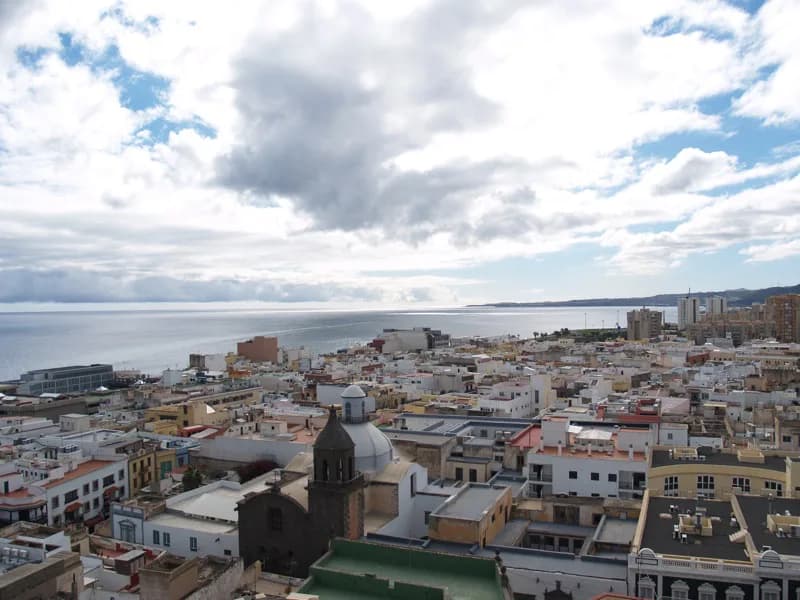
The best-known view in Las Palmas is from the top of the Catedral de Santa Ana, where the city and the bay of Las Palmas open out below. It is the one viewpoint within the old town itself, which makes it easy to fold into a Vegueta morning. Treat the climb as a decision: pay it if you want the overview, skip it if heights or queues slow you down.
The Mirador de Altavista gives you the city from further out, a different angle from the cathedral tower. If you only have one clear view in your itinerary, take the cathedral and the bay, because it puts the old town you have just walked in context. The Altavista view is worth it when you have a car or time to spare on the city's edge.
How Vegueta and Triana fit together on foot
Vegueta and Triana are continuous: you can leave the Plaza de Santa Ana, walk the old lanes, cross into the shopping streets and come out at the Teatro Pérez Galdós without a bus or a taxi. That means order matters. Start at the cathedral end, work through the museums, and let Triana carry you towards the city centre and on to the coast.
Keep a map to hand, because the old town's lanes twist and a wrong turn costs more time than distance. A printed or offline map is the single most useful thing for a first day here, more than any list of sights.
A sample day: old town in the morning, seafront in the afternoon
Begin at the Plaza de Santa Ana with the cathedral, then take the Casa de Colón, the Ermita de San Antonio Abad and El Museo Canario while the morning is still cool. Cross into Triana for the Calle Mayor de Triana and the Plaza de Cairasco, and stop for lunch on the way. Keep the afternoon free for Las Canteras and its promenade.
If you have a second day, use it for the CAAM, the Parque Doramas and the Pueblo Canario, then return to the seafront in the evening when the light softens. Spreading the city over two days like this keeps the historic centre from blurring into one long morning of stone.
A short break or a port stop
The old town alone fills a comfortable half-day, and adding Las Canteras makes a full day. With two days you can take the museums properly and still give the Atlantic front a proper walk. That shape suits a city break far better than a rushed checklist of everything.
From a cruise call, concentrate on Vegueta and Triana, which sit together and reward a short walk, and leave Las Canteras for a longer stay. The cathedral, the Casa de Colón and the Plaza de Santa Ana give the essence of the city in a few hours. The old town is worth seeing even from a cruise stop.
Getting around and connecting to the island
Walking is the right way to see the historic centre: Vegueta and Triana are compact enough for a morning's stroll. The seafront at Las Canteras is a separate district from the old town and works best as its own outing rather than being tacked onto the historic loop.
Las Palmas sits on the north-east coast of Gran Canaria, and the island's roads radiate from the capital towards the interior and the south. If you plan to explore beyond the city, a car gives the most freedom, though the old town is best left to your feet.
Choose your first stop: Plaza de Santa Ana or Las Canteras
Start at the Plaza de Santa Ana and the Catedral de Santa Ana, because the old town gives you the city's history, its museums and its best walking in one compact morning. Then move to Las Canteras for the afternoon, where the Atlantic provides the change of pace that makes Las Palmas feel like two places in one day.
Walk the historic centre, keep the seafront as its own outing, and leave the cathedral roof and the bay view as your reward at the end of the old-town loop. That order gives you the city at its most useful and least rushed.
Explore more Las Palmas guides
Frequently Asked Questions
What should I do in Las Palmas from a cruise ship?
Focus on Vegueta and Triana, which sit together and are compact on foot. The Plaza de Santa Ana, the Catedral de Santa Ana, the Casa de Colón and the Calle Mayor de Triana give you the essence of the city in a few hours. Las Canteras is a separate district and needs a short ride, so save it for a longer stay.
In which country is Las Palmas?
Las Palmas de Gran Canaria is in Spain, on the island of Gran Canaria in the Canary Islands, off the north-west coast of Africa. It is the island's capital and sits on its north-east coast.
Can I see Vegueta and Triana in one day?
Yes. The two quarters are continuous, so you can walk from the Plaza de Santa Ana through the old lanes and into the shopping streets of Triana without any transport. Add the museums and you have a full morning, leaving the afternoon free for Las Canteras.
Sources
Notes for your next Spanish town break
Optional updates to our guides.
You might also like
Continue reading
More guides you'll find useful