Las Palmas Walking Tour: A Self-Guided Route Through Vegueta and Triana
A self-guided Las Palmas walking tour through Triana and Vegueta, stop by stop, with museum hours, church closures and when a guided walk earns its place.
On this page
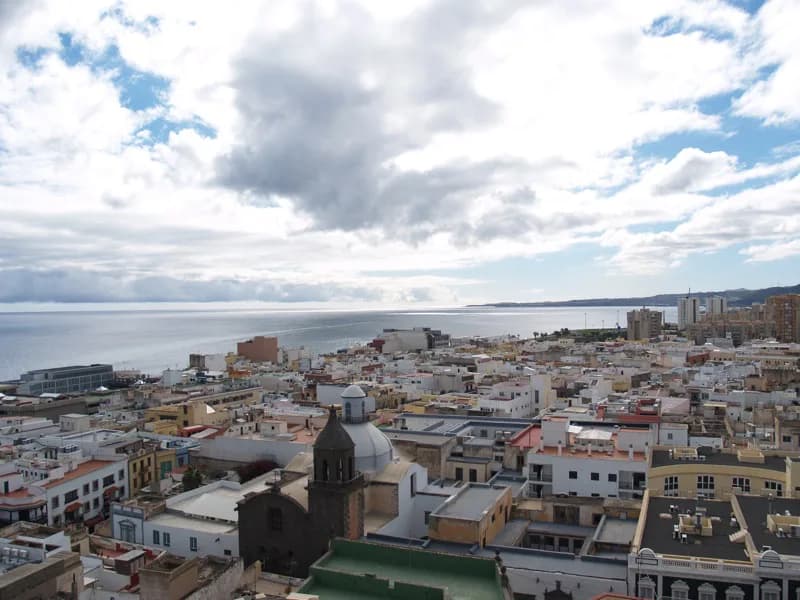
A self-guided Las Palmas walking tour fits comfortably into one day because the interesting part of the city is compact: start at Parque San Telmo, follow Calle Triana south, cross the Barranco Guiniguada and work through Vegueta back to the cathedral. This is a half-day to full-day walk on foot, not a sightseeing crawl that needs transport between stops. The route follows the two historic banks of the old barranco in walking order, naming streets so you know what comes next and where to turn back.
Las Palmas divides neatly along the old Barranco de Guiniguada, with the historic centre on one side and the commercial streets of Triana on the other, and today's GC-110 road runs where the watercourse once separated them. Walking Triana first and Vegueta second means you end among the monuments and museums rather than walking back uphill to reach them. A Las Palmas map helps here, since the old town is a mesh of short lanes off Calle Los Balcones, Calle Colón and Calle Doctor Chil rather than a single promenade.
Parque San Telmo and the start of Calle Triana
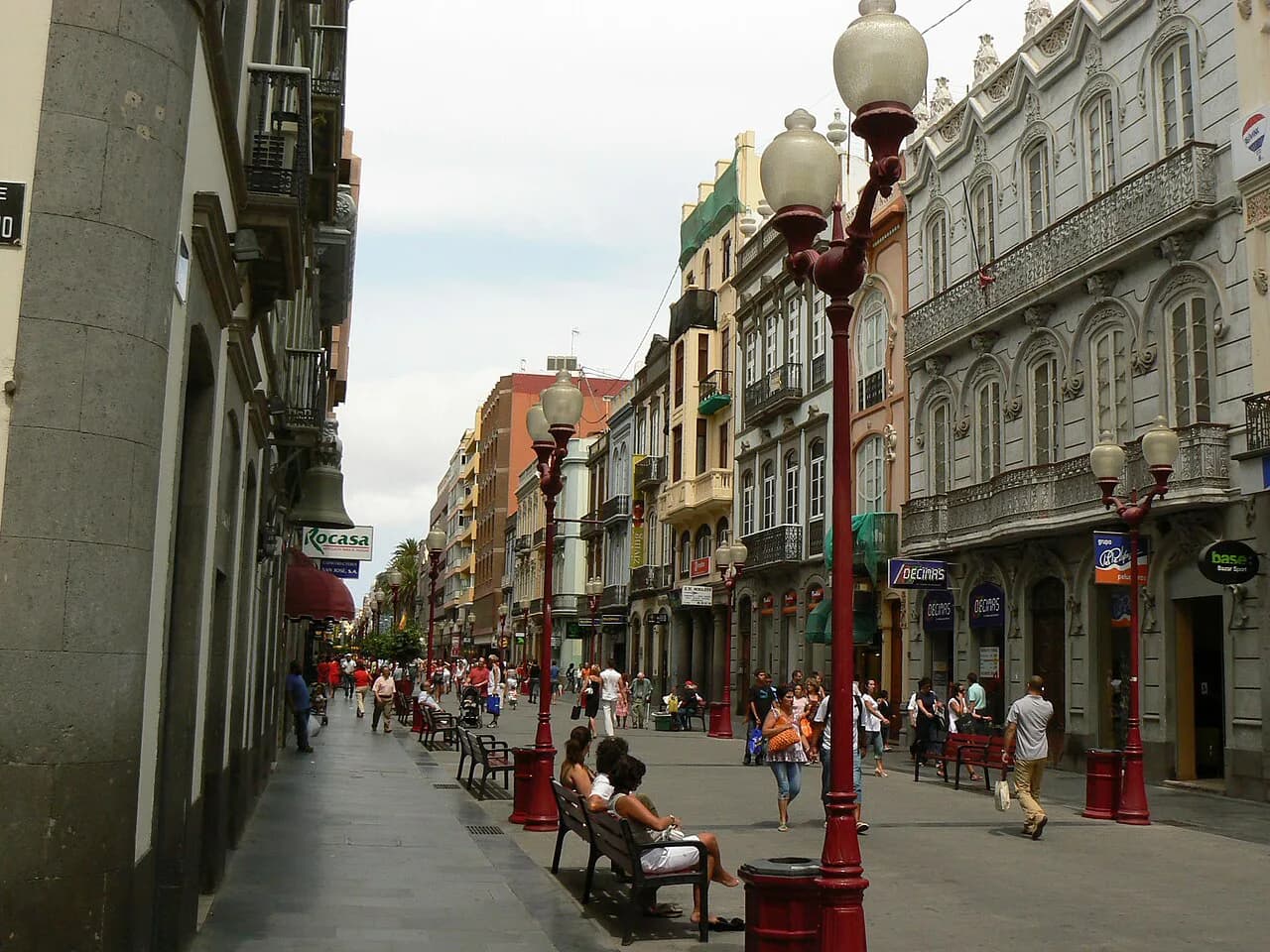
Begin at Parque San Telmo, the green square at the northern end of Calle Triana. Calle Triana is the spine of the neighbourhood and took its most elegant buildings in the nineteenth and early twentieth centuries, so the first stretch is as much about façades as about reaching anywhere. Walk south with the street, keeping an eye on the upper storeys rather than the shopfronts at pavement level.
The modernista houses and the old tram rails
Four modernista houses stand at numbers 76, 78, 80 and 82 on Calle Triana, and they are the single best reason to slow down on this stretch. Further along, a section of old rails has been left visible in the street, the last trace of the tram locals called La Pepa, which ran here from 1890 until the middle of the twentieth century. Look for both on the same walk south, since the rails sit in the roadway while the façades rise above the pavement.
Benito Pérez Galdós's birth house on Calle Cano
Turn off Calle Triana onto Calle Cano to find the house where the writer Benito Pérez Galdós was born, now a museum in his memory. It is a short detour rather than a major stop, and it works best as a pause on the way south rather than a destination in itself. Treat it as a marker of how Triana's literary and commercial history sit on the same few streets.
Crossing the Barranco Guiniguada into Vegueta
At the southern end of Calle Triana you reach the GC-110 road, which occupies the old Barranco Guiniguada channel and forms the boundary between Triana and Vegueta. Crossing it is the moment the walk changes character: the streets narrow, the buildings get older and the museums begin. This is also the natural place to decide whether to continue straight to the Mercado de Vegueta or to loop through the lanes first.
Mercado de Vegueta and Calle Los Balcones
The Mercado de Vegueta has been trading since 1858 and sits just across the road, making it the first building you meet on the Vegueta side. From there, Calle Mendizábal leads to Calle Los Balcones, a street of fifteenth-century houses and palacetes that includes the Centro Atlántico de Arte Moderno among its buildings. Read the street as a sequence of doorways and balconies rather than rushing to the museum entrance at the end.
Plaza del Pilar Nuevo and the Centro Atlántico de Arte Moderno
Calle Los Balcones ends at the Plaza del Pilar Nuevo, a small square with a fountain tucked behind the cathedral and beside the Casa de Colón. The Centro Atlántico de Arte Moderno opens Tuesday to Saturday from 10:00 to 21:00 and Sunday from 10:00 to 14:00, and closes on Mondays and public holidays, which makes it the one stop where the day of your walk genuinely changes the plan. If you are walking on a Monday, see the square and the exterior instead and keep the museum for another morning.
The Casa de Colón is the other museum on this square and, despite the name, Columbus never lived in it, so go for the collection and the courtyards rather than the legend. It sits naturally between the art centre and the chapel lane below, which makes the square a sensible place to choose between them.
Ermita de San Antonio Abad
A narrow alley to the right of the Casa de Colón leads to the Ermita de San Antonio Abad, the first chapel built in Las Palmas and the place where Columbus is said to have prayed before sailing for the Americas. It is a small, quiet stop that rewards a few minutes rather than a long visit. The lane itself is one of the prettiest corners of the route, so approach it slowly.
Palacio Episcopal and the west front of the cathedral
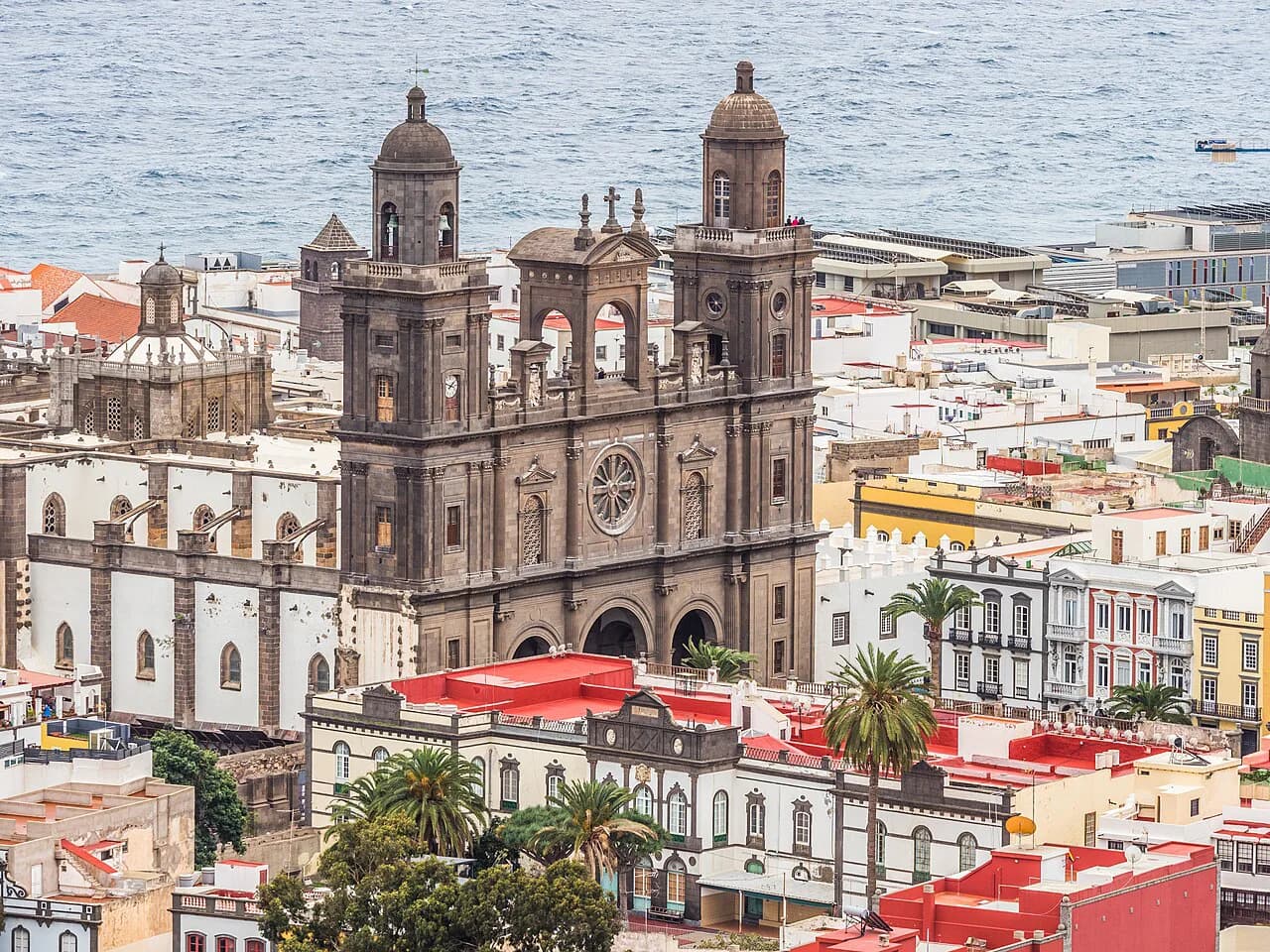
Climb Calle Colón past the Casa de Colón entrance, continue along Calle San Marcial and turn left to reach the Palacio Episcopal, a two-storey building standing since the sixteenth century, with a first-floor balcony of latticework shutters. A few steps on, the west front of the Catedral de Santa Ana comes into view, a mix of neoclassical, Gothic and Renaissance work begun in 1497 and only completed in the twentieth century. The cathedral is open during worship hours, so approach the building as architecture first and a visit second.
Worship hours are not visitor hours, and a service under way is not the moment to walk the aisles with a guidebook in hand. Time the cathedral for when the doors are open to the congregation and keep the interior visit short.
Plaza de Santa Ana and its eight iron dogs
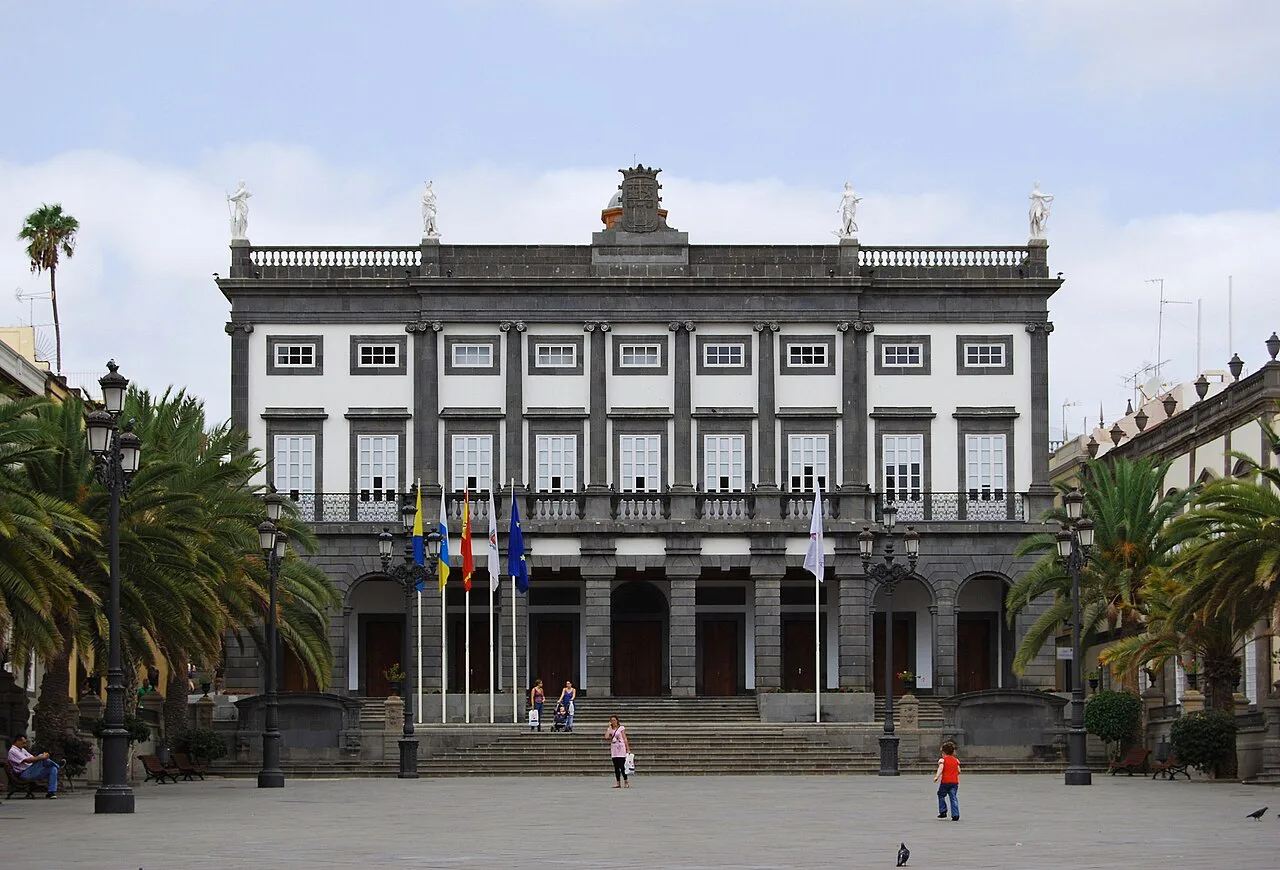
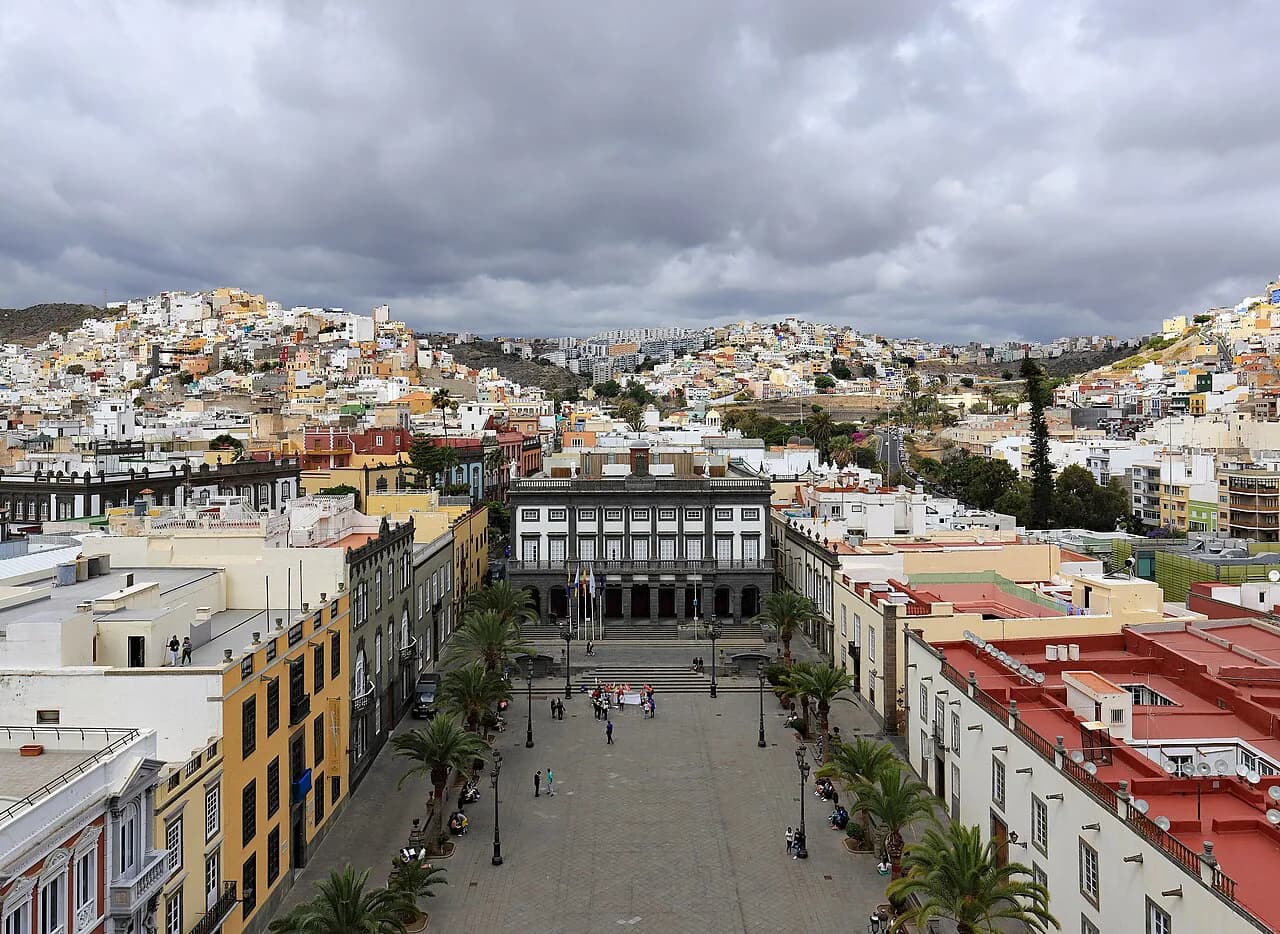
The cathedral façade faces the broad Plaza de Santa Ana, framed by the neoclassical Casas Consistoriales, the Palacio Episcopal and the Casa Regental, one of the few Renaissance buildings in the city. Eight iron dogs have stood on the square since 1895, and they are the detail most people walk past on the way to the church door. This is the natural halfway pause of the walk, with benches and open space on all sides.
Plaza del Espíritu Santo and the Ermita
Leave Plaza de Santa Ana by Calle Castillo to reach the Plaza del Espíritu Santo, where a small Ermita faces a stone-covered fountain shaded by a large dragon tree. The square is ringed by noble buildings, and it reads best as a residential corner of Vegueta rather than a monument in its own right. It is a good place to sit before the loop back to the cathedral.
Back through Calle Doctor Chil to the cathedral
Return by Calle Doctor Chil, where the façades of old señorial houses line the street, and turn left to come back towards the cathedral. From there, Calle Espíritu Santo leads to the small Plazoleta Francisco María de León, a sensible spot to break the walk for a drink before closing the loop. Continue to the end of Calle Espíritu Santo, turn left and you are back at Calle Mendizábal and the Mercado de Vegueta where the Vegueta half began.
How long the route takes and where to break it
The route from Parque San Telmo through Triana, across the barranco and around Vegueta covers a compact area of old streets, so the walking itself is short and the time goes on stops rather than distance. Plan the walk around the fixed points: the CAAM from Tuesday to Sunday, the cathedral during worship hours and the Casa de Colón during its opening times. A morning start leaves the afternoon for a museum, while a late start means choosing between the CAAM and the cathedral rather than doing both.
Museum stops worth adding: Casa de Colón
The Casa de Colón opens from 10:00 to 18:00, which makes it the easiest museum to slot into the middle of the walk; confirm the day before you go, as its Sunday hours are not fully published here. The house holds the island's early colonial history and courtyards rather than the explorer's own belongings, so budget time for the rooms rather than a quick photograph at the door. Pair it with the CAAM only on a day when both are open, since Monday rules out the art centre.
Finishing at Las Canteras instead of the cathedral
If you finish the Vegueta loop early, Las Canteras is the obvious extension, and the city's urban beach sits in the Puerto-Canteras zone at the other end of the centre. It is a different walk rather than a continuation, so treat it as a separate outing after the old town rather than a stop on the same loop. The official tourism route divides the capital into Vegueta, Triana, Ciudad Jardín-Alcaravaneras and Puerto-Canteras, which is a useful way to think about how the beach relates to the historic centre.
When a guided or free walking tour is the better call
A guided walk earns its place when you want the street names and the history joined up without reading as you go, and free tours of the centre are offered by local operators, so check availability when you book. The self-guided route above is the better call if you want to stop at the CAAM or the Casa de Colón on your own timing, because a group pace rarely accommodates a museum detour. If you take a guide, suggest the same order — Triana first, then Vegueta — so the barranco still marks the change of scene.
Which Las Palmas walk suits your day
Choose the self-guided route if your day is built around opening hours and you want to decide on the spot whether to add the CAAM or the Casa de Colón. Choose a guided walk if you would rather have the streets explained as you pass and are happy to keep moving. Either way, walk Triana before Vegueta so that the crossing of the Barranco Guiniguada does the work of separating the two halves of the city.
Explore more Las Palmas guides
Frequently Asked Questions
Is there a free walking tour in Las Palmas?
Free tours of the historic centre are offered by local operators, usually covering Triana and Vegueta on foot. Meeting points and times change, so check with the operator you book with rather than relying on a fixed schedule.
How far is the walk from Triana to Vegueta?
The two neighbourhoods are adjacent, separated only by the GC-110 road running through the old Barranco Guiniguada, so the crossing takes a few minutes on foot. The walking distance matters less than the stops, which are concentrated in a small area of old streets.
Can you walk from Vegueta to Las Canteras?
Yes, but it is a separate stretch across the city rather than part of the old-town loop, since Las Canteras sits in the Puerto-Canteras zone at the other end of the centre. Many visitors treat the beach as an afternoon extension after finishing Vegueta.
Sources
Notes for your next Spanish town break
Optional updates to our guides.
You might also like
Continue reading
More guides you'll find useful