Triana, Las Palmas: the shopping street beside Vegueta
Triana is Las Palmas's historic shopping quarter, with the pedestrian Calle Mayor de Triana, modernist façades and plazas linking San Telmo to Vegueta.
On this page
Triana is the strolling and shopping quarter of Las Palmas de Gran Canaria, and the pedestrian Calle Mayor de Triana is its spine. Plan it as a half-day walk rather than a monument checklist, pairing it with Vegueta across the old barranco de Guiniguada. This guide covers the street's length and landmarks, the plazas and theatres that anchor the barrio, and how the whole thing fits a short city break.
What Triana is and where it sits in Las Palmas
Triana is one of the historic quarters of Las Palmas de Gran Canaria and, with Mesa y López, one of the city's traditional open-air shopping districts. Many of its streets are pedestrian only, and it packs in shopping, cafés and everyday life rather than a single star attraction. The barrio was declared a Conjunto Histórico and Bien de Interés Cultural in 1993, which is why the building frontages are worth looking up for.
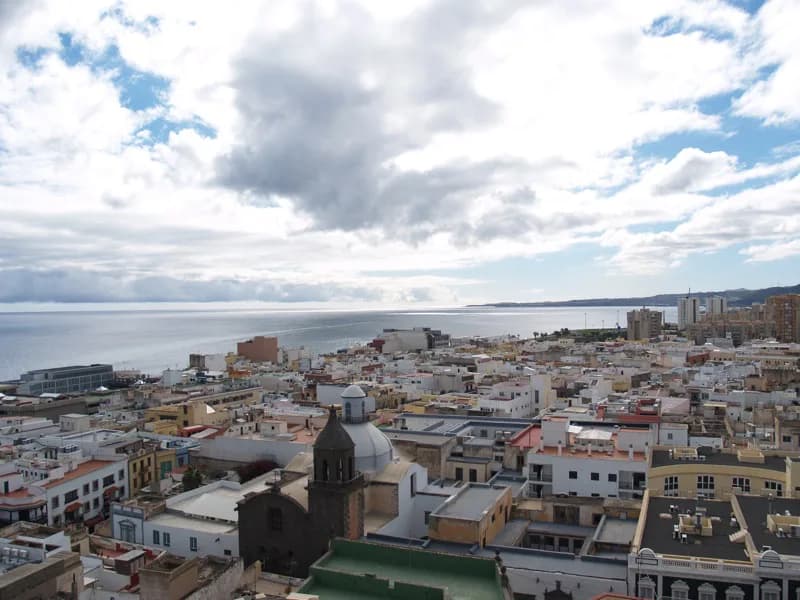
Geographically, Triana sits almost on the edge of the barranco de Guiniguada, the ravine that separates it from Vegueta. The ravine is now largely buried beneath the road that links the capital with the centre of the island, so the two quarters feel continuous on foot even though they were once divided by a gully. That geography is the key to planning: read Triana and Vegueta as one loop, not two separate outings, and you will spend far less time crossing back and forth.
The barrio also holds two of the city's main stages, the Teatro Pérez Galdós and the Teatro Cuyás, so its evenings are not just about shop windows. For a short break, that makes Triana a flexible filler: a morning of architecture and browsing, or a late-afternoon stroll before a performance.
Calle Mayor de Triana: the pedestrian spine
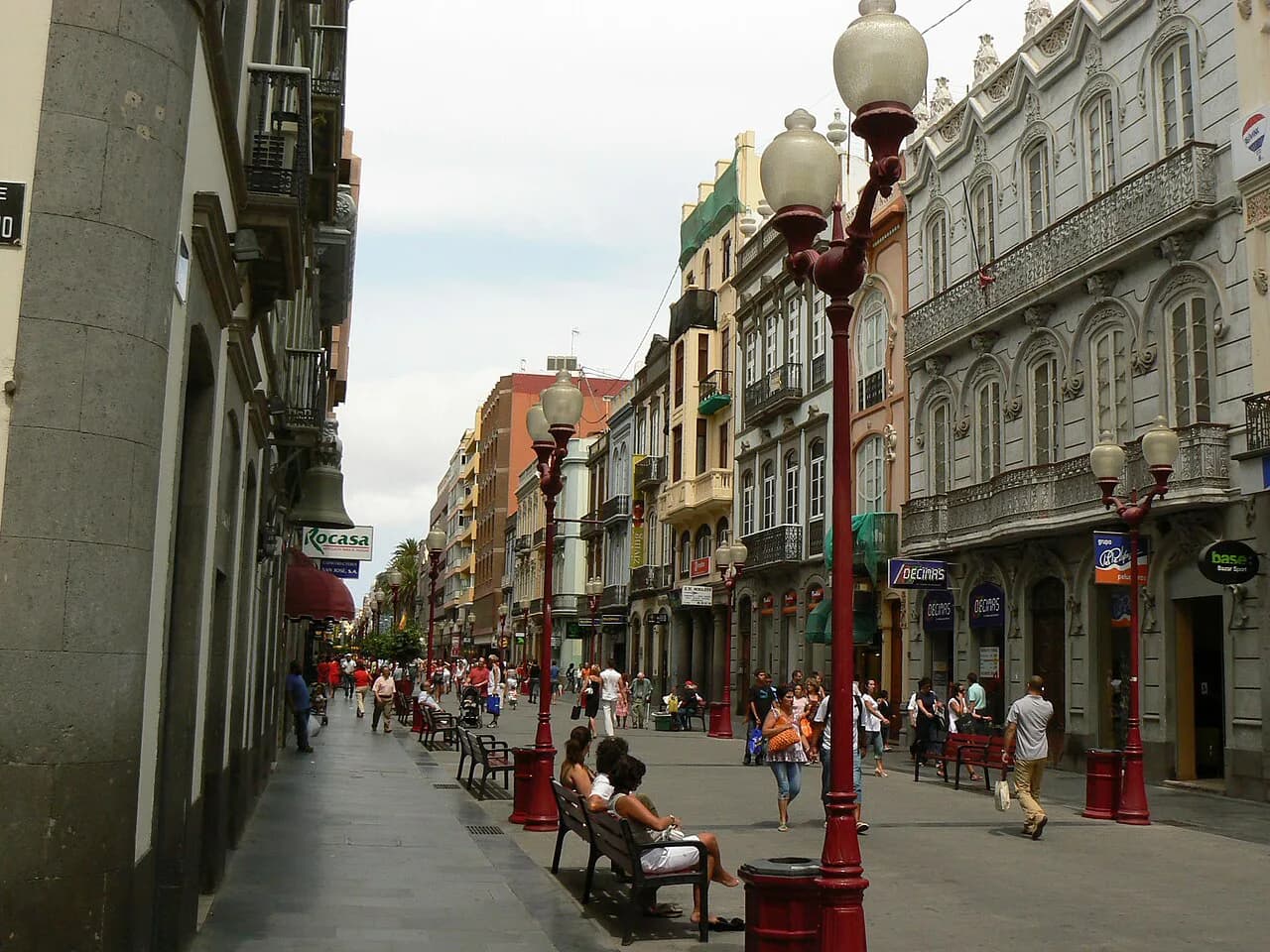
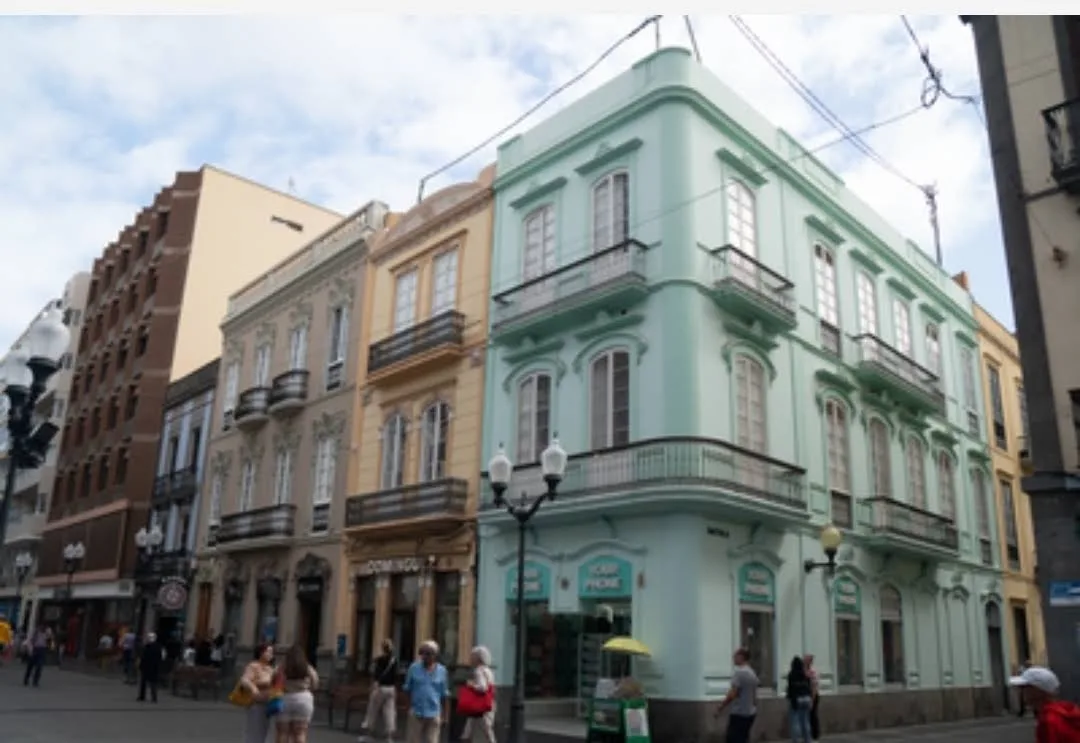
Calle Mayor de Triana is the barrio's main artery and the centre of its shopping, running for more than 600 metres. It is fully pedestrian and links Parque de San Telmo with the area around the Teatro Pérez Galdós, so it works naturally as the axis of any walk through the quarter. Start at the San Telmo end if you are coming from Vegueta and let the street carry you through.
The street is broad and elegant rather than cramped, with old building fronts above and modern shopfronts at eye level. It mixes traditional shops with current brands, which is why it reads as a working shopping street rather than a museum piece. Komoot lists Calle Triana as a highlighted walking segment in the city, a sign that it is treated as a route in its own right.
What to look for on the walk
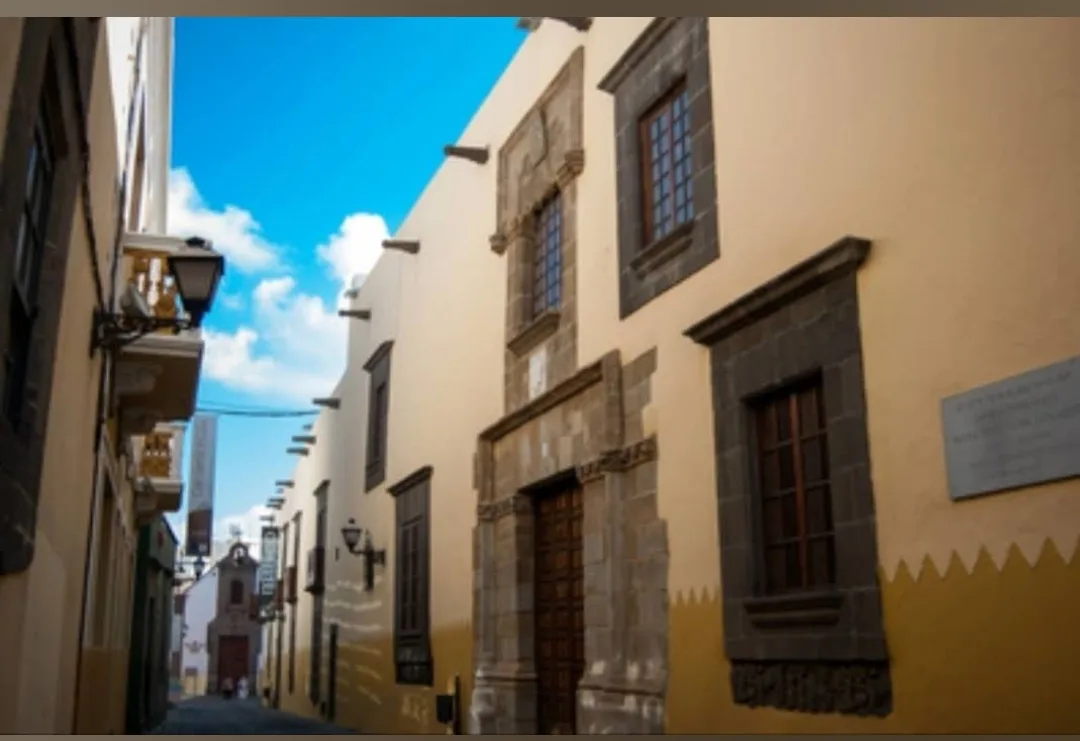
Look up first: the modernist façades are the reason to slow down, with wooden balconies and decorative detail that survive above the shop signs. Modernist architecture is present across the barrio, but Calle Mayor de Triana and the nearby Parque de San Telmo show it most clearly. Then look down: rails from the old tram are still set into the paving, a reminder of how the street used to move people.
The shop windows are part of the experience, blending historic commerce with contemporary names, and the pavement stays busy with people carrying bags or simply strolling. It is calm by big-city standards, which makes it a comfortable place to walk even in the middle of the day. Treat the street as the destination and the shops as the scenery.
The plazas and buildings to know
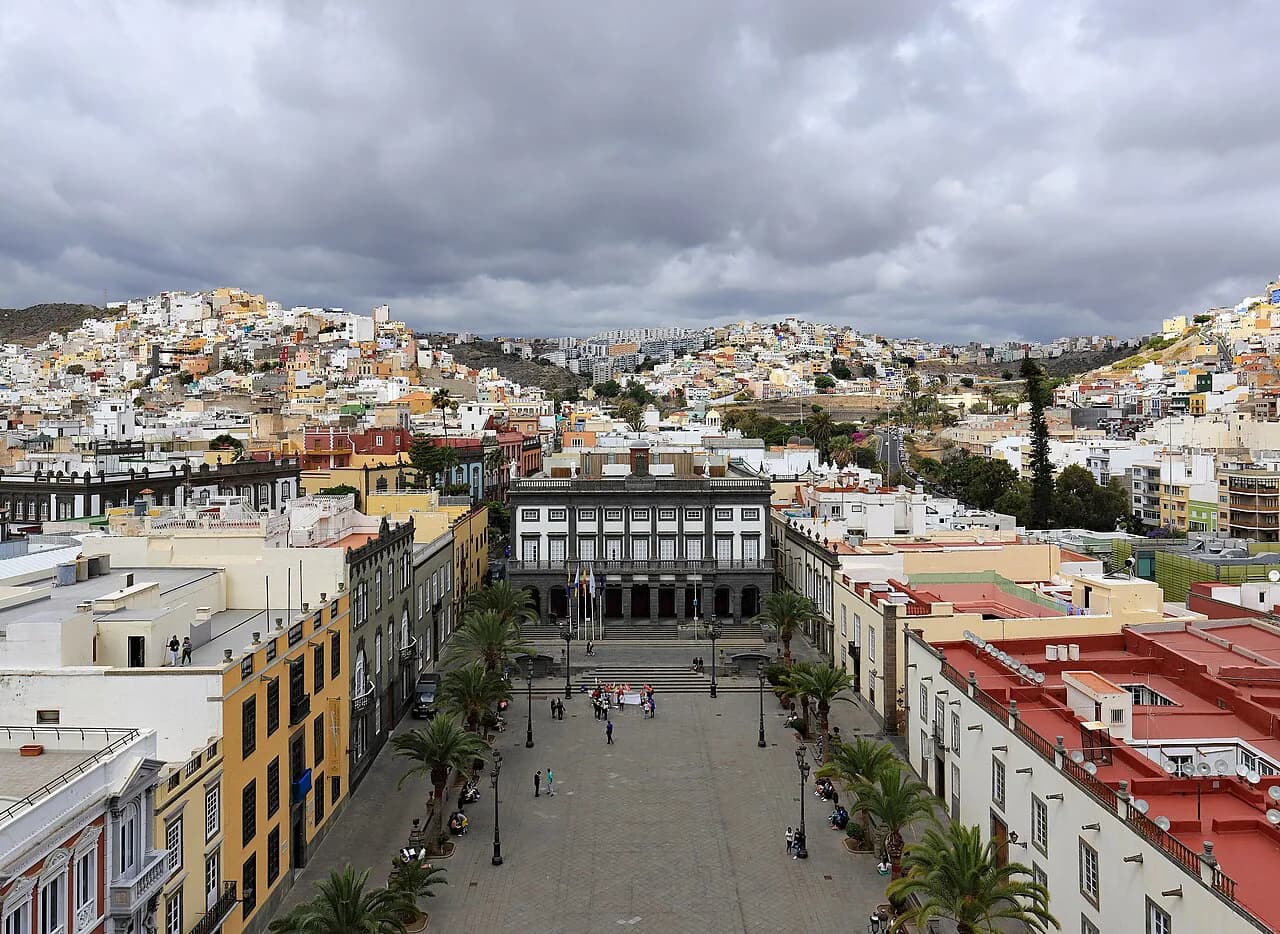
Two plazas anchor the barrio near the ravine: Plaza de Hurtado de Mendoza and Plaza de Cairasco. The second is presided over by the Gabinete Literario, a historic building and example of the modernism found elsewhere in Triana. Both are small enough to pass through in minutes, but they give the walk its punctuation and a reason to pause.
The theatres do the same job on the cultural side: the Teatro Pérez Galdós and the Teatro Cuyás are two of the city's principal stages, and both sit within the barrio. The Casa-Museo Pérez Galdós is also listed among the barrio's sights, rounding out the literary thread running through these streets. Check each venue's own programme and visitor information before building a day around a performance or a museum visit.
Our pick is to walk the plazas in sequence rather than pick one: Hurtado de Mendoza, Cairasco and the Gabinete Literario, then on towards the theatres. That route keeps you moving through the barrio's architecture instead of stopping at a single address.
Edges of Triana worth adding
At the southern end, Parque de San Telmo acts as the gateway to Triana and holds the Ermita de San Telmo. The park is the natural entry point if you approach from the historic centre, so it makes a sensible place to begin or end the loop. Look for the modernist detail in the surrounding frontages as you cross it.
Towards the other side of the barrio, the Alameda de Colón and the Iglesia de San Francisco add a quieter edge to the circuit. The Castillo de Mata, home to the Museo de la Ciudad y del Mar, sits further out and suits travellers who want a museum stop with a different subject from the cathedral quarter. Each of these is a short add-on, not a separate trip.
How Triana fits a short break
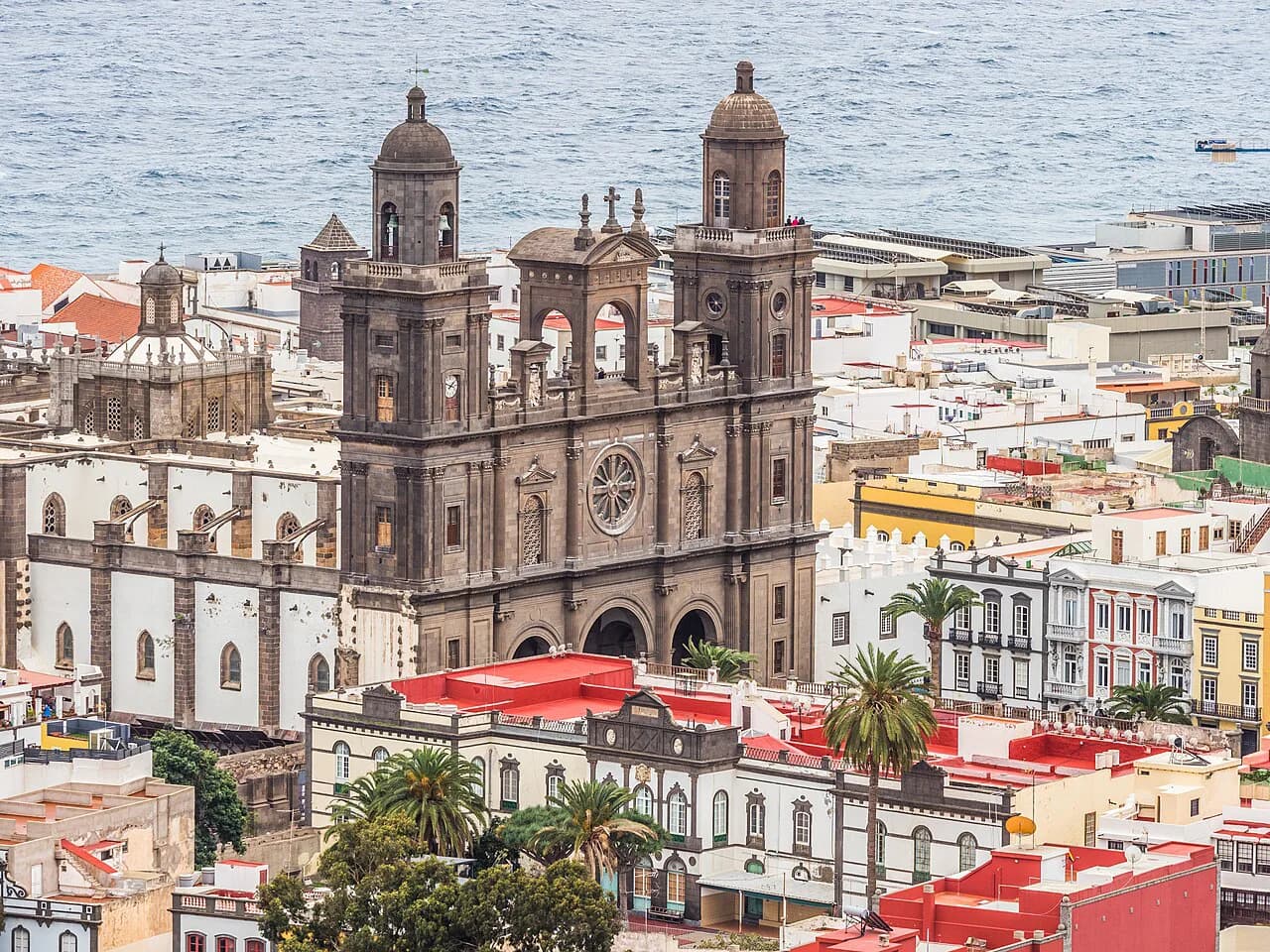
Triana pairs naturally with Vegueta, the historic heart of the city across the old ravine, where the Catedral de Santa Ana stands. Because the barranco is buried under the connecting road, you can walk from one quarter into the other without a detour. That makes a single generous loop covering both, rather than two half-days, the efficient way to use a short break.
A well-paced version is to start at Parque de San Telmo, follow Calle Mayor de Triana to the theatres, cross into Vegueta for the cathedral and its surrounding streets, then return through Triana's plazas. If you prefer structure, a Las Palmas walking tour can compress the history into a guided route.
For everything else in the city, from the historic centre to the museums and viewpoints beyond it, see the wider set of things to do in Las Palmas de Gran Canaria and slot Triana in as the connective tissue.
Practical trade-offs: heat, Sunday quiet and pedestrian streets
Triana is a shopping street, so its rhythm follows the shops. If your priority is browsing rather than architecture, aim for a normal working day, and confirm individual shop and museum opening times with each operator before you go.
Las Palmas is milder than the inland Andalusian towns, but midday sun on a long stretch of open pedestrian street is still worth avoiding in summer. A morning or late-afternoon walk, with a café stop in the middle, is the more comfortable shape. The positive trade-off is that the street is flat and car-free, so it is easy on the feet.
Watch for traffic on the surrounding roads when you leave Calle Mayor de Triana for the plazas and the theatres. The core is walkable, and the main street is flat and car-free.
Build your Triana loop around the street, not a single sight
Triana works best as a walk: start at Parque de San Telmo, follow the pedestrian Calle Mayor de Triana for its modernist façades and old tram rails, pause at Plaza de Cairasco and the Gabinete Literario, then continue to the theatres. Cross into Vegueta while you are there, because the old ravine no longer divides the two quarters on foot. That single loop gives you the shopping street, the plazas and the historic centre in one comfortable outing.
Explore more Las Palmas guides
Sources
Notes for your next Spanish town break
Optional updates to our guides.
You might also like
Continue reading
More guides you'll find useful