Vegueta, Las Palmas: What to See in the Old Town
Plan a walk through Vegueta in Las Palmas de Gran Canaria: Santa Ana cathedral and its tower, Casa de Colón, the Museo Canario, the market and Triana.
On this page
Vegueta is the old town of Las Palmas de Gran Canaria and the place where the city began in 1478, so a single morning of walking covers its core: Plaza Mayor de Santa Ana, the cathedral, Casa de Colón and the lanes around them. Allow a full day if you want the Museo Canario, the market and Triana on the far side of the barranco Guiniguada as well. This guide orders the walk plaza by plaza and flags where entry is free.
What Vegueta is and how it sits in Las Palmas
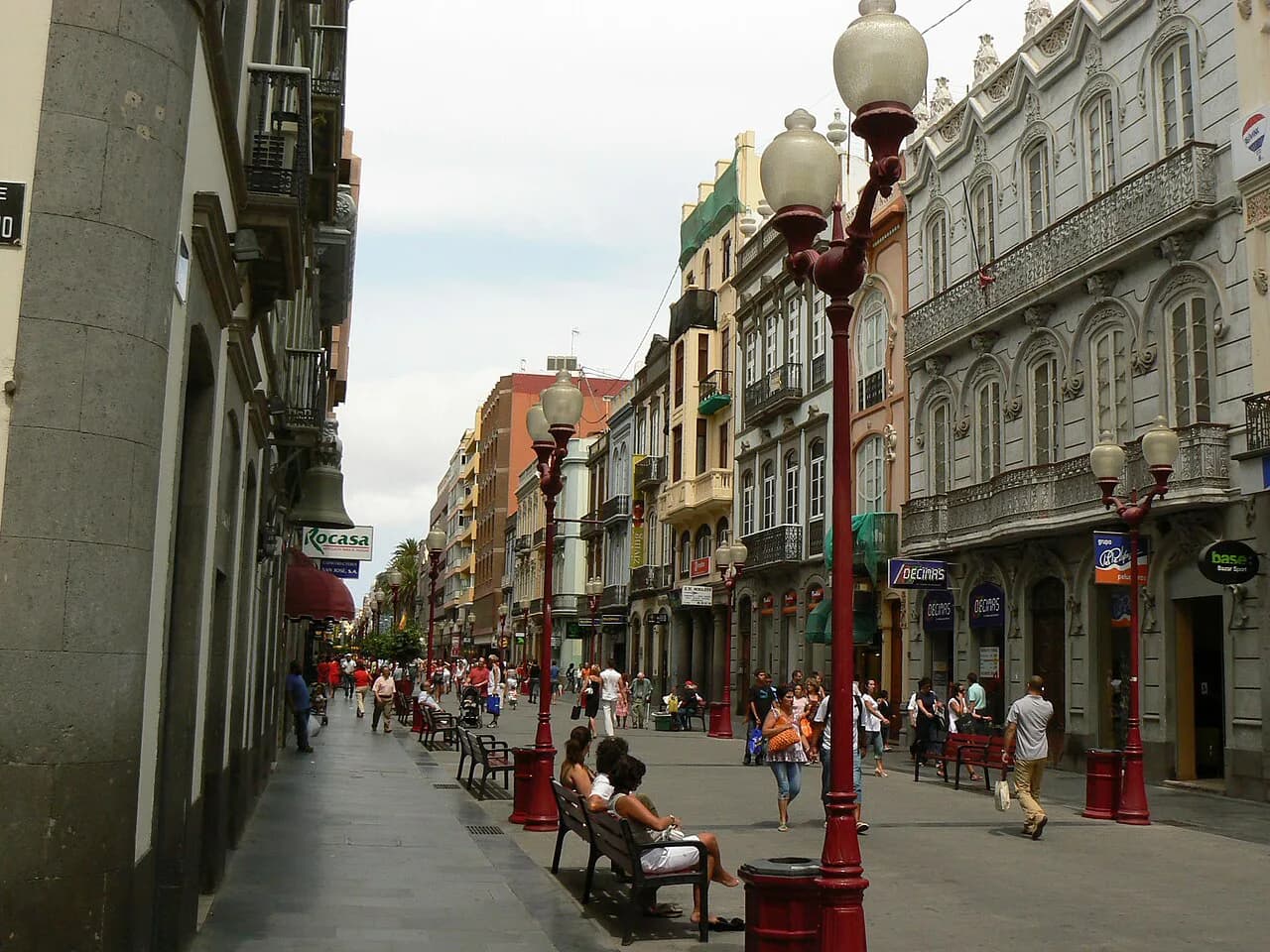
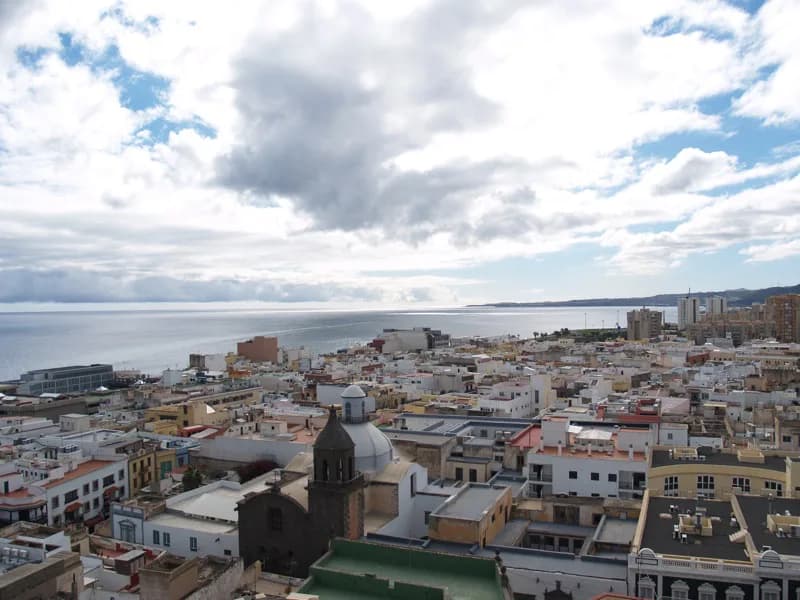
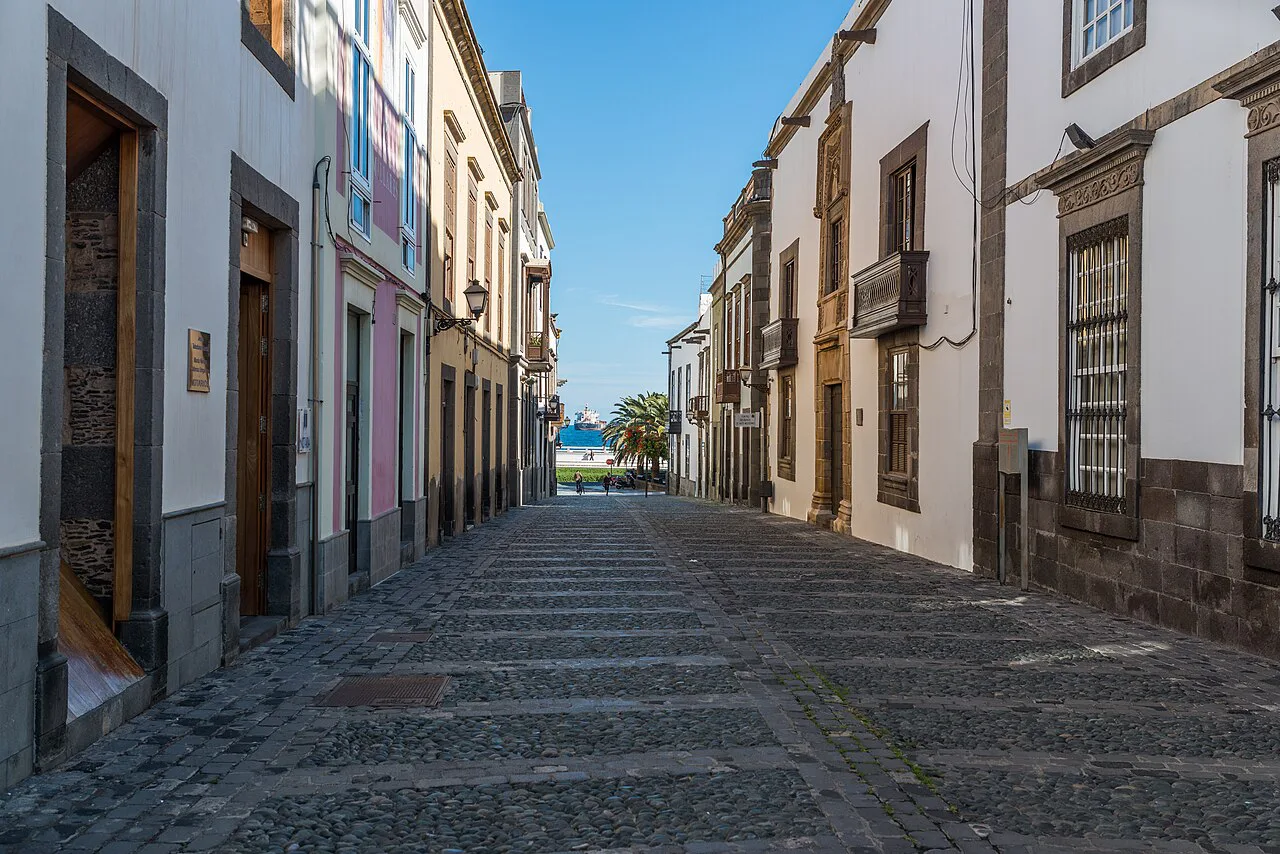
Vegueta occupies the south bank of the barranco Guiniguada, the dry channel that separates it from Triana, the commercial quarter on the other side. The old town is a tight grid of cobbles, coloured facades and carved wooden balconies, and its whole historic centre was declared a Conjunto Histórico-Artístico Nacional in 1973.
Because the core is small, the layout matters more than any tick-list: Plaza Mayor de Santa Ana is the anchor, Calle de los Reyes and the lanes off it carry you south through the quarter, and the market and Museo Canario sit within a few minutes of the square. Cross a bridge over the barranco and you are in Triana without needing transport.
Plaza Mayor de Santa Ana and its bronze dogs
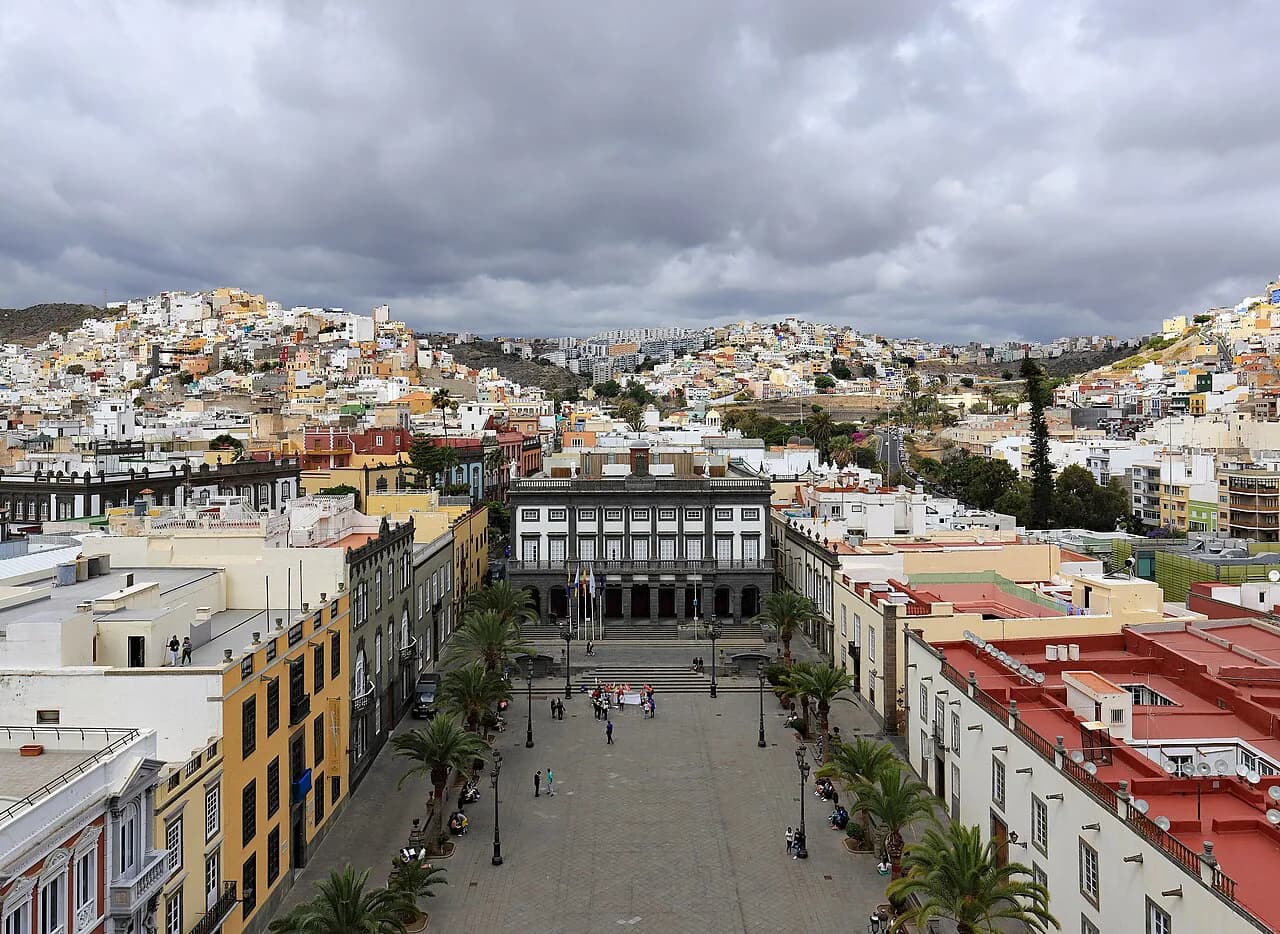
Plaza Mayor de Santa Ana is the symbolic heart of the city, and several of its most important buildings face onto it: the Catedral de Santa Ana, the Casas Consistoriales, the Palacio Episcopal, the Archivo Histórico Provincial and the Casa Regental. The bronze dog sculptures opposite the cathedral nod to one theory about the name Canarias, the islands of the dogs, from the Latin canes.
Treat the square as your meeting point rather than a sight in itself. It gives you the cathedral on one side, the old town hall on another and a clear line north to the barranco and Triana, so you can leave, loop through the lanes and come back without losing your bearings. For an overview of the wider city before you start, the things to do in Las Palmas covers what lies beyond the old town.
Catedral de Santa Ana: four centuries under one roof
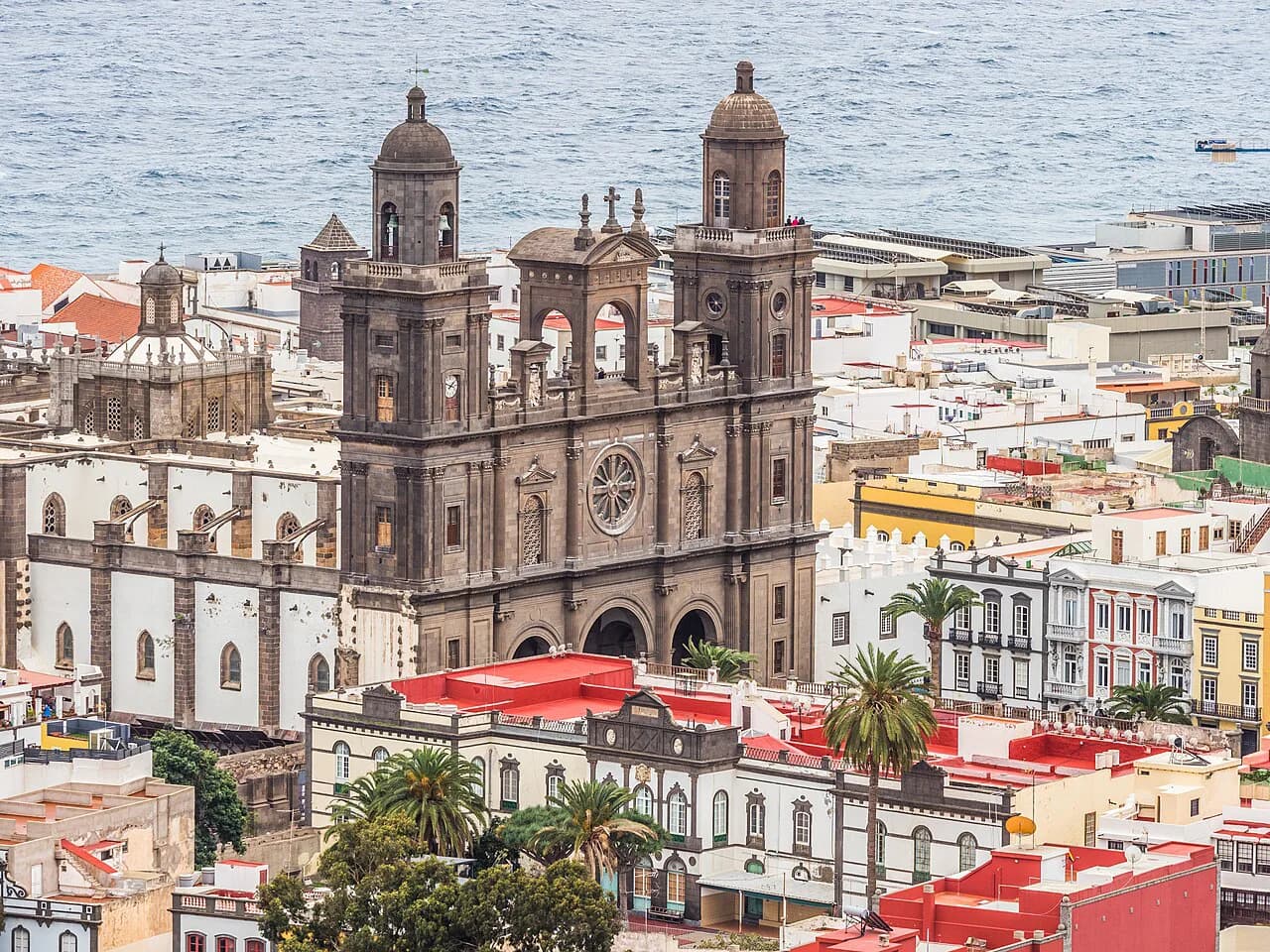
The cathedral is the oldest in the Canary Islands. Building started in 1500 and took more than four centuries to finish, which is why Gothic, Renaissance and Neoclassical work sit side by side in the same fabric, and it was declared a Monumento Histórico-Artístico Nacional in 1948.
A lift runs up the south tower, giving views over the plaza and across the city, and below you can visit the Patio de los Naranjos, where the Museo Diocesano de Arte Sacro is housed. The cathedral may close to tourists during services, so plan a weekday visit to the interior rather than assuming the doors are open. If you want the surrounding sights mapped before you climb, the Las Palmas map will help.
Casa de Colón and the Sunday free entry
Casa de Colón occupies the former house of the island's governors, and tradition holds that Christopher Columbus stayed there in 1492 before crossing the Atlantic; the museum inside covers his voyages and the links between the Canaries and the Americas. The building itself is worth the stop for its carved doorway and wooden balconies, and it opened as a museum in 1951.
Entry costs around €4, and it is free on Sundays. That Sunday slot is the single easiest saving in Vegueta, but it also draws a queue, so arrive early in the day if you are using it.
Museo Canario and the world of the Canarii
The Museo Canario, founded in 1879, holds the largest collection devoted to the island's pre-conquest inhabitants, the Canarii: pottery, idols including the Idol of Tara, and a room of aboriginal mummies and hundreds of skulls that is the most striking part of the visit. It is the museum that makes sense of everything else you see in the old town.
Entry is modest rather than expensive, but the museum has its own opening hours and closing days, so check before making it the anchor of an afternoon. Give it an hour if you are short of time, more if the prehistory is the reason you came.
The lanes: cobbles, courtyards and the Ermita de San Antonio Abad
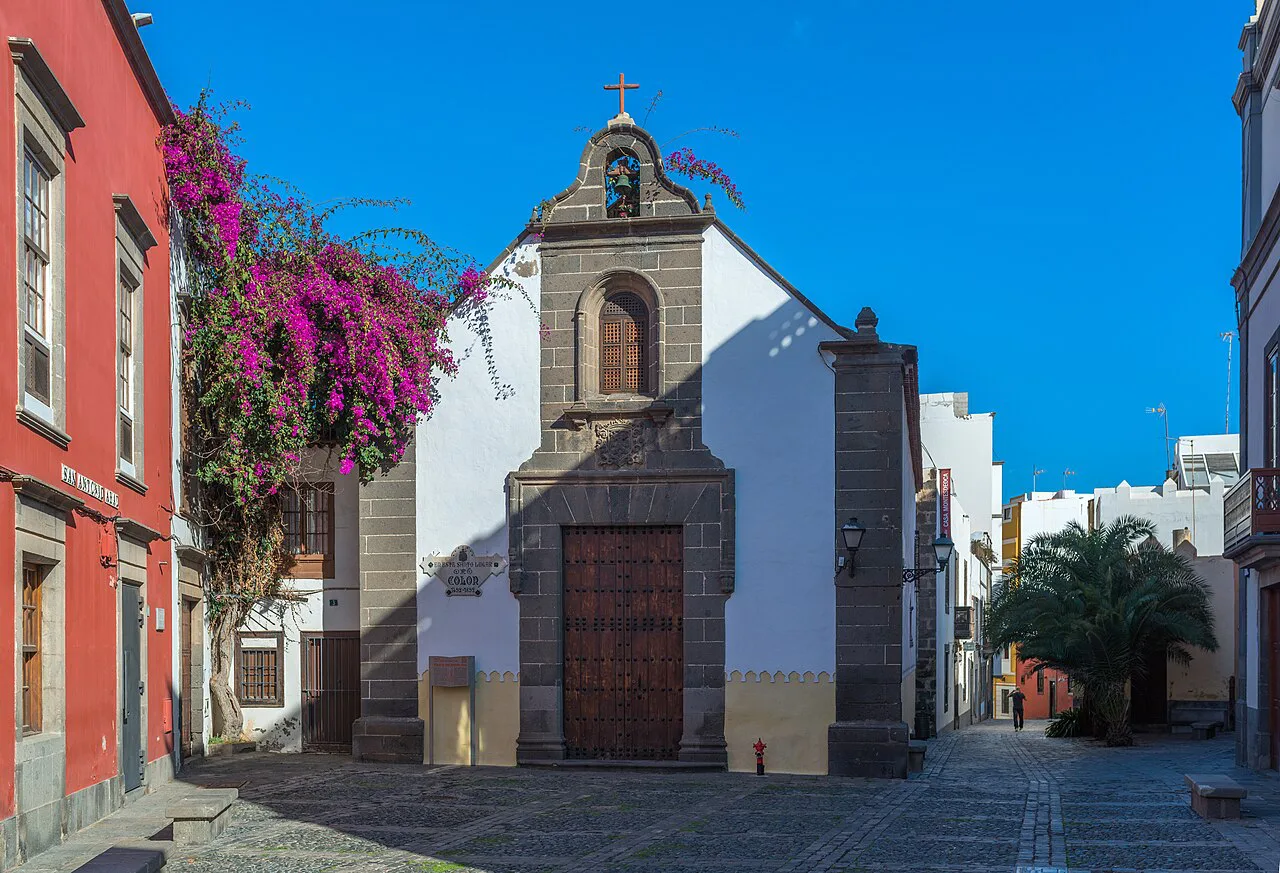
The pleasure of Vegueta is in the streets between the sights. Look for coloured facades, carved wooden balconies, Canarian patios and quiet plazas such as Plaza del Pilar Nuevo, Plaza del Espíritu Santo and Plaza de Santo Domingo, which string together a natural loop south of the cathedral.
The Ermita de San Antonio Abad, built in the years of the conquest of Gran Canaria, is where tradition says Columbus prayed. It is a small chapel rather than a museum, and its doors follow church rather than visitor hours, so treat it as a passing stop on the lane walk rather than a scheduled appointment.
Mercado de Vegueta: go in the morning
The Mercado de Vegueta is the city's traditional food market. One local account dates its inauguration to 1958 and calls it the first wholesale market built in the Canary Islands, and says it was awarded the city's Medalla de Oro in 2008; the market itself sells tropical fruit, fresh fish, meat, cheeses and local produce from stalls that have passed through generations of the same families.
Its opening pattern shapes the day: the market runs in the morning from Monday to Saturday and closes on Sundays, so an early start lets you see it working and then walk the old town in the same block of time. Small food counters inside make it a mid-morning stop rather than a lunch reservation. Confirm the current hours before a market-led morning, as these are the approximate times a local guide gives.
CAAM and the Casa-Museo Pérez Galdós
Contemporary art has a home in Vegueta at the CAAM, the Centro Atlántico de Arte Moderno, which opened in 1989 with a permanent collection of around 2,500 works from Europe, America and Africa. Across the barranco in Triana, the Casa-Museo Pérez Galdós occupies the house where the writer was born in 1843.
The two give your day a second register beyond churches and colonial architecture, and both sit on routes you will already be walking. Each keeps its own visiting hours, so plan them as one block rather than squeezing them into a gap between plazas.
Triana across the barranco
Triana is the historic commercial quarter on the north bank of the barranco Guiniguada. Its main street is pedestrian and lined with early twentieth-century modernista buildings, shops and terraces, and the Gabinete Literario, the Teatro Pérez Galdós and the Parque de San Telmo with its modernista kiosk are the landmarks to look out for.
Do Triana after Vegueta rather than before: cross the barranco when the morning market has wound down, walk the length of the shopping street and finish at San Telmo. For a closer look at that side of the city, see Triana, Las Palmas.
How long Vegueta needs and how to order the walk
One day covers Vegueta, Triana and even a stretch of Las Canteras, while two days let you take the museums and the seafront at an easier pace. Within Vegueta itself, a half-day is enough for the cathedral square, Casa de Colón and the lanes, with the market added if you start early.
Order the walk as a loop: Plaza Mayor de Santa Ana first for orientation, the cathedral and tower, then Casa de Colón and the lanes down to Plaza del Pilar Nuevo, the market before it closes, the Museo Canario, and finally Triana over the bridge. A Las Palmas walking tour can compress that circuit into a couple of hours if you would rather have the background told to you.
Getting to Vegueta from the airport and moving around
The airport sits about 20 km from the city, roughly 25 minutes by guagua or car, and the urban guaguas link Vegueta, Triana and Las Canteras in around 20 to 30 minutes. Driving into the old town is the weak option: parking in Vegueta and Triana is difficult, so use the public car parks or arrive by bus.
On foot is the right way to connect the old town and Triana, since the barranco is a few minutes' walk across and the streets between them are the point of the visit. Save the bus for the longer hop north to Las Canteras or for getting in from the airport.
The honest trade-offs: cloud, closing days and midday heat
Mornings in Las Palmas can bring the low cloud locals call panza de burro, which burns off later, so a museum or the market suits an overcast start and the tower and lanes suit the clearer afternoon. Temperatures stay mild across the year, roughly 18 to 26 degrees, which makes walking comfortable but does not remove the need for shade at midday.
Closing days are the real trap. The market closes on Sundays, Casa de Colón is free but busy on the same day, and churches and museums keep their own schedules that do not line up with each other, so a loose list of sights can turn into locked doors. Pick your fixed points first, then fill the gaps with lanes and plazas, which never close.
Where Vegueta stops and the rest of the city begins
Vegueta ends at the barranco Guiniguada. Everything south of it is the old town; everything north, starting with Triana, is the commercial city, and beyond that the long arc of Las Canteras runs along the coast. Treating Vegueta as a separate half-day rather than part of a single city walk keeps the historic core from blurring into shopping streets.
If you are building an itinerary around the old town, the Las Palmas attractions guide sets Vegueta alongside the city's other sights so you can see what else deserves a slot.
Which order suits your day in Vegueta?
Start at Plaza Mayor de Santa Ana on a weekday morning, take the cathedral and tower while the light is soft, then Casa de Colón, the lanes and the market before it shuts for the day. Finish with the Museo Canario or cross into Triana, depending on whether prehistory or modernista streets interest you more.
If Sunday is your only free day, use the free entry at Casa de Colón and accept the market will be closed, then fill the gap with the lanes, the plazas and Triana. Check the cathedral, Museo Canario and CAAM times directly before you set out, since those schedules decide how much of the loop fits.
Explore more Las Palmas guides
Frequently Asked Questions
What is the capital city of Gran Canaria?
Las Palmas de Gran Canaria is the capital, and Vegueta is its founding old town, on the south bank of the barranco Guiniguada. The island's airport lies about 20 km from the city, so the old town is usually the first stop on arrival.
Is Vegueta free to walk around?
Walking the streets, plazas and lanes of Vegueta costs nothing, and the market is free to enter. The cathedral, Casa de Colón and the Museo Canario each set their own admission and publish their own reduced or free slots, so check the official price list for each site before you go.
Sources
Notes for your next Spanish town break
Optional updates to our guides.
You might also like
Continue reading
More guides you'll find useful