
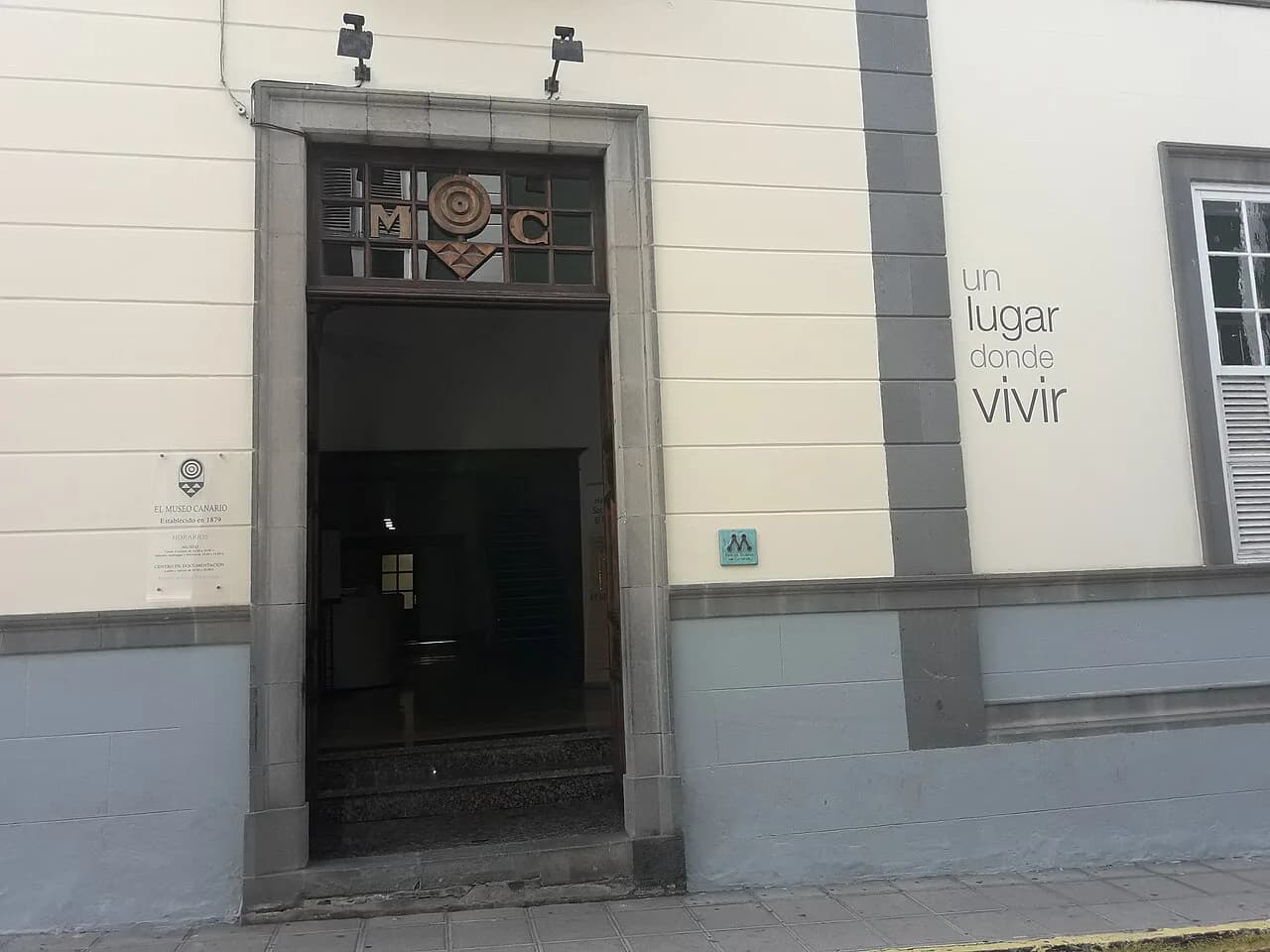
El Museo Canario: the Guanche museum in Vegueta, Las Palmas

El Museo Canario is the museum to choose in Las Palmas if you want the island's pre-colonial story rather than its modern art. It sits in Vegueta, the founding neighbourhood, a few minutes on foot from the cathedral and Plaza de Santa Ana, and its core collection explains how Gran Canaria's Berber-origin population lived before the Castilian conquest. This page covers what the museum holds, how to reach it, how long to allow and what to pair with it nearby.
Treat it as an hour of your morning rather than a half-day, and place it between the cathedral square and the city's other Vegueta museums. The museum's address is Calle Dr. Verneau, 2, in the historic centre, in the same cluster as the Casa de Colón and the Centro Atlántico de Arte Moderno. For the wider set of sights in the city, see Las Palmas Attractions: 6 Visitor Guides before you fix an order.
What El Museo Canario is and why it matters in Las Palmas
The museum exists to answer a single question: how did the aboriginal population of Gran Canaria live? Its displays follow a people of Berber origin who inhabited the island from around the change of era until the fifteenth century, when the Castilian conquest and colonisation ended that world. That focus makes it the natural counterpart to Vegueta's cathedral and colonial houses, which tell the story from the arrival of the conquerors onwards.
It is a scientific society as much as a display, founded in the nineteenth century and still run from the same historic building. The result is an old-fashioned, cabinet-style museum rather than an interactive one: cases of objects, labels to read and a strong emphasis on the physical remains of the population. If you prefer contemporary art, the CAAM a few streets away is the better use of an hour; if you want context for everything else you see on the island, start here.
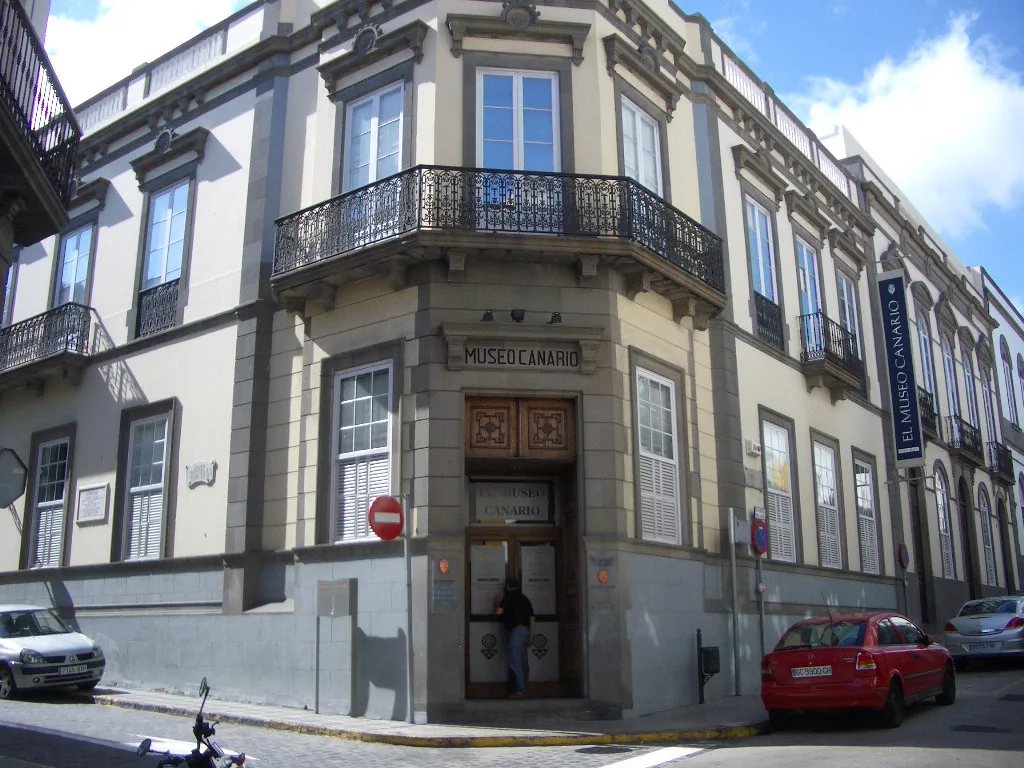

Where it is in Vegueta: Calle Dr. Verneau
The entrance is on Calle Dr. Verneau, number 2, in Vegueta, close to the cathedral and Plaza de Santa Ana. Vegueta is the old quarter on one side of the former Barranco de Guiniguada, the ravine that still separates the historic centre from the commercial streets of Triana. Because the museum sits inside that compact grid of cobbled streets, you reach it on foot from almost anywhere in the old town.
From the cathedral square, walk past the rear of the cathedral towards Plaza del Pilar Nuevo and the CAAM; the museum is a short step from there. If you are coming from the port or the Las Canteras end of the city, a taxi or city bus into the historic centre is the simplest approach, since parking in Vegueta's narrow streets is limited.
The city's four visitor districts are Vegueta, Triana, Ciudad Jardín–Alcaravaneras and Puerto–Canteras, and the museum belongs firmly to the first. That matters for planning: you can spend the whole morning in Vegueta without crossing town, then move to the waterfront later. The Auditorio Alfredo Kraus and the Parque de Santa Catalina sit at the Las Canteras end, so save them for a separate stretch of the day rather than doubling back.
What to see inside: the René Verneau room
The best-known space is the René Verneau room, named after the French anthropologist who studied the island's population. Its glass cases hold a large collection of skulls and several mummies, the museum's most discussed exhibits and the reason some visitors come at all. Give this room the bulk of your time; it carries the argument the rest of the collection supports.
Beyond the skulls, the displays cover everyday life: the tools, pottery and domestic arrangements of a people who lived on the island for centuries before the conquest. Read the panels as you go — the museum rewards patience with labels more than it does speed. Human remains are displayed openly here, so decide in advance whether that suits everyone in your group.
How long to allow, and how to pace the Vegueta morning
Plan on about an hour for the museum at a reading pace, and less if you skim the cases. It is a single historic building rather than a sprawling complex, so there is no risk of museum fatigue before you reach the door. That makes it easy to slot into a morning alongside the cathedral and one other collection.
A sensible order is Plaza de Santa Ana first, then the cathedral, then El Museo Canario, then the CAAM on Plaza del Pilar Nuevo behind the cathedral. The CAAM opens Tuesday to Saturday from 10:00 to 21:00 and Sundays from 10:00 to 14:00, and closes on Mondays and public holidays, so a Monday visit means reshuffling the art stop. Build the walk so the museum falls before lunch, when Vegueta's churches and smaller shops tend to quieten down.
If you only have one full day in the city, give Vegueta the morning and the Las Canteras seafront the afternoon. The two are at opposite ends of the centre, and swapping between them mid-morning wastes time on transport.
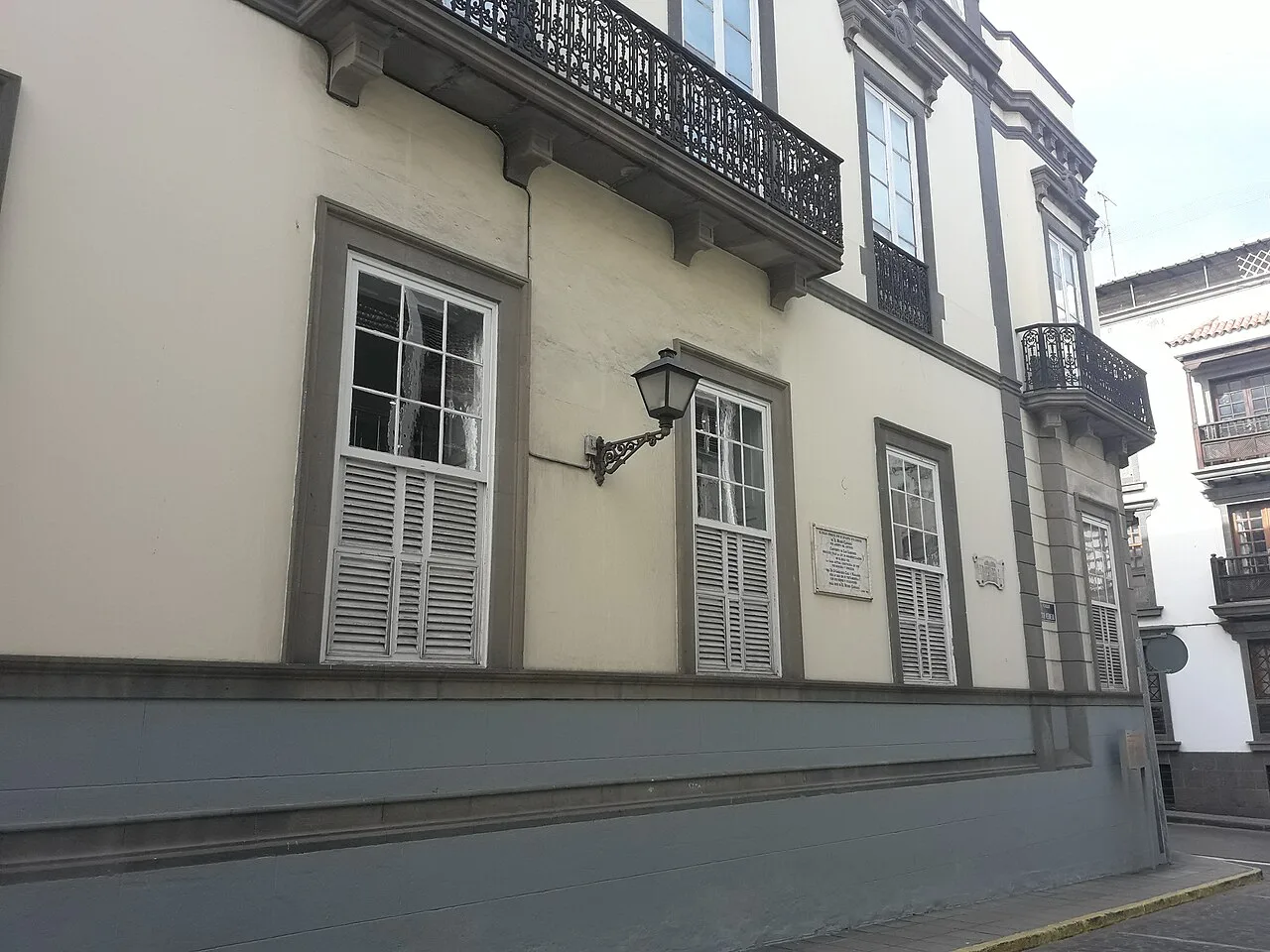

Tickets and opening hours: where to confirm them
Ticket prices, free-entry slots and opening hours are set by the museum and change from season to season, so confirm them on the museum's own information page before you travel. The same page carries the address and any notices about closures. Do not rely on a guidebook or a blog post for the current entry fee.
If you are visiting on a Monday, confirm how the museum is operating that day and plan the cathedral and Casa de Colón around it. The Casa de Colón, a few minutes away in Vegueta, keeps its own hours; check those separately before setting your order.
Nearby in Vegueta: cathedral, Casa de Colón and CAAM
The cathedral of Santa Ana presides over the square of the same name a couple of minutes away, begun in the sixteenth century and still unfinished, with a Diocesan Museum of Sacred Art around the Patio de los Naranjos and a tower view over the city and bay. The cathedral is open during worship hours, so a visit can collide with mass; check the times at the door rather than assuming a tourist slot.
The Casa de Colón, an Americanist museum and study centre in a fine old house in Vegueta, explores the Canaries' relationship with the Americas and the admiral's association with the island. The chapel of San Antonio Abad nearby carries a plaque marking where Columbus is said to have prayed. Pair it with the Museo Canario for a full picture: one museum covers the island before the conquest, the other the Atlantic world after it.
For a change of register, the Casa-Museo Pérez Galdós in Triana covers the novelist born in the city, and the walk between it and Vegueta takes you through the pedestrian shopping street of Triana. Literature, anthropology and art sit within twenty minutes of each other here, which is why Vegueta rewards a slow morning rather than a checklist dash.
Practical notes: lunchtime closures and Mondays
Vegueta's rhythm is Spanish rather than tourist-brochure: churches and small shops often close for the middle of the day and reopen in the late afternoon. Aim to see the museum and cathedral in the morning and treat the early afternoon as a pause, since the cobbled streets get warm at midday even in this Atlantic city.
Mondays need care, because the CAAM closes that day along with public holidays, and other sights may follow different patterns. Check each site's own timetable the day before and put the museum first if you are working with a single morning.
Is El Museo Canario worth an hour of your Vegueta morning?
Yes, if you want to understand the people who were here before the Spanish arrived, and no, if you are after an art gallery or a family-friendly interactive experience. The René Verneau room, the skulls and the mummies are the reason to go, and an hour is enough to do them justice. Put it together with Plaza de Santa Ana and the cathedral for a coherent Vegueta morning.
Two last steps: confirm the museum's hours and entry arrangements on its information page, and check the CAAM's Monday closure before you fix the order of your day. Then walk the loop from Santa Ana to the CAAM without back-tracking, and leave the seafront end of the city — the Parque de Santa Catalina and the Auditorio Alfredo Kraus — for the afternoon.
Frequently Asked Questions
Do I need to book El Museo Canario in advance?
Booking arrangements are set by the museum, and no advance reservation is required for individual visitors. Check the museum's own information page before you travel and follow whatever it says for your dates.
Is El Museo Canario suitable for children?
It is a traditional museum of cases and labels, and its best-known room displays human skulls and mummies. Older children with an interest in archaeology tend to get the most from it; younger ones may find the CAAM or the seafront a better fit.
Can I visit the museum and the cathedral in one morning?
Yes. They are minutes apart, so a morning that takes in Plaza de Santa Ana, the cathedral and the museum is realistic, with the CAAM as an optional fourth stop. Confirm the cathedral's worship hours at the door, as tourist access pauses during mass.