
Casa de Colón in Las Palmas: What to See and How Long It Takes

The Casa de Colón is a museum of Canary–America history in the old quarter of Las Palmas de Gran Canaria, not a preserved house where Christopher Columbus lived. Give it an hour to ninety minutes: the building is nine former houses joined into one block, so you move through a sequence of patios and rooms rather than one grand interior. This page covers where it sits in Vegueta and how the visit works.
The site is the former Casa de los Gobernadores, the governors' house on ground that dates back to the founding of the Real de Las Palmas in 1478. The museum as it exists today opened in 1951, after the Cabildo de Gran Canaria commissioned Secundino Zuazo Ugalde to convert and extend the old properties. Treat that history as context rather than a claim that Columbus slept under this roof.
Where the Casa de Colón sits in Vegueta
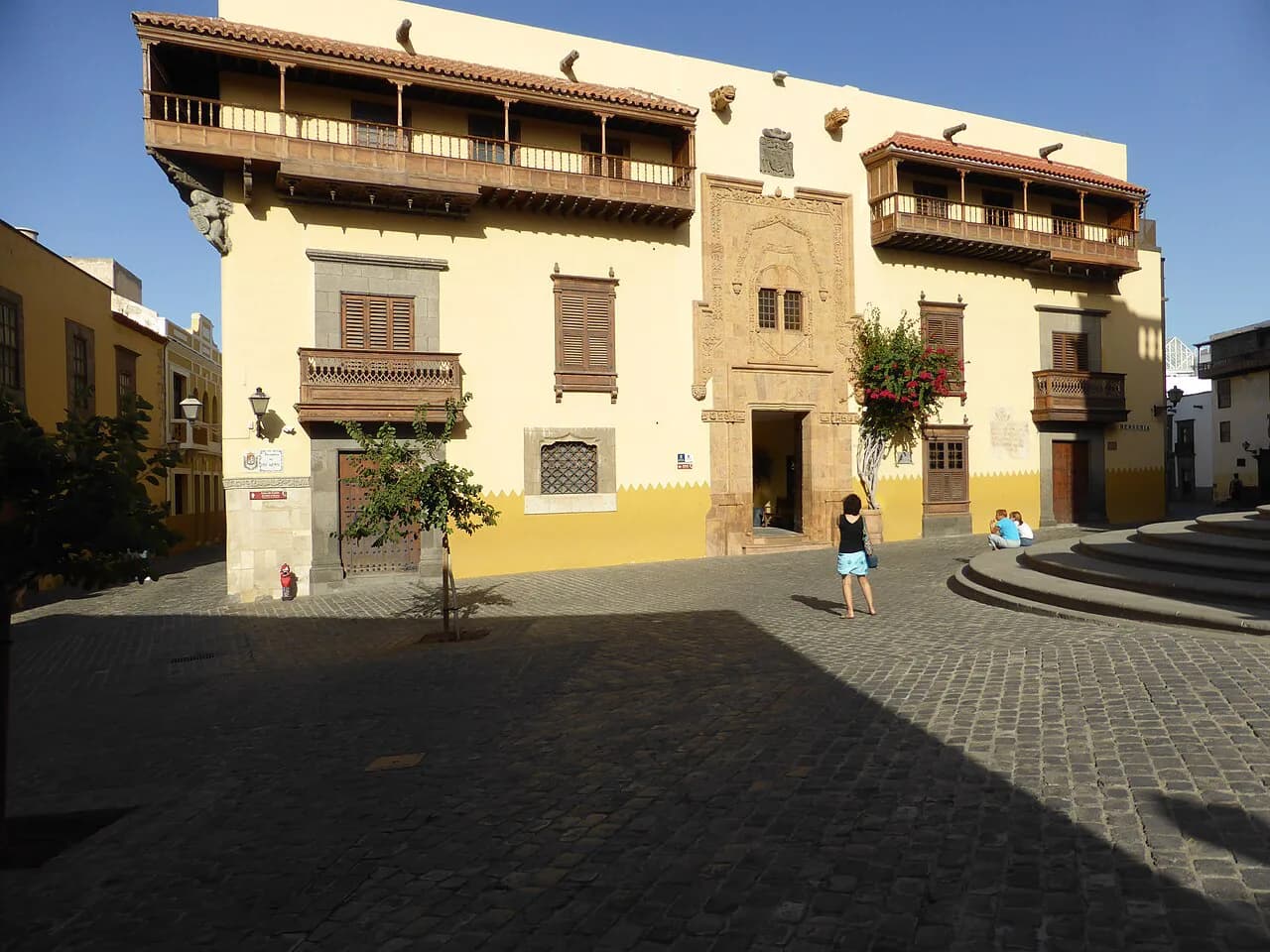
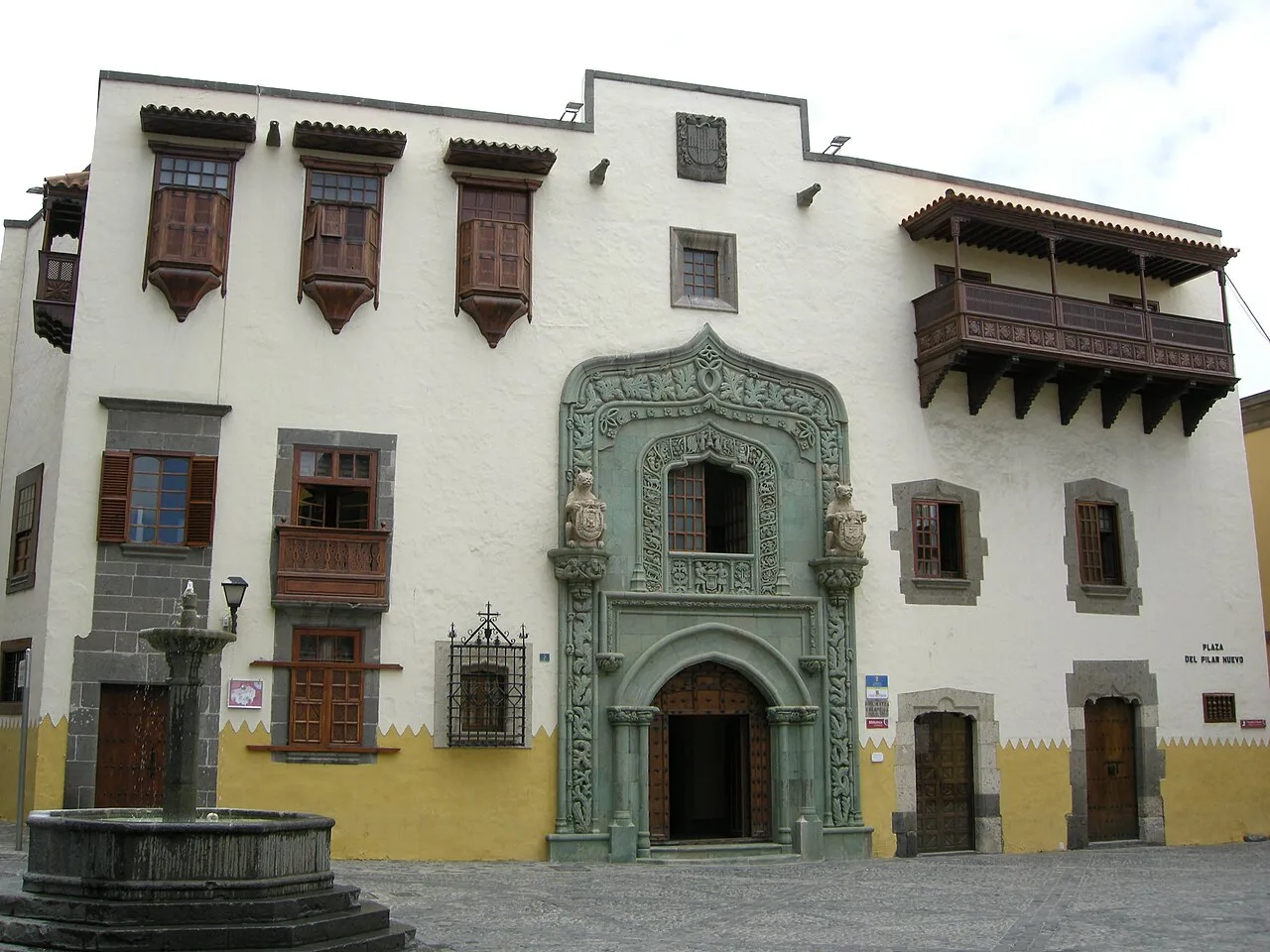
The museum occupies a block in Vegueta, the old quarter on the west bank of the Barranco de Guiniguada, at Calle Colón, 1. The green portada everyone photographs faces the Plaza del Pilar Nuevo, a small square a stone's throw from the cathedral, while the street address is Calle Colón. Check which façade you are at before queueing so you know where you are entering.
Vegueta is the walkable core of the city: narrow streets, low buildings and a handful of squares within a few minutes of each other. The Catedral de Santa Ana Las Palmas rises immediately east of the Plaza del Pilar Nuevo, so the museum and the cathedral share the same short stroll. Plan the museum as one stop on a Vegueta circuit rather than a separate trip across the city.
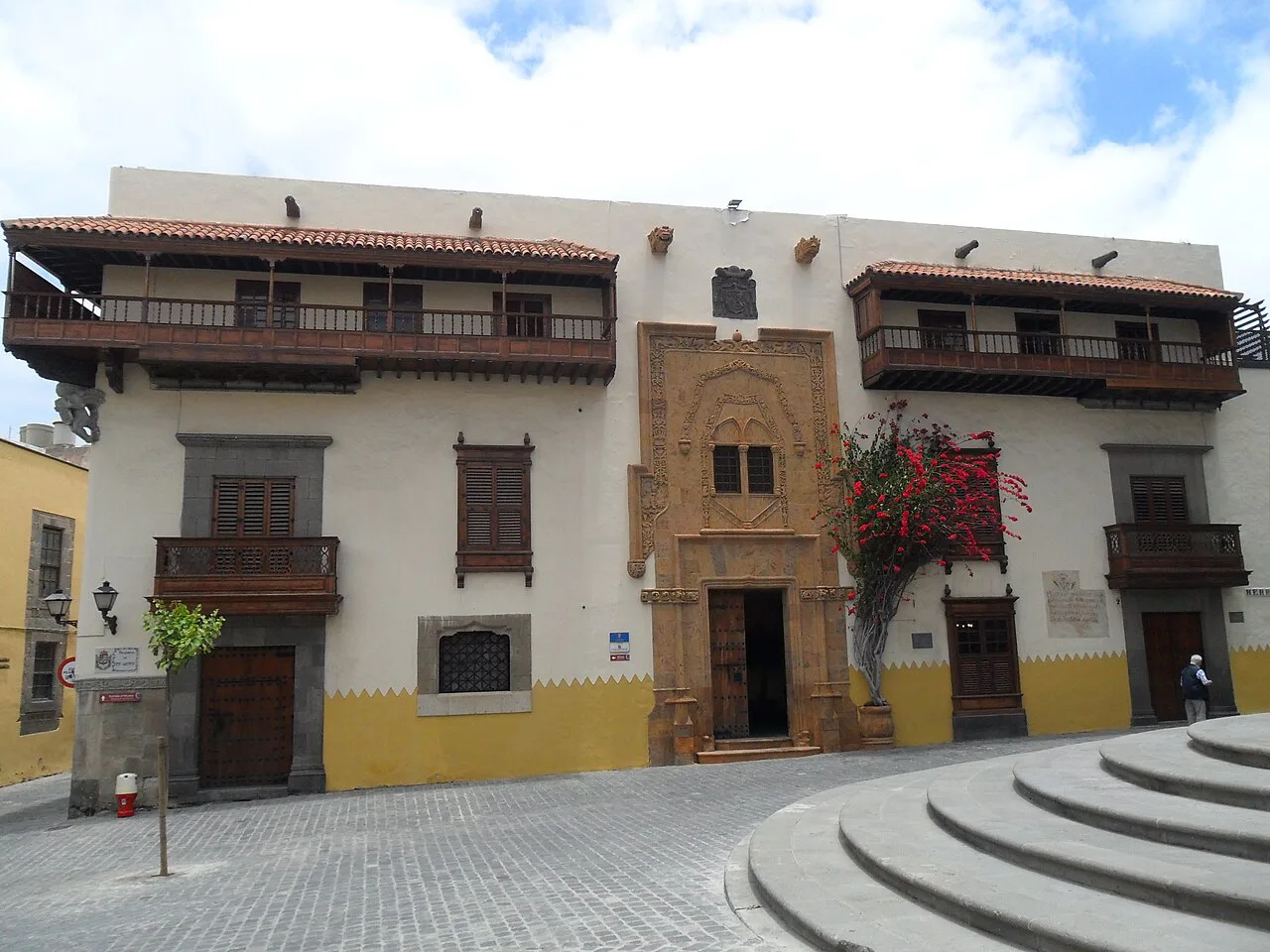

How to get there: Plaza del Pilar Nuevo and Calle Colón
If you are coming from the modern city, head for the old town and aim for the cathedral, then walk the last couple of minutes to the Plaza del Pilar Nuevo. Buses and taxis run across Las Palmas, and the centre is compact enough that most of the final approach is on foot through pedestrian streets. Allow extra time for that walk if you are arriving from the port or the beach end of the city.
For a group visit, the museum takes bookings for guided tours on weekday mornings between 10:00 and 16:00, arranged in advance by email to deaccolon@grancanaria.com. That arrangement is published for groups, so do not assume a walk-up guided tour on a weekend. Individual visitors simply turn up during opening hours.
Opening hours and days across the week
The museum opens Monday to Saturday from 10:00 to 18:00, and on Sundays and public holidays from 10:00 to 15:00. That shorter Sunday window is the one that catches people out: a late-afternoon arrival on a Sunday or a festivo will find the doors shut. If your trip spans a weekend, put the Casa de Colón on the Saturday and keep Sunday for the squares and the cathedral.
Admission rates are set by the Cabildo de Gran Canaria, so ask at the desk on Calle Colón or check the museum's own page before you travel rather than relying on older listings. Do not confuse this museum with the Casa Museo de Colón in Valladolid, a separate institution with its own schedule and charges. If a search result shows Valladolid hours, you are looking at the wrong city.

What to see inside: courtyards, paintings and the Canary–America story
The permanent collection is organised by theme rather than by date, and the displays make the logic clear as you go. Sections cover Columbus's voyages, cartography and navigation instruments, pre-Columbian America, the links between the Canary Islands and the Americas, the urban geography of Las Palmas from the fifteenth to the nineteenth century, and painting from the fifteenth to the twentieth. If you have limited time, the cartography and the Canary–America rooms carry the museum's argument most directly.
Painting is a stronger part of the visit than many expect: the museum holds works from the sixteenth to the nineteenth centuries, including pieces on deposit from the Museo del Prado and Flemish paintings linked to the sugar and wine trade with the Low Countries. The patios are the other draw, planted with Canary vegetation around a small fountain, with macaws in the entrance courtyard.
The building itself: nine houses and two façades
The museum is a merger of nine dwellings that once filled a city block, the oldest being the Casa de los Gobernadores, with later buildings from the sixteenth to the twentieth century. The result is a mix of styles across the interior and the four façades, from Gothic to neo-Canarian. This is why the visit feels like a series of rooms opening off patios rather than a single processional route.
Two façades matter to a visitor. The oldest is the sixteenth-century portada de Santa Gadea Mansel, while the best known is the green portada on the Plaza del Pilar Nuevo, the one on postcards and the obvious meeting point. Walk round to Calle Colón to see the entrance address and the other elevations before you go in, so the jigsaw of the block makes sense.
How long to allow and when it is busiest
An hour is enough for a focused pass through the themed rooms; ninety minutes lets you read the panels, sit in the patios and take the painting galleries at a reasonable pace. Add twenty minutes if you like maps and instruments, which reward closer looking. The museum is compact enough that you can step back out into Vegueta and return to the same streets afterwards without losing the day.
Mid-morning, close to the 10:00 opening, is the calmest slot, and the last hour before closing tends to be quieter than the middle of the day. Late Sunday morning is the tightest window because the museum shuts at 15:00, so aim to be inside by early afternoon at the latest. School holidays thicken the courtyards, and group bookings arrive on weekday mornings.
What is nearby in Vegueta and the cathedral square
The cathedral square and the Catedral de Santa Ana are the obvious pairing with the museum, and the surrounding streets hold enough civic buildings and small squares to fill a morning. The Barranco de Guiniguada marks the western edge of the old town and gives you a clear line back towards the newer city. Keep your walk to monuments and squares and you will see the quarter at its best.
Two other museums in the same quarter suit a second day or a longer afternoon. The Casa-Museo Pérez Galdós, devoted to the Canary writer, and El Museo Canario, which covers the pre-Hispanic history of the islands, both sit within walking distance of the Casa de Colón. Visiting one of them alongside the Casa de Colón gives a fuller picture of the archipelago's story than either does alone.
Where to check current details before you go
Hours and admission are best confirmed on the museum's own page or at the desk on Calle Colón before you set out. The city's official visitor listing carries the standard schedule: Monday to Saturday 10:00 to 18:00, Sundays and holidays 10:00 to 15:00. For group bookings, use the weekday-morning arrangement and the email address exactly as published.
Slotting the Casa de Colón into a Vegueta morning
Build the visit around an early start on a weekday, pair it with the cathedral square and one other museum in Vegueta, and you have a solid half-day without rushing. If your only free time falls on a Sunday, go in the morning and treat the 15:00 closing as a hard stop. Check admission on the museum's own page or at the desk before you pay.
Frequently Asked Questions
Is the Casa de Colón the actual house where Christopher Columbus stayed?
No. The museum stands on the site of the former Casa de los Gobernadores, the governors' house in the founding core of Las Palmas, and the building as you see it is nine dwellings merged and converted from 1951. Columbus is the theme of the collection, not a resident of this house.
Is there a Christopher Columbus house in Gran Canaria?
The Casa de Colón in Vegueta is the museum on Gran Canaria devoted to Columbus's voyages and the Canary–America relationship. Do not confuse it with the Casa Museo de Colón in Valladolid, which is a separate museum in Castile with different hours and charges.
Do I need to book the Casa de Colón in advance?
Individual visitors do not need a booking and can turn up during opening hours. Guided visits are arranged for groups on weekday mornings between 10:00 and 16:00 by prior arrangement through the museum's published contact address, so a group should sort that out before travelling.