
Bellver Castle (Castell de Bellver), Palma: a Visitor's Guide

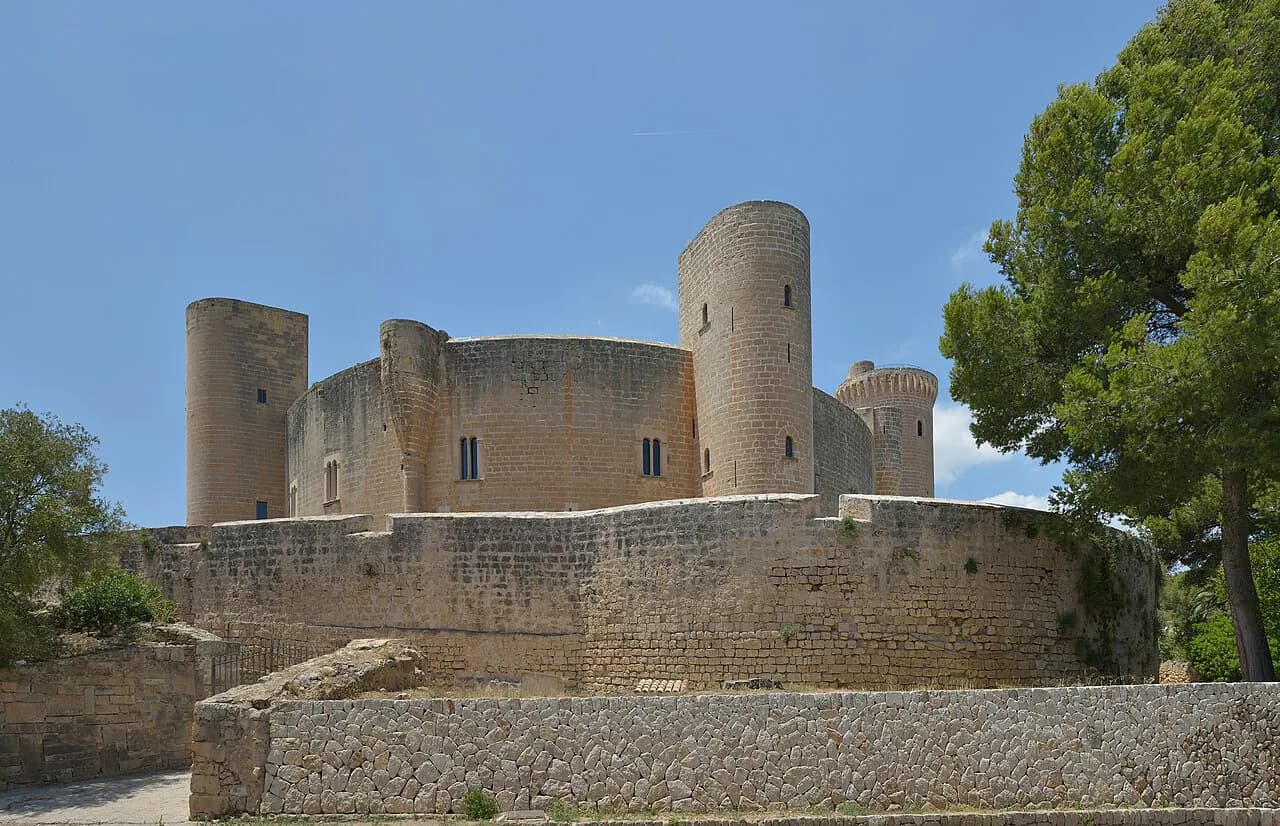
Bellver Castle is worth two hours of a Palma break: an entirely round Gothic fortress begun in 1300, with a double-tiered courtyard, a city history museum and a roof terrace looking over the bay. It sits on a wooded hill about 3 km west of the centre, close enough to walk up on a cooler morning and still reach the old town by lunchtime.
A round Gothic fortress on a wooded hill
Jaume II began the castle in 1300 and the architect Pere Salva, who also worked on the Almudaina Palace, gave it a plan found nowhere else in Spain: a complete circle. Three large towers ring a central courtyard linked by an arch to a free-standing keep, so the silhouette reads as a ring with an annex rather than a conventional square fortress. The name means 'lovely view' in Catalan.
For centuries the building served as a prison, and Jaume III's widow and sons spent most of their lives confined here. Walk the moat first, then climb to the roof, where you can see how the lower courtyard's semicircular arches sit beneath the upper level's Gothic arches and rib-vaulting.

Where Bellver Castle is
The castle stands on a hill in the Ponent neighbourhood at the western edge of Palma, addressed as Carrer Camilo José Cela s/n. It is roughly 3 km from the historic centre, a comfortable uphill walk in mild weather and a sweaty one in July and August, with shade from the pines on the approach.
How to get there: on foot, by taxi or by bus
On foot, head for Plaça Gomila and climb through the pine woods above Carrer de Bellver, passing a chapel on the way; this wooded approach puts you at the castle gate without a car. By road, taxis and cars reach the hill directly, and there is free parking beside the site plus paid parking and free street spaces nearby. The hop-on hop-off tourist bus also stops at the castle.
The final stretch is uphill, so light shoes and a water bottle matter more than any equipment. The pine path is the reason to leave the taxi behind on a fine day; the taxi is the reason to keep the castle in the plan when time is short or the temperature is high.
Opening hours by season
Hours shift with the season, so check the calendar for your dates before setting out. From April to September the castle opens Monday from 08:30 to 13:00, runs Tuesday to Saturday from 08:30 to 20:00, and opens Sunday and bank holidays from 10:00 to 20:00. From October to March it opens Tuesday to Saturday from 10:00 to 18:00 and Sunday and bank holidays from 10:00 to 15:00, with Monday closed outside the summer window.
That means a winter Monday is a wasted trip and a summer Monday only works as a morning visit, which suits the heat anyway. Sunday in the low season closes at 15:00, so a late lunch in the old town afterwards beats an afternoon ascent.
Tickets, reduced prices and free entry
Standard admission is 4€, reduced to 2€ for pensioners and visitors aged between 14 and 18, and entry is free on Sundays and for children under 14. That makes Bellver one of the cheaper monuments in Palma, and the Sunday slot is the obvious way to combine a free visit with a walk in the pines.
Free Sundays also fill the museum rooms, so a weekday morning gives you the courtyard and roof with more space. If you are travelling with teenagers, remember the 14 to 18 band pays the reduced rate rather than going free.
What to see inside
The circular courtyard is the heart of the visit: two levels of arcades, the lower with semicircular arches under a flat roof and the upper with Gothic arches and rib-vaulting. Walk the moat outside first, then take the roof to look down into the courtyard and compare the two styles from above.
The museum of municipal history traces Palma's development through its collections, including pottery from the Talaiotic, Roman, Arab and Spanish periods. Labels appear in several languages and temporary exhibitions rotate alongside the permanent displays, with rooms devoted to the Mallorcan kings. Read a few panels properly rather than speed-walking the whole floor; the pottery sequence alone explains a lot about the island's layers of settlement.
The view from the roof
From the upper level and the battlements the panorama takes in Palma's rooftops, the port and the whole sweep of the bay, with the Serra de Tramuntana visible on clear days. This is the payoff for the climb through the pines, so give the roof more than a quick circuit.
Bring the camera for the bay rather than the building: the round plan reads best from outside on the moat, while the panorama needs the height. If the city and harbour are all you can see, the climb is still worth it.
How long to allow and when to go
Two hours covers the moat walk, the courtyard, the museum floors and the roof without rushing, and ninety minutes works if you skip most of the displays. Add the walk up from Plaça Gomila, which is itself part of the outing rather than dead time. A morning start in summer beats any afternoon slot.
The hilltop is exposed, so hats and water in high summer are practical rather than cautious, and the pine path gives shade on the way up. The entrance and parking are accessible, which makes the castle a reasonable stop for mixed-mobility groups.
What is nearby in Palma
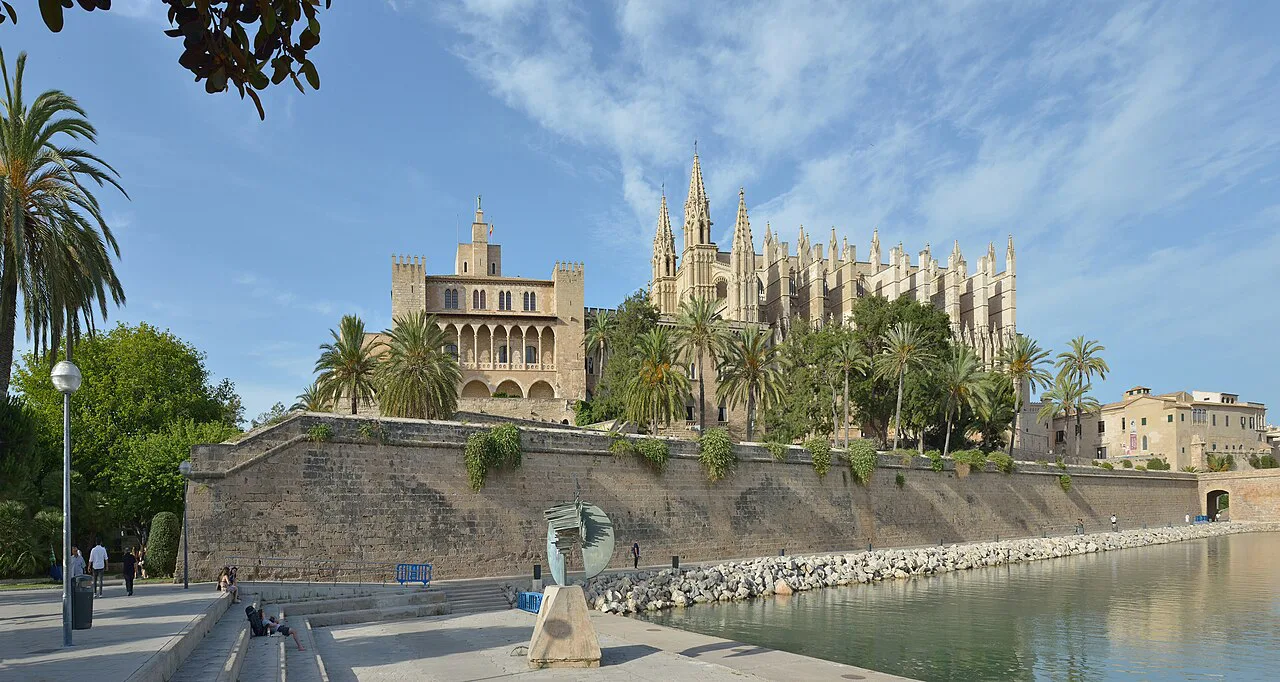
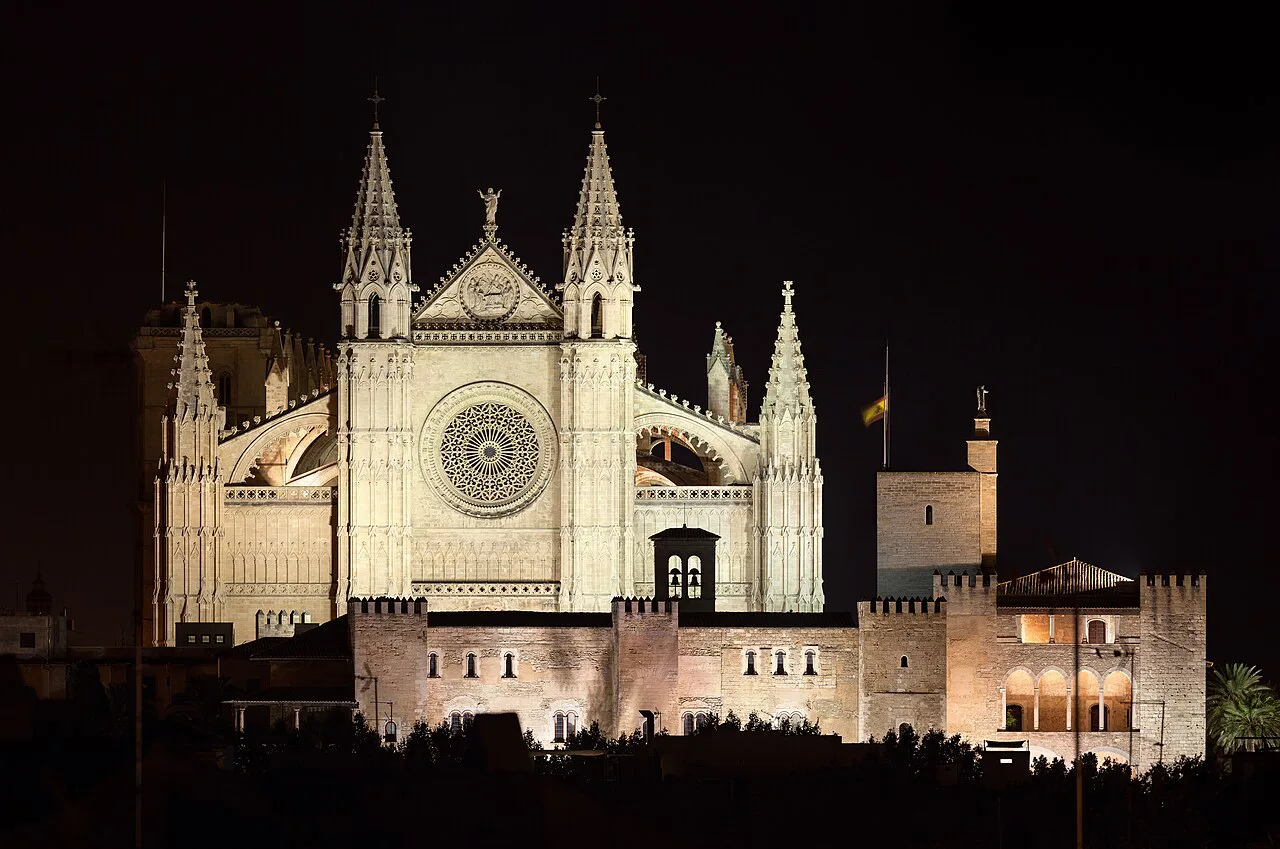
Come back down into the centre and the Palma Cathedral (La Seu) sits above the old walls facing the Almudaina Palace, the royal residence whose architect links back to Bellver's builder. It is a natural next stop for anyone following the Gothic thread from the castle, so check its visiting hours before you go.
A short walk inland brings you to the Arab baths, a small surviving Moorish bath complex that pairs well with Bellver's museum pottery for an afternoon of layers. From there the Passeig del Born gives you a broad, tree-lined stretch towards the centre, with the es Baluard museum of contemporary art on the old sea wall as an option.
If you want a plaza to end the day in, the Plaça Major is the central square to aim for after the descent. It makes a sensible meeting point for a group that splits between castle and shops.

Practical points before you climb
Treat the hill as the main physical effort of the day and plan the rest of the itinerary accordingly; the castle itself is a gentle walk once you are through the gate. In summer, go early and carry water. In winter, check the calendar because the Monday opening disappears outside the summer season and the Sunday closing time comes forward.
The museum rewards a slower pace, so decide before you arrive whether you are there for the views or the displays. Either way, the moat walk and the roof should be non-negotiable.
Should Bellver Castle be on your Palma list?
Yes, if you want one monument that combines architecture, city history and a panorama without eating a whole day. The round plan and two-level courtyard are genuinely unusual, the museum gives context for the rest of Palma, and the walk through the pines makes the approach part of the visit.
Put it first thing on a summer morning or on a free Sunday, check the seasonal calendar before you go, and finish the descent in the old town. For a wider set of Palma stops to build around it, the Palma Attractions: 6 Visitor Guides collection covers the old town piece by piece.
Frequently Asked Questions
Do you need to book Bellver Castle in advance?
You buy your ticket at the castle; the published information gives an admission price, reduced rates for pensioners and visitors aged 14 to 18, free entry on Sundays and for children under 14, and no advance reservation requirement. A free Sunday is the busiest slot, so arrive early if you want space in the museum rooms. Check the seasonal opening calendar first, because the Monday pattern changes between summer and winter.
What makes Bellver Castle different from other Spanish castles?
It is entirely round, described as unique among Spanish castles, with three towers around a central courtyard and a free-standing keep connected by an arch. The courtyard itself has two levels, the lower with semicircular arches and the upper with Gothic arches and rib-vaulting. Climbing to the roof lets you see both levels at once and gives the bay panorama that the Catalan name refers to.