
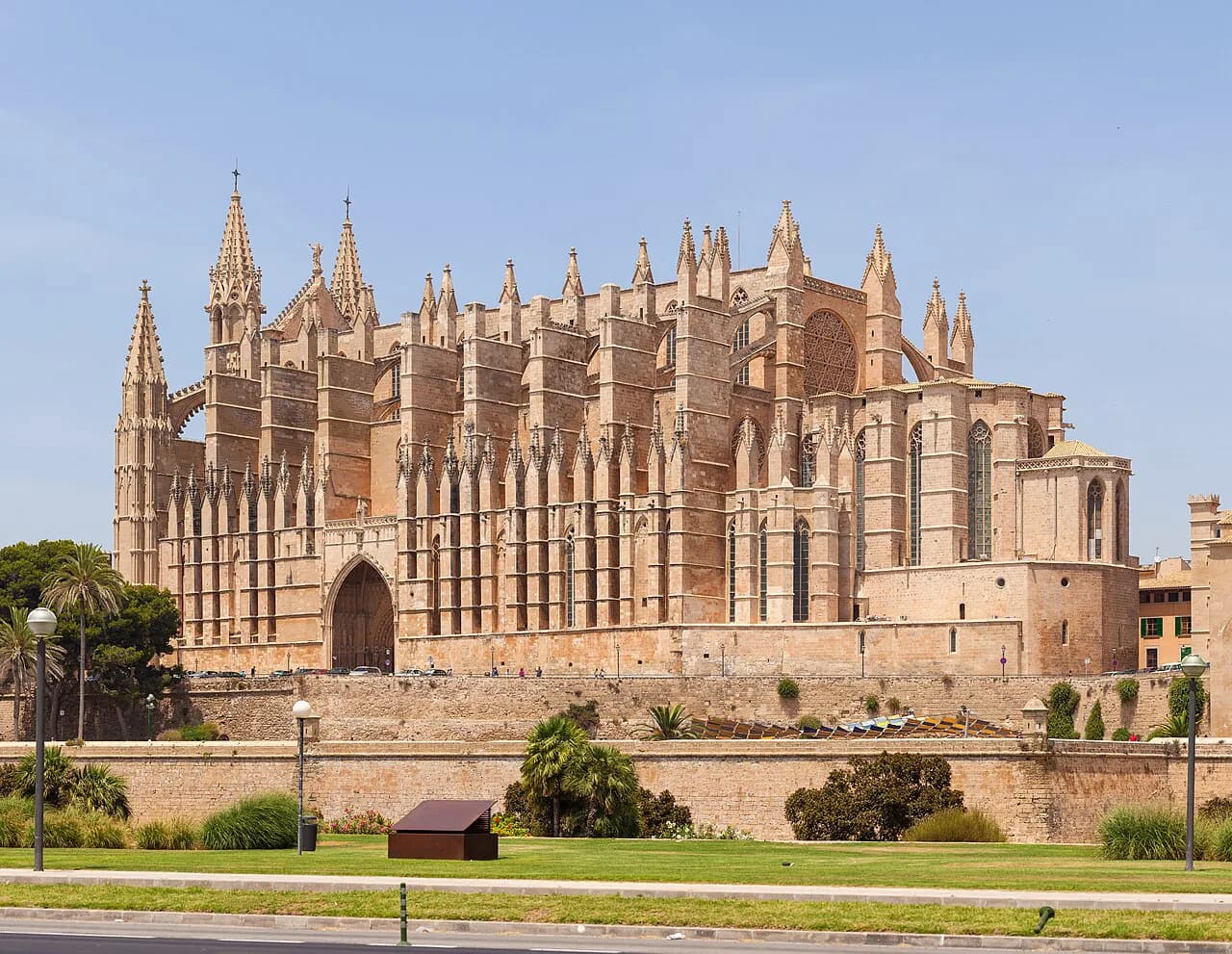
Palma Cathedral (La Seu): What to See and How to Visit

Palma Cathedral, La Seu, is the one monument in Palma you should not skip: a Gothic cathedral built between the 14th and 16th centuries, set just above the water at the edge of the old town. Allow roughly eighty to a hundred minutes to do the exterior portals properly, walk the three naves and spend time at the rose window. This guide covers what to look at, where to find the entrances, and how to separate worship hours from ordinary visitor hours.
The cathedral sits in the heart of the city, so you can reach it on foot from almost anywhere in the old town. Its position above the sea and the old-town lanes around it make it the natural anchor for a morning walk rather than a separate afternoon errand.
Where La Seu sits in Palma
La Seu occupies high ground at the edge of Palma's old town, its west front turned towards the city and its southern side looking out over the sea. Anyone walking the old town will find it easily by following signs to the cathedral or, more simply, heading downhill towards the water until the flying buttresses appear above you.
Because it stands at the top of a dense tangle of streets, allow fifteen to twenty minutes of walking from the lower old town and a few more from the Passeig del Born. The approach through the smaller lanes is part of the visit: the cathedral unfolds gradually rather than appearing all at once.
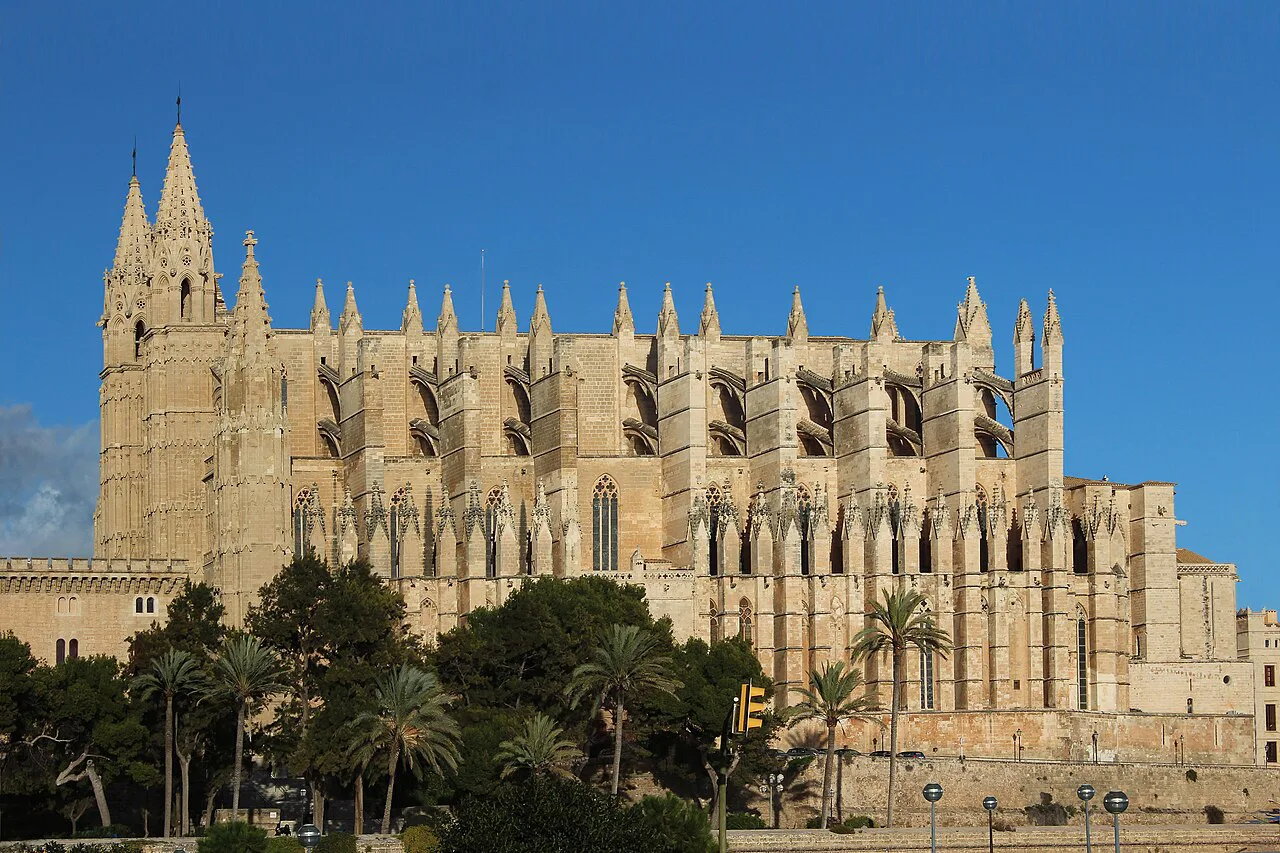

What La Seu is: a Gothic cathedral on the sea wall
The building you see is a Christian replacement for a mosque, put in hand after the 13th-century conquest of Mallorca and built to Gothic design between the 14th and 16th centuries. Construction spanned roughly two hundred years, which is why the visitor has to read several layers of style rather than a single clean statement.
Happily, the cathedral is unusually explicit about that long campaign: Gothic work dominates, but Renaissance and Baroque fixtures sit inside, and the whole west front was rebuilt in the 19th century. That gives you a way of moving round the church, following the shift from medieval to later work as you go.
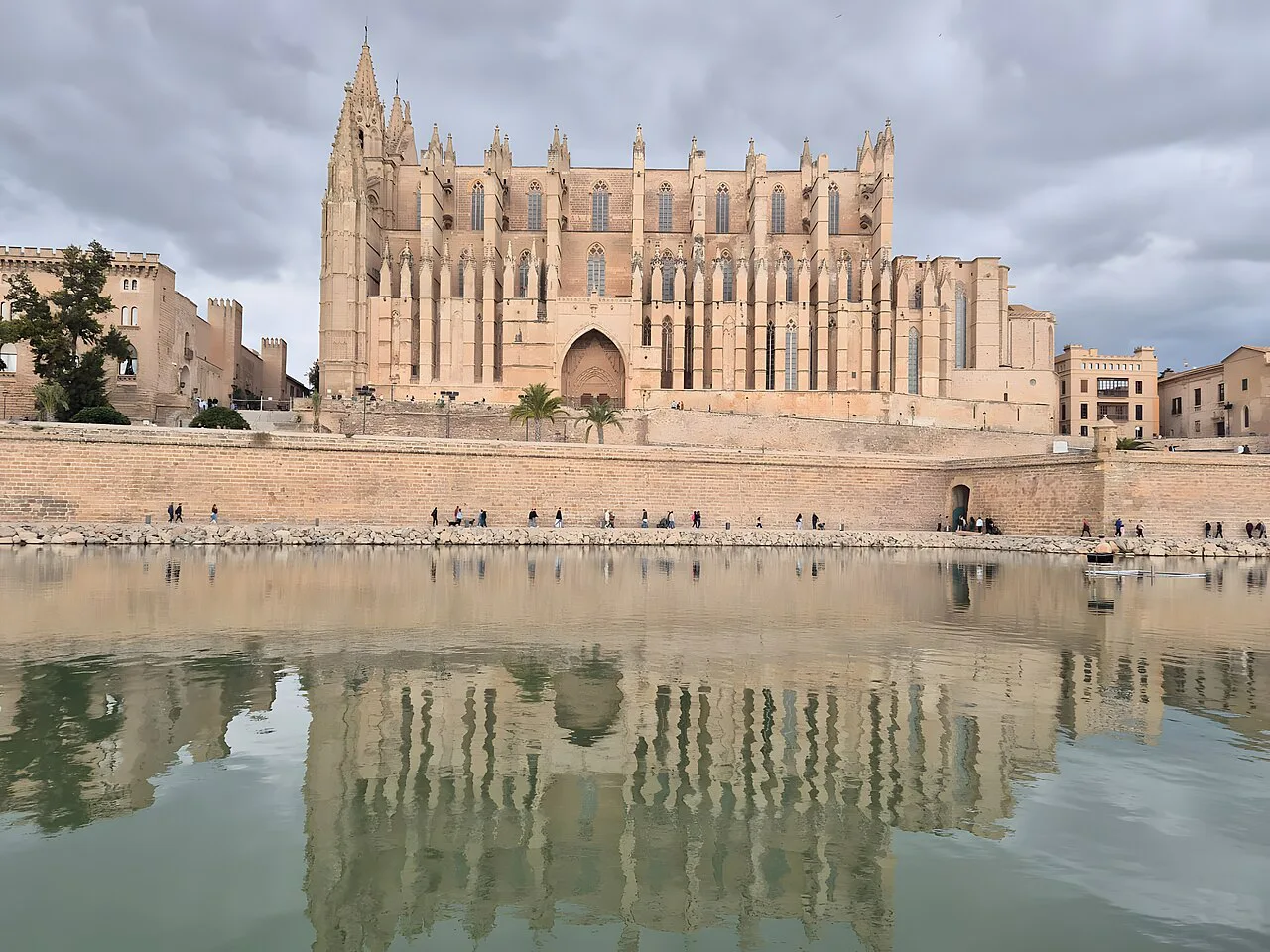

The exterior to look at first
Begin at the sea-facing Mirador portal, one of the masterpieces of Gothic sculpture and the entrance with the best setting, since it opens directly towards the water. Study the sculptures of Saint Paul, Saint Andrew, Saint Peter, Saint John the Baptist and Saint James on the doorjambs, the Last Supper and Heavenly Father on the tympanum, and the musician angels along the archivolts.
Move on to the main portal, a Renaissance addition from around 1600 with a triumphal-arch shape and a coffered vault. Its jambs carry figures of Gregory, Jerome, Ambrose and Augustine and a tympanum of the Immaculate Conception — a clear contrast with the medieval carving at the Mirador.
The west front, facing into the city, is the neo-Gothic façade of the 19th century, with four towers and figures of Ramón Llull and three saints. It looks older than it is, and that is precisely the point of the design.
Inside: the nave and the fourteen pillars
The plan is broadly rectangular with three naves divided by fourteen slender, impressively tall octagonal pillars supporting ribbed vaults. The result is a space that feels open rather than heavy, and the pillars give you an easy way to keep your bearings as you walk the length of the church.
Make for the oldest part, the raised Trinity chapel and the Royal Chapel at the head of the church. These are where the cathedral began in the early 14th century, and they hold the Virgen de la Grada, the oldest sculpture in the building. Their raised level makes them easy to spot from the nave.
The rose window and the light inside
The apse holds the cathedral's great rose window, made of twenty-four coloured triangles and dating to the 14th century; it is the largest Gothic rose window in the world. The windows around the church are among the reasons La Seu feels airier than most Gothic interiors, so they are worth seeking out rather than waiting to notice them.
If light matters to you, the stained glass reads best on a bright day, when the glazing does the most work and the aisles are at their best. On a dull day the glass still reads well but the contrast is softer.
Opening hours and entry
La Seu is a working cathedral rather than a museum, and the official site publishes separate times for worship and for visiting. On weekdays, worship runs from around half past eight to a quarter to ten in the morning, with different schedules on Saturdays and Sundays.
Plan round those worship slots rather than the other way about: come at the cathedral's published visitor opening time to get in ahead of the main groups. Ticket categories, prices and any online booking requirement are published on the cathedral's own pages, so check the official site, and any authorised ticket seller, before you go.
How long to allow and when to go
Allow eighty to a hundred minutes if you want the exterior portals, the nave, both chapels and the rose window without hurrying; a brisk walk round takes about forty-five. Add time if you are interested in the carvings, because the Mirador portal alone rewards fifteen minutes.
Crowds build through the middle of the day in season, and the summer heat on the cathedral steps is fierce. Going early in the day is the quietest and coolest time to be inside, and late afternoon is a good second choice; both avoid walking uphill in the full sun.
Mass and cathedral etiquette
Sunday brings worship and visitor hours into the same building, so the timetable decides how your morning works. Sunday and Saturday evening schedules differ from weekday mornings, and it is worth building the day round one of the quieter visitor windows instead of hoping to squeeze past a service.
Dress for a church rather than a beach: covered shoulders and knees, quiet voices and no flash near worshippers. If a service is under way the sensible move is to wait, or to walk round the outside and come back, rather than to edge past the congregation.
Nearby after your visit
The old-town lanes immediately around the cathedral lead up towards the Arab baths, one of the few surviving Moorish buildings in the city. That gives you a natural second stop without another bus ride.
For a longer circuit, walk down to the Plaça Major for coffee and shade, then continue to the Passeig del Born for the modern city. Bellver castle on its hill is the counterpoint: a round Gothic fortress visible from much of Palma, best kept for another morning.
Practical points for the visit
The cathedral publishes its own rules for visitors on its site. Check them before you go, since photography conditions and any restricted areas can differ from the nave and chapels you have come to see.
Whether you can climb or walk out onto the terraces, and on which days, is a matter for the cathedral's own visitor information, which is the only reliable source. Photographs of the interior are widely available if the lighting is poor on the day you go.
Is La Seu the right stop for your first morning in Palma?
Yes, if you want the clearest possible introduction to Mallorca's architecture and history in one building. Begin at the Mirador portal, give the nave and the two chapels real time, and finish with the rose window before the surrounding lanes pull you away.
If your taste runs more to modern art or to castle walls, the es Baluard museum and Bellver Castle (Castell de Bellver), Palma cover that ground, and La Seu can come later in the break. The other entries in Palma Attractions: 6 Visitor Guides set out what each one gives you.
Frequently Asked Questions
How long did it take to build Palma Cathedral?
The cathedral was built over roughly two centuries, running from the early 14th century to the end of the 16th, which is why Gothic work sits alongside a Renaissance main portal and a 19th-century west front.
How much does it cost to enter Palma Cathedral?
Ticket prices and any free or reduced categories are set by the cathedral itself and published on its own site and authorised ticket pages, so look there before you go.
Is there a dress code at Palma Cathedral?
It is a working church, so covered shoulders and knees, quiet voices and no flash photography during worship are the sensible standard, and the cathedral sets out its own rules for visitors.
Can you visit the terraces of Palma Cathedral?
Terrace access is set by the cathedral, so check the official visitor information before you go rather than assuming a roof walk is part of the standard visit.