
Arab Baths in Palma: What to See at the Banys Àrabs

The Arab Baths in Palma, the Banys Àrabs, are worth 30 to 45 minutes of an old-town walk: a small 11th-century Islamic bathhouse tucked behind a horseshoe arch on Carrer de Can Serra, with a domed hot room, twelve columns and a quiet garden. This guide covers where the building sits, how to reach it on foot, what you are actually looking at inside, and what the ticket and hours are.
What the Banys Àrabs are
These are one of the few examples of Islamic architecture preserved in Palma, built in the 11th century and now standing inside the gardens of Can Fontirroig in the heart of the historic centre. Enough of the rooms survives to read the building as a bathhouse rather than as ruins alone, which is what makes a short stop here worthwhile.
Archaeologists link the surviving rooms to the palace of a Muslim nobleman, which explains the small scale: this was a private bath suite, not a public hammam. Approach it as a piece of architecture to look at closely rather than a museum with displays, and set aside the expectation of labels and reconstructions.

Where the Arab Baths are
You will find them at Carrer de Can Serra number 7, inside the gardens of Can Fontirroig, in the old town of Palma. The street is narrow and the entrance easily walked past: look for the horseshoe arch rather than a large sign, because the baths sit behind a house and courtyard rather than on a grand square.
Because the address sits deep in the historic centre, you can reach it on foot from anywhere in the old town, on public transport or in a car. Approach from the cathedral side and the walk doubles as a look at the surrounding lanes.

Walking there from the old town
No single route is the point: the baths sit within a few minutes of the cathedral and the main shopping streets, so treat them as a stop on a wander rather than a destination you travel to. Start near the cathedral, drift inland through the lanes, and you will come across Carrer de Can Serra without needing a bus or taxi.
Coming from the Plaça Major or the Passeig del Born side, the walk is equally short, and either square works as a natural start or finish to the same loop. Set the baths midway through an old-town morning, before the streets fill, rather than tacking them onto the end of a long day.
The entrance portal and the central hot room
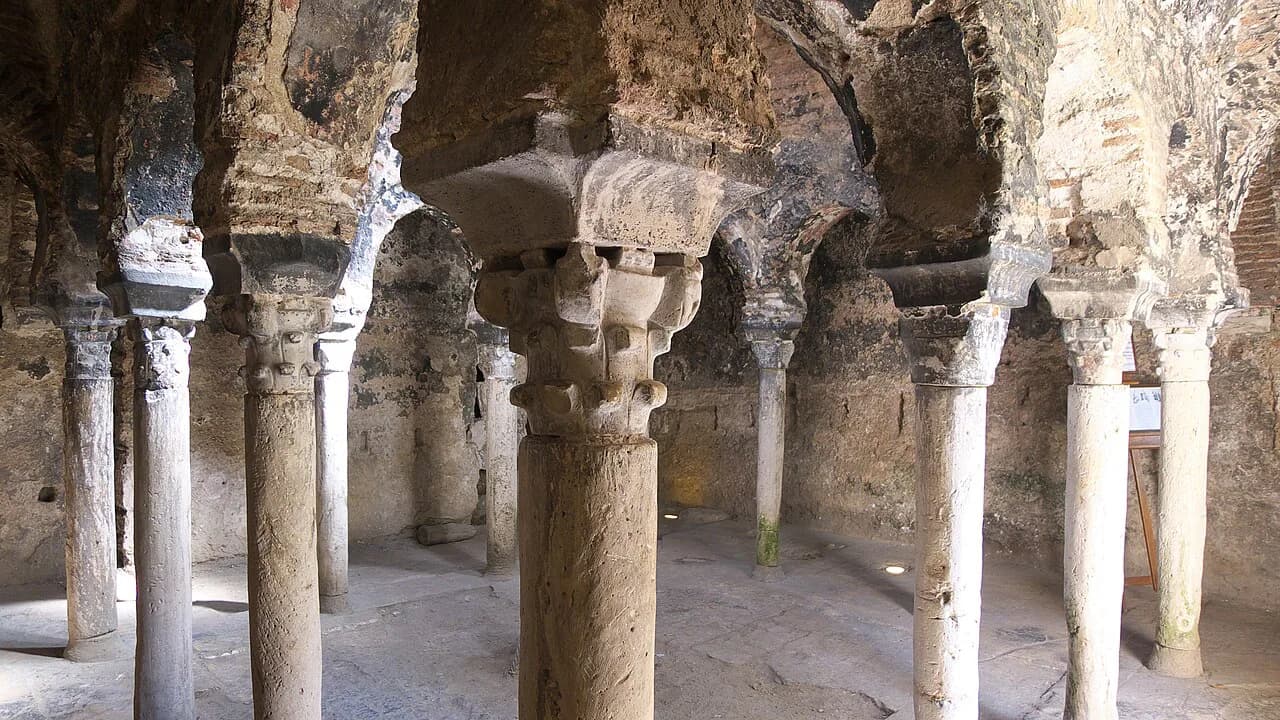
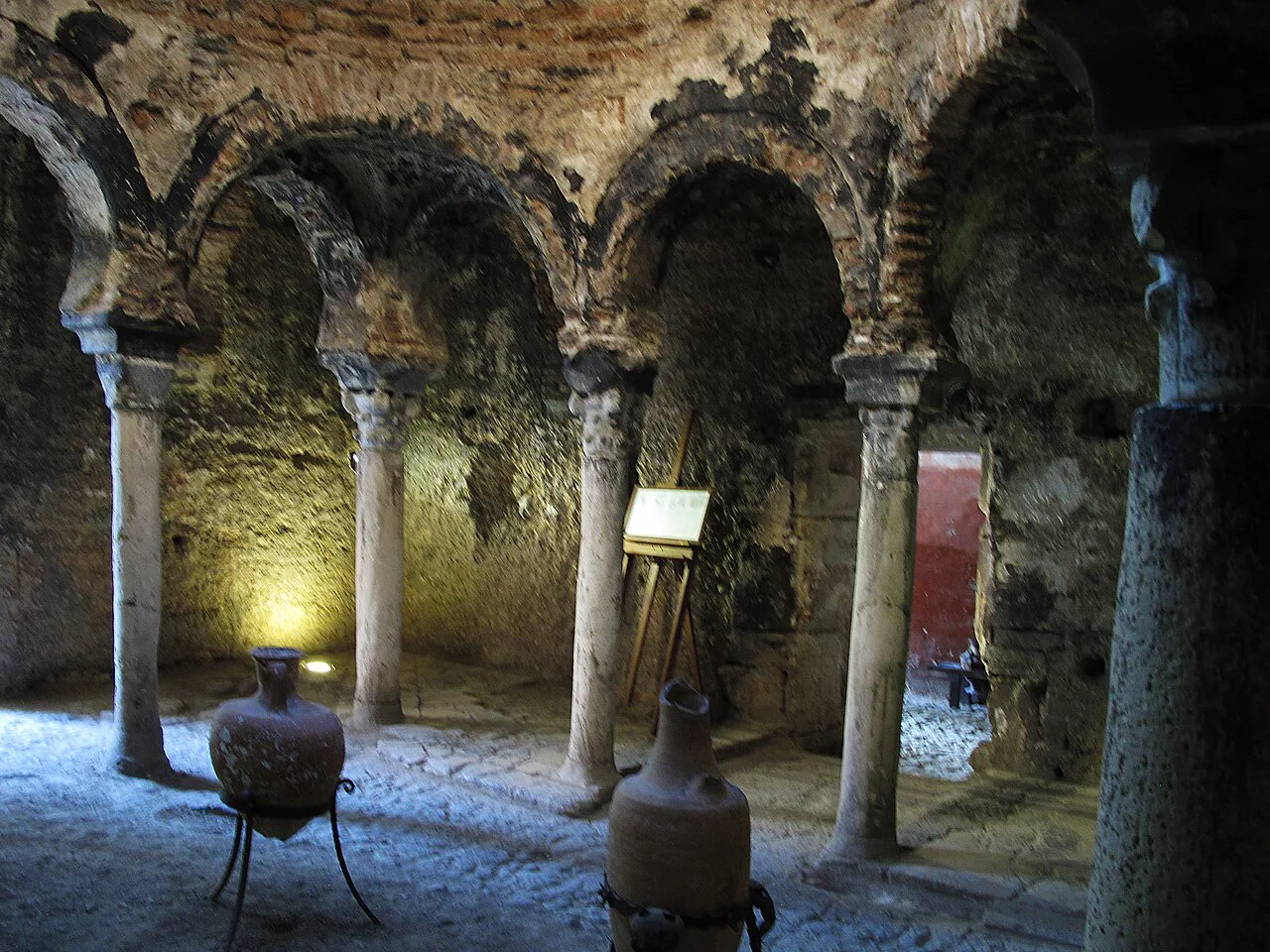
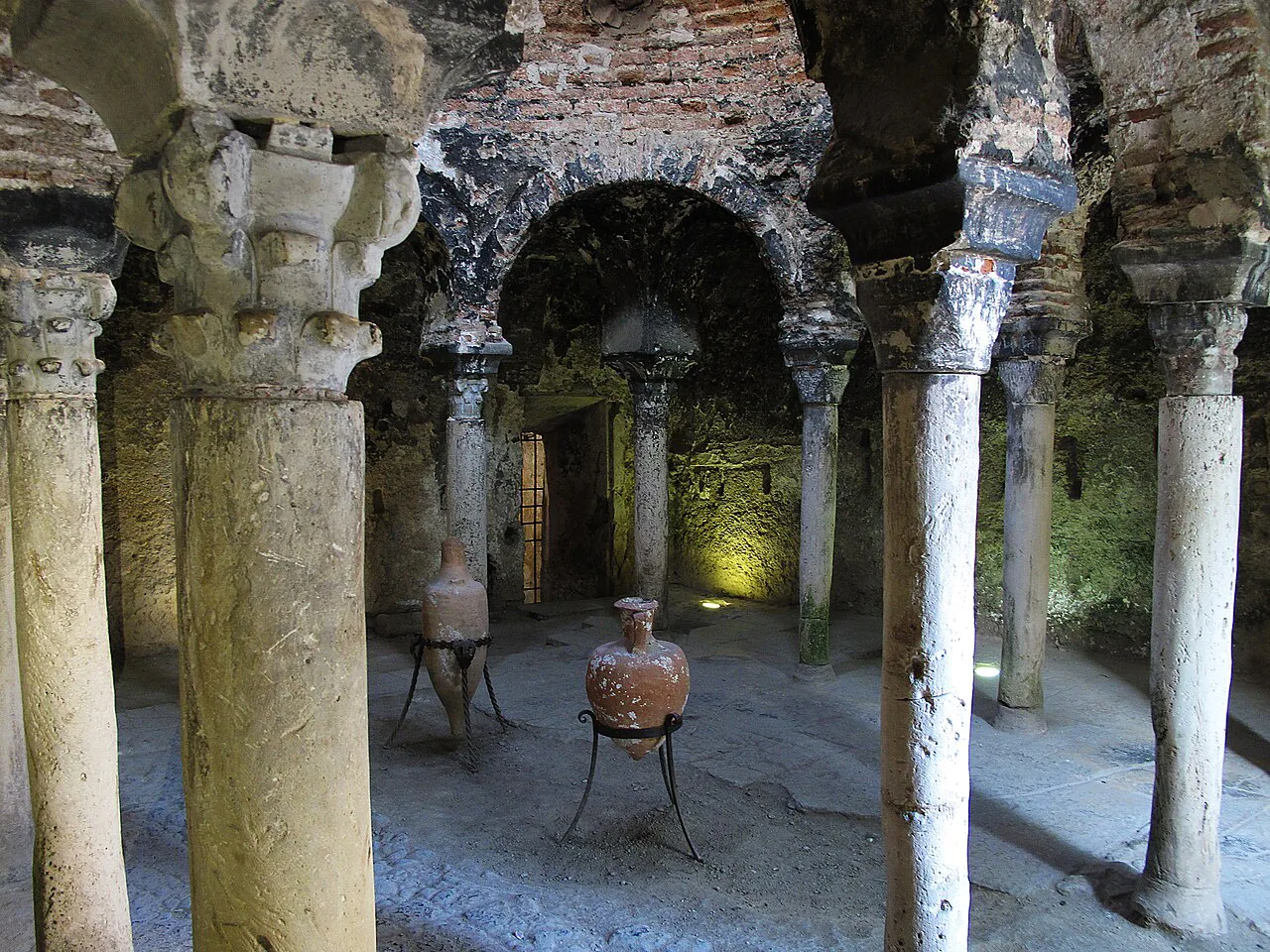
You enter through a portal with a horseshoe arch, the first hint of what lies inside. Beyond it the central room is square in plan, roofed with a brick dome pierced by skylights, and ringed by twelve columns carrying horseshoe arches.
This was the hot room, and the dome is the reason to come: light drops through the openings onto the columns below in a way photographs flatten. Look up first, then walk the perimeter slowly, because the room is small enough that a lap takes a minute and the detail is all in the capitals.
The capitals are deliberately mismatched: building materials and carved pieces were reused from other structures in the area, so the styles vary from column to column. That recycling is not a flaw in the visit but the most interesting thing to examine, and it rewards a closer look than the room's size suggests.
The heated floor and the side room
Underfoot, the hot room kept a double floor: hot water and steam circulated through gaps in the lower level and warmed the space above, the same principle as a Roman hypocaust. Knowing this changes what you see, because the floor is engineering rather than decoration.
A rectangular room alongside it survives under a barrel vault, and the cold room has been lost entirely. Set your expectations accordingly: this is a partial survival of a bath suite, not a complete sequence of rooms, and the pleasure is in the dome, the arches and the reuse of stone rather than in furnishing or display.
The garden of Can Fontirroig
The baths stand in the gardens of Can Fontirroig, and the courtyard and planting are part of the ticket rather than a route to the door. Shade and greenery make the garden the natural place to sit for a few minutes after the domed room, particularly in summer when the old-town lanes hold the heat.
A waterwheel once supplied the baths from these gardens, which ties the planting to the building's original function. It also makes the garden a useful pause: the whole site is compact, so the garden extends a visit that would otherwise be over in twenty minutes.
How long to allow
Thirty to forty-five minutes covers the entrance, the hot room, the side room and a turn around the garden at an unhurried pace. The building is small, so there is no risk of running out of time, and equally no need to build a morning around it.
Slot the visit into a wider old-town walk rather than making it the day's single objective. Pair it with the cathedral and a square or two, and the baths become a compact, low-cost interval between larger sights instead of a standalone outing.
Opening hours, tickets and booking
From April to November the baths open from 09:30 to 20:00, and from December to March from 09:30 to 19:00. Admission is charged and costs around two euros, and you do not need to book a time in advance; turn up during opening hours and pay at the entrance.
The published contact number for the baths is 971 72 15 49, and the tourism office pages carry the opening details and directions. Confirm the day's hours before a special trip, since a monument this small can close for maintenance without much notice.
Nearby sights to pair with the baths
The cathedral is the obvious companion, and the lanes between the two are the most rewarding part of the walk. The Es Baluard Museum, on the old sea wall, adds a modern counterpoint if you want a second indoor stop the same day.
Bellver Castle sits outside the historic centre and needs its own journey, so it belongs in a separate half-day rather than tacked onto the baths. Within the old town, the Passeig del Born and the Plaça Major give the walk shape and somewhere to stop between sights.
Should the Arab Baths be on your Palma shortlist?
Yes, if you want a small, atmospheric piece of Islamic Palma that costs little and takes under an hour. Skip it if you are after a large museum or a full morning's worth of rooms, because this is a compact monument that rewards close looking rather than a long stay.
Build the visit into an old-town morning with the cathedral and a square, arrive in the cooler part of the day, and check the current hours before setting out. The baths are the sort of stop that makes a short Palma break feel fuller, provided you know what you are going to see.
Frequently Asked Questions
Are the Arab Baths in Palma free to enter?
No. Admission is charged and costs around two euros; you do not need to book in advance, but you pay at the entrance.
How long does a visit to the Banys Àrabs take?
Allow thirty to forty-five minutes. The hot room, the barrel vaulted side room and the garden of Can Fontirroig are all compact, so the visit fits easily into an old-town walk.
What is there to see inside the Arab Baths?
The horseshoe arch entrance, the square hot room with its brick dome and skylights, twelve columns with mismatched reused capitals, a double heated floor and a rectangular side room under a barrel vault.