
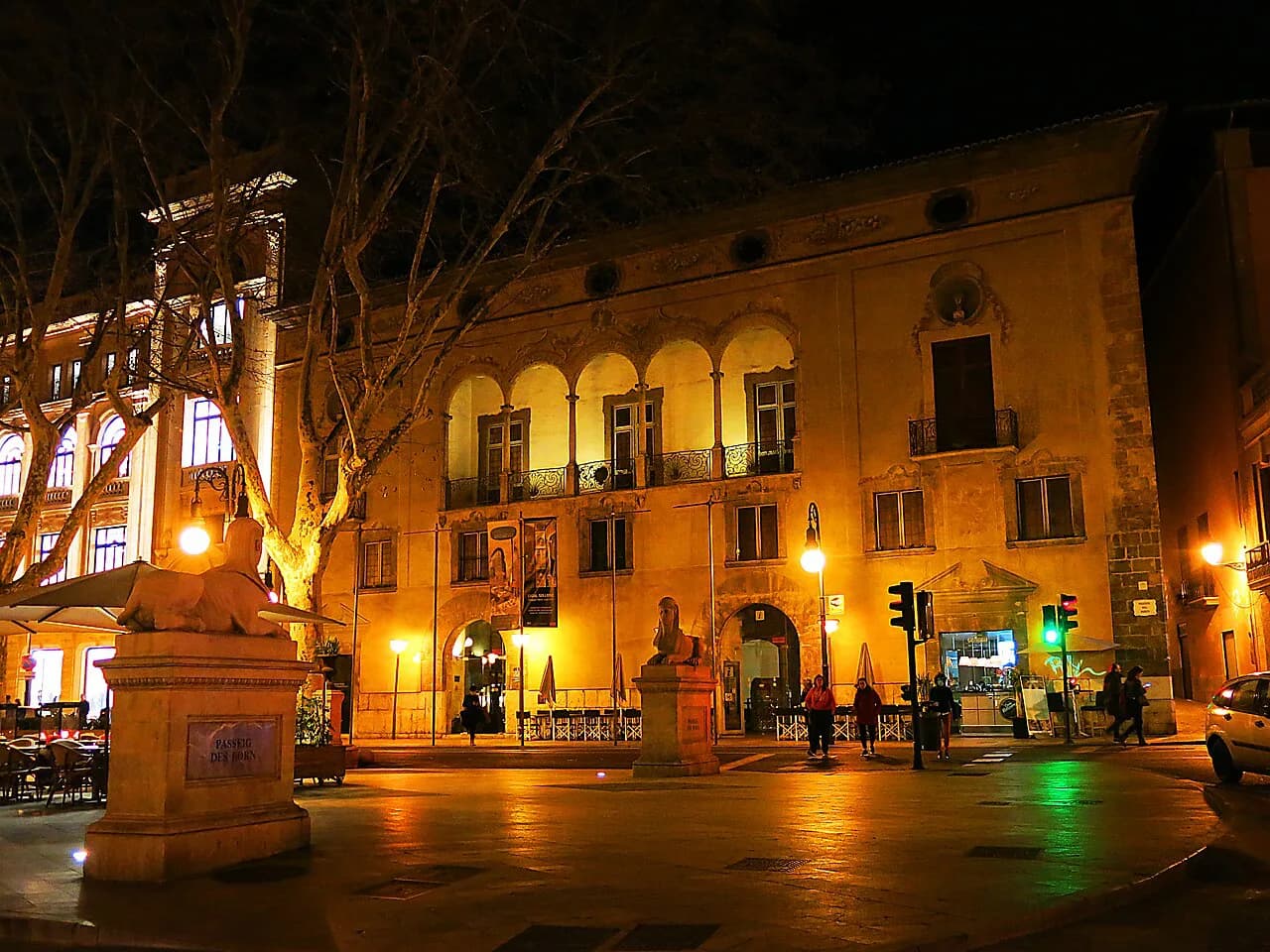
Passeig del Born, Palma: A Visitor's Guide to the City's Grand Avenue

The Passeig del Born is worth 20 to 30 minutes of a Palma city break, and rather more if you plan to shop or stop for a coffee under the trees. The elegant avenue runs some 200 metres from Plaça de la Reina to Plaça de les Tortugues, which is how you should slot it into a walk through the old town rather than treating it as a standalone sight. This guide covers where it runs, what to look at, and the monuments that sit within a few minutes of either end.
What the Passeig del Born is and where it runs
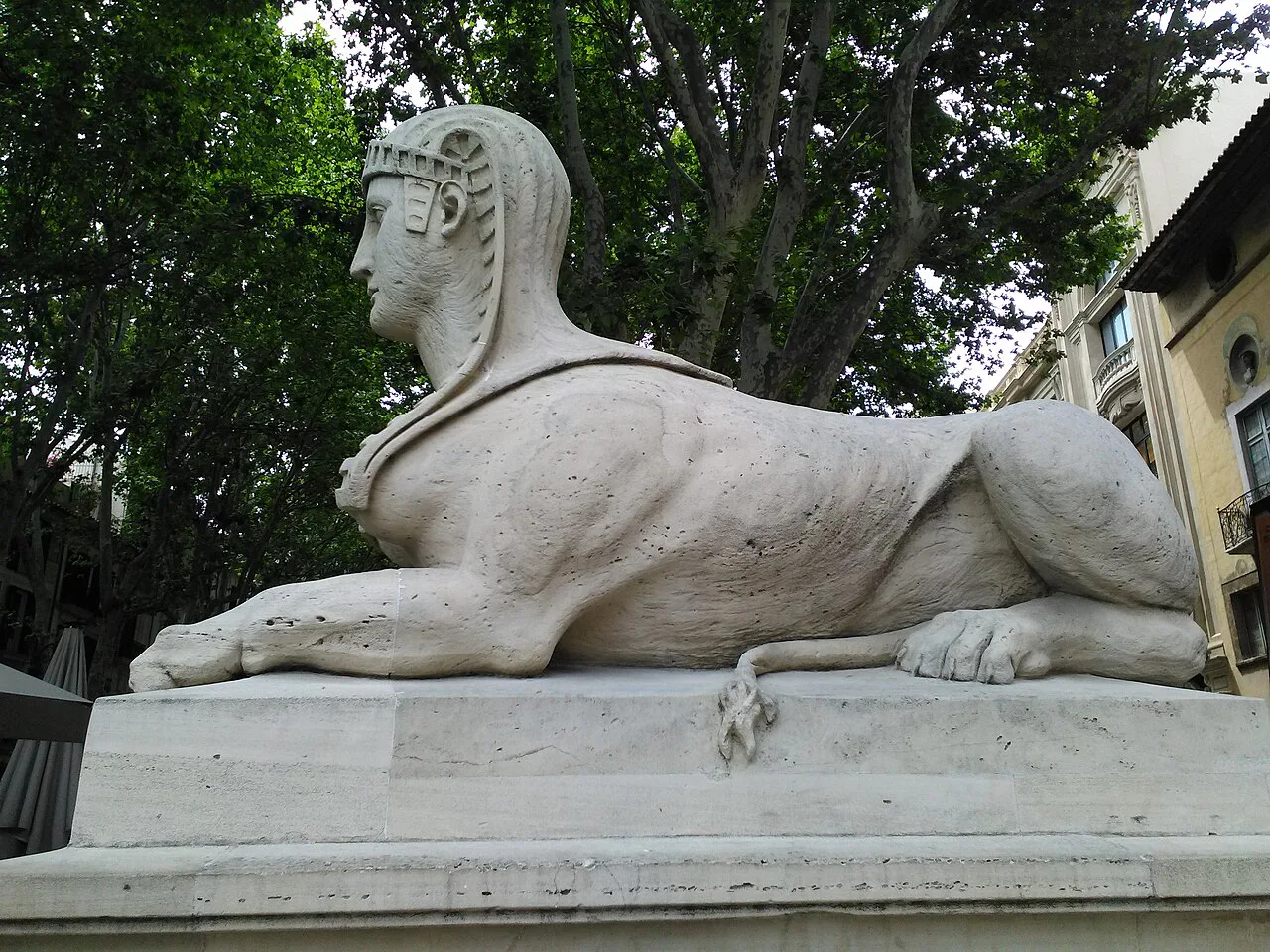
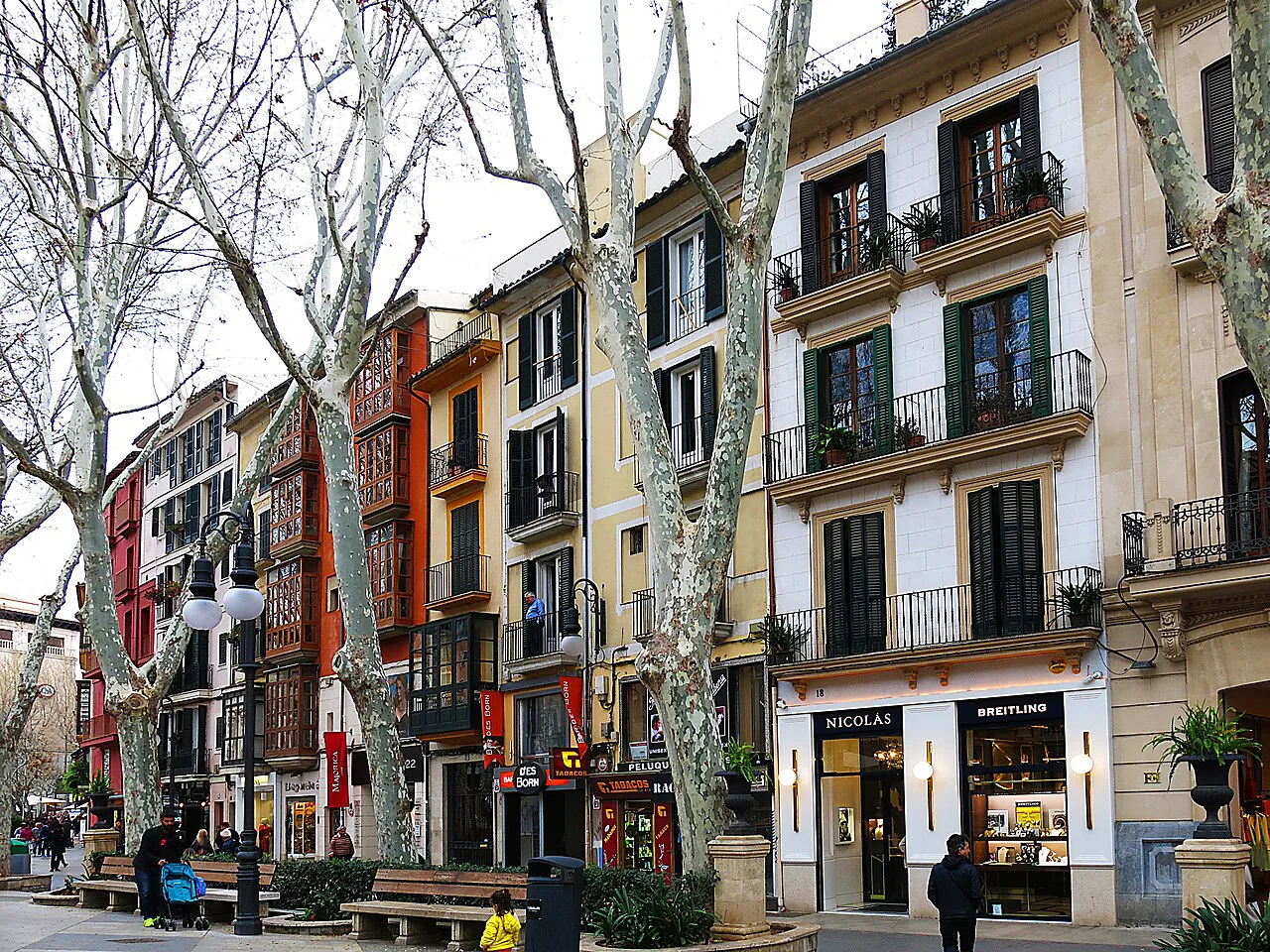
The avenue is about 200 metres long and roughly 20 metres wide, laid out in the middle of the historic centre and flanked by large trees. Castilian Spanish calls it the Paseo del Borne; the Catalan form on street signs and in local listings is Passeig des Born or Passeig del Born. It is often billed as Palma's Golden Mile, and the mood is dressy rather than bohemian: stone benches, manicured trees and grand townhouses.
The layout makes sense once you know the ground was once water. A channel called Sa Riera ran here and divided the old city in two before the watercourse was diverted and the old bed filled, creating the open space the avenue now occupies. The name Born is shared with similar squares elsewhere in Spain and refers to ground used for knightly jousts; public executions also took place here in the Middle Ages. Trees and stone benches were planted along the avenue in 1822, giving the promenade its present shape.
Think of the avenue as a link between two squares rather than a destination in its own right. Plaça de la Reina is the natural starting point if you are coming from the cathedral or the port side; Plaça de les Tortugues closes the other end near the shopping streets. Because it sits in the middle of the old town, you will almost certainly cross it on foot between other sights.

How to get there and how long to allow
Most visitors arrive on foot, because the avenue sits inside the old town where driving is impractical and parking is scarce. If you are staying outside the centre, any city bus heading into the historic core will put you within a few minutes of Plaça de la Reina. Several city bus routes stop close to Es Baluard at the western edge of the old town, including lines 1, 3, 4, 5, 7, 20, 40, 46 and 47 and the tourist bus, which is useful if you are combining the avenue with the museum.
Walking the avenue end to end takes a few minutes at normal pace, so set aside 20 to 30 minutes to look at the facades, read the benches and take a photograph. Add an hour if you want to browse the shops, and more if you intend to sit down. The pleasure here is the procession of architecture rather than any ticketed exhibit, so there is nothing to queue for on the avenue itself.

What to look at on the avenue
Start with the trees and the seating: the promenade is at its best when you slow down and look up at the building fronts. The Casal Solleric is the standout, an 18th-century palace built for the Marqués de Solleric a few metres from Avinguda Jaume III. It is now a cultural centre and events venue open to the public, and its architecture alone justifies the detour from the middle of the avenue.
The statue of Queen Isabella II, unveiled in 1863, was pulled down a few years later during a revolution, a reminder that the avenue has been repeatedly remodelled rather than preserved intact. Look for the contrast between the ornate stone fronts on the north side and the heavier commercial blocks opposite. It is the sort of street where the details, balconies, ironwork and doorways repay a second pass.
Shopping and cafés along the avenue
Luxury retail is the avenue's modern signature, with high-end brands and galleries occupying the ground floors, and the stretch continues as a shopping run into Avinguda Jaume III. Shops here keep their own hours, which are not published for the avenue as a whole, so look at individual shopfronts or the brand's own page rather than assuming a fixed schedule.
Cafés and restaurants line the avenue, and summer is when the tree canopy earns its keep, offering shade for a mid-morning coffee or a late-afternoon break. Expect the avenue to be at its most crowded in the summer months, when the combination of shade and central location draws both residents and visitors. If you want photographs of the facades without people in them, go early rather than at midday.
Nearby sights within a few minutes' walk
The cathedral, La Seu, is about 280 metres away, and the Almudaina palace roughly the same distance, so the avenue works neatly as a breather between the two. La Llotja, the old exchange, sits about 250 metres off, and the Fundació la Caixa is around 370 metres away. For a fuller picture of what else deserves your time in the city, work through these Palma Attractions: 6 Visitor Guides before you fix a route.
The Palma cathedral, a short walk east of Plaça de la Reina, is the obvious next stop and can absorb an hour or more on its own. Allow for the possibility that tourist visits pause during services, and time your arrival around mass rather than the other way round. If you are heading inland afterwards, Plaça Major, Palma is a straightforward walk north through the shopping streets.
At the western end of the old town, the Es Baluard Museum, Palma occupies the Renaissance wall overlooking the bay, with a terrace looking out over the port, the bay and the cathedral. It opens Tuesday to Saturday from 10:00 to 20:00 and Sunday from 10:00 to 15:00, and closes on Mondays as well as 1 January and 25 December; the ticket desk shuts 30 minutes before closing. General admission is 8,00 €, reduced admission 5,50 €, entry by bicycle 2,00 €, and on Fridays visitors choose the price from 0,10 € upwards.
Beyond the old town, Bellver Castle (Castell de Bellver), Palma is the city's other major monument, a circular Gothic castle on a wooded hill above the bay. It is too far to combine comfortably on foot with the avenue, so plan it as a separate outing by bus or taxi. The Arab baths, a small surviving Moorish bathhouse in the old town, are closer and make a short addition to a walking loop.
Practical points before you set out
Palma's inland summer heat makes midday the least comfortable time to be out, and the avenue's trees help but do not solve it; plan the avenue for the morning or after the worst heat has passed. The avenue is a public street, so there is no ticket to buy and no closing time to work around. What does vary is the museums and churches nearby, which keep their own hours and closing days.
For opening hours, entry prices and any changes at the monuments and museums around the avenue, check each venue's own page in the days before you travel, since these are the details most likely to shift between seasons.
How to fit the Passeig del Born into a Palma walk
Treat the avenue as half an hour of your day, not a morning: walk it from Plaça de la Reina to Plaça de les Tortugues, pause at the Casal Solleric, and use it as the seam between the cathedral and the Es Baluard end of the old town. Build the museums around their closing days, especially Monday at Es Baluard, and leave the shopping for a cooler hour. That way the avenue does the job it does best, joining the pieces of central Palma together.