
Plaça Major, Palma: what to see in the city's main square

Plaça Major is Palma's main square, and it takes about twenty minutes to see properly: a long rectangle of yellow façades with green shutters, wrapped at ground level by arcaded covered galleries. It is a busy civic crossroads rather than a quiet monument, so treat it as a pause between sights rather than a destination in itself. This guide covers where the square sits in the old town, what you are looking at, and what to pair with it nearby. For the wider set of city sights, see Palma Attractions: 6 Visitor Guides.
Nothing here needs booking and there is no ticket to buy. The appeal is architectural and social: the galleries, the consistent frontages and the daily flow of shoppers cutting through towards Sant Miquel.
What Plaça Major is and why it sits at the heart of Palma's old town
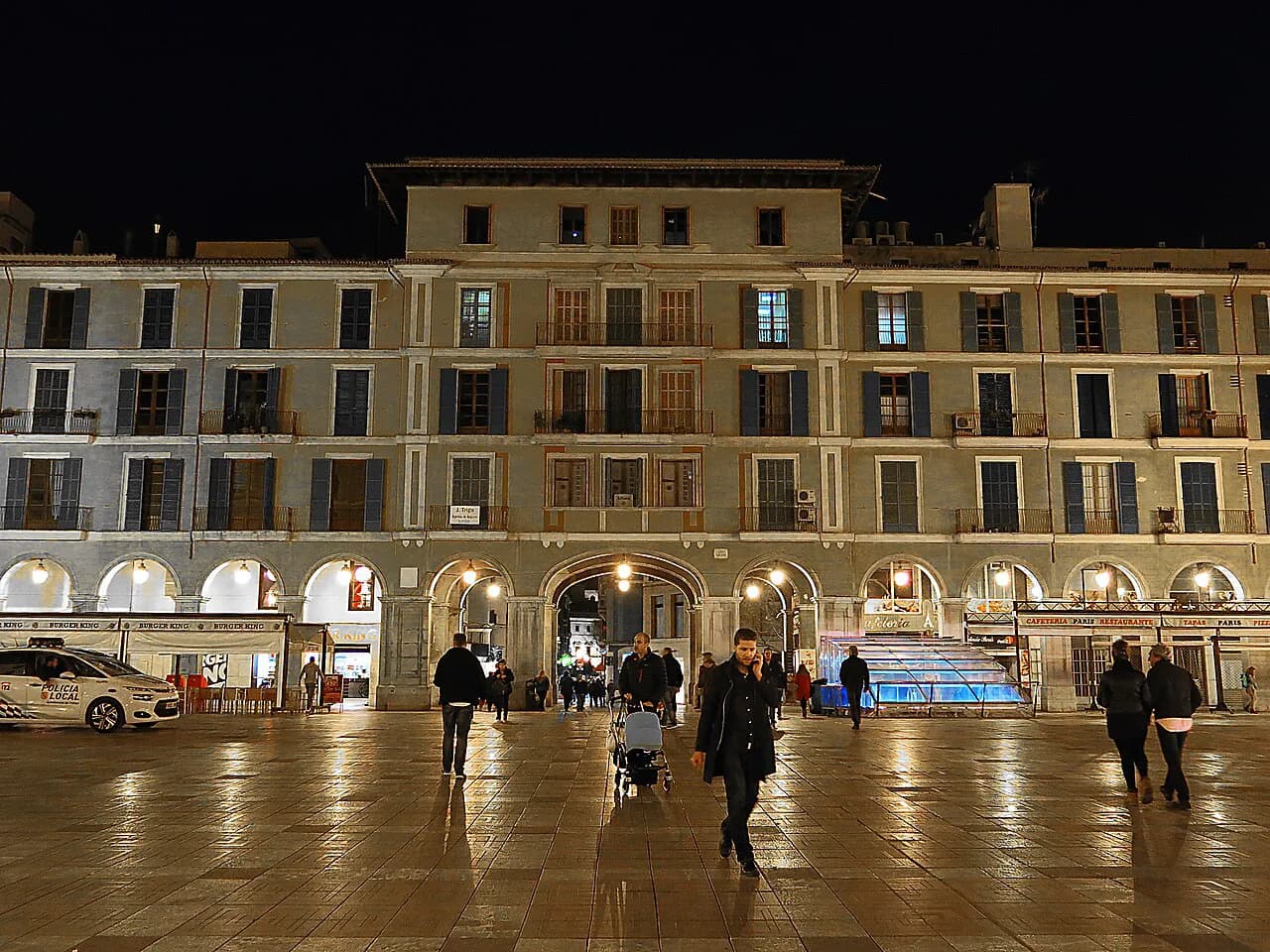
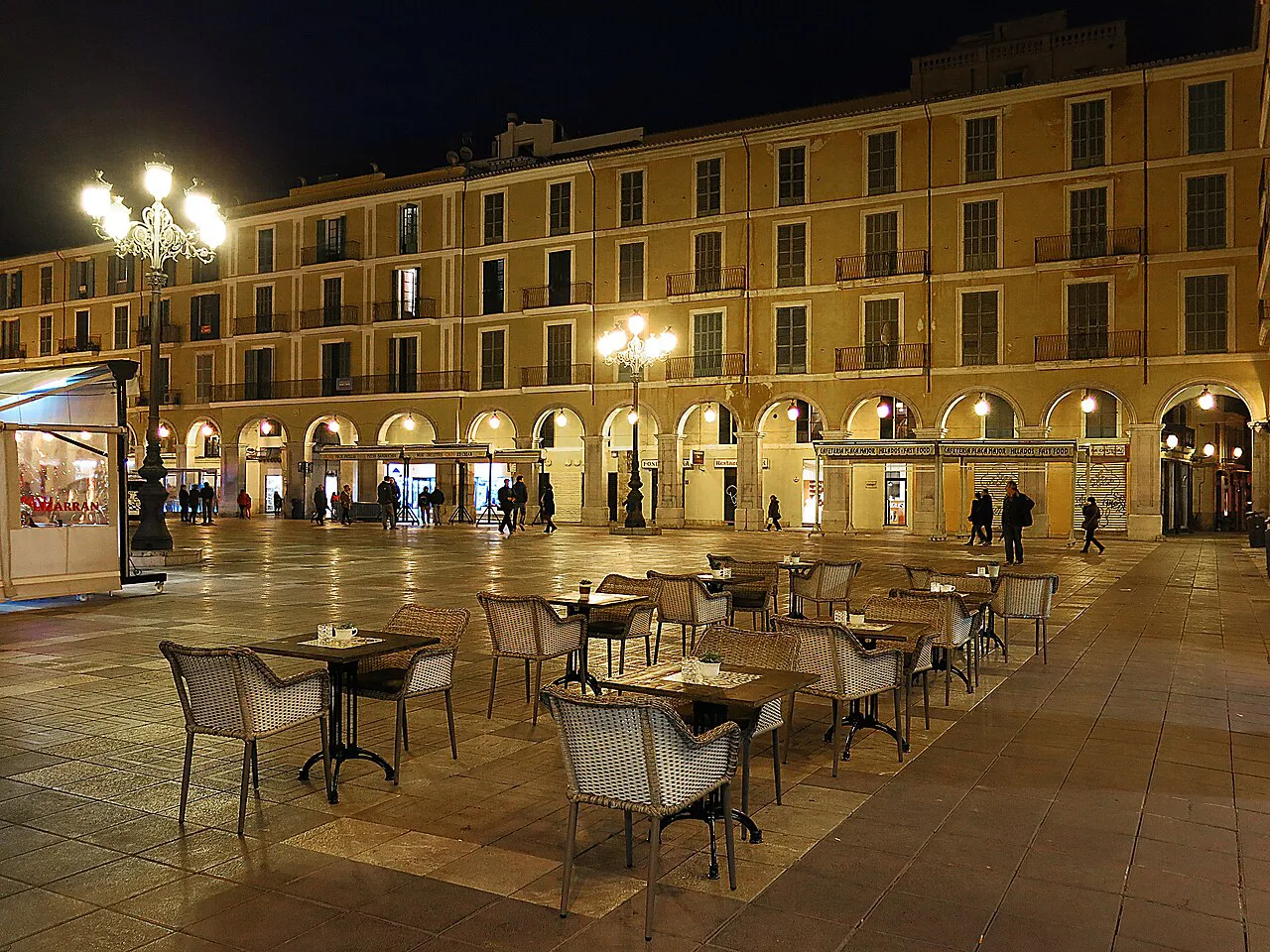
The square occupies the heart of Palma's old town, which is why most walks through the district end up crossing it whether you plan for it or not. Its shape is rectangular and unusually long, lined on all sides by arcaded buildings whose ground-floor arches form a covered corridor. That layout makes it both a meeting point and a shortcut: you pass under the arches, glance at the shops, and come out on the next street.
The arcades were built so traders could display goods sheltered from sun and rain, and the same corridors now hold shops and terraces facing the open space. That commercial use is what gives the square its everyday character rather than a museum feel.

Where it is: landmark reference and the streets that lead into it
Four main streets feed into the square, and the best known is Carrer de Sant Miquel, the shopping street that carries pedestrians through the old town. If you can find Sant Miquel, you can find the square: follow the shopfronts and you arrive at one of its corners. Once inside, use the open centre as your reference, since the arcades look similar from every side and it is easy to leave onto a different street from the one you entered by.
The square stands on the site of the San Felipe Neri convent, which explains why it reads as a planned 19th-century space inserted into a much older street pattern. Approach from the shopping streets to the south and west and the shift from narrow lanes to open rectangle is sudden.

How to get there and how to find it on foot from the old town
On foot is the sensible approach: the lanes around the square are narrow and pedestrian-heavy, so leave the car outside the old town. From the direction of the cathedral and the waterfront, head inland and uphill until you meet the Sant Miquel axis, then follow it to the square.
City buses serve the wider centre, and the walk from the cathedral area takes roughly ten to fifteen minutes, longer if you keep stopping at shop windows. Check current bus routes and stopping points with the operator before setting out rather than relying on an old route number.
The arcaded façades and covered galleries: what you're looking at
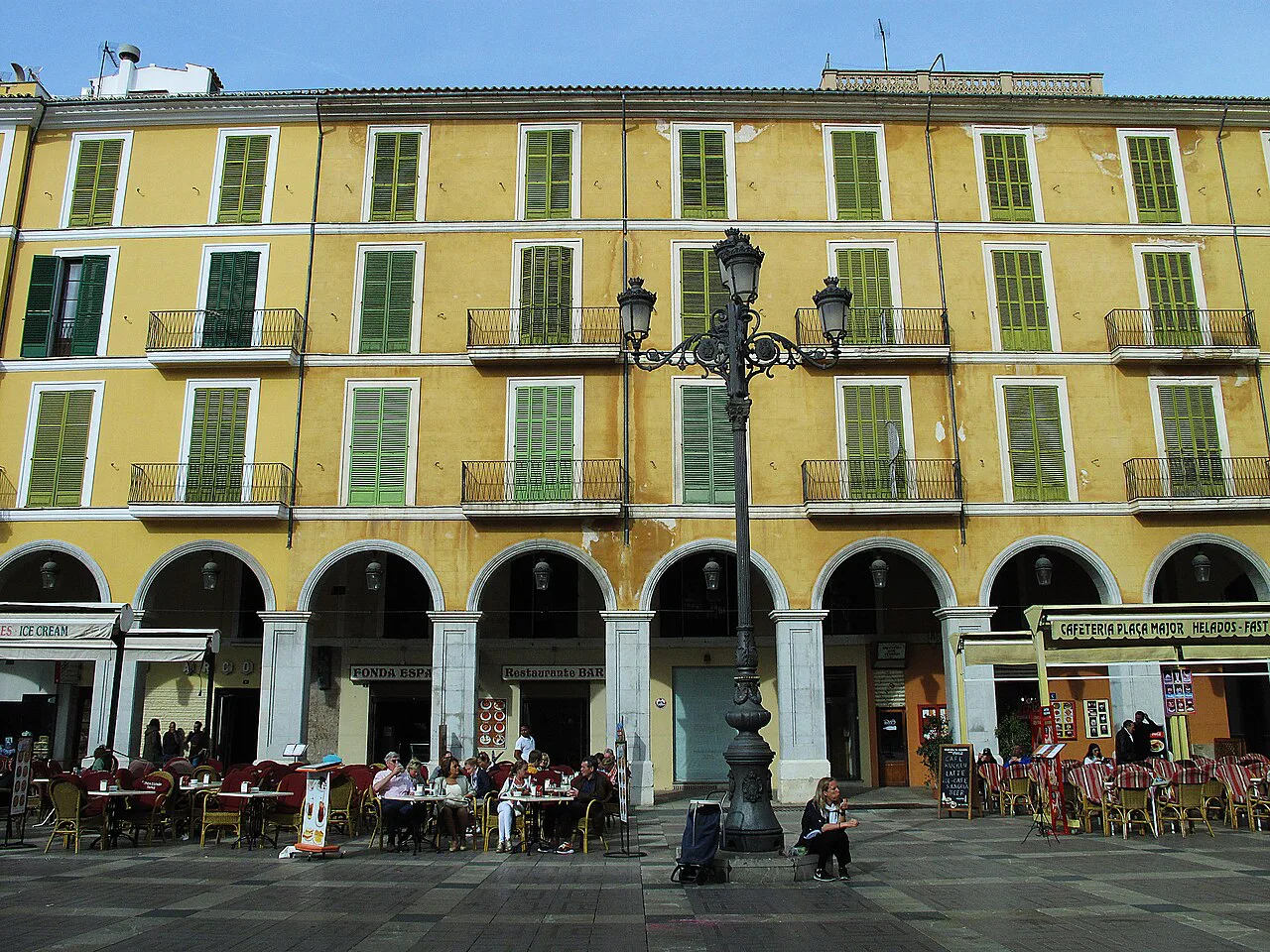
The architectural interest sits at eye level and just above it. A continuous run of arches forms a covered walkway around the square, and above the arches rise several storeys of yellow-rendered façades with green shutters and shallow balconies, built to a consistent rhythm. Stand in the middle and look outwards rather than up: the appeal is the repetition of the arcade and the contrast between shaded gallery and bright centre.
Because the galleries open onto the street, you can walk the full circuit under cover, which makes the square usable in midday heat or rain. The buildings were completed over the 19th century and into the start of the 20th, so the uniformity is deliberate rather than accidental.
The site's history: the San Felipe Neri convent and the Inquisition period
Before the square existed, this was the site of the San Felipe Neri convent, and the plot later served as the seat of the Spanish Inquisition in Mallorca until the 1820s. The present square was laid out from the 1820s onwards and finished in the early 20th century, which is why its architecture looks far more regular than the surrounding medieval lanes.
The Inquisition connection is the square's most quoted piece of history, and knowing it before you arrive helps the open space read as a deliberate replacement of an older institution rather than a plaza that was always there. Accounts of when the Inquisition period ended in Mallorca differ by a few years, so treat the broad 19th-century transition as the reliable part.
The daily craft and souvenir market: when it runs
A craft market aimed at souvenir shoppers sets up in the square every day through July, August, September, Easter and Christmas, so in high season and over the holidays you will find stalls rather than empty paving. Outside those periods the square reverts to its everyday role as a shopping and meeting point, which is arguably the more authentic version.
Stall hours are set by the traders rather than by the square, so if browsing the market is your reason for coming, confirm the day's arrangements with the city's tourist information. Plan it as a bonus rather than the centrepiece: the arcades and façades are there year-round.
Street performers and life in the square
Street performers work the open centre: puppeteers, living statues and artists are the regular mix, appearing among the pedestrians rather than on a stage. They add noise and crowds, which is either the square's charm or its drawback depending on your mood. If you want the architecture without people in the frame, come early before the shopping traffic builds.
The terraces under the arcades keep the edges busy through the day, and because the space is a thoroughfare as well as a plaza, it never really empties. Think of it as somewhere to sit briefly and watch, not to linger for hours.
How long to allow and the best time of day to pass through
Budget twenty to thirty minutes: one circuit under the arcades, a stop in the middle to look at the façades, and a few minutes watching whatever is happening in the centre. If you are shopping along Sant Miquel, the square becomes a natural break in that walk rather than a separate stop.
Timing matters more than duration. Midsummer midday is hot in the open centre with little shade beyond the galleries, so morning or late afternoon is more comfortable, and mornings are quieter for photographs. Small shops elsewhere in the old town often close for part of the afternoon, so a morning visit fits better into a full day of sightseeing.
Nearby: what else in the old town to pair with it
The square sits close to the rest of the old town's monuments, so build a short loop rather than a single stop. The Arab baths are the smallest and quietest of the nearby sights, and a short detour to them balances the bustle of the arcades.
For a change of scale, the cathedral and the waterfront lie downhill towards the sea, while the Passeig del Born gives you a tree-lined boulevard for the walk back up. For a half-day away from the centre, Bellver castle sits above the city and is reached separately.
A workable order is cathedral first thing, the old-town lanes and the square mid-morning, then the Arab baths before the afternoon lull. For the full set of Palma monuments, with each one's times and prices, work from the city's attraction guides.
Is Plaça Major worth a stop?
Yes, but as a twenty-minute pause rather than a sight in its own right. Come for the arcaded galleries, the yellow frontages and the sense of a working city centre, and come in the morning if you want it without the crowds.
If your priorities are monuments with tickets and set hours, the cathedral and Bellver castle will fill your day; the square is what you cross between them. If you are in Palma over the summer months or at Easter and Christmas, the market gives the visit a reason beyond the architecture.
Explore more Palma guides
Frequently Asked Questions
Is Plaça Major free to visit?
Yes. It is a public square with no ticket, no gate and no set opening hours, so you can walk through at any time of day. Any charges apply only to whatever you buy under the arcades or at the market stalls.
Why is Plaça Major famous?
Mainly for its arcaded 19th-century frontages and its position at the heart of the old town, plus its history as the site of the San Felipe Neri convent and later the seat of the Inquisition in Mallorca. It is also the square most shoppers cross on the Sant Miquel axis.
How do I reach Plaça Major from Palma's cathedral?
Walk inland and uphill from the cathedral through the old-town lanes until you meet the Sant Miquel shopping street, then follow it to the square. It is a short walk of roughly ten to fifteen minutes, and buses serve the wider city centre if you prefer not to walk.