
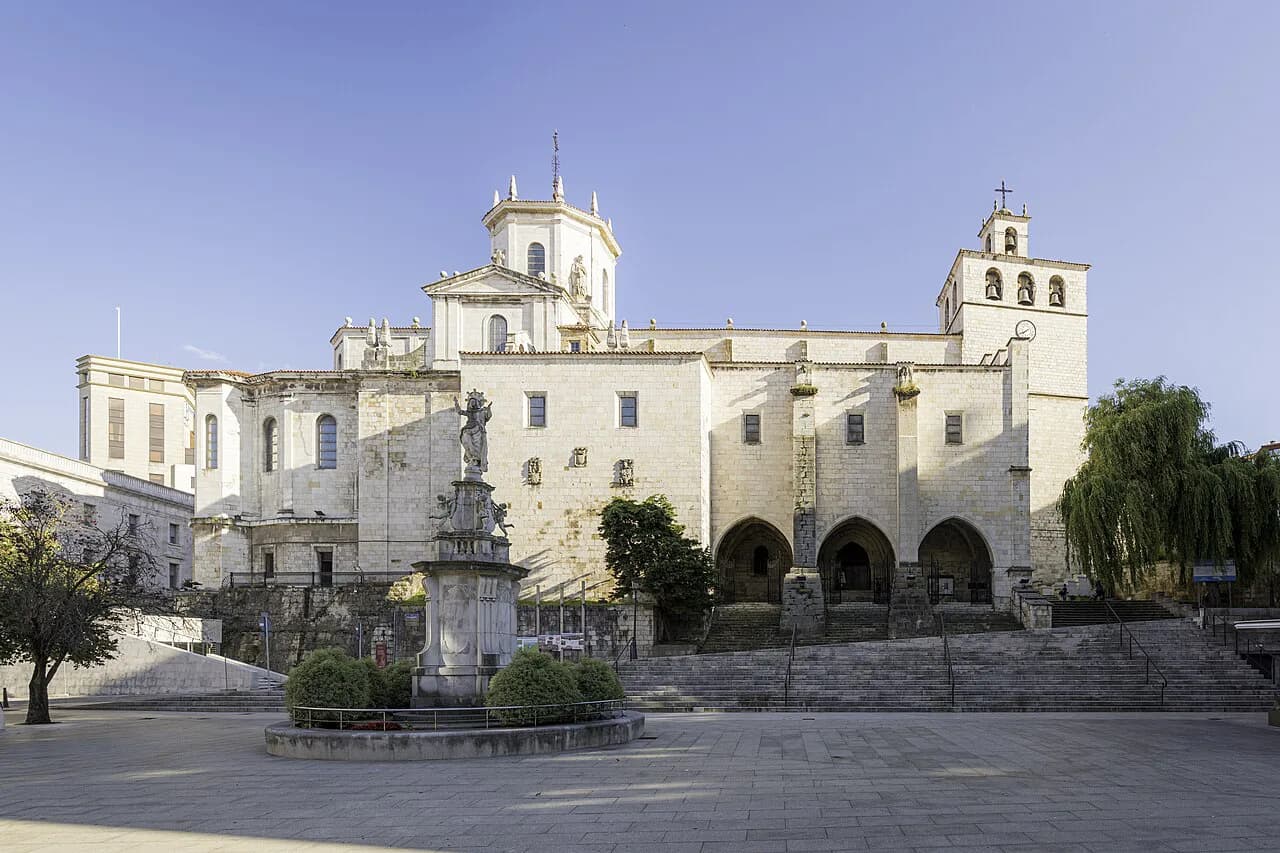
Santander Cathedral: What to See Inside the Two Churches

Santander Cathedral is two Gothic churches built one above the other: an upper church finished in the 14th century and, beneath it, the Iglesia del Cristo, begun in the first third of the 13th century. Allow around 45 minutes to an hour to see both levels and the cloister properly, and come knowing that you are visiting a building reshaped by fire rather than a single unbroken medieval interior. This guide covers the layout, the details worth seeking out and how the site fits a morning in the old town.
What Santander Cathedral actually is
The building's full name is the Catedral Basílica de Nuestra Señora de la Asunción, and it sits on a small hill that was once surrounded by water, on the site of the Roman settlement of Puerto de la Victoria. It became a cathedral in 1754, when Benedicto XIV raised the temple to that rank at the same time as the diocese of Santander was created. Before that it was the Abbey of the Holy Bodies, named for the martyrs Emeterio and Celedonio, whose relics were kept here.
The relics still matter to the city: the silver reliquaries are venerated during the Semana Grande. If you are planning a wider sweep of the city's monuments, the Santander Attractions: 5 Visitor Guides gives you the surrounding sights in one place.

Where it is and how to reach it
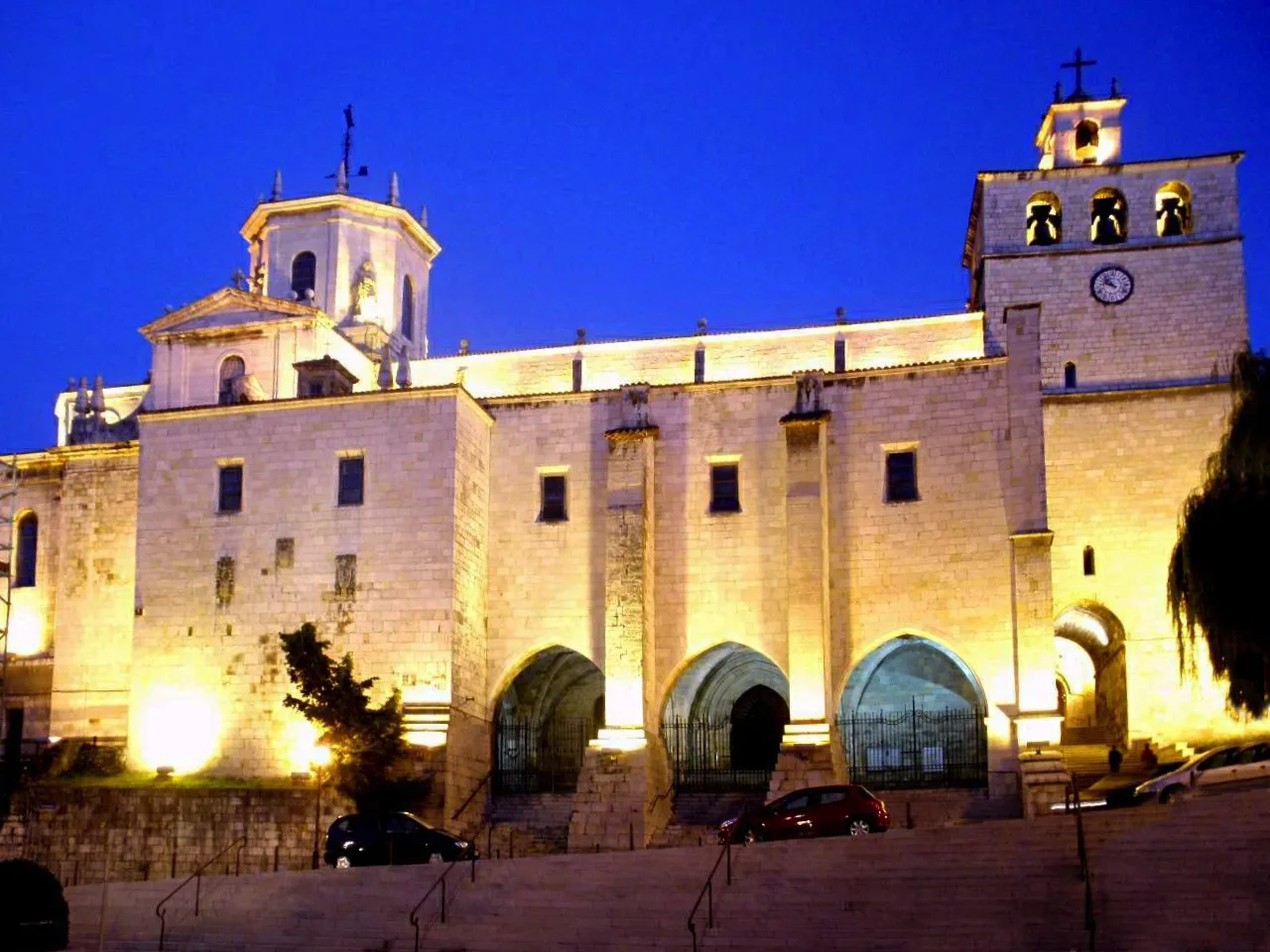
The cathedral stands on Calle Somorrostro in the old town, a few minutes' walk from the Jardines de Pereda and the port area. Coming from the Pereda gardens, you approach through pedestrian streets with the harbour behind you, which makes the cathedral an easy first stop before the market and the Plaza del Ayuntamiento. Guided walks in the city commonly begin at the Jardines de Pereda and take in the cathedral and the neighbouring parish church of El Cristo before moving on through the Mercado de la Esperanza and the Plaza del Ayuntamiento towards the Ensanche and Plaza Pombo.
Timetables for any bus or train you need to reach the centre should come from the operator, and the diocese sets the visiting hours; check both before you set out, since religious services take priority over tourist visits.

The layout: two churches and a cloister
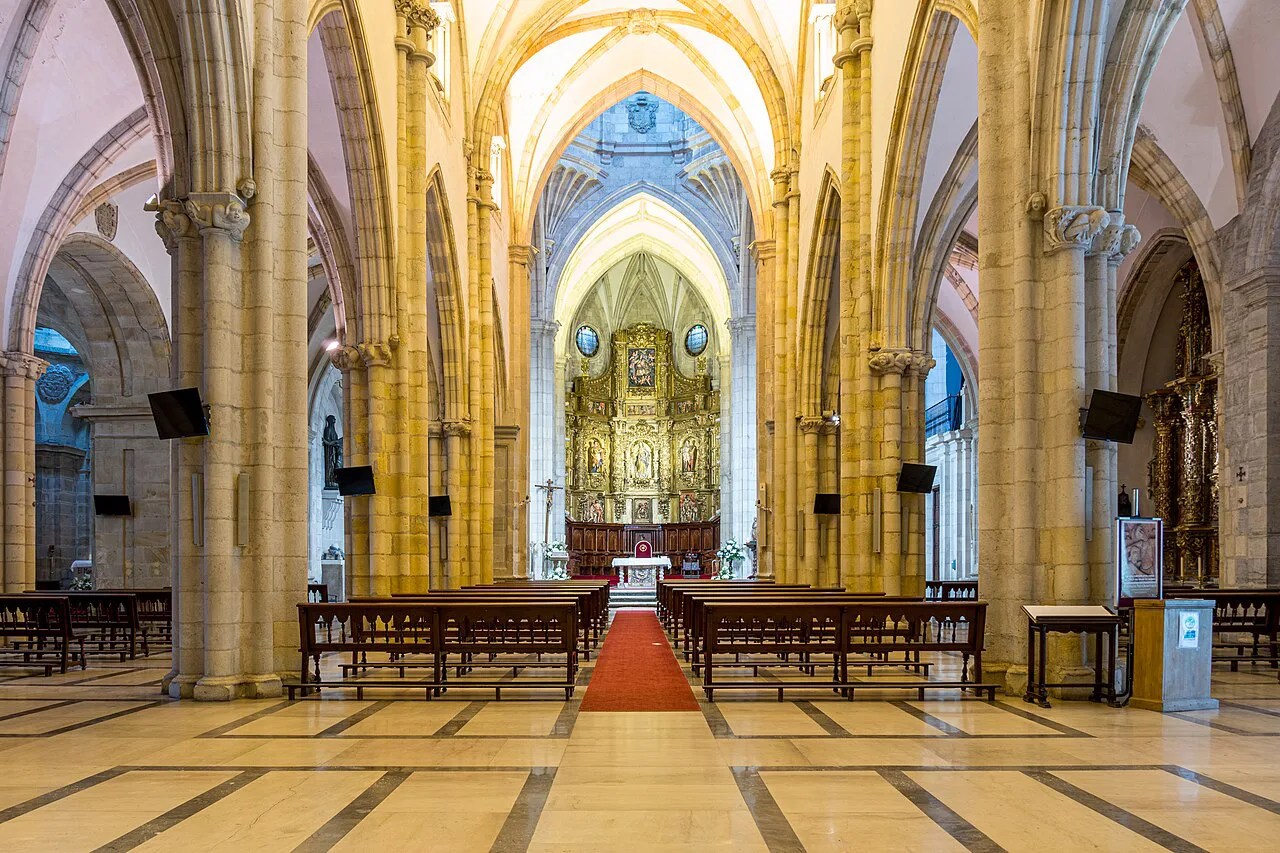
Start with the lower church, the Iglesia del Cristo, built during the first third of the 13th century. It has three naves separated by round arches on pillars with carved capitals, many with plant motifs and Christian imagery, and the space measures 31 metres long by 18 wide. Two doorways show the transition from Romanesque to Gothic, so look at the mouldings and arches as you pass through rather than hurrying in.
The upper church was completed in the 14th century, and a Gothic cloister added afterwards remains one of the most rewarding parts of the complex. Because the two levels are stacked, the visit feels like moving between two buildings rather than one, and the difference in height, light and scale is the thing most first-time visitors underestimate.
What to look for inside
The main door dates from 1230 and carries what the cathedral's own account describes as the first royal arms to show the castle and the lion together, the symbols of Castile and León. Look up at the stonework before you go in. Inside, keep an eye out for the Coro de Piedra and the Puerta de los Mártires, both original elements retained through the 20th-century rebuild, and for the stained glass, restored in the Gothic style after the fire.
In the south nave are three chapels dating from 1622 to 1624; on the north side, a Baroque chapel of 1671, a penitential chapel with a baptismal font, and the tomb of the scholar Marcelino Menéndez Pelayo. In the presbytery, the altars are dedicated to San Matías and Fernando III. The accumulation of periods is the point: medieval doors, 17th-century chapels and mid-20th-century glass in one walk-through.
How the 1941 fire reshaped the building
The cathedral survived the 1893 explosion of the steamship Cabo Machichaco and the Civil War, but the great Santander fire of 1941 damaged it badly. Between 1942 and 1953 it was substantially rebuilt, with a new presbytery, cimborrio and ambulatory added while original fabric such as the stone choir, the Puerta de los Mártires and the adjoining staircase was kept. Knowing this explains why parts of the interior read as restrained mid-20th-century work rather than medieval Gothic.
How long to allow and how it fits a short break
Budget 45 minutes to an hour for the two churches and the cloister at a calm pace, longer if you read the chapels carefully or linger over the door. That fits neatly into a half-day old-town plan: cathedral first, then the market and the Plaza del Ayuntamiento, and a walk along the Paseo de Pereda afterwards. If you are weighing up how the cathedral sits alongside the city's other big draws, the Santander Attractions guide sets out the options, including the Centro Botín, Santander on the waterfront, and the Palacio de la Magdalena, Santander out on the Magdalena peninsula.
For a wet or very hot afternoon, the Museo de Prehistoria y Arqueología de Cantabria and the Museo Marítimo del Cantábrico are both indoor alternatives in the city. The maritime museum suits anyone who wants the port and fishing side of Santander's story after the cathedral's religious one.
Access: the ramp and the side entrance
Access is not straightforward, and it helps to know the routes before you arrive. The upper church is reached by a steep ramp at the foot of the building, which the accessibility report rates as usable with help from another person. The accessible entrance to the lower church is from the side, through the sacristy, to avoid the steps, and the interior doorway there is 70 centimetres wide.
The same report notes partial wheelchair circulation inside and limited lighting in places, with staff on hand to support visitors who need assistance; the badge awarded to the cathedral reflects a commitment to visitors with accessibility needs rather than step-free access throughout. Visitors with reduced mobility should plan the upper and lower churches as two separate approaches rather than one continuous route.
Nearby stops in the old town
The Mercado de la Esperanza and the Plaza del Ayuntamiento are within the same old-town circuit, and the market is where the city's everyday shopping concentrates. The Jardines de Pereda give you a bench and a harbour view between sights, and the Paseo de Pereda leads on along the waterfront. Together these make a compact loop of an hour or two that does not depend on transport.
Should the cathedral be your first stop in Santander?
Yes, if you want the city's history in one compact building: the two-tiered Gothic shell, the 1230 doorway, the chapels and the fire-era rebuild tell Santander's story in under an hour. It is also the natural anchor for an old-town morning, with the market, the Plaza del Ayuntamiento and the Pereda gardens a short walk away. Visitors with mobility needs should read the access details first and plan the two churches separately.
Frequently Asked Questions
Are there guided visits that include Santander Cathedral?
Guided walks of the historic centre are sold in Santander, typically starting at the Jardines de Pereda and including the cathedral and the parish church of El Cristo, subject to religious services. Departure times and what the ticket covers vary by season and operator, so confirm the current schedule and inclusions with the operator when you book rather than relying on an old listing.
Is Santander Cathedral open every day?
Visiting hours are set by the diocese of Santander, and church services take priority over tourist visits, so the building may be closed to visitors during mass even on days when it is otherwise open. Check the diocese's listing for the cathedral before you travel, and treat any times quoted on third-party pages as provisional.