
Ciutadella Cathedral: what to see inside the Catedral de Santa Maria

Ciutadella Cathedral is a 30-minute visit that rewards a closer look than most people give it. The Catedral de Santa Maria sits in the centre of Ciutadella de Menorca, and a modest entry charge also covers the Convent de Sant Agustí five minutes away. This guide covers where it stands, how to reach it from the port, the seasonal visiting pattern, what the ticket includes, and which details inside are worth seeking out.
Where the cathedral sits in Ciutadella's old town
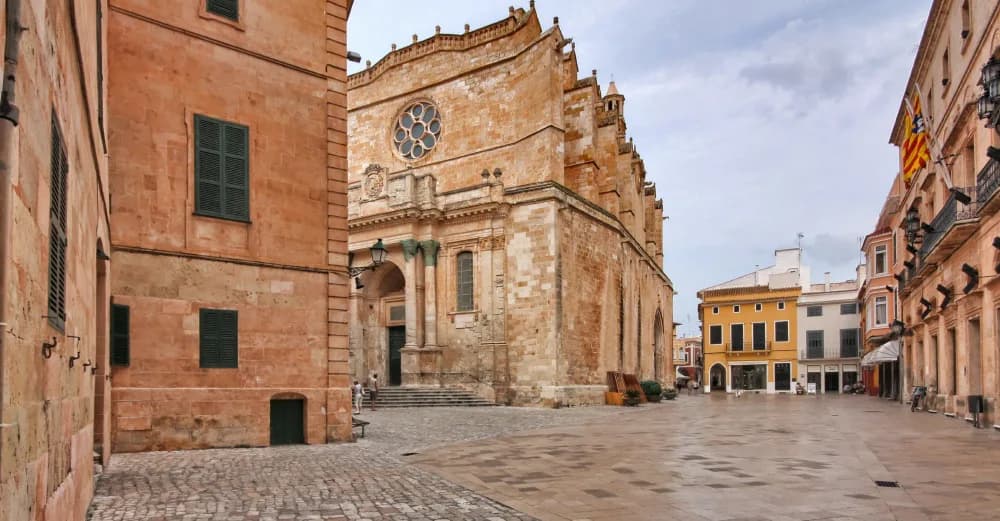
The cathedral stands in the centre of Ciutadella de Menorca, inside the old town rather than out on the harbour edge. The practical landmark to aim for is the Plaça des Born, the broad square that anchors the historic centre; from there the cathedral is a short walk through the narrow streets. If you orient yourself by the square you will find the church without needing a map.
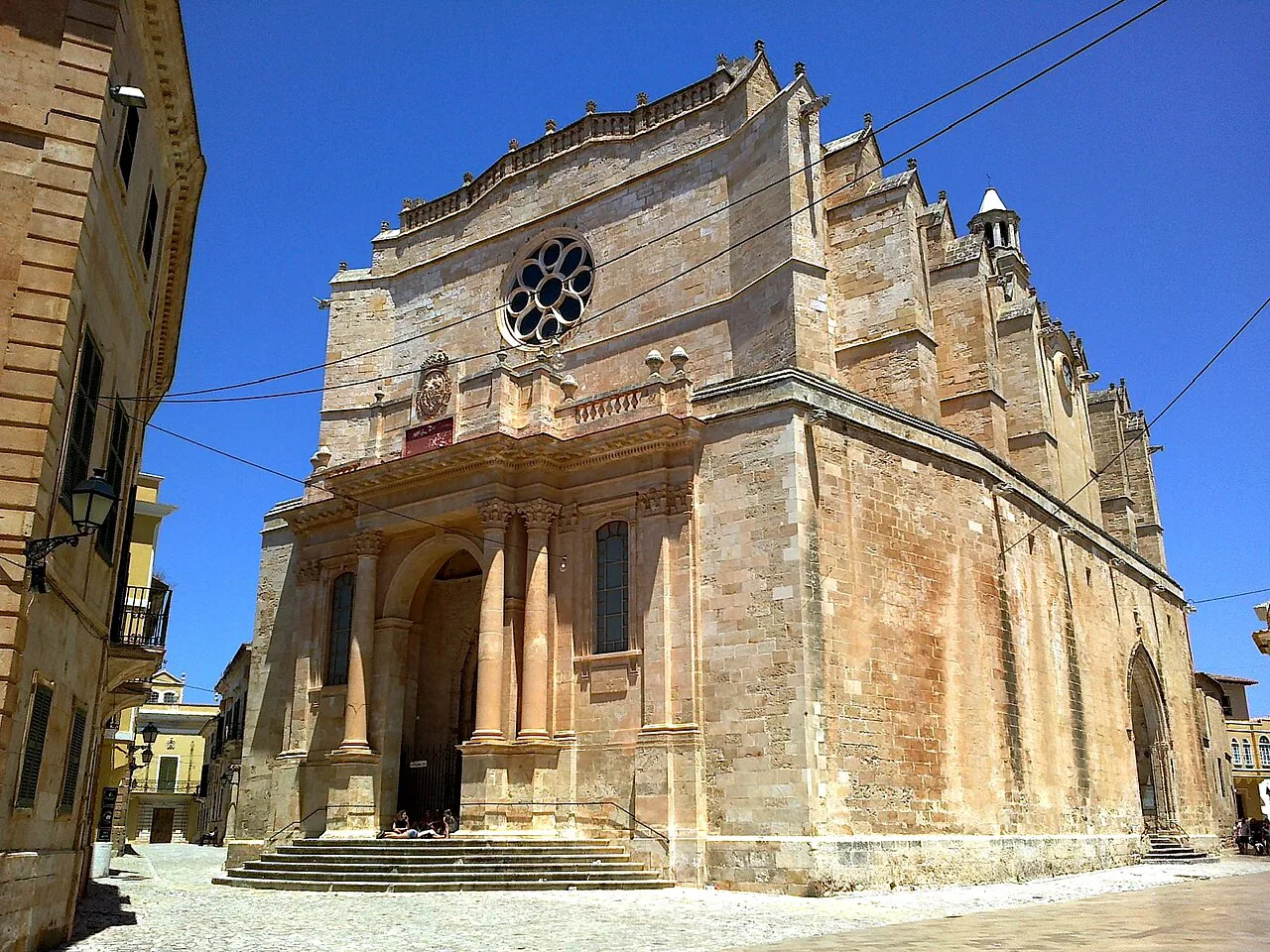
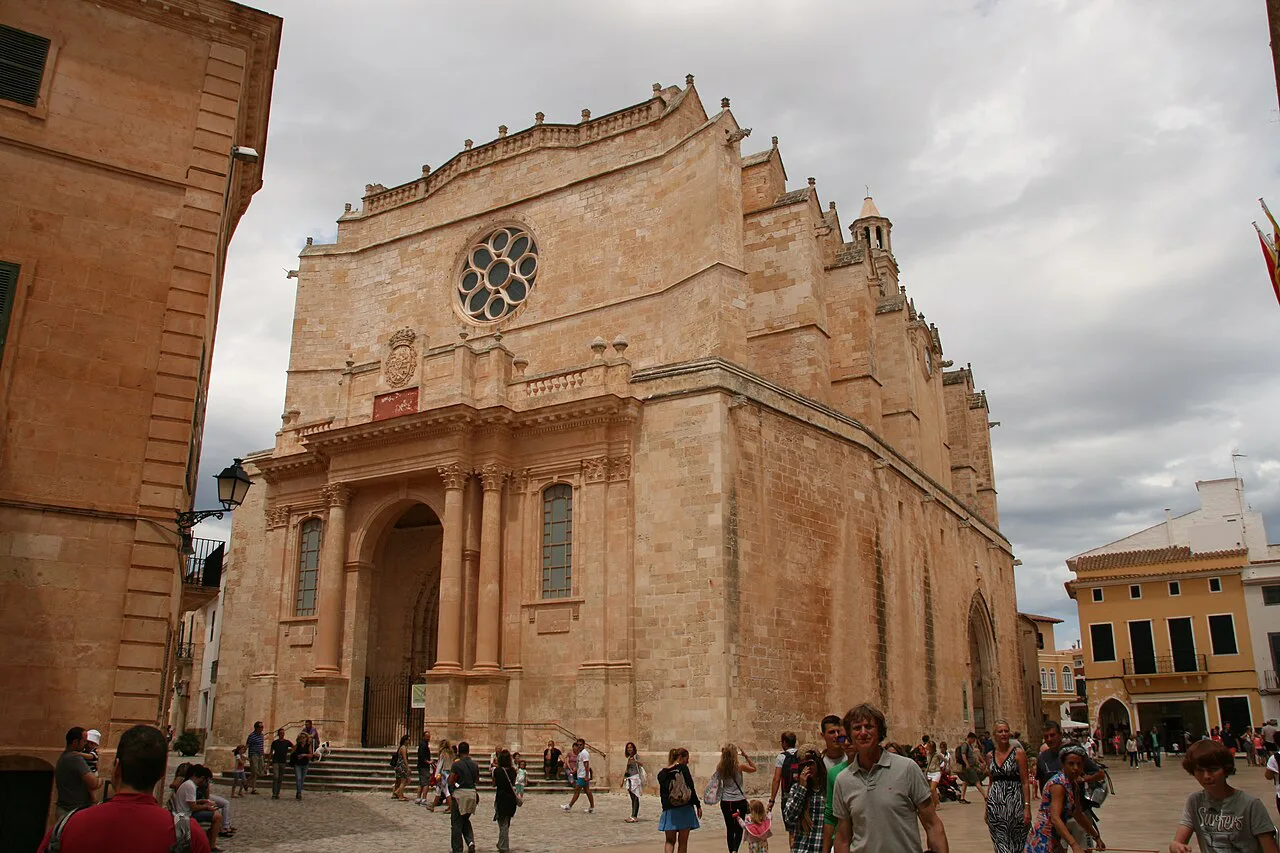
The building you are looking for is the Catedral de Santa Maria, built from 1287 onwards on the site of the former main mosque of Medina Minurka. That long history explains why the cathedral does not read as a single style: Gothic Levantine bones, later chapels and a 19th-century porch sit together in one block. Knowing this beforehand stops the façade looking like an architectural muddle.

How to get there from the port and the city centre
Ciutadella's port lies below the old town, and the climb up into the centre is the main effort of a visit. Once you are among the streets around the Plaça des Born, the cathedral is close enough that you can pair it with the rest of the historic centre on foot. Allow a leisurely walk rather than a dash, because the lanes between the square and the church are part of the appeal.
If your trip starts from elsewhere on Menorca, Ciutadella is the island's western town and most easily reached by road; timetables for buses are worth checking before you set out. Lighter footwear matters more than you might expect, since the approach from the port and the old-town lanes are uneven underfoot.

Opening hours and entry prices
Opening hours change with the season, so the published pattern is what you plan around. From May to October inclusive the cathedral is open Monday to Saturday from 10.00 to 14.30. From November to April inclusive the pattern is a split day, 08.00 to 13.00 and 18.00 to 20.00. The visiting window is short in summer, so the cathedral is best treated as a morning stop rather than an afternoon one between May and October.
Standard entry is 6,60€ and includes the Convent de Sant Agustí as well as the cathedral. Retirees pay 5,50€, and children under 12 go free. A guided visit runs once a day at 12.00 for 11€, and that ticket also gives free access to Sant Agustí. Check the current times and prices with the cathedral before travelling, since the institution managing the building sets and revises them.
The combined ticket is the decision worth making deliberately. Because Sant Agustí is only about five minutes away, the sensible approach is to see the cathedral in the morning and walk to the convent in the same outing rather than paying for two separate stops. Give the pair a single block of time in your day rather than treating the cathedral as a filler between other sights.
Mass times and visiting around worship
This is an active parish church, and the Mass schedule runs alongside visitor opening. The Diocese of Menorca lists Mass at the cathedral in Ciutadella on weekdays, Saturdays and Sundays, with the winter timetable including a Sunday evening Mass at 19.30. Services take precedence over sightseeing, so build your visit around the published schedule rather than expecting to walk around during worship.
The winter timetable is the one that catches people out, because the cathedral's own visiting hours also shift to a morning and evening split. A midday arrival in November, for example, may not fit either the visiting window or the church's use for services. Read the diocesan schedule for the day you plan to be in Ciutadella and pick a visiting slot that does not overlap a Mass.
The Gothic shell and the neoclassical façade
The cathedral's main architectural language is Gothic Levantine, the Catalan-influenced Gothic that spread through northern Spain with French input. Its interiors unify the space and keep windows comparatively small, which suited the intense Mediterranean light. Look up at the roof and the walls to read the building's history rather than expecting the soaring glass of northern European cathedrals.
Part of the roof collapsed in 1626, and the massive wall that wraps the building like a skirt is a response to that fear rather than a stylistic choice. That is one of the two details worth specifically seeking out. The other is the doorway: one of the two Gothic doors sits behind the large neoclassical portico added in the 19th century. Walk round to find the older door behind the newer front, because it is easy to pass without noticing.
Inside: chapels, sacristy and the minaret bell tower
The interior layers several periods on top of each other. The Capilla del Santísimo was built in the late 16th century in neoclassical style, and the Capilla de las Almas followed in 1670 in baroque style. The sacristy was remodelled in the late 19th century, also neoclassical. Moving between these spaces gives you a compact lesson in how a single church accumulates taste over centuries.
The bell tower holds the detail most visitors miss: roughly half of it survives from the mosque's minaret, built without steps so that goats could climb it carrying water and food. The cathedral also lost its entire heritage in a 1936 looting, and the gargoyles you see are the recent work of a local artist. Knowing what is original and what is replacement changes how you read the building.
How long to allow, and the best time for light and quiet
The cathedral visit itself takes about 30 minutes, and the published visiting time confirms it as a short stop rather than an afternoon. Pairing it with the Convent de Sant Agustí, five minutes away and included in the ticket, turns the outing into a half-day of old-town sightseeing rather than a two-stop dash. That is the realistic unit of time to plan around.
In the May-to-October season the visiting window closes at 14.30, which pushes you towards a morning visit when the streets outside are still cool. The winter split day offers a quieter evening slot between 18.00 and 20.00 as well as the early morning one, so an out-of-season visit has more flexibility. If you want the building to yourself, the margins of the published windows are better bets than the middle of the day.
If you are choosing what else to see in town, our Ciutadella Attractions: 6 Visitor Guides covers the old town, the harbour and the monuments around it, so the cathedral can slot into a wider walk rather than standing alone. The Plaça des Born is the natural hinge between the two.
Nearby: Sant Agustí, the harbour and the tower
The Convent de Sant Agustí is about five minutes from the cathedral door, and entry is included in the standard cathedral ticket. It is the obvious companion visit and the reason the combined price is better value than it first appears. Walk there directly after the cathedral rather than leaving it for another day.
On the seaward edge of the old town, the Castell de Sant Nicolau guards the entrance to Ciutadella's harbour and makes a natural end to a walk downhill from the centre. It is a short detour from the cathedral district, and the coastal position gives you a different view of the town than the streets around the Plaça des Born.
If you have time for one trip further out, the Naveta des Tudons is Menorca's best-known prehistoric monument and part of the island's UNESCO World Heritage listing. It sits outside Ciutadella and needs its own transport or a journey planned around a timetable. That makes it a separate outing rather than something to squeeze in around the cathedral.
Cathedral first, then Sant Agustí
See the cathedral in the morning within the published visiting window, look for the Gothic door behind the neoclassical portico and the minaret half of the bell tower, then walk five minutes to Sant Agustí on the same ticket. Check the diocesan Mass schedule for your date before fixing the time, because worship takes priority over sightseeing. If you have a full day, end with the harbour and the Castell de Sant Nicolau.