
Punta Nati: Menorca's Lighthouse and Cliffs at Ciutadella's Western Tip

Punta Nati is a windswept cape at Menorca's north-west corner, in the municipality of Ciutadella, about 6 km from the town itself. You come for one thing: a white lighthouse above low cliffs on an almost treeless plateau, with a small car park and one rough path in. This guide covers where the cape sits, how to reach it, what there is to see, how long to allow and what fits around it.
Where Punta Nati is
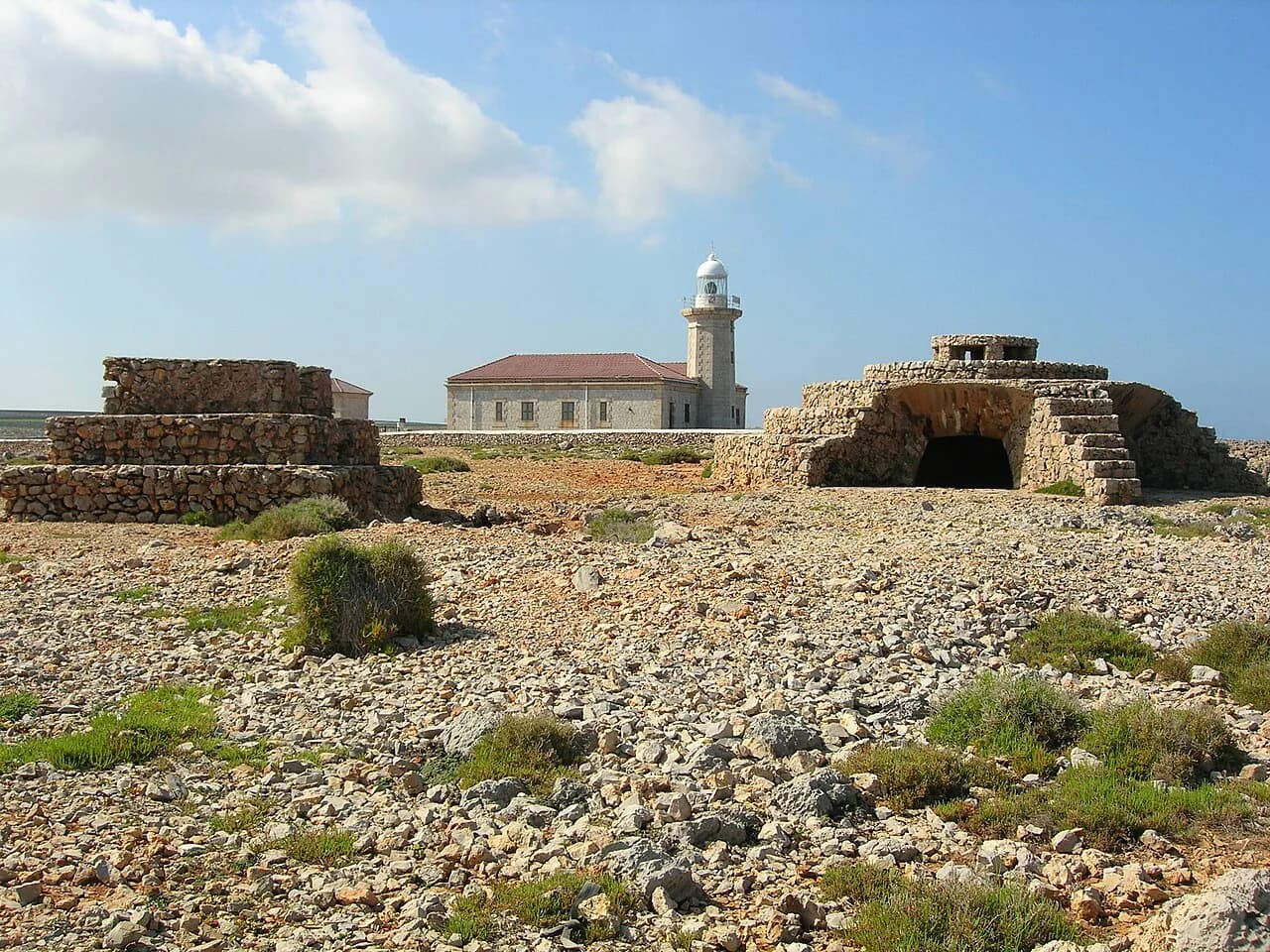
The cape forms Menorca's north-western extremity, inside the Ciutadella municipal area, a short drive from the town's old quarter. The setting is genuinely arid: the plateau is stony and almost bare, held together by long runs of dry-stone wall, and the only vegetation is low fleshy coastal plants. Because it faces the full force of the tramontana, there is no shelter anywhere on the approach.
Think of it less as a monument and more as a landscape with a building on it. The cliffs drop steeply to the water below, and the horizon opens west with nothing between you and the sea. On a clear day Mallorca shows on the skyline. It is the opposite of Ciutadella's tight knot of lanes and plazas, so pair the two rather than choosing between them; the Ciutadella Attractions: 6 Visitor Guides page sets out what the old town covers.

The lighthouse and its history
The lighthouse was born from disaster. A French liner, the Général Chanzy, sailed from Marseille for Algiers and was driven onto these rocks on 10 February 1910; the tower went up in response and was inaugurated on 1 September 1913. It stands roughly 43 m above the sea, a white tower topped by an aluminium dome and lantern, with the old keepers' quarters and a walled courtyard still attached; the cape is capped by the Faro de Punta Nati, also called the Farola Nova, built by the French.
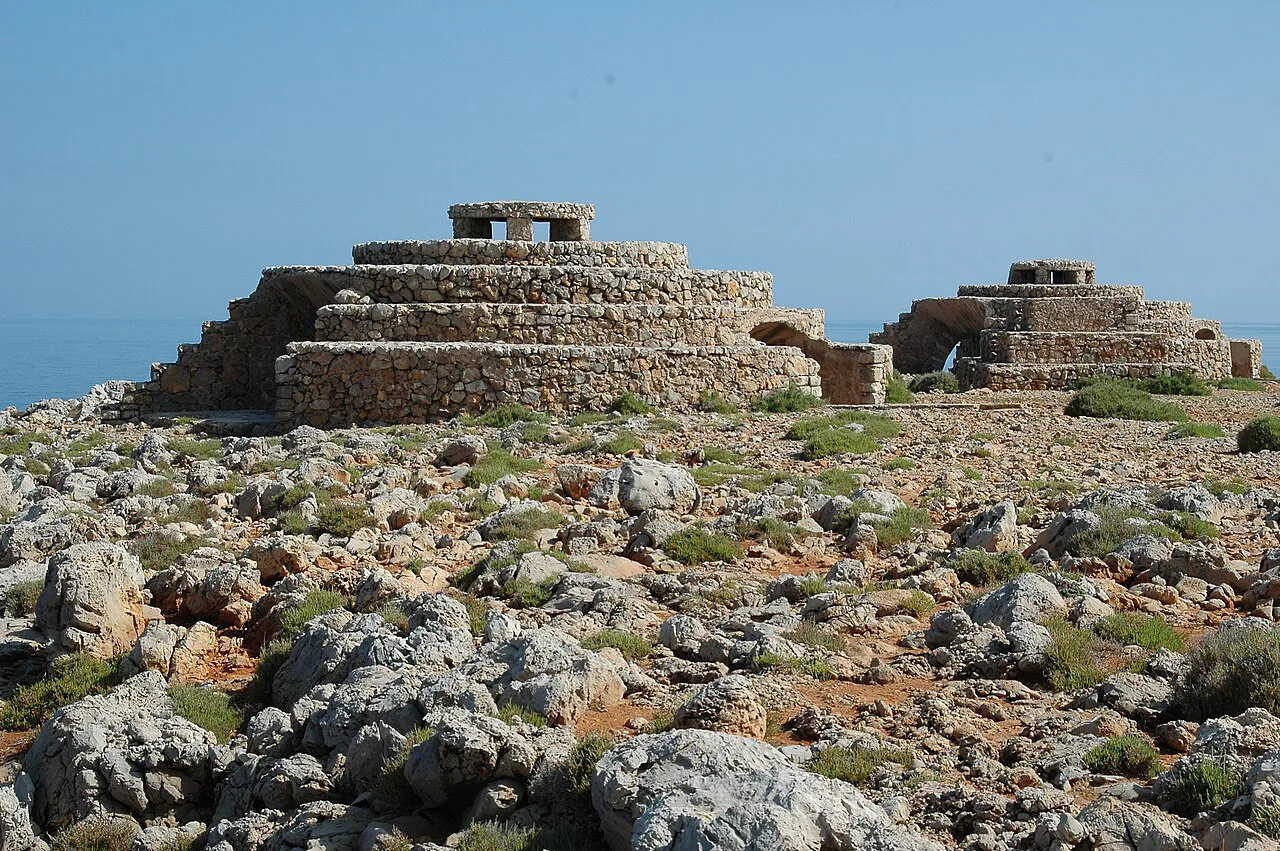
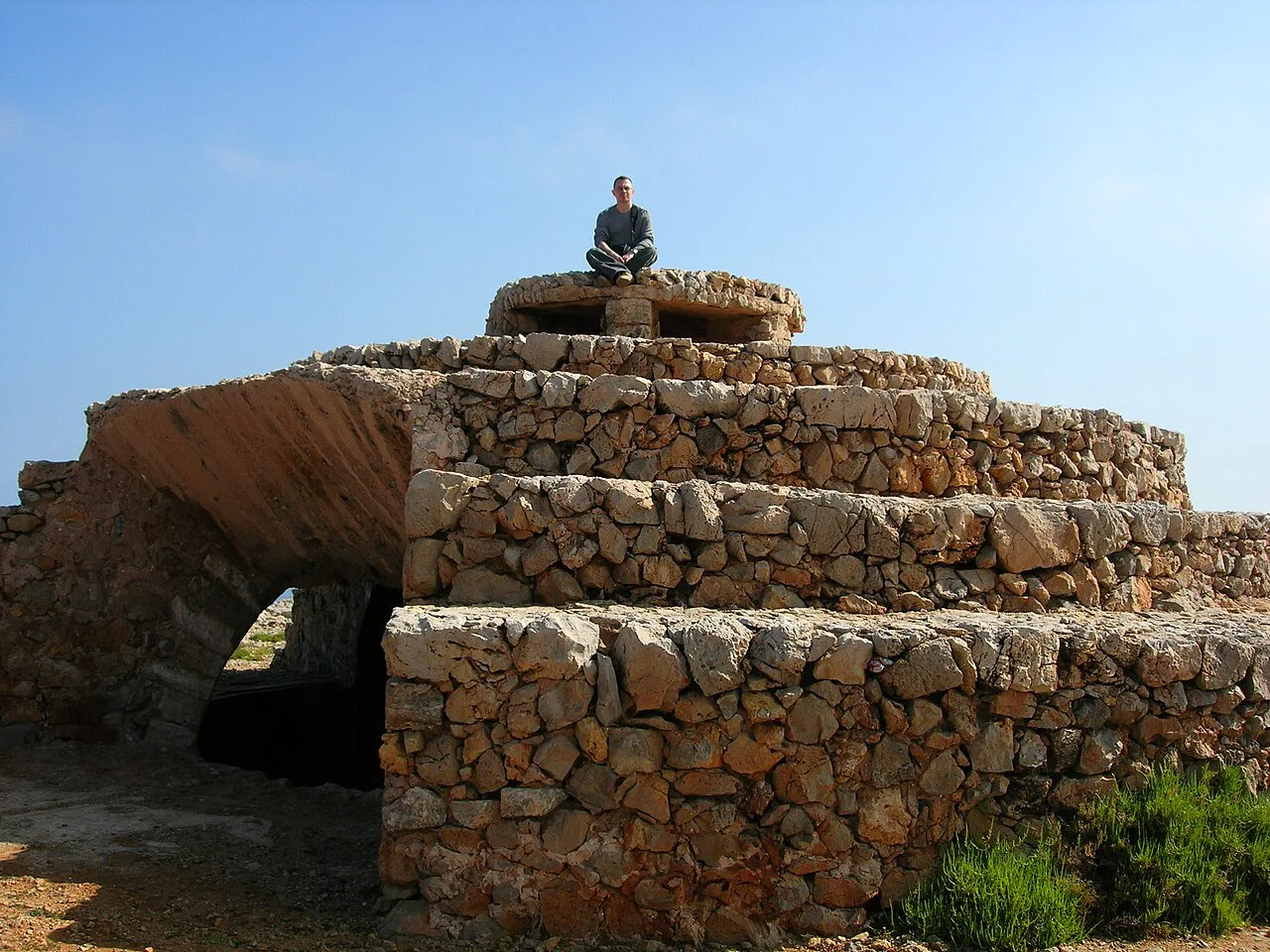
To one side of the lighthouse sit the remains of a civil-war observation post and battery, low concrete structures you can walk up to. That is the extent of the built sightseeing: the lighthouse is viewed from outside only, and the interior is not open to visitors. Come expecting a short external look and a long look at the sea, not a museum.

Getting there from Ciutadella
No scheduled public bus runs to the lighthouse gate, so plan on a car, scooter or bicycle. The final approach is a narrow lane where two vehicles can pass only with care, and it ends at a small free car park on the right-hand side. Drive slowly and expect to meet oncoming traffic on the bends.
In July and August the car park is small enough that it fills before sunset, and access is closed roughly an hour beforehand; a seasonal shuttle then runs from Ciutadella, with timetables that shift through the summer to track the sunset and tickets sold online or at the Ciutadella bus stops. Those arrangements and fares change from year to year, so confirm the current service before you rely on it. Outside high season, the car park is normally the straightforward option.
If you are coming from town by taxi or hire car, the cape is listed at Ciutadella, Balearic Islands, which is enough for any navigation app. Note that the cape closes to vehicles before dusk in peak season, so a taxi will need a pickup point at the gate rather than at the tower.
The last 800 metres on foot
From the car park, the lighthouse is about 800 m away, a walk of roughly ten minutes over rocky ground. Trainers or walking shoes make a real difference here; smooth soles and sandals are a poor choice on the broken limestone. There is no shade and no water on the path, so carry what you need with you.
The path is easy enough for most visitors who can manage uneven ground, but it is not a smooth promenade and there is no lit route back. If anyone in your party has mobility difficulties, the viewing is largely what you get from the car park and the first stretch of path. Plan to be back at the car before the light goes.
Sunset and stargazing
Sunset is why most people come. Arriving about an hour before the sun goes down lets you walk out, pick a spot on the roof of the old bunkers and settle in; the low structures make a natural raised platform above the rocks. The cape is also one of Menorca's better places for looking at the night sky on a clear evening.
Bear in mind that the whole site faces west and gets the full wind, so a layer and something to sit on are worth carrying even in summer. Once the sun drops, the walk back over rock is done in fading light, which is another argument for proper shoes and a torch on your phone.
Walking in on the Camí de Cavalls
Walkers can reach the cape on foot from Cala Morell along the Camí de Cavalls, the GR 223 long-distance path that circles the island. That stage runs about 14 km return, with wide sea views most of the way, and it starts just beyond the prehistoric caves at Cala Morell. It is a half-day undertaking rather than a stroll, and the exposed terrain means you should start early and carry water.
The Cala Morell starting point is itself worth an hour: the village sits beside a rock-cut necropolis, and the area's prehistoric monuments are one of the reasons Menorca attracts travellers interested in talaiotic archaeology. If you have already seen the Naveta des Tudons, this is a similar order of sight in a very different setting, so the walk-in combines well with a morning of talaiotic monuments.
Practical trade-offs
This is an exposed, amenity-free site. There is no shade, no café at the cape, and nothing to break the wind; the car park is small and the road in is tight. In high summer, midday is the least rewarding time to stand on bare rock above the sea, so early morning or late afternoon makes better sense.
If the sunset alone is your goal and you are staying far from Ciutadella, Cap de Cavalleria on the north coast is the easier alternative, with simpler access and a beach on the way. Punta Nati pays off when you are already spending the day in the Ciutadella area and can fold it into an afternoon rather than crossing the island for it.
What to combine with Punta Nati
The natural pairing is Ciutadella itself. The old town is compact and walkable, and a loop taking in the Plaça des Born, Ciutadella and the harbour side makes a good morning before an afternoon drive out to the cape.
For a second stop, the Ciutadella Cathedral is the old town's landmark, so check the times posted at the door before building your day around it. The Castell de Sant Nicolau at the harbour mouth is a short walk and an easy addition.
Palau Salort Ciutadella is another old-town interior worth an hour if your timing allows, and it keeps you in the shade during the hottest part of the day. A sensible shape is old town in the morning, siesta or a late lunch, then the drive to Punta Nati for the evening.
Should you drive out for the sunset?
Yes if you are based in or near Ciutadella and want a raw coastal landscape with a lighthouse at the end of it. No if you are coming from the far side of the island just for dusk, or if anyone in your group cannot manage 800 m of rocky path in fading light. Budget an hour on site plus travel and bring proper shoes and a windproof layer; in July and August the car park shuts for the evening about an hour before sunset, so sort your transport to the gate first.
Frequently Asked Questions
Can you go inside the Punta Nati lighthouse?
No. The lighthouse is viewed from outside only; there is no interior visit. What you can walk around are the tower, the keepers' quarters and the remains of the civil-war bunkers and observation post nearby.
How long do you need at Punta Nati?
Allow about an hour on site: roughly ten minutes each way over the 800 m path from the car park, plus time at the cliffs. Add around half an hour of driving from Ciutadella each way, more in the busy evening period.
Is there a bus to Punta Nati?
No scheduled public bus serves the lighthouse itself. In July and August a seasonal shuttle has run from Ciutadella in past years, with a car park closure roughly an hour before sunset, but the timetable and fares vary, so confirm the current service locally before planning around it.
What should you wear to Punta Nati?
Sturdy shoes with grip, because the final stretch is broken rocky ground. The cape is exposed and windy with no shade, so bring a windproof layer and water, and a torch or phone light if you are staying for sunset.