
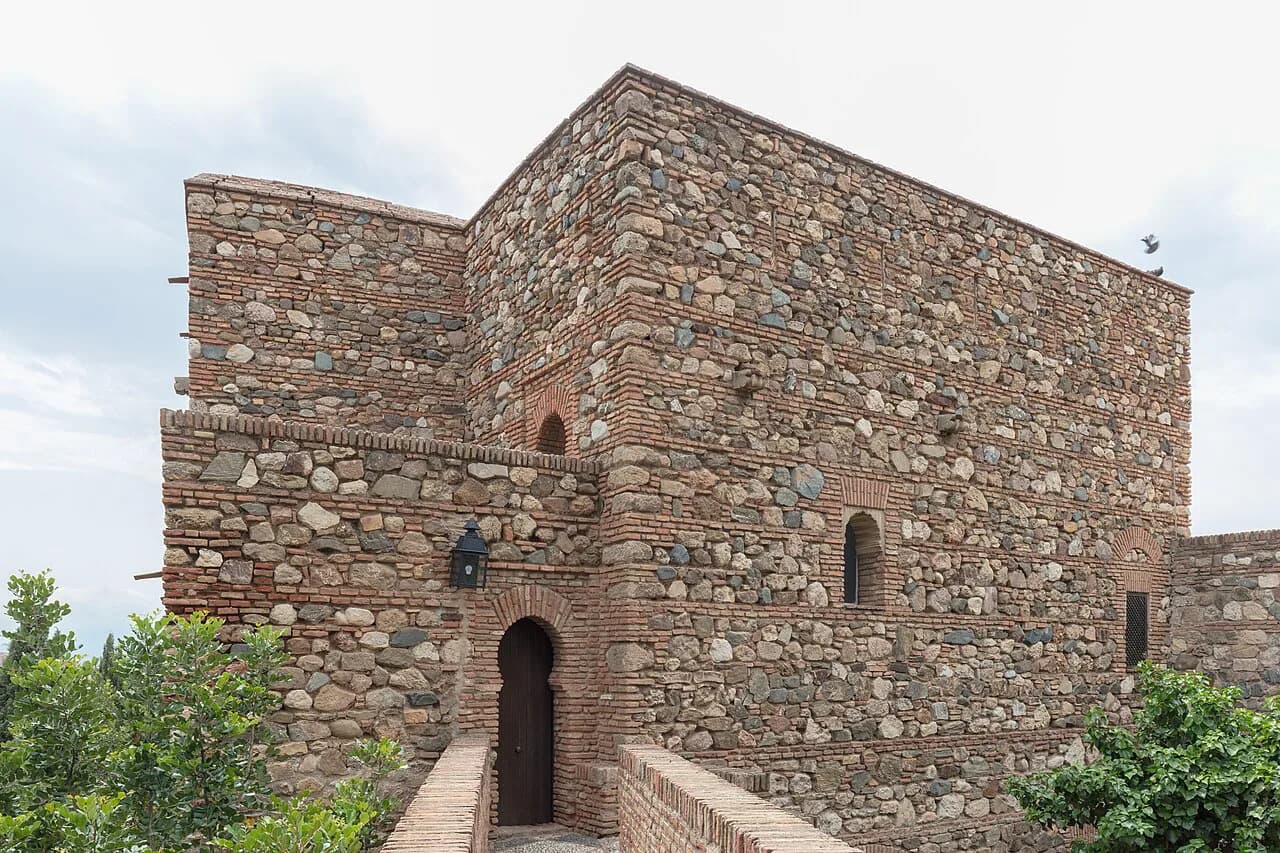
Alcazaba de Málaga: What to See and How Long It Takes

Allow about an hour and a half for the Alcazaba de Málaga, then another thirty minutes of climbing if you continue to the Castillo de Gibralfaro. The fortress sits on the hillside directly above the old town, close enough to walk to from the centre but high enough that the port opens out below you.
This guide covers the approach from the old town, the details worth looking for inside the walls, realistic timings for the Alcazaba and Gibralfaro together, and what sits at the foot of the hill once you come back down. Opening hours and ticket prices change, so the official Alcazaba and Castillo de Gibralfaro pages are the place to confirm them before you set out.
Where the Alcazaba sits and how to reach the entrance
The Alcazaba occupies the lower slope of Monte Gibralfaro, looking south over the port and east over the streets of the old town. The visitor entrance is on the town side of the hill, reached on foot from the cluster of streets around Calle Alcazabilla, where the climb begins almost immediately.
Walking up from the old town is short but genuinely uphill, with steps and uneven paving for much of the way. Comfortable shoes with grip matter more than any other piece of kit here, particularly on the descent when the stone is polished by foot traffic.
If you are coming from further out, the old town itself is compact and walkable, and most of the centre sits within a fifteen- to twenty-minute walk of the entrance. The wider set of Málaga Attractions: 6 Visitor Guides shows how the Alcazaba fits alongside the cathedral, the Picasso museum and the waterfront.

What you see inside the walls
The Alcazaba is an eleventh-century Muslim fortress, and its character comes from the fabric of the walls rather than from any single showpiece room. The ramparts are built of tapial, a rammed-earth technique, and the gateways and interior arches use the horseshoe form typical of Al-Ándalus.
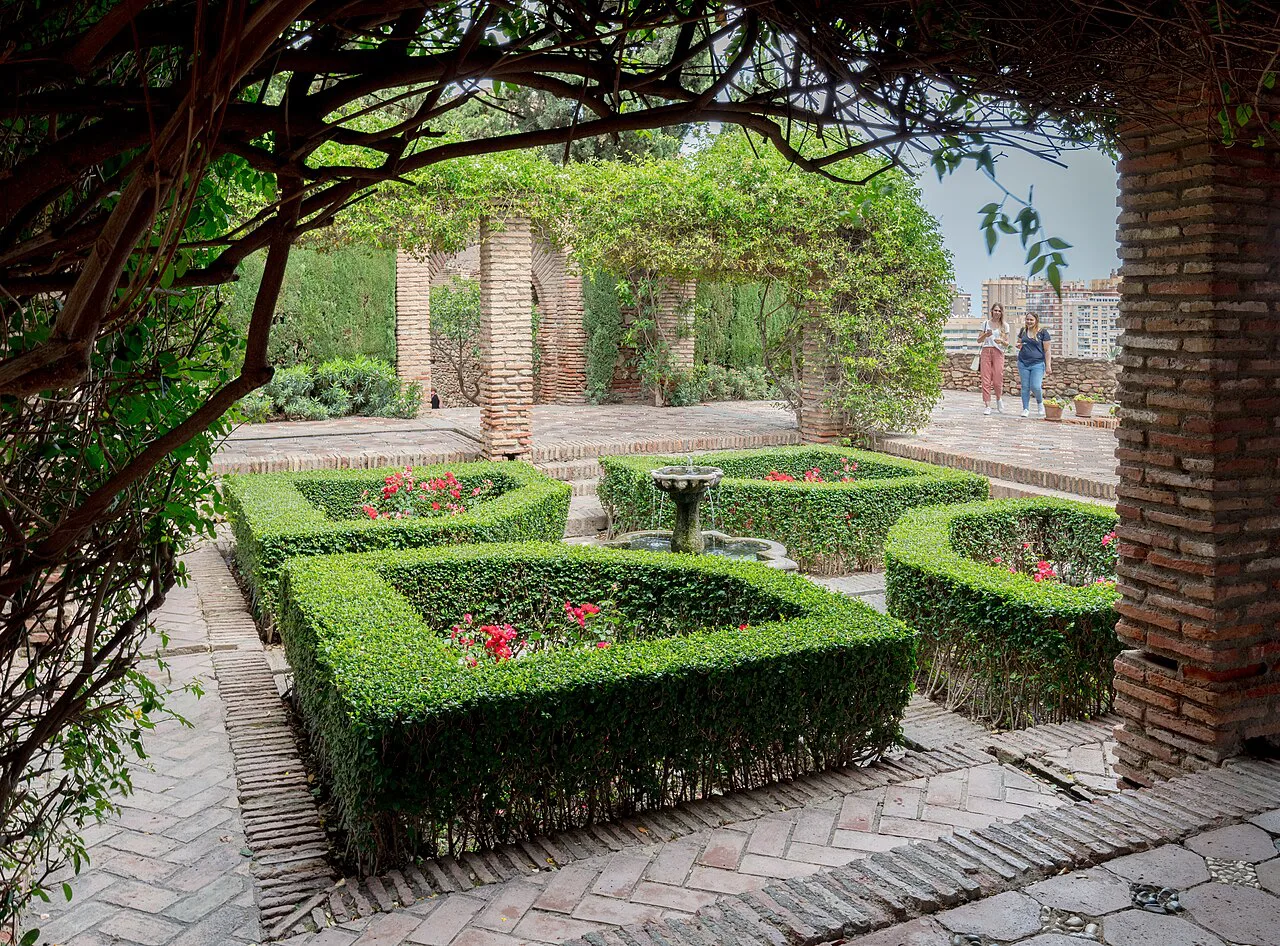
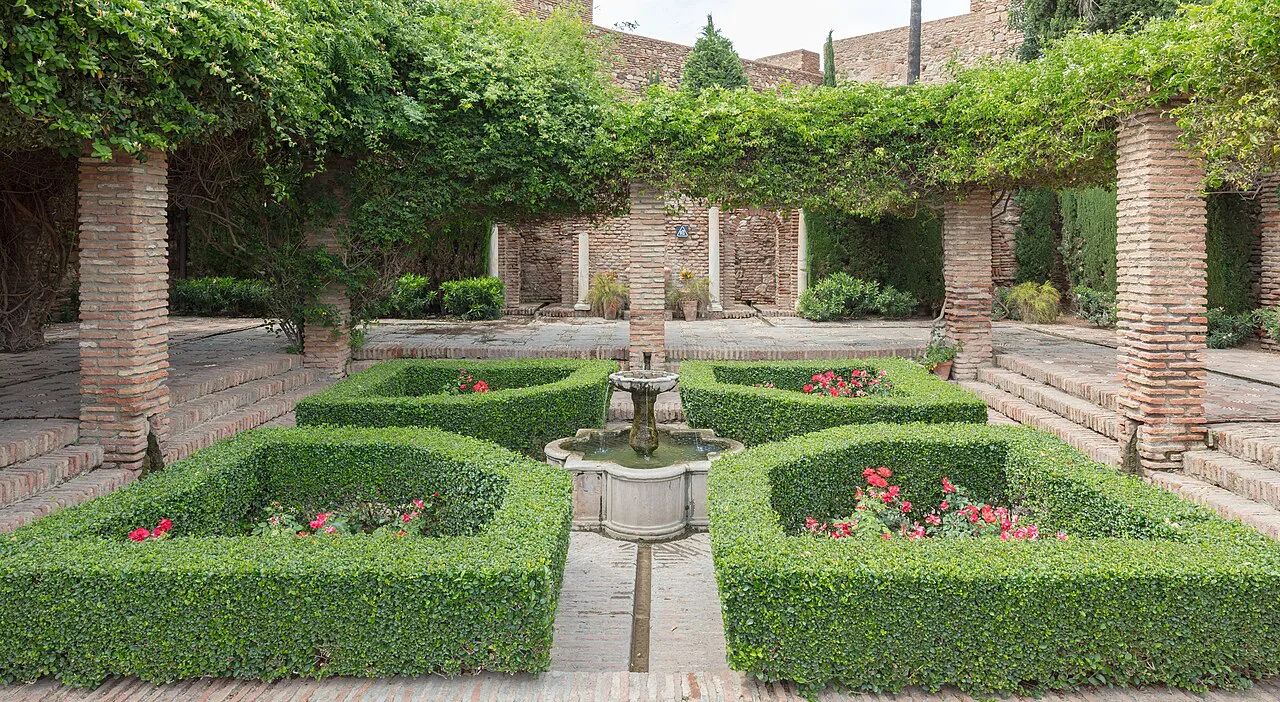
Inside, the route passes through a series of patios in the Nazarí manner, with narrow channels of water and planted beds that break up the heat of the stone. Look for the contrast between the defensive outer wall and these quieter inner courts, which were remodelled long after the fortress was first built.
The reward at the top of the visitor route is the view: the port, the sweep of the bay and the rooftops of the centre laid out below. Give yourself a few minutes there rather than pressing straight on towards Gibralfaro, because the panorama is the part people remember.

How long to allow for the Alcazaba
Budget roughly one hour and thirty minutes to walk the Alcazaba at an unhurried pace, which covers the walls, the patios and the viewpoints without rushing. A guided tour uses about the same window and fills it with the architecture and the siege of 1487, so the fortress is not a place to slot into a twenty-minute gap.
The connecting path to the Castillo de Gibralfaro takes about thirty minutes on foot, climbing the ridge that historically linked the two fortifications. It is steep and exposed, so it is the section to think about carefully in the middle of the day.
If the climb does not appeal, a taxi or bus line 35 covers the distance in roughly ten minutes according to the same source, saving legs for the upper fortress. Neither option needs booking far ahead, but the bus is the cheaper way to skip the gradient.
Adding the Castillo de Gibralfaro
The Castillo de Gibralfaro is a separate fortress on the crest of the mountain, 132 metres above sea level, with the sea on one side and the city on the other. It was the watchtower for both the town at its foot and the approaches by land and sea, and the walls follow the broken line of the ridge rather than a neat plan.
The Torre Blanca is the standout piece of military architecture, a large outlying tower on the north-west side with a hoof-shaped plan, once used as a prison. It is the largest tower of its kind surviving in Al-Ándalus, and it guards the bent entrance gate that controls the approach from the Coracha.
Inside the enclosure, the Pozo Airón is a shaft cut more than forty metres into the living rock, and there are cisterns, bread ovens and a narrow walkway along the ramparts. Part of the site is occupied by the Centro de Interpretación in the eighteenth-century powder magazine, which explains the layers of building and rebuilding on the hill.
Allow about one hour and thirty minutes for Gibralfaro as well, bringing the whole outing to roughly three and a half hours once the walk between the two is counted. That total is the honest figure for a half-day, and it leaves room for a slow start or a rest at the top.
Organising the day: both fortresses in one half-day
Start early, go up first and come down second. Doing the climbing in the cooler part of the morning means the exposed path between the fortresses is behind you before the sun is at its strongest, which matters most in summer.
Carry water and wear shoes that cope with stone steps and steep gradients; the same advice appears in the route planning published for the two monuments. The Parador de Gibralfaro near the summit is a useful landmark for orientation rather than a stop this guide recommends.
Check the official pages for opening hours and ticket prices before you go, since these are set by the operator and can change seasonally. The same pages carry any free-entry arrangements, which are worth knowing before you queue.
Nearby once you come down: the Roman theatre and Calle Alcazabilla
At the foot of the hill, the Roman theatre Málaga sits directly below the Alcazaba walls, a straightforward add-on if you have half an hour left after the descent. Calle Alcazabilla, the street below the fortress, links the theatre with the cathedral and the Picasso museum Málaga, so the cluster works on foot.
The Catedral de Málaga is a few minutes away along the same street, and its own tower and interior make a natural second stop once you are back at ground level. The Carmen Thyssen museum Málaga and the centre Pompidou Málaga extend the same walk towards the water if you want to fill the afternoon.
Should you add Gibralfaro to the Alcazaba?
Yes, if you have a half-day and reasonable mobility, because the two fortresses belong to the same defensive system and the upper one explains the lower. Allow about three and a half hours in total and treat the connecting path as a climb rather than a stroll.
If time or knees are against you, the Alcazaba alone gives you the tapial walls, the horseshoe arches and the port view in about ninety minutes, and the bus or a taxi can take you to Gibralfaro on another day. The Málaga guide sets the fortress alongside the rest of the city's sights for planning purposes.