
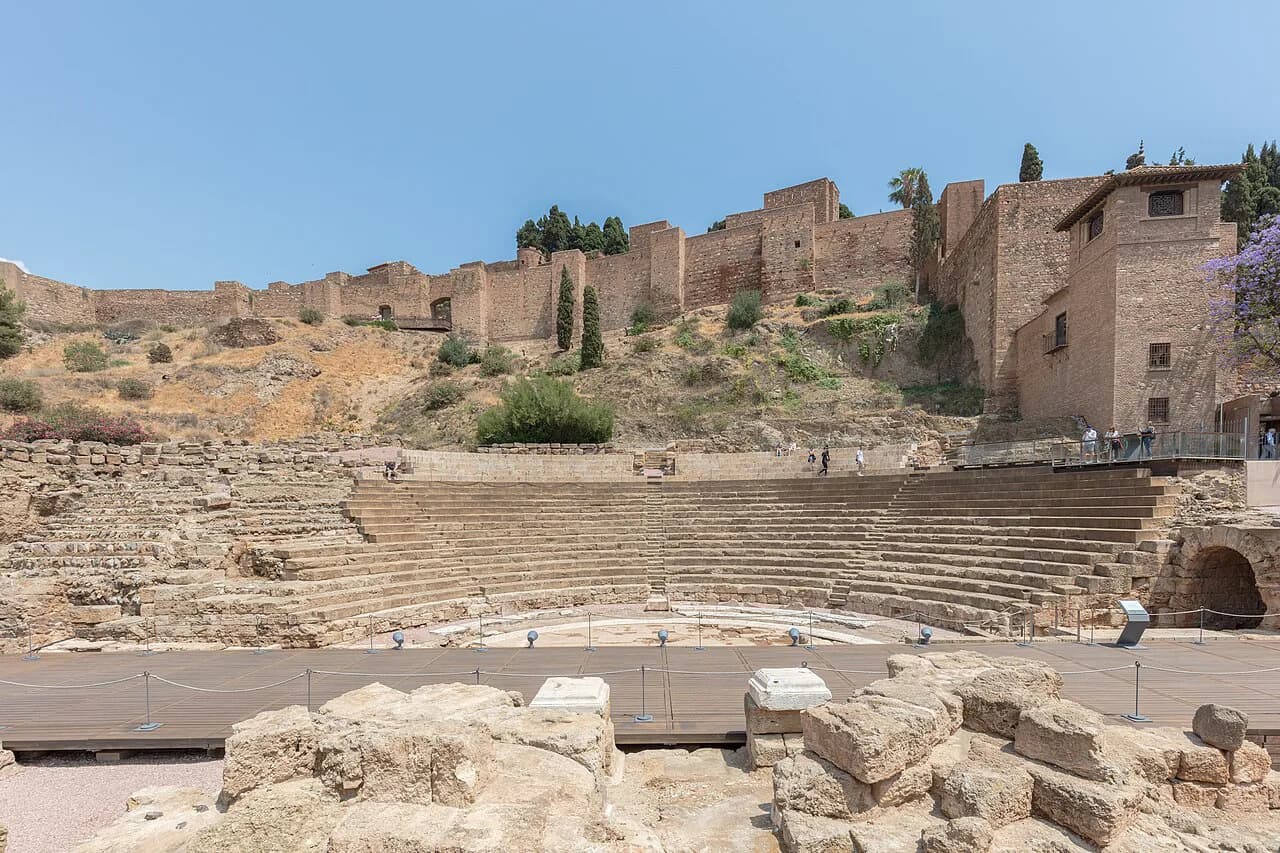
Roman Theatre Málaga: what to see at the Teatro Romano

The Teatro Romano de Málaga is a short stop, not a half-day: most visitors need twenty to thirty minutes to look over the seating, the marble-paved orchestra and the stage building, and rather longer if they join a guided tour that pairs it with the Alcazaba above. It sits on Calle Alcazabilla in the historic centre, close to the port side of the old town, so it slots easily into a morning that already includes the fortress. This page covers where the theatre is, what survives to look at, how much time to give it, and what else is within a few minutes on foot.
Where the Roman theatre is in Málaga
The theatre stands on Calle Alcazabilla, the street that runs along the foot of the Alcazaba hill in the historic centre. Coming from the port side, you reach it on foot in a few minutes from the Palmeral de las Sorpresas and the Muelle Uno quayside, and it is equally close to the Cathedral end of the old town.
Because the address anchors the visit, use Calle Alcazabilla as your search term rather than the monument name alone; the theatre entrance is set slightly back from the street, below the walls of the Alcazaba. Public transport, parking and drop-off arrangements around the old town change, so check the city's own transport information before setting out.
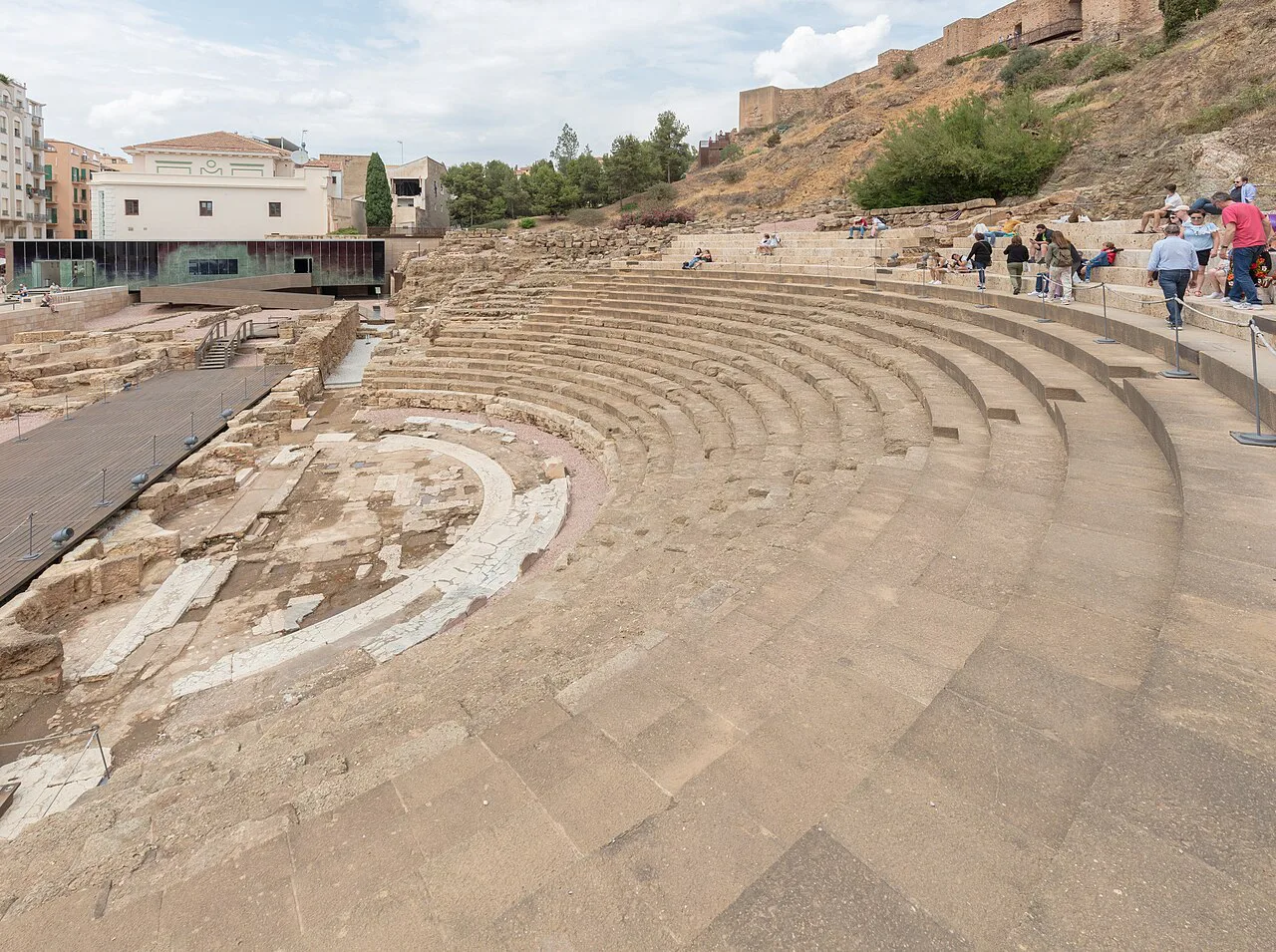

What the Teatro Romano is
The theatre was built in the first century AD, when Málaga was a Roman town, and it retains the three elements that define a classical theatre: a seating area, an orchestra and a stage building. The structure lay buried for centuries and now sits in an open archaeological setting directly beneath the Moorish fortress, which makes the site unusual as a single stop covering two very different periods.
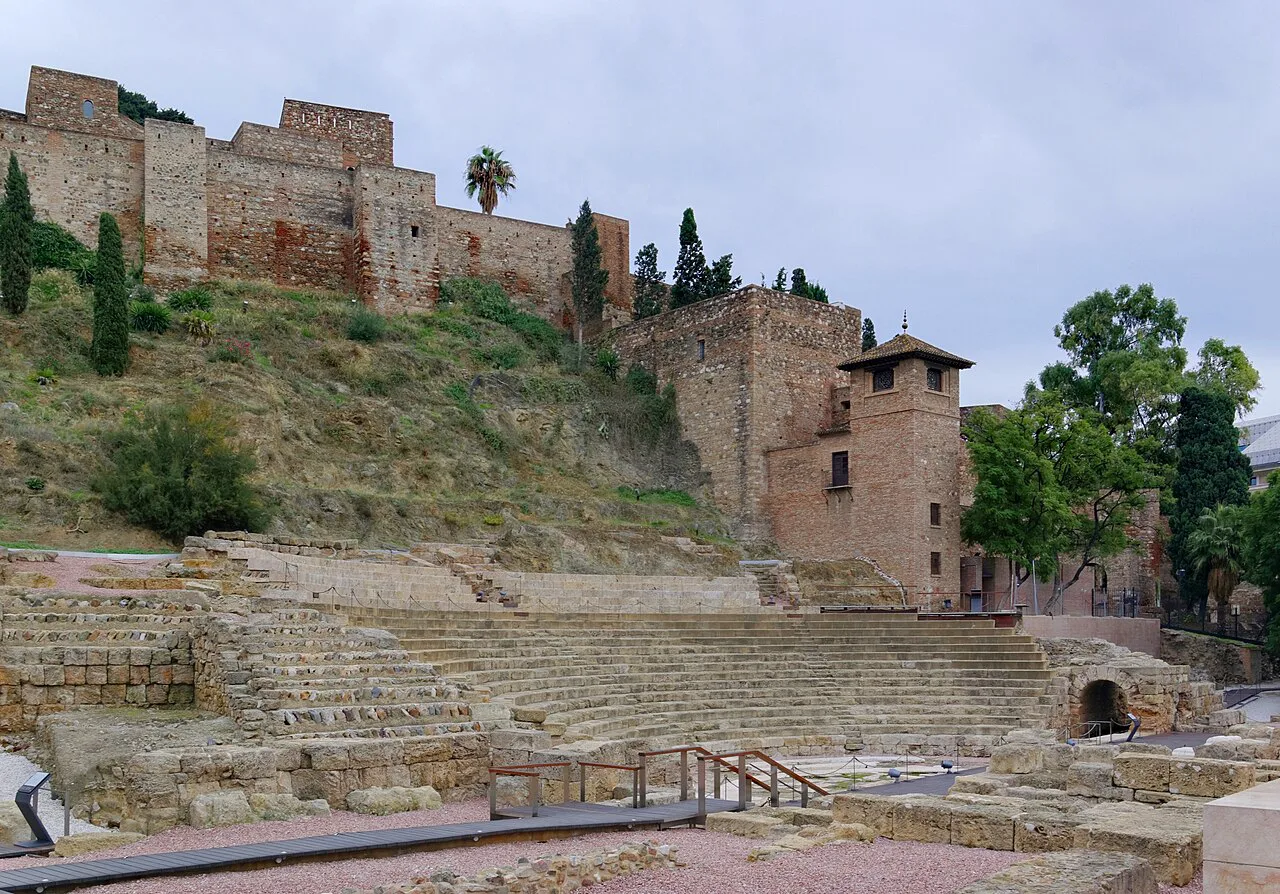

What to see: the cavea, the orchestra and the scaena
Start with the cavea, the stepped seating carved into the hillside, which shows how the auditorium was arranged in tiers facing the stage. Below it, the orchestra is the semicircular performance floor, decorated here with marble slabs, and beyond it stands the scaena, the stage building that once closed off the back of the acting area.
The site is small enough to take in from a few vantage points, and the surviving stonework is best read with some explanation of how a Roman theatre functioned. Labels and panels do part of that work, but the layers of later building above and around the theatre are easier to follow with a guide.
How much time to allow
Allow twenty to thirty minutes for an unhurried look from the street-level viewing points, which is enough to see the seating, orchestra and stage building and read the on-site information. Add time if you want to photograph the site against the Alcazaba walls, since the light and the angles change as you move along Calle Alcazabilla. Anything longer usually means a guided visit, which covers the theatre and the fortress together.
Combining it with the Alcazaba next door
The theatre sits immediately below the Alcazaba, so the obvious pairing is one stop that takes in both: the Roman remains at street level, then the climb through the fortress gates for the patios, walls and views over the city and port. The Alcazaba de Málaga guide covers the fortress, while this page covers the theatre, and together they make one outing rather than two separate days.
The walk through the fortress involves steps and uneven surfaces, so it suits shoes you can climb in and a slot earlier in the day in summer. Plan the fortress for when you have the most energy, and keep the theatre for the twenty minutes before or after.
Tickets and guided visits
A combined guided tour of the Roman theatre and the Alcazaba is listed from 18,00 €, and that figure is the tour's price, not an entry charge for the theatre on its own. Booking ahead is worthwhile in busy periods because guided departures have limited places, and the tour is the practical way to get interpretation of both monuments in one go.
Several operators run visits that combine the Alcazaba with the Roman theatre, including guided options sold with entry included, and some tours add the cathedral or the Picasso museum to the same booking. Compare what each ticket actually covers before paying, since a fortress-only entry and a guided two-monument visit are different products.
Opening hours, standalone admission and any free or reduced entry arrangements for the theatre are not given here, so confirm them before you travel. If you want a fixed slot and commentary, book the guided combination; otherwise the theatre is an open-air site you can look over during a walk along Calle Alcazabilla.
What else is within a few minutes' walk
The Picasso museum Málaga sits just over 150 metres away, off Calle San Agustín, which makes a natural follow-on if you want an indoor stop after the open-air theatre. The Catedral de Málaga is a little further the other way, and Plaza de la Merced is a few minutes on, so the whole cluster fits a single loop through the centre.
The distance between the theatre, the Alcazaba and the Picasso museum is short enough to walk without transport, which is why Calle Alcazabilla works as a base for a morning. Add the Catedral de Málaga if you want a third major sight, and leave the port-side museums for another day rather than cramming everything into one walk. For the practical details, see the Málaga guide.
Street view or guided visit?
If you are already walking the old town, the Roman theatre costs you twenty minutes and pairs naturally with the Alcazaba above it. If you want the site explained and the fortress included, book the guided combination and treat the theatre as part of that ticket rather than a standalone stop.
Either way, use Calle Alcazabilla to find it, go earlier in the day during summer, and confirm current opening details with the operator before you travel. The rest of the old town's monuments sit nearby, so the theatre rarely needs a trip of its own; see the wider Málaga Attractions: 6 Visitor Guides for the rest.