
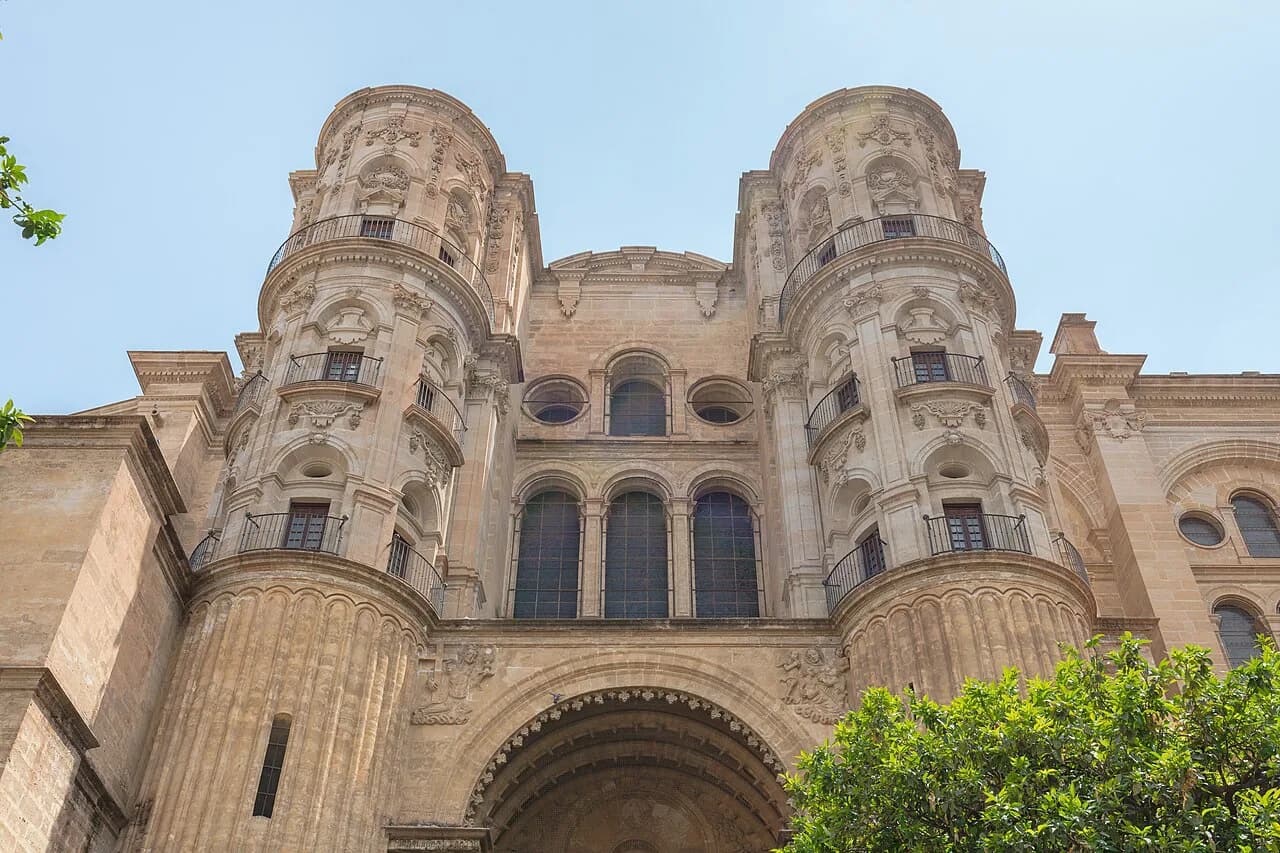
Málaga Cathedral: what to see, tickets and the rooftop climb

Málaga Cathedral rewards about an hour if you stay on the ground floor, and closer to two hours if you add the rooftop walk. The building is the Catedral de la Encarnación, a Renaissance-Baroque church on Calle Molina Lario with the port on one side and the Alcazaba hill on the other, so it sits naturally in the middle of a walking day. This guide covers what is inside, how the tickets and rooftop climb work, the day-by-day opening pattern, and what is within a few minutes of the doors.
Where the cathedral sits in the centre
The main door faces Calle Molina Lario, one block back from the port promenade and roughly five minutes on foot from the foot of the Alcazaba. That position makes the cathedral an easy hinge for a half-day: port and Muelle Uno to the south, the old town and the Picasso museum to the north, the Alcazaba and Roman theatre just east. If you are building a wider route, the Málaga Attractions: 6 Visitor Guides cover the monuments that surround it.
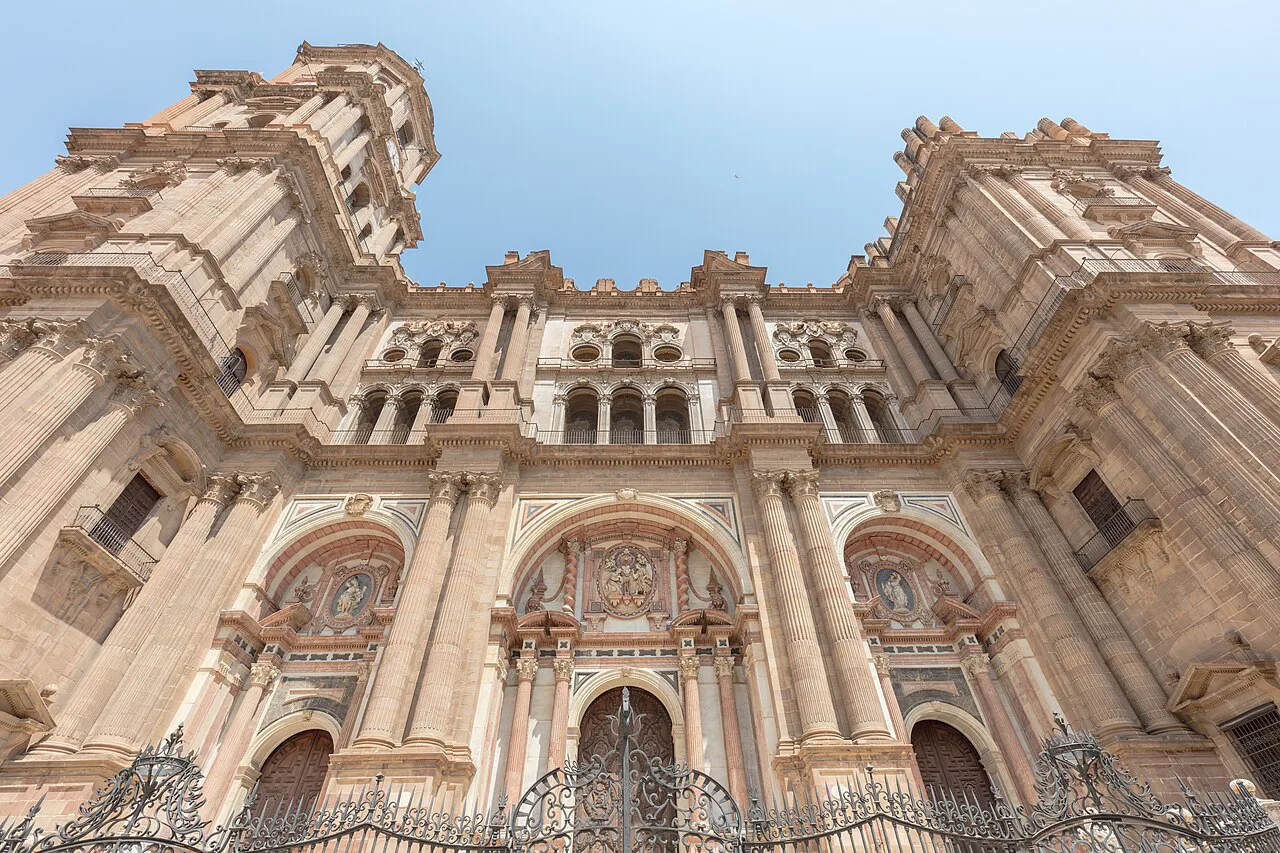

Opening times and the last-access cut-off
The cathedral currently opens from 10:00 to 19:30 Monday to Friday, 10:00 to 18:00 on Saturdays and holiday eves, and 14:00 to 18:00 on Sundays and feast days. Last access is 45 minutes before closing, which catches people out in the late afternoon: arriving at 18:50 on a weekday gets you nowhere. Treat these as the times currently listed rather than a fixed promise, since services and seasons can shift them.
Sunday is the awkward day: a 14:00 opening rules out a morning visit, so plan the cathedral for the afternoon and put the Alcazaba or a museum in the morning instead. Weekday mornings are the simplest slot, and the 45-minute cut-off matters less if you arrive before lunch. The ticket listing carries the full address, Calle Molina Lario, 9, if you are navigating by map.
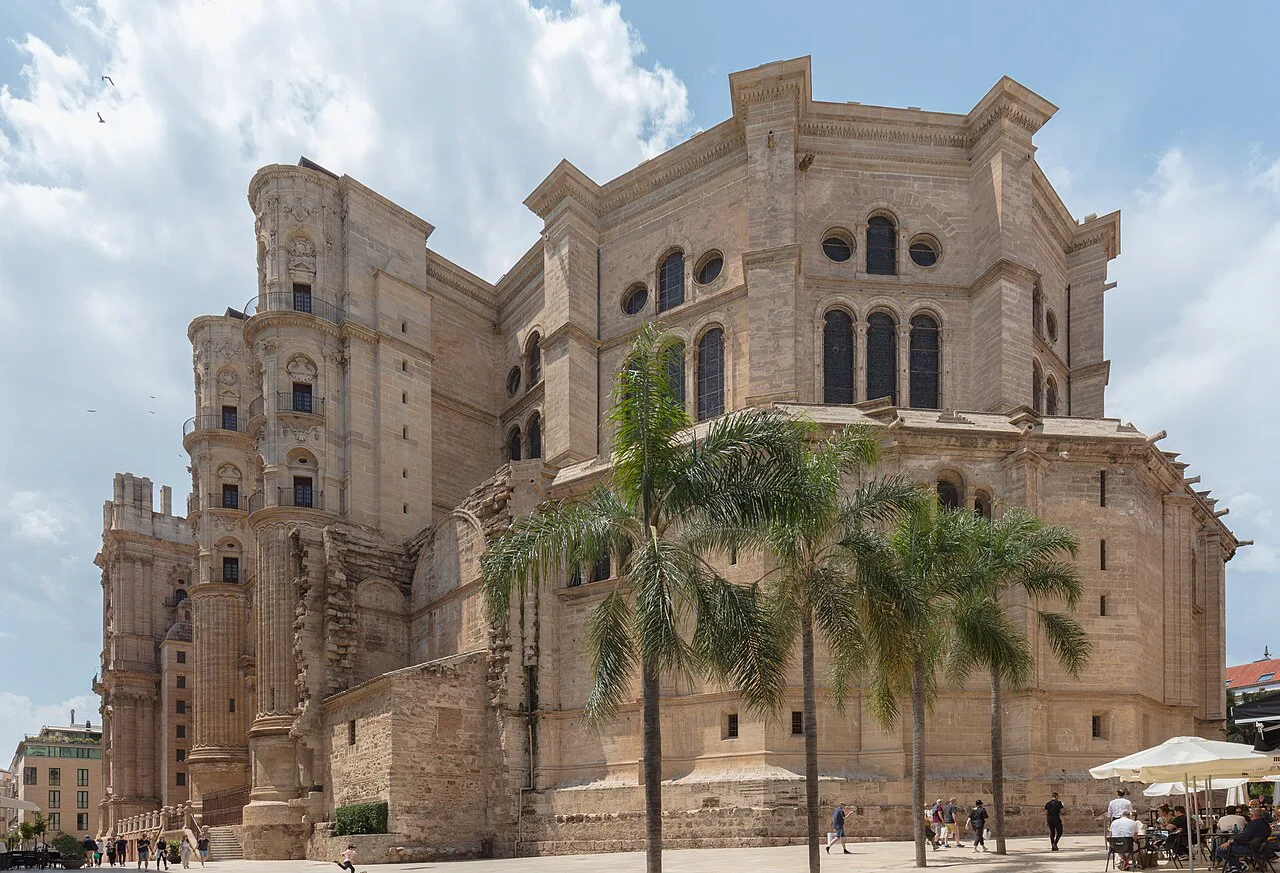

Ticket options: cathedral alone or with the rooftop
Tickets are sold as a cathedral entry with an audio guide in seven languages, and a rooftop add-on can be bundled in. The listed combination prices run from 7,00 € for visitors aged 13 to 17 up to 12,00 € for a general ticket, with reduced rates for pensioners and for 18 to 25 year olds; buying the cathedral alone costs less, so decide first whether you want the climb.
Because the rooftop carries its own restrictions and its own timetable, a combined ticket only pays off if you are confident of making a scheduled ascent. If there is any doubt about stairs or timing, buy the plain cathedral entry and keep the visit simple. The rooftop is not a free-flow add-on: you go up with a guide at set passes, so the ticket is really a booking for a slot.
The rooftop climb and who should skip it
Rooftop visits are currently suspended because of works on the roof, so the climb cannot be relied on when you plan a trip. The cathedral keeps a page on the rooftop visit where the suspension notice sits at the top, and it is the place to confirm before paying extra.
When it runs, the route goes up the eighteenth-century north tower stair, across the intermediate terraces of the chapels and up a sixteenth-century stair turret to almost fifty metres, with more than two hundred steps. The staircase is a narrow spiral, and the organisation states plainly that the visit is unsuitable for anyone who cannot manage stairs or move easily.
The cathedral also advises against the climb for people with breathing difficulties, injuries, advanced pregnancy, babies, small children who do not walk, and anyone with claustrophobia or vertigo. Tripods, backpacks, baby carriers, food and any bulky bag are banned on the ascent, so leave luggage behind and wear sensible shoes. Groups stay with the guide throughout and the visit is never self-guided, and it can be called off for bad weather.
Inside: the Capilla Mayor, the coro and the paintings
The interior is laid out around a broad nave, with the Capilla Mayor as the focal point and the coro, one of the major sculptural ensembles of the Spanish Baroque, filling the centre of the church. Work through the chapels along the aisles rather than rushing the nave: each holds its own retables and tombs, and the audio guide earns its keep here. Allow at least 45 minutes for this circuit alone.
Two images anchor the artistic highlights: the Virgen del Rosario, a canvas by Alonso Cano, and the popular Virgen de los Reyes. The cathedral also keeps an older Gothic retable of Santa Bárbara, which is easy to miss if you only look at the main chapel. Keep quiet in the side chapels where people are praying, and be mindful of services.
How long to allow and when to go
Budget one hour for the cathedral interior without the rooftop, two hours if the climb is running and you catch a scheduled pass. Mid-morning on a weekday gives the quietest conditions and leaves the afternoon free; Málaga's summer heat makes the shaded interior a sensible midday stop, and the stone floor stays cool even when the streets outside are fierce.
On Sundays and feast days the 14:00 opening pushes everything later, so pair a morning at the Alcazaba de Málaga with an afternoon in the cathedral and finish on the port. A visit that collides with a service may mean waiting or viewing only part of the building.
Getting there on foot
From the port promenade, walk inland at the Palmeral de las Sorpresas and you reach Calle Molina Lario in about five minutes; from the Alcazaba entrance the walk is a similar few minutes downhill. Coming from the old town, the cathedral is a short stroll from Calle Larios and the Plaza de la Constitución, and the streets around it are pedestrian, so no bus or taxi is needed once you are in the centre. Málaga's city buses and the Cercanías train stop within a ten-minute walk, but check timetables on the operator's site rather than relying on memory.
Nearby: the Alcazaba, Roman theatre and museums
The Alcazaba de Málaga rises directly behind the cathedral, and the Roman theatre sits at its foot, so the two together make a natural second half of the morning. Both are within a few minutes' walk of the cathedral doors, and the theatre is visible from the street without a ticket.
North of the cathedral, the Museo Picasso Málaga occupies the Palacio de Buenavista and holds the core of Picasso's own gift to the city; allow an hour there after the cathedral. The Carmen Thyssen museum sits nearby in the Palacio de Villalón, and the centre Pompidou Málaga at Muelle Uno is a longer but flat walk along the port.
Practical points: dress, bags and closures
The cathedral is a working church, so dress respectfully, and large bags are best left at your accommodation. If you hope to do the rooftop, travel light, since bulky bags and backpacks are banned on the ascent. Parts of the building may be roped off during services, and the cathedral's own site is the place to check the Mass schedule rather than assuming midday is free.
Should you book the rooftop or just the cathedral?
Book the plain cathedral entry unless the rooftop is confirmed to be running on your dates and you can comfortably manage a narrow spiral staircase of more than two hundred steps. The interior alone justifies an hour, and the 12,00 € combined general ticket only makes sense if you actually make the ascent. Check the rooftop page before paying for the add-on, especially while works are stopping visits.