
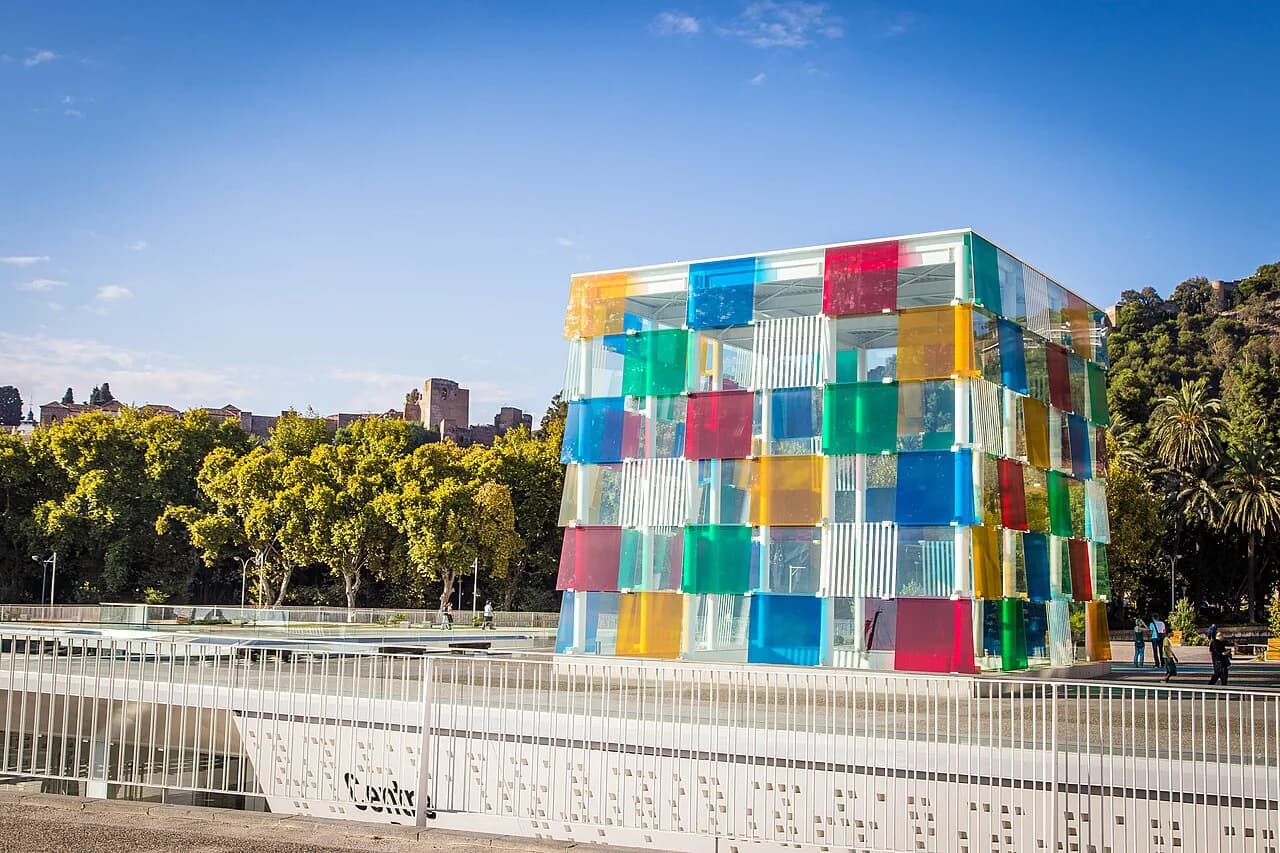
Centre Pompidou Málaga: visiting the Cubo at Muelle Uno

The Centre Pompidou Málaga is worth an hour or two of a portside half-day if you want modern and contemporary art in a compact, well-signposted space, rather than a full-scale museum morning. It occupies El Cubo on Muelle Uno, the leisure quay in the Puerto de Málaga, and its semi-permanent hang is a curated selection from the Paris collection rather than the whole thing. This guide covers the address, the building, what is on show, how long to allow and how to fit the visit around the rest of the port.
Where the Centre Pompidou Málaga is
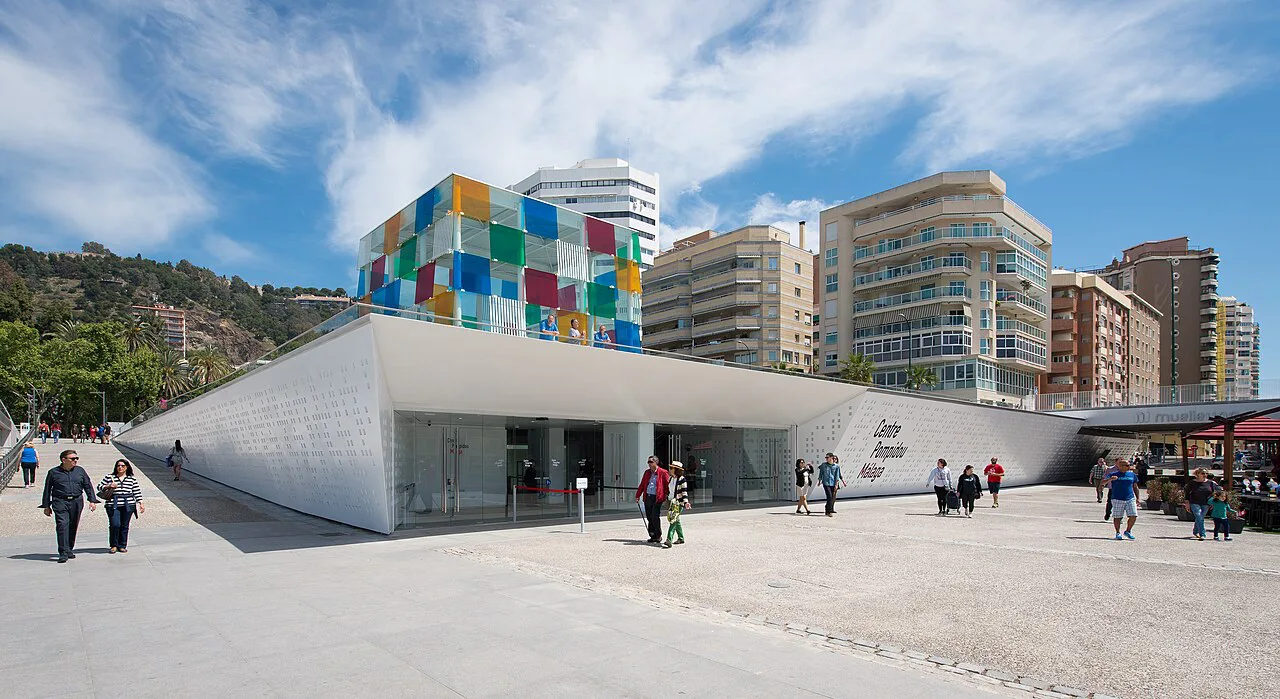
The venue is on Muelle Uno in the Puerto de Málaga, at Pasaje Doctor Carrillo Casaux, in the eastern part of the port. Treat the quay itself as your wayfinding anchor: once you are on Muelle Uno, the glass cube is hard to miss among the low port buildings. The address is published on the venue's own site, which is the page to use for the location and how-to-arrive details.
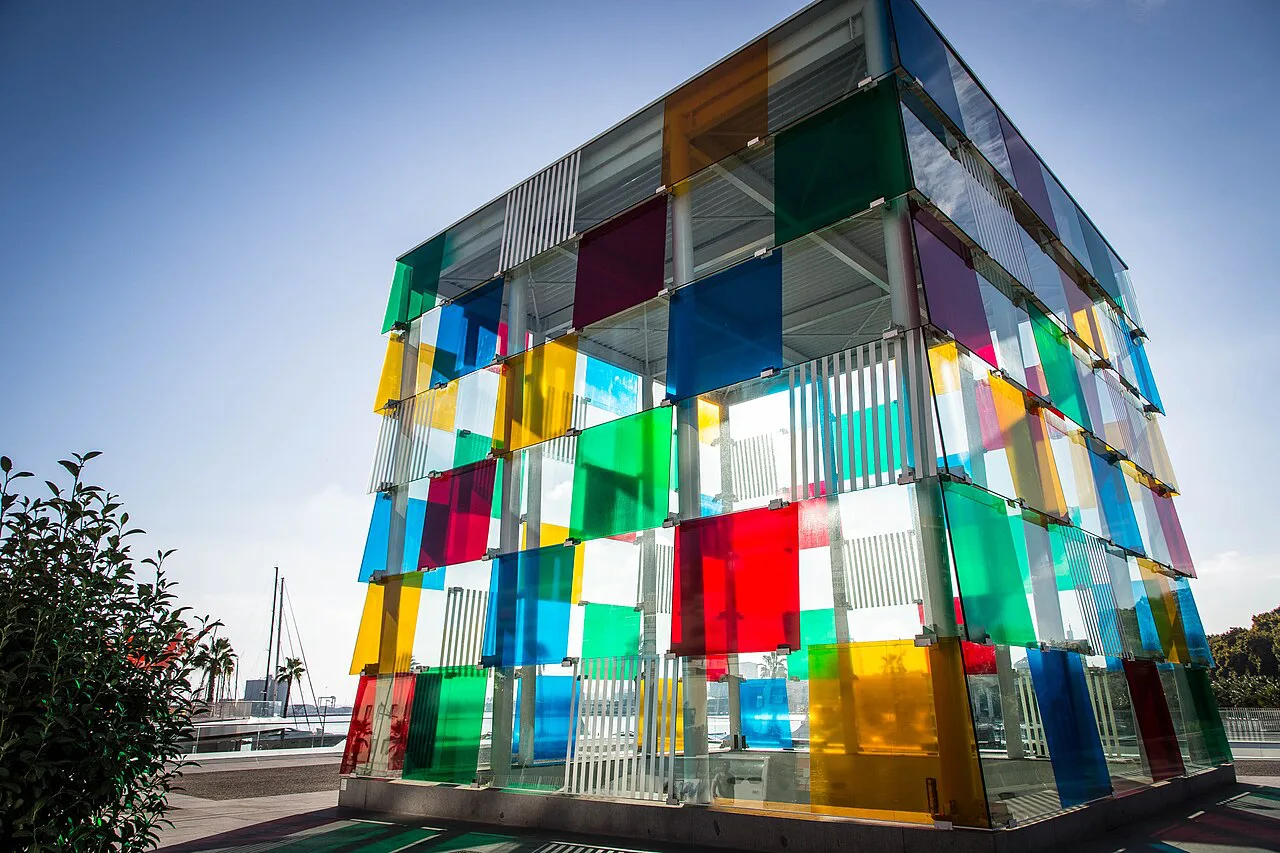
The Centre Pompidou in Paris describes El Cubo as a 6,000 m² cultural building under a cubic glass structure, built in 2013 and reworked by the French artist Daniel Buren in 2014. That exterior is the landmark to navigate by when you approach along the port. Because the whole venue sits on the quay, there is no old-town climb and no need to thread through the historic centre to reach it.

Getting there from the city centre and the port
From the historic centre, the simplest approach is downhill towards the port and then east along the quay to Muelle Uno; from the port side, follow the waterfront promenade to the same point. The venue publishes its own directions page, and that is the version to trust on the day because port access and pedestrian routes around the quay change with works and events.
If you are combining the visit with the old town, plan the walk in one direction only and use the port as the natural end of the loop. The Alcazaba and the Roman theatre sit on the city side, so a route that takes in the castle hill first and finishes at the water keeps the climbing at the start. The Alcazaba Málaga guide sets out that uphill section in detail if you want to link the two, and Málaga Attractions: 6 Visitor Guides shows how the city's main sights fit together geographically.

The building: Daniel Buren's glass Cubo
The structure is the first thing to look at, not just the container for the art. The Paris Pompidou's own account notes the 2013 build and Buren's 2014 reworking, and it is that treated glass skin that gives the venue its local name, El Cubo. Allow a few minutes outside before you go in: the cube reads differently in morning and late-afternoon light, and it photographs best when the sun is not directly behind it.
Inside, the scale is deliberately smaller than the Paris parent. The semi-permanent display covers 1,800 m², which is the figure to keep in mind when you are deciding how much of the day to give it. That footprint makes the Málaga venue a focused stop rather than a museum you need to clear an afternoon for.
What you actually see inside
The main draw is the semi-permanent hang, a themed route through 20th and 21st-century art built from the Pompidou collection. The current edition is To Open Eyes. Miradas de artista, running from 3 July 2025 to 17 January 2027, so it is the show to expect on a visit in that window. The selection changes between editions, which is why a repeat visit does not simply replay the same rooms.
Around that core, the venue runs temporary exhibitions, usually two or three a year, curated by Pompidou staff and drawing on painting, photography, drawing, design, architecture, film and new media. That mix means the programme can shift substantially from one season to the next. Check what is on for your dates rather than assuming the collection route is the whole visit.
There is also a lighter layer of interventions and public-space pieces alongside the main hang. The official listings for the autumn 2026 season include Hors Pistes, tenth edition, from 1 October to 2 November 2026, alongside an intervention by Imon Boy, El intérprete, from 4 March 2026 to March 2027, and La Casa Mágica + Juego de volúmenes by Adrien Rovero and Émilie Queney, from 20 February 2026 to February 2027. These are the smaller reasons to look beyond the headline exhibition.
How long to allow, and when to go
Budget roughly an hour for the semi-permanent route and a further 30 to 45 minutes if a temporary show interests you; the 1,800 m² hang is the reason the visit stays short. Add time outside for the building. That makes it a natural late-morning or late-afternoon stop on a portside half-day rather than the centrepiece of a full day.
The venue also runs guided visits for individuals, included in the ticket and offered without prior booking subject to availability, and group visits that do require booking. If a guided walk-through appeals, ask at the desk on arrival rather than building the day around a fixed slot.
Tickets, opening hours and booking
Opening hours and admission charges are set by the venue and are not fixed for the year, so confirm both on the official visit pages before you travel. The same pages carry accessibility and house rules, which matter if you are arriving with a group or need step-free access.
Entry is sold through the venue's own shop and ticket pages, and third-party resellers also list tickets for the collection and temporary exhibitions. Buying direct keeps the terms simple if your plans move, and it is the version that matches what is actually on.
Combining it with Muelle Uno and the port
Muelle Uno is the surrounding context rather than a separate excursion: the quay gives you a waterfront walk, open views back to the city and a straightforward route onward. Keep the Pompidou as the fixed point of the half-day and let the quay fill the rest. That structure avoids turning a short visit into a city-wide itinerary.
If you want a second museum in the same outing, the Picasso museum Málaga is the obvious pairing for anyone following the Picasso thread, since the city is his birthplace and the Pompidou's own programming leans towards Spanish artists. Do that one as its own timed slot rather than tacking it on at the end.
Other city-centre collections sit within the same walking radius as the old town, including the Carmen Thyssen museum Málaga and the Málaga cathedral, so a two-museum day is realistic if you start early and keep each visit tight.
Common mistakes to avoid
The first is assuming the collection on show is permanent. The Málaga venue has run successive semi-permanent editions, from The Collection through to the current To Open Eyes, so what you see depends on when you go. Read the current exhibition page before setting out.
The second is treating it as a full Pompidou-scale morning. At 1,800 m² of display, it is a focused visit, and pairing it with a long lunch or a second museum is realistic; clearing a whole day for it is not. The third is arriving without checking the programme for closures around installation changes between exhibitions.
Is the Cubo worth the stop?
Yes, if you want a compact, well-curated dose of modern and contemporary art on the waterfront and you are content with an hour or two rather than a full morning. The combination of Buren's glass exterior, the rotating semi-permanent hang and the smaller interventions gives it more character than its size suggests. Check the current exhibition and visit details before you go, then build the rest of the half-day around the quay.
Frequently Asked Questions
Is the Centre Pompidou Málaga free to enter?
Admission terms are set by the venue, so check the official visit pages for the current ticketing arrangements before you travel. Do not rely on older blog posts for this.
How long does a visit to the Centre Pompidou Málaga take?
Allow around an hour for the semi-permanent collection route and up to 45 minutes more if a temporary show interests you. The display area is 1,800 m², so it fits comfortably into a portside half-day rather than a full day.
What exhibitions are on at the Centre Pompidou Málaga?
In autumn 2026 the programme pairs the semi-permanent hang To Open Eyes. Miradas de artista, which runs to 17 January 2027, with Hors Pistes and smaller interventions. The line-up changes, so check what is on for your dates on the official site.
Where exactly is the Centre Pompidou Málaga?
It is at Pasaje Doctor Carrillo Casaux on Muelle Uno in the Puerto de Málaga, inside the glass building known as El Cubo. Approach along the quay and use the cube as your landmark.