
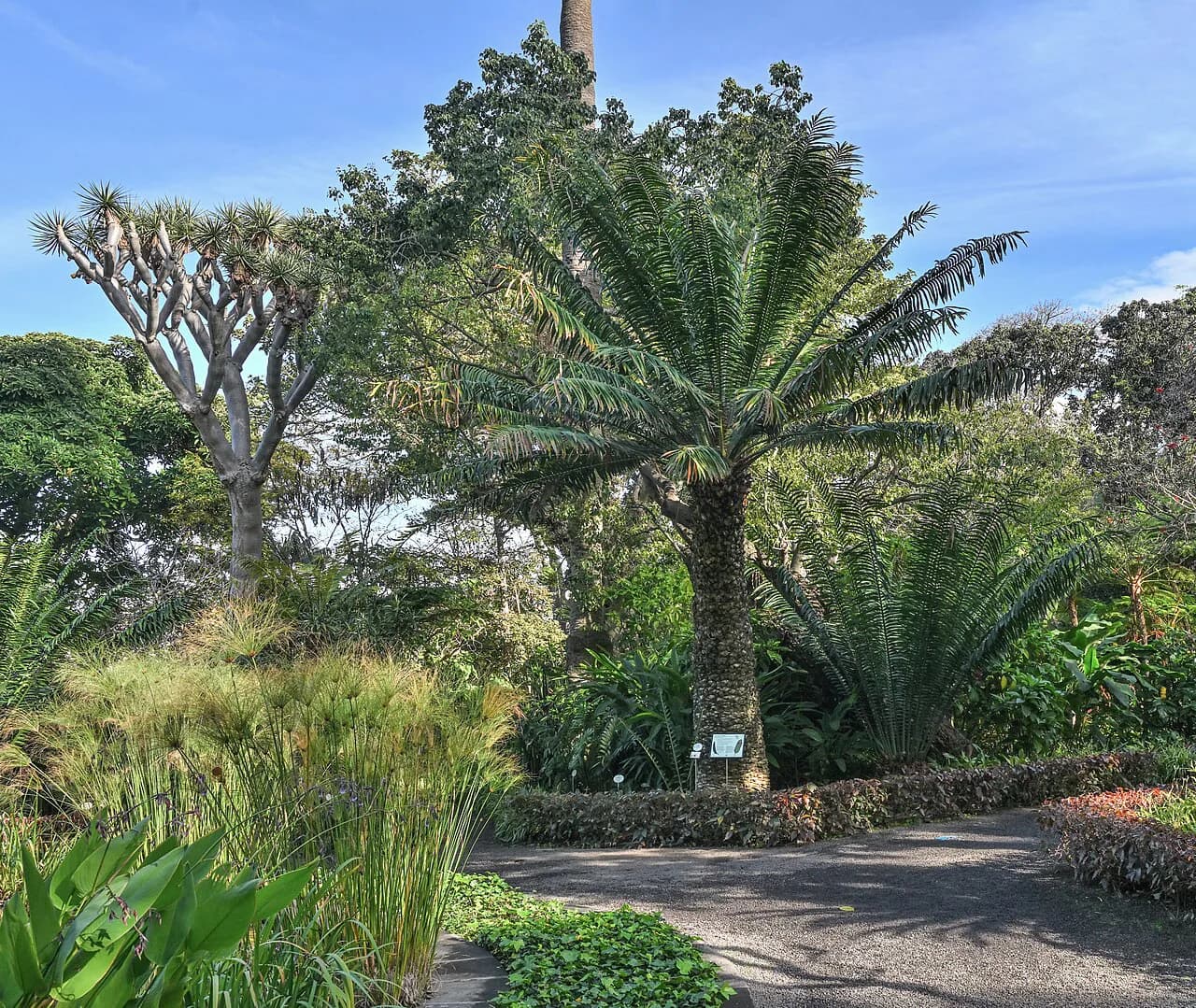
Jardín de Aclimatación de La Orotava: the Botanical Garden at Puerto de la Cruz

The Jardín Botánico Puerto de la Cruz visitors search for is the Jardín de Aclimatación de La Orotava, and it sits in Puerto de la Cruz, not in La Orotava. Plan on roughly an hour to an hour and a half for a slow circuit, and treat it as a half-day pairing with the town centre rather than a standalone outing. This guide covers the name confusion, the walk from the centre, what the collection actually contains, and how to slot it into a short break.
Why a garden called La Orotava sits in Puerto de la Cruz
The name is historical rather than geographical. The coastal land where the garden stands once formed part of La Orotava's territory, and the two places are separate municipalities today. Carlos III ordered the garden's creation in 1788; the project and justification were drawn up in 1790 and the first plantings began in 1792, and it ranks second in antiquity among Spain's botanic gardens after the Real Jardín Botánico in Madrid.
The original purpose was practical: tropical species brought back from the Americas were to be acclimatised here before being moved on to the Peninsula. The driving force behind the project was Alonso de Nava y Grimón, sixth Marqués de Villanueva del Prado. That experimental role helps explain why the collection leans towards useful and exotic introductions rather than a formal ornamental layout.
The garden has a long record of scientific work, including international seed exchanges and a herbarium focused on Canarian flora. It also keeps a place in literary history, since André Breton wrote passages in L'Amour fou inspired by a visit. For a visitor, this context is the reason to read the labels rather than simply walk the paths.
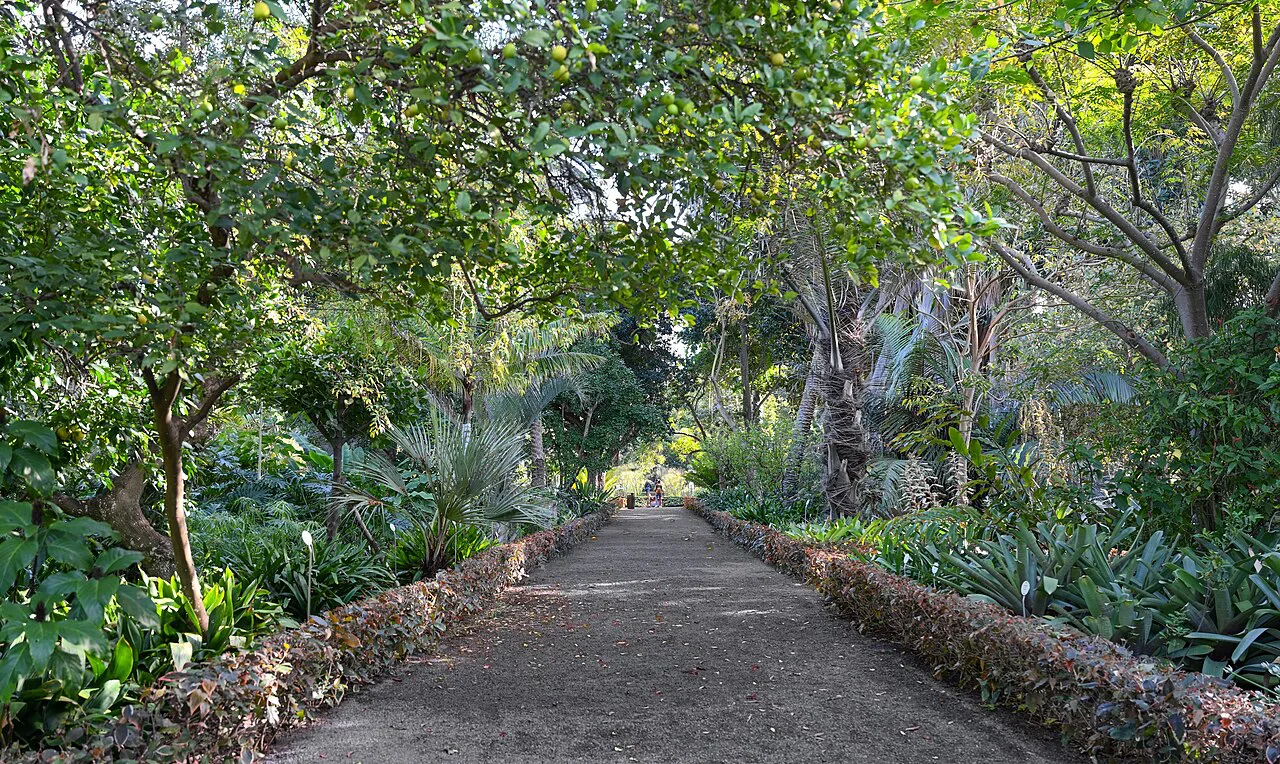

Where the garden is and how to reach it on foot
The entrance is on Calle Retama, 2, in Puerto de la Cruz, on the eastern side of town towards the coast road. Work out the walk from your own base; the historic core around the plaza del Charco is a reasonable starting point for the stroll towards the garden.
Drivers and taxi users should give the Calle Retama address rather than the garden's historic name, which sends some navigation apps to the wrong municipality. If you are building the garden into a wider day, the Puerto de la Cruz Attractions overview sets out how the town's sights sit relative to one another.
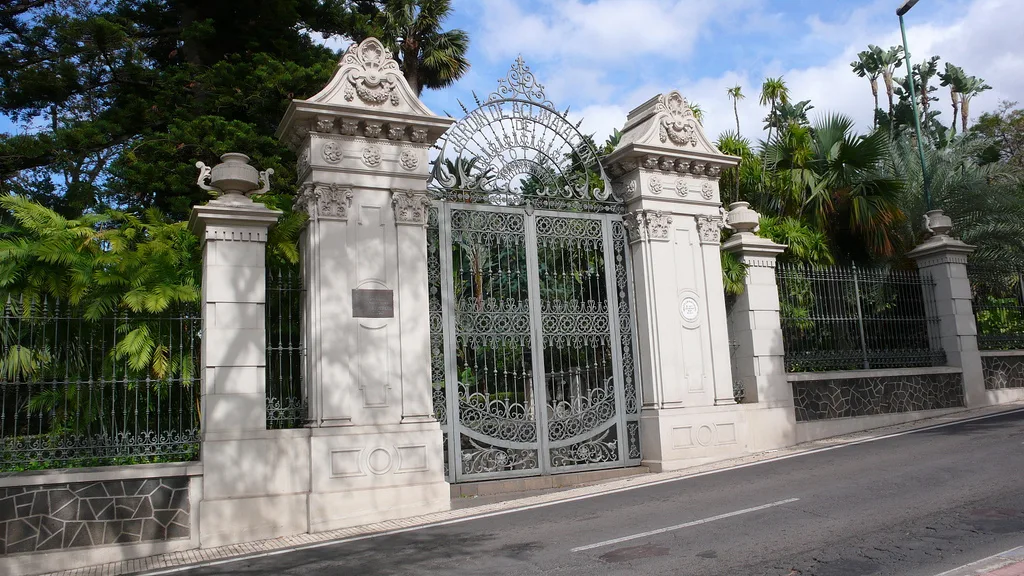

What grows inside the walls
Behind the perimeter walls and railings the planting spreads across roughly 60,000 square metres, which is why the site feels more like a park than a walled town garden. The collection is strongest in palms, bromeliads, aroids and figs, alongside mature trees valued for their age, size and rarity. Among the best known is a South American fig said to be over 200 years old, with roots that rise above the soil.
Walk with an eye for structure as well as flowers: the tall palms form the canopy, the bromeliads and aroids occupy the shaded understorey, and the figs anchor the older beds. Labels matter here, because many specimens are ordinary-looking trees with unusual provenance. Give the mature trees time rather than rushing to the far end of the site.
How long to allow and when to walk it
An hour covers the main paths at a steady pace; ninety minutes lets you linger and read labels without watching the clock. The garden's mature trees give it a shaded, park-like feel that makes it a comfortable stop in warm weather, so it works well as the middle of a day rather than the start. Pair it with an early visit to the town and a late afternoon on the coast.
Plan around your own schedule and confirm opening times yourself before setting out; carry water, since refreshments sit outside the walls in town. If heat is a concern, the shaded interior paths are the more comfortable section.
Tickets, opening hours and step-free access
Current opening times and any ticket or free-entry arrangements should be confirmed with the garden directly before you go. Accessible routes were improved during recent works, but not every corner could be adapted because the site's protected status as a Bien de Interés Cultural restricts structural changes. Wheelchair users and anyone with limited mobility should expect some paths to be easier than others, and ask at the entrance which circuit to follow.
Nearby: La Orotava, Loro Parque and the coast
La Casa de los Balcones in La Orotava, inland from Puerto de la Cruz, makes a natural pairing with the garden as a second look at the island's historic architecture. Loro Parque, west of Puerto de la Cruz, is a well-known option for families. Both feature among the Puerto de la Cruz Attractions: 5 Visitor Guides.
Closer in, the Castillo de San Felipe and its small cove make a natural continuation of the coastal walk back towards the centre, while the older streets around the Plaza del Charco and Calle La Marina reward a slow loop before or after the garden.
If you are staying in the La Paz neighbourhood, the Mirador de la Paz gives a cliff-top view over the coast. Gardeners should also note the Sitio Litre, another historic garden in Puerto de la Cruz, as an optional second stop.
Is the botanical garden worth an hour of your break?
Yes, if you treat it as a shaded botanical walk with real historical weight rather than a quick photo stop. The roughly 60,000-square-metre site, with trees that are centuries old, makes a genuine half-day anchor in Puerto de la Cruz, and the Calle Retama entrance is easy to find.
Pair it with the town's squares and castle for a full day, and check the garden's own pages for current hours and ticket arrangements before setting out.
Frequently Asked Questions
Is the Jardín Botánico in La Orotava or Puerto de la Cruz?
The garden known as the Jardín de Aclimatación de La Orotava stands in Puerto de la Cruz, on Calle Retama, 2. The name survives from the period when this coastal land formed part of La Orotava's territory; the two are separate municipalities today.
What trees and plants are found in the garden?
The collection is best known for palms, bromeliads, aroids and figs, together with mature specimen trees prized for their age and rarity. One of the most striking is a South American fig said to be over 200 years old, with roots that rise above the ground.
Does Puerto de la Cruz have an old town to walk after the garden?
Yes. The streets around the plaza del Charco and Calle La Marina form the historic core, and the coastal path towards the Castillo San Felipe makes a natural continuation of a garden visit.
How long should a visit take?
Allow around an hour for the main paths and ninety minutes if you want to read labels and linger. The garden's size means there is more walking than a small town garden would involve.