
Salamanca Cathedral: Visiting the Old and New Cathedrals

Salamanca has not one cathedral but two, built against each other and visited on a single ticket: the Romanesque Catedral Vieja of the twelfth and thirteenth centuries and the much larger Catedral Nueva begun in 1513 and inaugurated in August 1733. You enter through the Puerta de Ramos off the Plaza de Anaya, pass from Gothic nave to Romanesque church by a single doorway, and finish in the cloister. This guide covers the layout, the works worth lingering over and the published opening hours.
Two cathedrals, one entrance
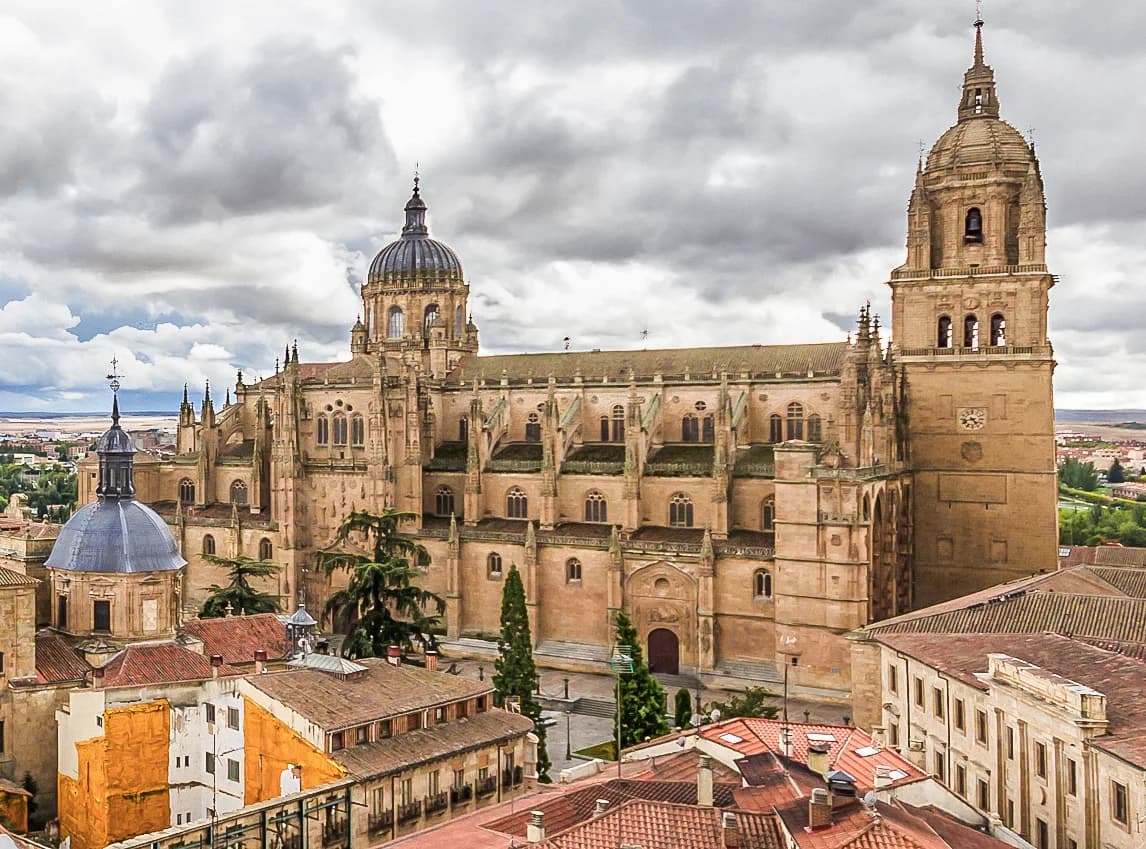
The Catedral Nueva is the one most visitors picture: a rectangular church of three naves with chapels set between the buttresses, roofed with star-shaped rib vaults, lightened by close to a hundred stained-glass windows. The Catedral Vieja, dedicated to Santa María de la Sede, is Romanesque in build, a basilican plan of three naves with a developed crossing, and was later finished with vaults pointing towards the Gothic. Because the two buildings are physically joined, you plan one entry and one period inside rather than two separate visits.
The main façade looks onto the Plaza Juan XXIII, where the statue of Padre Cámara stands, and guided groups gather at that statue before walking round to the Plaza de Anaya to enter by the Puerta de Ramos. The visit then runs through the two cathedrals and finishes in the cloister. Coming out, the route lands on Calle Gibraltar beside the Casa Lis, which makes the glass museum a natural next stop on the same walk.

Inside the Catedral Nueva
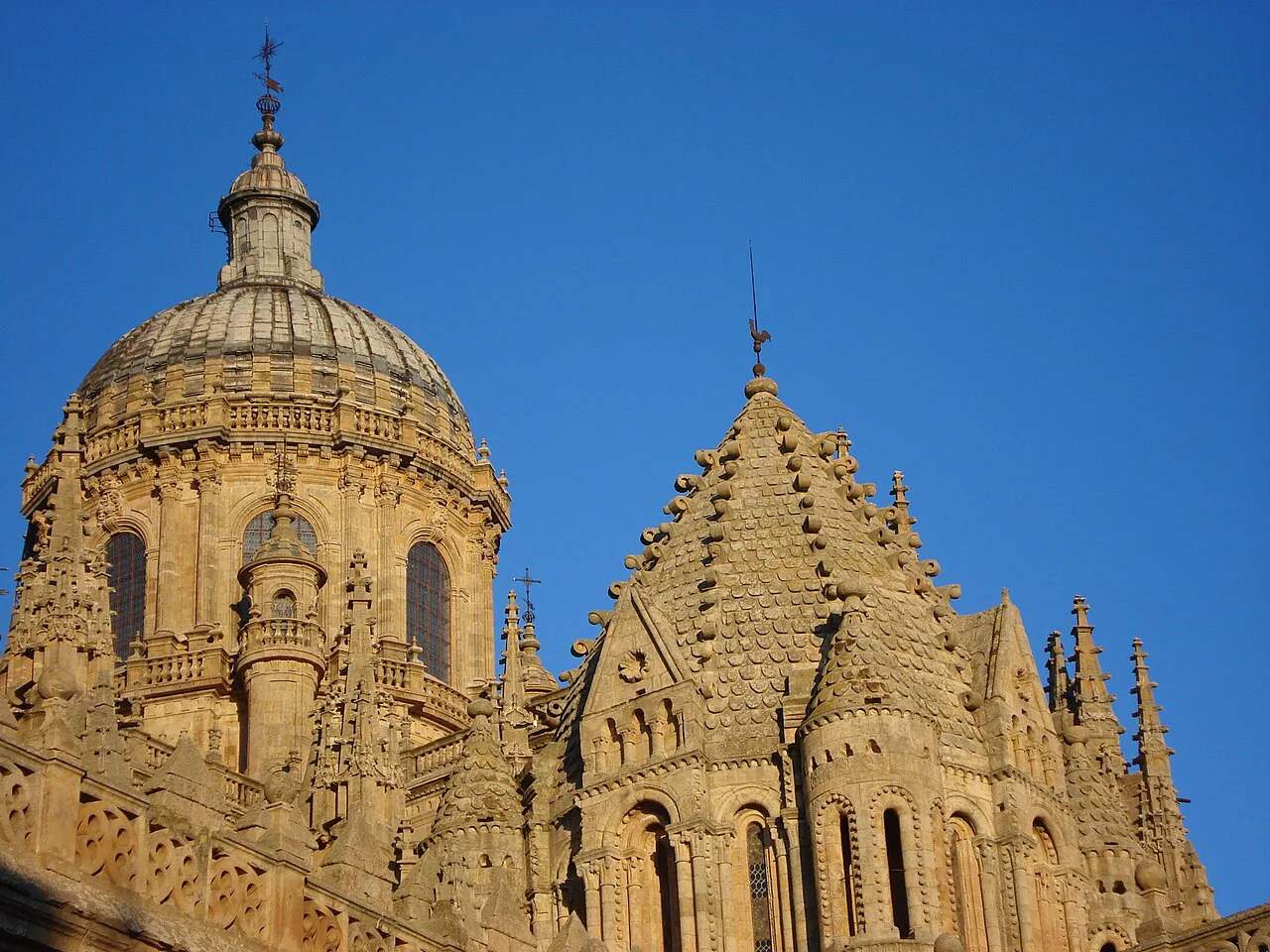
Look up in the crossing for the cimborrio, an octagonal drum carried on pendentives carved with monumental reliefs of the Marian mysteries, topped by a cylindrical lantern and a hemispherical dome; the exterior finishes in a false lantern completed in 1765. The choir is Baroque, and the two organs and the stained glass carry much of the interior's character. Notice, too, the two galleries running at two heights around the walls, with medallions of prophets, evangelists and doctors of the Church.
The windows are the reason to give the New Cathedral time rather than pass through. Almost a hundred survive, the earliest figurative panels coming from Flanders, and some of the glass outlasted the Lisbon earthquake. On a bright morning the east end glows; on a grey afternoon the nave reads much darker, which changes how long you will want.
The building took more than two centuries, begun in late Gothic by Juan and Rodrigo Gil de Hontañón, Juan de Álava and others, and steered by the cathedral chapter to keep a single style to the end. The Puerta de Ramos carvings include the astronaut and the frog that visitors hunt for on the stonework; treat them as details of the doorway, not the main event.

The Catedral Vieja
Cross the doorway and you are in a different century. The Old Cathedral was built through the twelfth and thirteenth centuries and keeps a defensive, fortress-like character that earned it the nickname Fortis Salmantina, hence the plain massing after the New Cathedral's height. Its scale is intimate: three naves, a crossing, and chapels close enough to read without craning.
The altarpiece by the brothers Delli holds fifty-three scenes from the lives of the Virgin and Christ, and the Last Judgement frescoes by Nicolás Florentino cover the walls nearby. The Virgen de la Vega, patron of Salamanca, is here as well. Allow real time at the altarpiece: it rewards close reading panel by panel, and most of the detail is lost from the far end of the nave.
The cloister and its chapels
The cloister holds two chapels of unusual character. The Capilla de San Salvador, or de Talavera, keeps the banner of the comunero leader Francisco Maldonado; the Capilla de Santa Bárbara was used for university degree examinations into the nineteenth century, a reminder that cathedral and university life in Salamanca were entangled for centuries. Both sit off the cloister walk, so the route naturally ends here.
The cloister is included in the same visit as the two churches and the museum, so there is no second entry to plan for. It is also the quietest part of the complex, and the sensible place to sit if the New Cathedral has been busy.
Opening hours, summer and winter
The Catedral Nueva, Catedral Vieja, cloister and museum keep one timetable in summer, April to September, from 10:00 to 20:00, and another in winter, October to March, from 10:00 to 18:00, with the diocese page listing a 17:15 last access. That winter cut-off is the detail that catches people out: arriving after a long lunch in the low season leaves little over an hour inside.
The published timetable covers visitor opening only; the diocese site lists masses and other services separately. Where a service is being held, access to parts of the building may be restricted, so check the day's service times before fixing the rest of the day around the cathedral. If a visit to the cathedral is the point of your trip, build the day around the morning slot.
Tickets and what a guided visit costs
Explora Salamanca runs a guided interior visit from Tuesday to Saturday at 11:00, lasting about an hour and a quarter, at nine euros per person, with monument entry not included and children under twelve free. It adds a seven-euro monument entry supplement for visitors aged seven and over, and separately quotes ten euros as the price without a guide.
Salamanca y Más lists cathedral entry at seven euros for adults (children over seven), free up to twelve, alongside a twelve-euro adult price for its monumental walking tour. That tour passes through the cathedral interiors but the entry fee is not included, so the two costs stack. Compare the totals rather than the headline tour price.
Neither figure is the cathedral's own published tariff, and prices change, so confirm the current admission when you book. Budget for the entry on top of whatever guiding you choose, and carry cash or a card for the ticket desk rather than assuming the tour operator collects it.
How long to allow and how to pace it
An hour and a quarter covers the New Cathedral and Old Cathedral at walking pace with a guide, which is enough to see the main chapels, the choir and the crossing, but not to read the Delli altarpiece properly. Give the complex two hours if you want the cloister chapels and the glass at your own speed. The ticket covers one continuous route, so there is no saving in rushing.
Start with the New Cathedral while your attention is fresh, then cross to the Old Cathedral and finish in the cloister. Doing it the other way round means meeting the Gothic nave already tired, and the contrast between the two buildings is the whole point of the visit. Leave the museum for last if you are short of time.
Nearby on the same walk
The Plaza de Anaya sits between the cathedral and the university quarter, and the Patio de Escuelas Menores nearby holds the Cielo de Salamanca, a painted ceiling fragment included in the monumental walking route. The university buildings and the Plaza Mayor, Salamanca's great arcaded square, are each a few minutes on foot, which makes a single morning of cathedral, university and square realistic.
The Casa de las Conchas, its façade studded with carved shells, lies on the walk between the cathedral and the Plaza Mayor and costs nothing to look at from the street. The Puente Romano over the Tormes is further out, a twenty-minute walk down from the old town, and better kept for a separate outing.
Which entry to book, and when to arrive
Decide separately whether you want a guide; the interior route covers both churches and the cloister, and the museum shares the same timetable. A guided interior tour adds context on the altarpiece and the glass for a modest supplement on top of admission, and the published cathedral timetable, rather than either tour operator's page, is the one to plan your day around.
Arrive for opening in summer or by mid-afternoon in winter to clear the last-access cut-off, and treat a morning slot as the safe choice. Check the day's service times on the diocese site before fixing the rest of the day around the cathedral.