
University of Salamanca: What to See at the Historic Building

Visit the Edificio Histórico, the university's 14th-century historic building, not the faculties scattered across the city. Founded in 1218 by Alfonso IX, the Universidad de Salamanca is among Europe's oldest universities, yet for travellers it comes down to one address and one courtyard. This guide covers where that building sits, what the plateresque facade shows, and what to look for in the old lecture rooms.
Allow around an hour and a half for the interior and facade, more if you read the stonework slowly or wait for a quiet moment in the Patio de las Escuelas Menores. Salamanca rewards a compact circuit, so treat the university as one stop between the Catedral Nueva and the Plaza Mayor, both a short walk away; see the wider Salamanca Attractions: 6 Visitor Guides for the rest of the old town.
What the University of Salamanca is and which building you actually visit
The university is a living academic institution with faculties and departments, and its own site lists everything from degree programmes to libraries. That matters practically: if you turn up at a modern faculty door expecting a visitor entrance, you will be redirected. The tourist visit is to the Edificio Histórico, the old core of the university, where the historic classrooms are preserved.
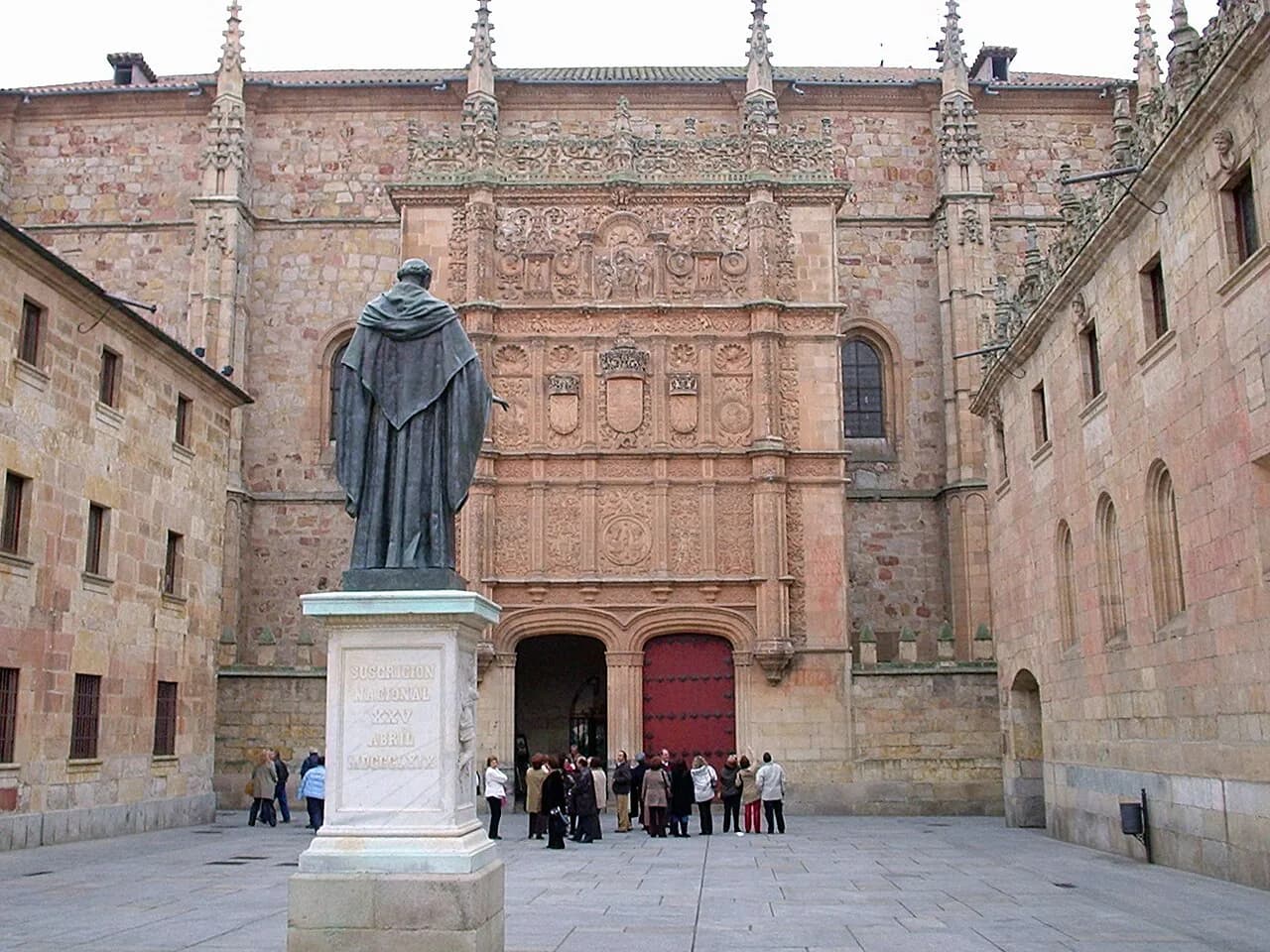
The university dates to 1218, when Alfonso IX founded it, and its prestige spread across Europe and into Iberoamérica. The portal describes the Edificio Histórico as a 14th-century building open to tourist visits, with a facade added in the early 16th century. Keep those two dates in mind as you look: the shell is medieval, the showpiece front is Renaissance.

Where the Historic Building sits, off the Patio de las Escuelas Menores
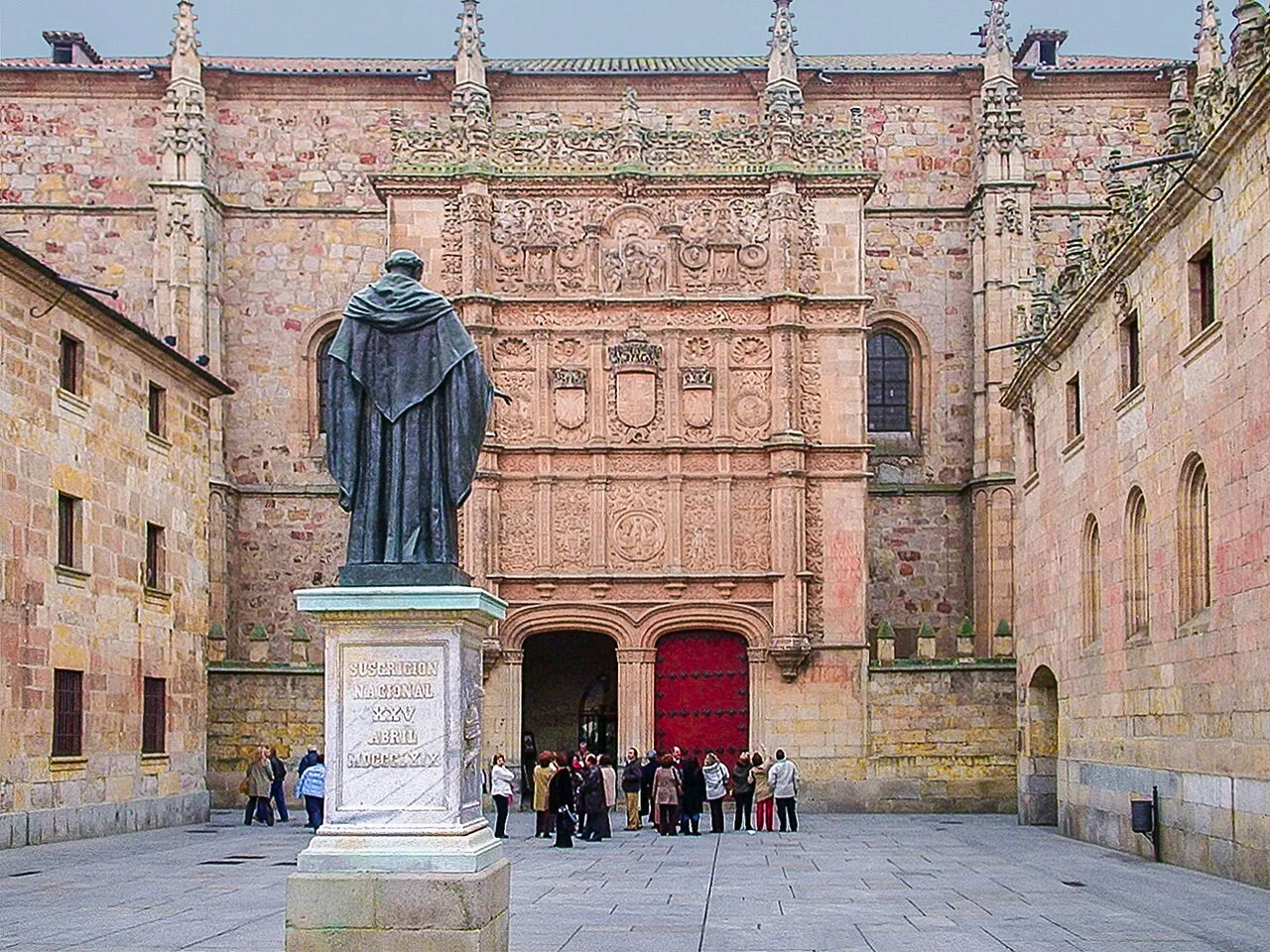
The visitor address is Patio de las Escuelas Menores, 1, Salamanca, a courtyard just south of the old centre's main square. Use the patio as your landmark rather than hunting for a street number on a busy shopping lane. From the Plaza Mayor it is a short walk, and from the Catedral Nueva it is only a few minutes further.
The building sits in the heart of the monumental quarter, so pedestrians, students and tour groups share the same narrow lanes. Arriving on foot is the sensible approach; the historic centre is compact enough that walking between sights beats moving the car. If you come by taxi, ask for the Patio de las Escuelas rather than the university in general.

The plateresque facade: what you are looking at
The facade on the Edificio Histórico dates from the early 16th century and is one of the most representative works of Spanish plateresque, the ornate style named for its resemblance to silversmith work. Look for the dense carving across the entrance rather than a single statue or medallion. The 14th-century stonework behind and around it is deliberately plainer, so the contrast between the two builds is part of the interest.
The carving repays a few minutes of close looking rather than a quick photograph, so stand back to take in the composition and then step close to pick out the detail. Midday light on the facade can flatten the relief, while morning and late afternoon light rakes across it. If the patio is crowded, circle back later in the day rather than queue for the perfect frame.
Inside the Historic Building: old lecture rooms and the aula of Fray Luis de León
The interior keeps the university's old classrooms, and the standout is the aula of Fray Luis de León, preserved as it was during the professor's lifetime. That room gives you a sense of what teaching looked like centuries ago: benches, plain walls, and the professor's chair as the focus. The other rooms continue the same theme, so read the labels rather than rushing through the sequence.
Because this is a historic interior rather than a modern museum, expect narrow stairs, stone floors and rooms that hold visitors in small numbers. Give the aula and the surrounding rooms around 45 minutes if you read everything. Keep quiet where a lecture or event is in progress.
The Escuelas Mayores and Escuelas Menores: how the two courtyards relate
The Escuelas Mayores are the older, grander part of the historic university, and the Escuelas Menores were the smaller preparatory school beside them. The tourist route runs through the Edificio Histórico, and the Patio de las Escuelas Menores gives you the courtyard setting as you arrive. Treat them as one ensemble rather than two separate attractions, and you will read the site more clearly.
The Patio de las Escuelas Menores is also a useful orientation point for the rest of the old town, since the university, cathedral and Plaza Mayor all sit within a short radius. Once you have found it, the surrounding lanes make more sense on the map. Use the courtyard as a meeting point if you are travelling as a group and splitting up.
How long to allow and how to fit it into a short break
Budget about an hour for the Historic Building, plus another 15 to 20 minutes for the facade and patio if you want to look properly. Add Plaza Mayor, Salamanca Cathedral and you have a comfortable half-day in the old centre. If you only have an afternoon in Salamanca, do the university first when queues are shorter, then the cathedral.
Salamanca suits a city break built around walking, so plan the university as one link in a loop rather than a separate excursion. Nearby, Casa de las Conchas is a short walk and makes an easy addition to the same afternoon. Keep the university visit for daylight hours, since the carved facade is the reason most people come.
Tickets, opening hours and closures: what to confirm
The university runs its own museum and tourist-visit page from its main site, and that is where any current timetable, ticket arrangements and closures are set out. The Castilla y León tourism portal also advises consulting the Escuelas Mayores for visiting details. Confirm the day's position before you walk over, especially in term time.
The Castilla y León tourism portal notes that it does not take responsibility for changes in the times and rates it reflects, so its entry is a useful cross-check rather than a booking tool. Check the university's own page for the latest position and for any booking requirement. If you are planning around a fixed train or flight, build in some slack.
Nearby: what else sits within a few minutes of the Historic Building
From the Patio de las Escuelas Menores you can reach the Plaza Mayor, the Catedral Nueva and the Casa de las Conchas on foot in a few minutes each. That tight cluster is what makes Salamanca work for a short break. Plan a loop so you are not backtracking through crowds; Plaza Mayor, Salamanca is an easy first or last stop.
The Casa Lis, the city's art nouveau and art deco museum, sits a little further out towards the river, so leave it for the end of the day if you want to add it. The other historic sights fit neatly around the university. Pick two or three and give them proper time rather than trying to see the whole old town in one afternoon.
Should you build your Salamanca morning around the university?
Yes, if you want one sight that explains why Salamanca matters: the plateresque facade, the old lecture rooms and the preserved aula of Fray Luis de León together make a compact, specific visit. It fits naturally between the cathedral and the Plaza Mayor and does not eat a whole day.
Confirm the day's opening times and ticket details on the university's visit page before you set out, then plan the rest of the loop on foot. Keep the university visit for daylight and leave the museum stops for later in the afternoon.