
Castillo de San Cristóbal: Santa Cruz de Tenerife's Buried Fortress

The Castillo de San Cristóbal is not a castle you walk around above ground. The fortress was demolished between 1928 and 1929 to make room for Plaza de España, and the visit today is an underground interpretation centre built around stretches of wall uncovered during works on the square in 2006. This guide covers what actually survives, where the entrance sits, how long to allow and how the remains fit into a morning in central Santa Cruz de Tenerife.
It suits travellers who want a short, city-centre dose of island history rather than a full afternoon out. The whole thing is compact, so treat it as one stop among several rather than the reason for a day.
What the Castillo de San Cristóbal is and why so little of it stands
Built from 1575 under Philip II, the fortress guarded the port of Santa Cruz for more than three centuries. It anchored a coastal defence line that later included the Castillo de San Juan and the Castillo de Paso Alto, and the growing city eventually outgrew it.
That demolition is the key fact for planning. Visitors expecting curtain walls and a tower should reset expectations: the site is a preserved fragment with an exhibition wrapped around it, and the reading of the place comes from the displays as much as from the stone.

Where it is: beneath Plaza de España
The site lies in the heart of Santa Cruz de Tenerife, at Plaza de España, 38201, in the main open space where the old town meets the port area. The interpretation centre is in the square itself rather than beside it, so use the plaza as your reference point rather than looking for a fortress facade.
Because the site is part of the square, there is no separate approach road to find. Arriving on foot through the centre brings you to the square itself, where the remains are presented as the Centro de Interpretación de las Ruinas del Castillo de San Cristóbal.

What survives: the excavated walls and the interpretation centre
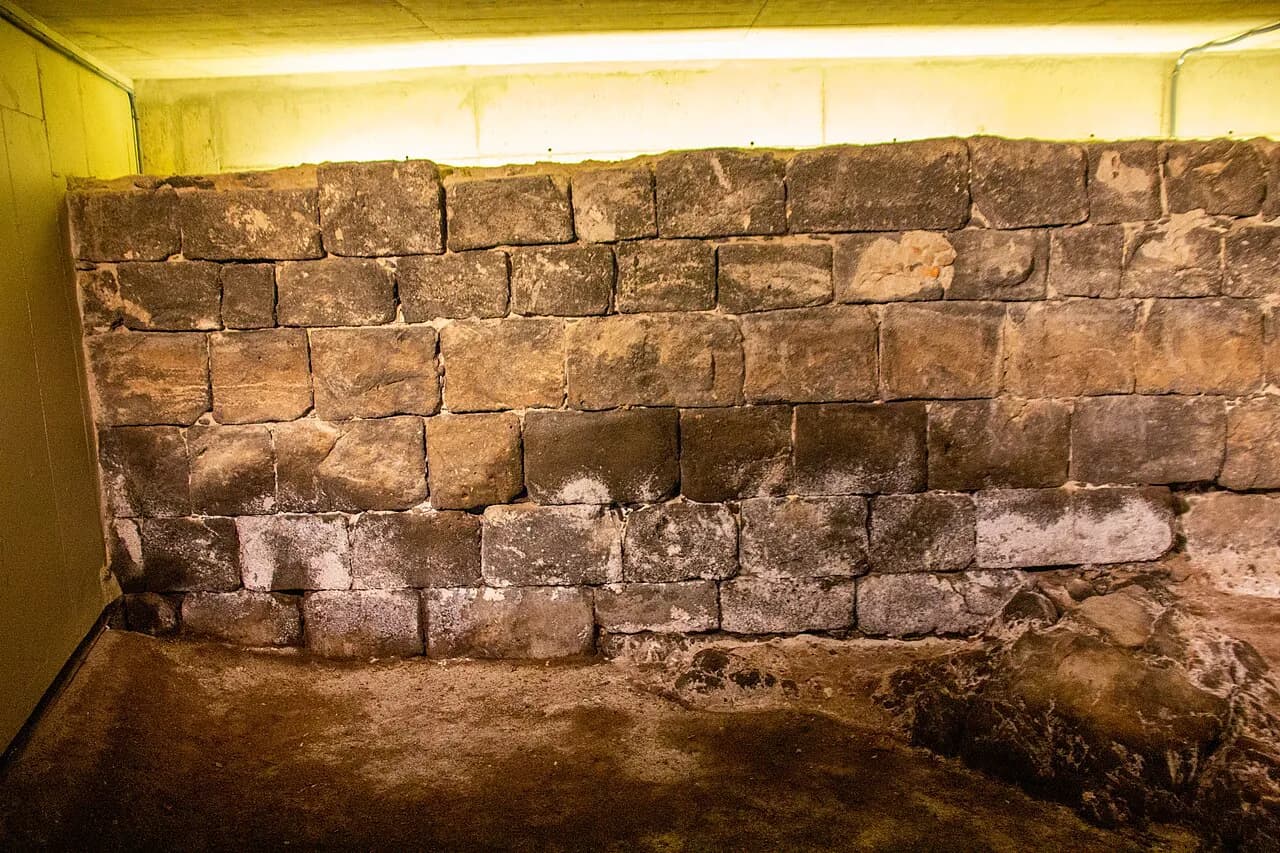
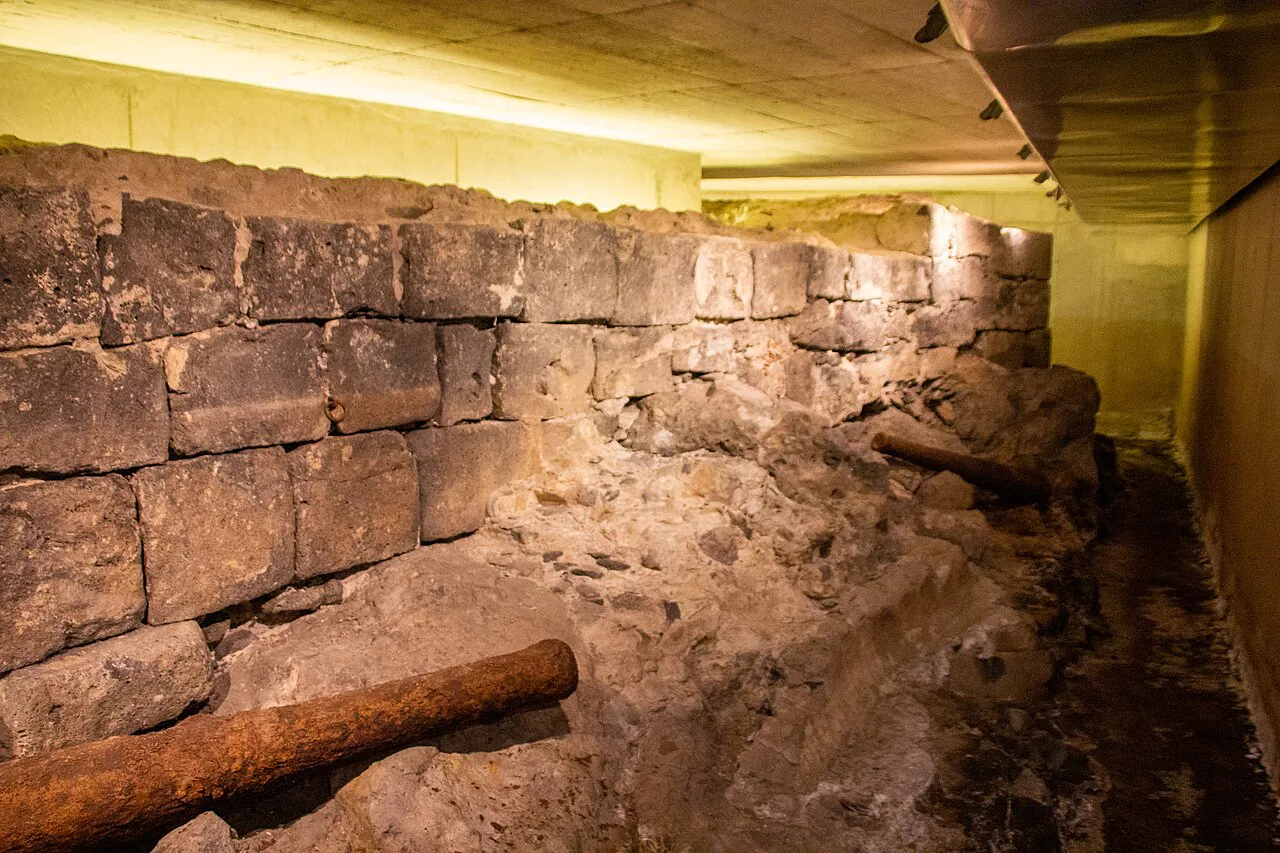
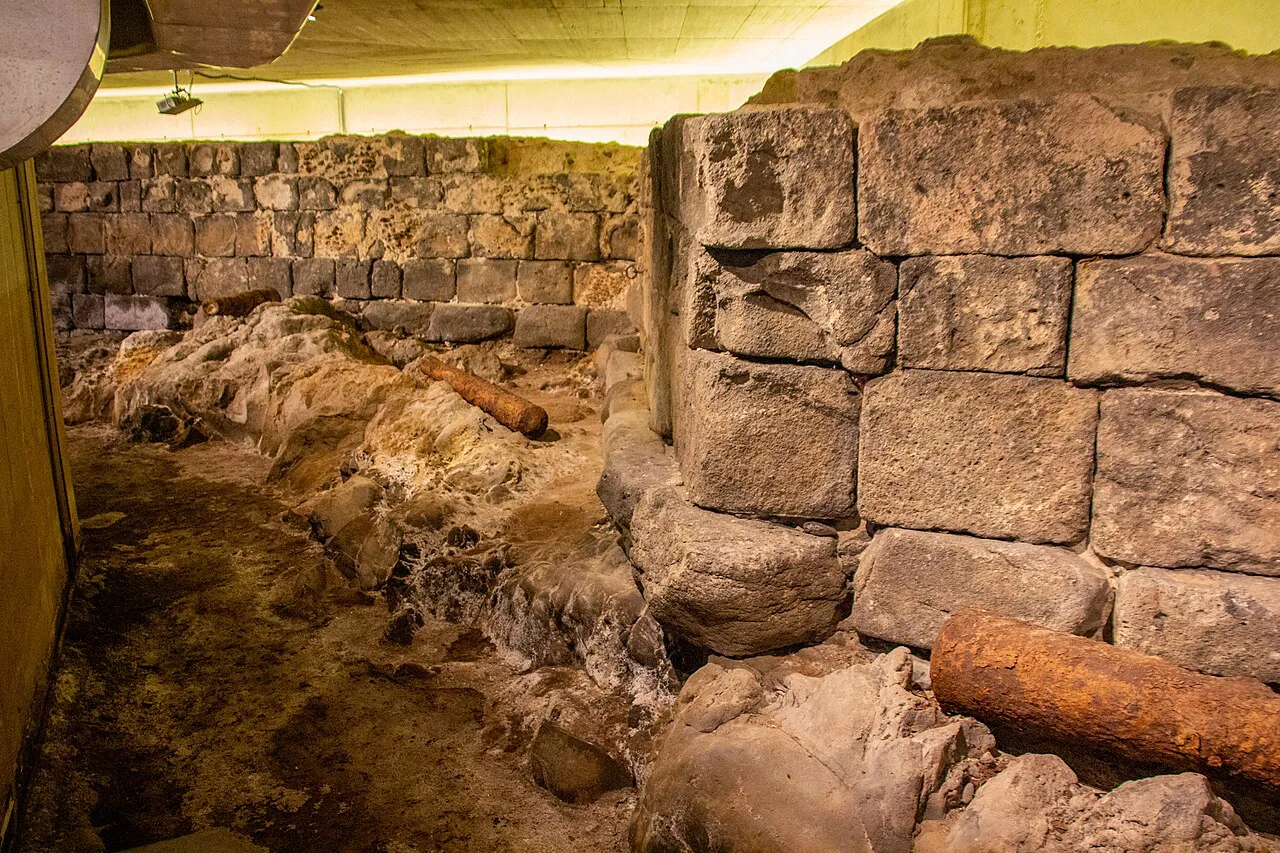
Remains of the castle walls came to light in June 2006 during restoration work on Plaza de España. Rather than cover them again, the city conserved the masonry and built an underground interpretation centre around it, so you descend to walk beside the actual base of the fortress.
The exhibition was prepared by the Museum of History and Anthropology of Tenerife and gives a monographic account of the castle from its construction in 1575 to its demolition in 1928. Expect the story told through panels, plans and the exposed structure itself, with the scale of the original fort explained against the walls you can see.
The 1797 attack and the loss of Nelson's arm
The fortress's most famous moment came in July 1797, when Horatio Nelson attempted an amphibious assault on Santa Cruz. Fire from the castle's defences struck Nelson and he lost his right arm; his fleet withdrew. The episode became a defining piece of local identity and is the site's central drama.
Earlier attacks frame the same story. Admiral Robert Blake's fleet was repulsed in April 1657, and John Jennings led another British squadron against the town in 1706, again without success. Seen in sequence, the three episodes explain why the castle mattered for so long.
Tenerife's wider coastal defence system
The displays set San Cristóbal within the island's broader defensive network rather than treating it as an isolated ruin. The Santa Cruz castle is explained alongside the Castillo de San Juan and the Castillo de Paso Alto, and the exhibition also covers fortifications scattered across the rest of Tenerife.
Only a few of those structures still stand, among them the Castillo de San Felipe in Puerto de la Cruz and the Castillo de San Miguel in Garachico. Both give you something the Santa Cruz site cannot: a complete fort you can walk around, on the north coast.
How long you need and how to see it without planning ahead
Budget around half an hour to forty-five minutes. The centre is small and the wall remains are viewed as part of a compact exhibition rather than a long circuit, so it slots easily into a short break.
Pair it with the square above and the surrounding streets of the old centre, so the fortress becomes one part of a two-hour walk rather than a destination on its own. If you are short of time, see the exposed walls and the Nelson section and move on.
Getting there and combining it with the centre
The site sits in the middle of Santa Cruz de Tenerife, so walk in from the bus or tram stops serving the centre and use the square as your reference point. Our guide to Santa Cruz de Tenerife Attractions maps the other sights within walking distance.
One obvious pairing is the Iglesia de la Concepción Santa Cruz de Tenerife, the city's oldest church, a short walk inland through the old streets. Another is the Auditorio de Tenerife on the waterfront, worth seeing from outside at the very least.
For a quieter contrast, the Parque García Sanabria lies further north-west and offers a shaded break from the streets. It is not next door, so treat it as a separate stop rather than an add-on.
Opening hours and tickets
The interpretation centre is listed as open Tuesday to Sunday from 10:00 to 18:00, so a Monday in Santa Cruz should not be built around it. Check the published schedule before you set out, because holiday hours can shift.
The Museum of History and Anthropology in La Laguna is a separate site with its own schedule, listed as Tuesday to Saturday 9am to 8pm and Sunday to Monday 10am to 5pm. Do not assume the two share timetables or a single ticket.
Also worth knowing: the Museum of History and Anthropology in La Laguna
The Museum of History and Anthropology in La Laguna is a separate museum in its own right, dedicated to the island's history and cultures. Its Casa de Carta exhibition shows period costumes and furniture, the Casa Lercaro displays trace the island's history through its different cultures, and an interactive activity there covers the remains of Castillo San Cristóbal.
La Laguna is a separate city with its own historic centre, so treat the museum as an outing rather than a stroll from Plaza de España. Take the tram from Santa Cruz to combine the two, and give the museum a couple of hours on top of the journey.
Getting there from Tenerife South airport
Tenerife South airport sits at the southern end of the island, well away from the capital, and the usual connection into Santa Cruz is by bus or hire car on the TF-1 motorway. Allow for a substantial transfer rather than a quick taxi hop, and check bus times for your arrival day.
Tenerife North airport is much closer to Santa Cruz and is the handier arrival point for a city break built around the capital. Whichever you use, the castle visit needs no more than an hour, so it fits around arrival and departure times.
Is the buried fortress worth your time?
Yes, if you are already in central Santa Cruz and want a compact, genuinely unusual piece of history: the chance to stand at the foot of walls that once guarded the bay, with the Nelson story told where it happened. No, if you are picturing a castle to climb, because the fortress above ground is gone and what remains is an underground exhibition.
Build it into a walk around Plaza de España and the old streets rather than making a special journey, and if you want the island's wider history, add the Museum of History and Anthropology in La Laguna as a separate outing with its own opening hours. Hours are the one detail most likely to change your plans.
Explore more Santa Cruz de Tenerife guides
Frequently Asked Questions
Can you still see the castle above ground in Santa Cruz de Tenerife?
No. The Castillo de San Cristóbal was demolished in the late 1920s to make way for Plaza de España. Surviving stretches of wall were uncovered during work on the square in 2006 and are now displayed at an underground interpretation centre.
How long does a visit to the interpretation centre take?
Allow roughly half an hour to forty-five minutes. The centre is compact and largely self-guided, so it fits easily into a morning in the city centre alongside the square and the nearby streets.
Was Nelson really wounded at Santa Cruz de Tenerife?
Yes. During the July 1797 assault on the town, fire from the castle's defences struck Horatio Nelson and he lost his right arm, after which his fleet withdrew. The episode is central to the exhibition.
How do you reach Santa Cruz de Tenerife from the airport?
From Tenerife South, the usual route is by bus or hire car along the TF-1 motorway, which takes a substantial part of the day's schedule. Tenerife North airport is much closer to the capital and is the handier arrival point for a city break.