
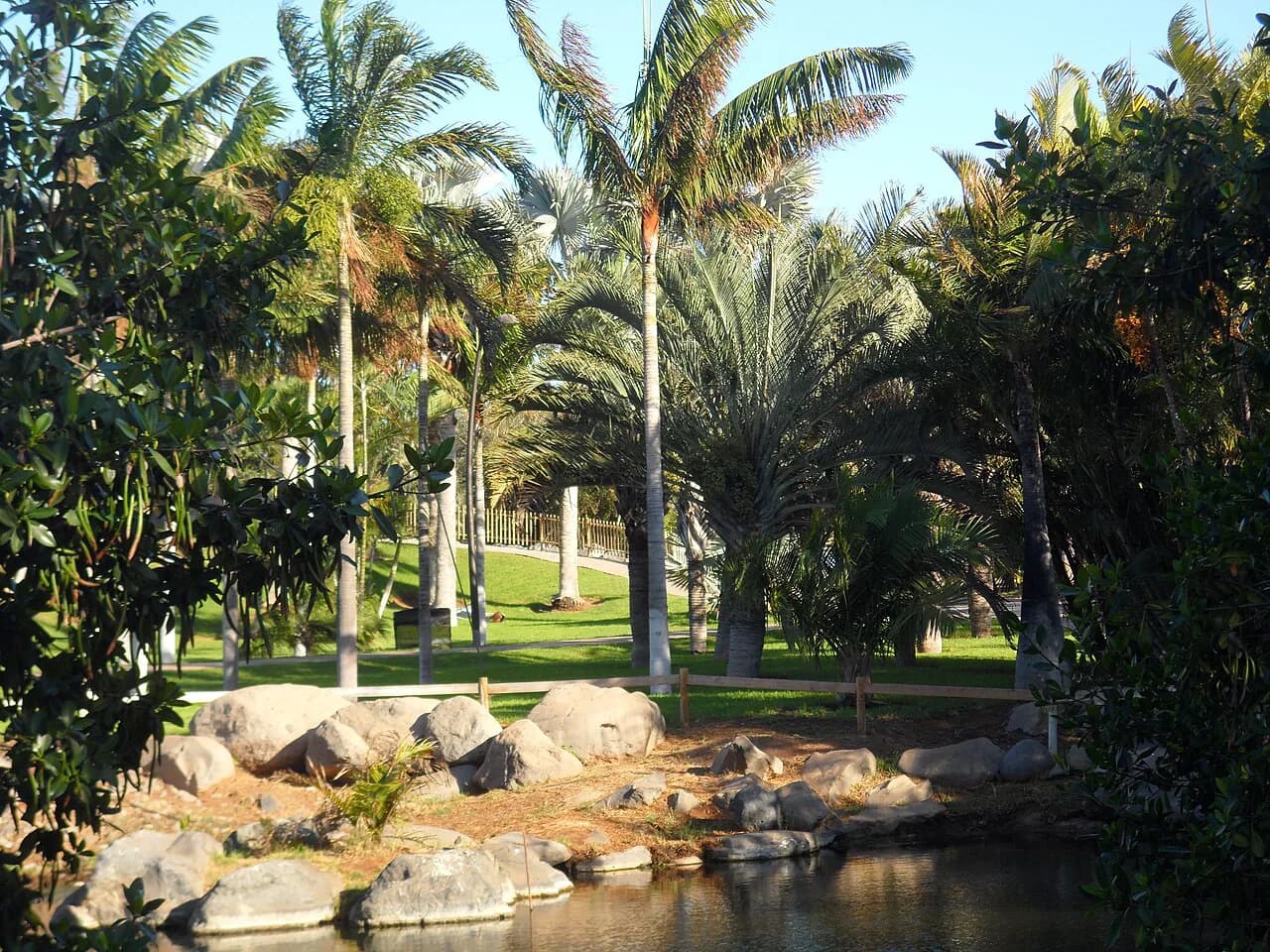
Palmetum Santa Cruz de Tenerife: what to see at the palm garden

The Palmetum is worth a half-day in Santa Cruz de Tenerife if you want palms rather than plazas: a 12-hectare botanical garden on Avenida de la Constitución holding Europe's largest palm collection, with more than 400 species grouped by where they grow in the world. It occupies the site of the old municipal landfill, reworked from 1996 and opened to the public in early 2014. This guide covers the zone-by-zone layout, the Papua New Guinea section added in late 2024, the miradors, how long to allow, tickets, house rules and parking.
What the Palmetum is and why it deserves a slot in Santa Cruz
This is a garden built around one plant family, and that focus is the reason to come. Because the beds are arranged by geographic origin, a single walk moves you from Caribbean and Latin American palms to African, Asian and Pacific species instead of the mixed borders of a general botanical garden. The transformation from landfill is part of the story too: works began in 1996 on the site of the former municipal tip, and the garden opened in 2014.
Treat it as a museum of living plants rather than a park. The garden's own rules describe the Palmetum as a museum of living beings and not a park or play area, which shapes how you use it: you follow the paths, you look, and you keep children under constant adult supervision. That makes it a calm, slow stop rather than a run-around stop for energetic children.

Where it is on Avenida de la Constitución
The garden sits on Avenida de la Constitución in Santa Cruz de Tenerife, on the coastal side of the city centre, within walking distance of the auditorium and the maritime edge of town. Coming from the centre, it is a straightforward walk down towards the water; a taxi is the sensible alternative if you are arriving with luggage or in the heat of the day.
If you are fitting the garden into a wider look at the city, it belongs with the seafront ensemble rather than with the old-town sights inland. The Auditorio de Tenerife is close by, and the city's central plaza is a short ride away, so the Palmetum works best as the green, open-air half of a day that starts indoors or in the old streets. See our guide to Santa Cruz de Tenerife Attractions: 6 Visitor Guides for the rest of the city.

How the garden is laid out by geographic zones
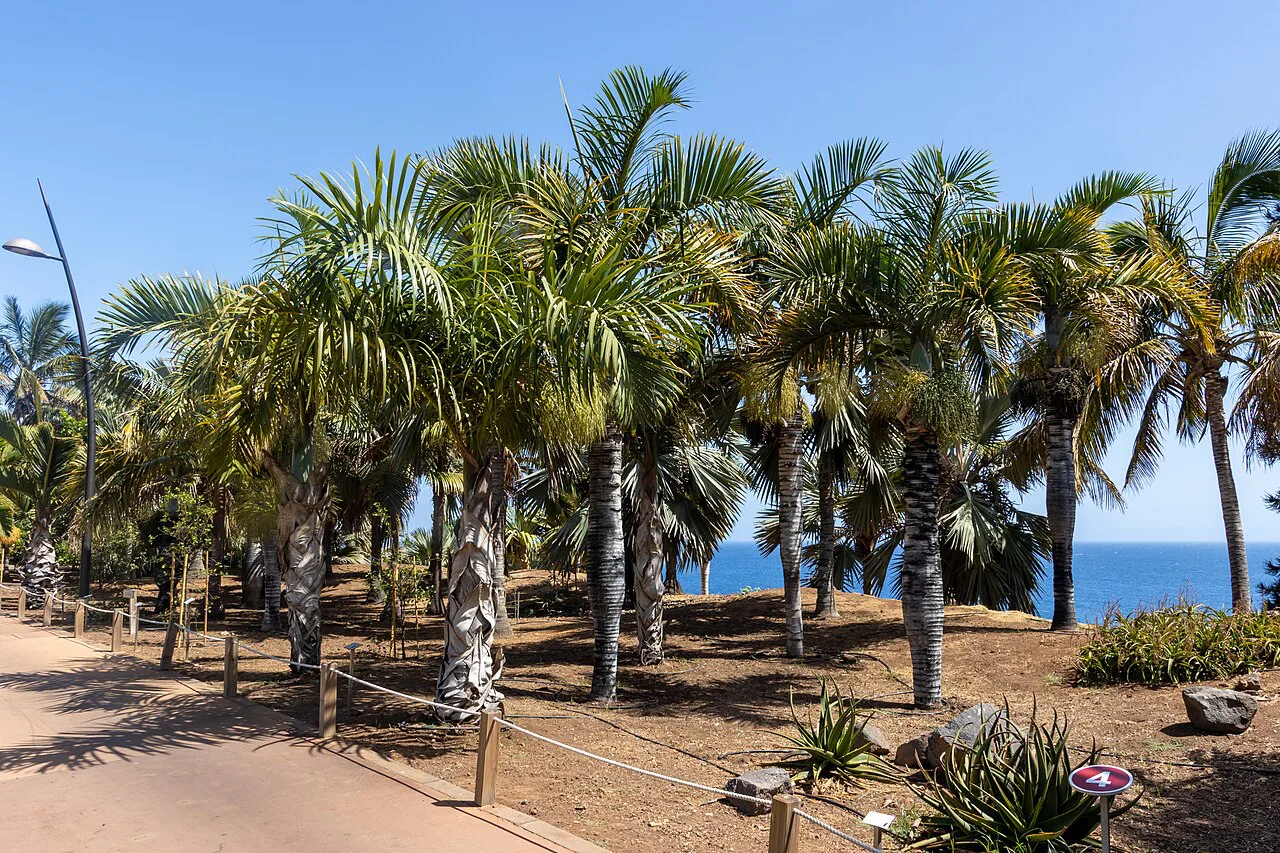
Plan your route as a circuit through continents rather than a wander. The collections are organised by biogeographic zones, so you can walk the Caribbean first, then the Latin American sections, then Africa and Asia, and finish in the Pacific. Reading the zone labels as you go turns the visit into something closer to a short course in where palms come from, and it stops the 12 hectares blurring into one long green corridor.
The newest reason to return is the Papua New Guinea section, which opened in late 2024 and added 1,600 square metres to the route. It brings in dwarf coconut palms and breadfruit trees, plus a lake and a point set up for watching birds. Anyone who visited before that date will find a genuinely new block of the garden rather than a reshuffled planting.
The palm collections, the lake and the birdwatching point
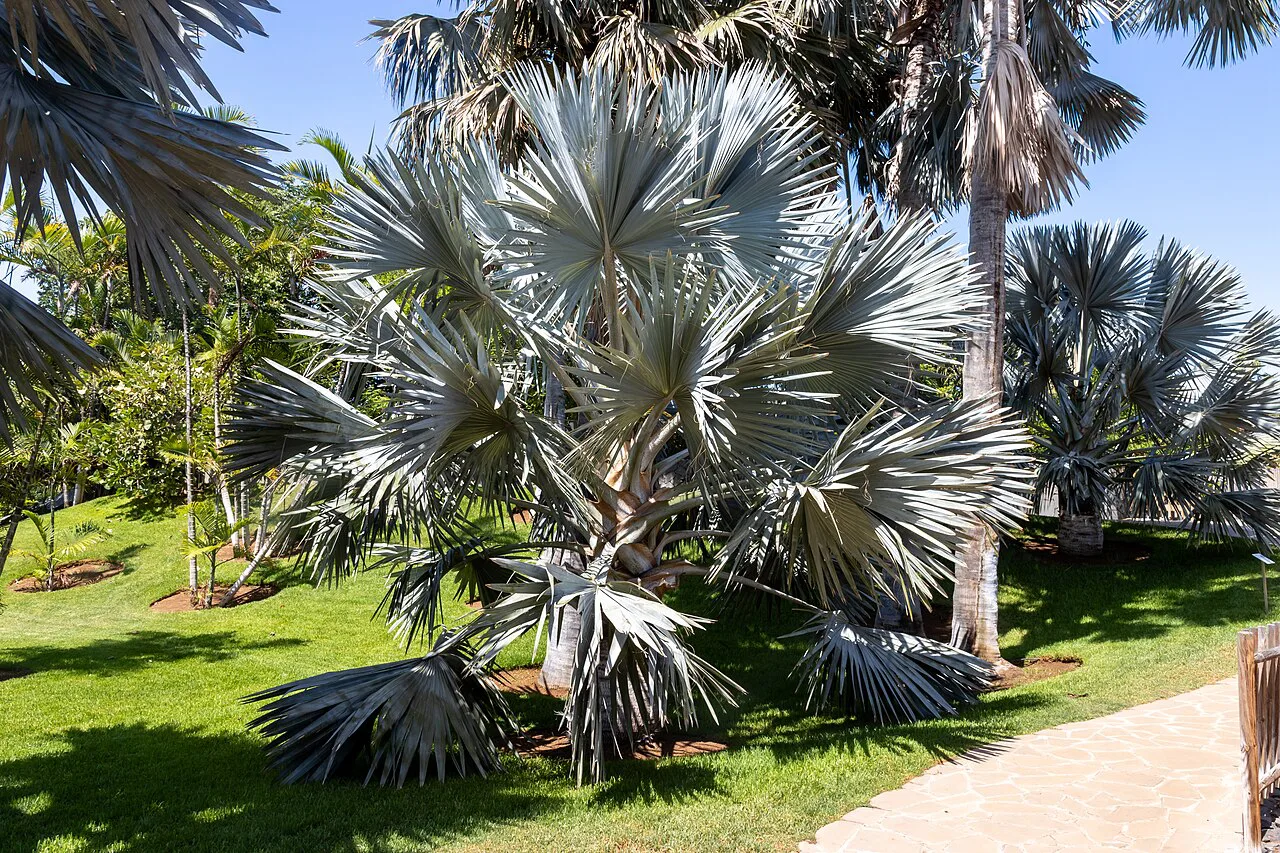
The headlines are the palms themselves, grouped by the regions they come from, which is what gives the garden its appeal. Look for the difference between the fan-leaved and feather-leaved groups as you move between zones; it makes the repetition of trunks and fronds legible. The lake in the Papua New Guinea area and the birdwatching point beside it add a second layer for anyone who carries binoculars.
Approach the birdwatching point quietly and early. The garden's own conduct rules ask visitors to stay on the paths and not to pick seeds or plant parts, and water inside the garden is not drinking water, so carry your own bottle. Those rules exist to protect the planting and the fauna, which is precisely what makes the birdlife worth pausing for.
Miradors over the sea and the city, plus facilities
Scattered along the route are miradors with views over the sea and back towards the city, and they are the natural places to break the walk. Use them to pace yourself: the garden is exposed in parts, and a shaded viewpoint is a better rest stop than pressing on to the next zone. Public toilets, a cafetería and drinks machines are available inside the grounds.
Do not plan on eating a packed lunch on a bench. Picnics are not allowed anywhere in the garden, so the cafetería is your only option inside the walls and you should eat properly before or after your visit. Photography for anything beyond ordinary holiday snaps requires permission from the garden's management and payment of the corresponding fee at the ticket office.
How long to allow and the best time of day
Allow at least three hours if you want to see the garden calmly, and treat that as the minimum rather than a generous estimate. The route is long, the zones are spread across 12 hectares, and the miradors and the lake all pull you off the main path. A rushed hour will get you a few palms and a view; three hours gets you the layout.
Go in the morning. A morning slot avoids the hottest hours and any queues, which matters in a coastal garden with limited shade in the newer sections. Carry water, since the garden's water is not drinkable, and wear a shirt or T-shirt, as entry without one is refused.
Tickets and inclusive visits
Entry is paid, at the ticket office, and you must keep your ticket for the whole visit. Payment covers access for a visit to the botanical garden; any other activity needs express authorisation.
Inclusive visits have run on Saturdays, with the option of a sign-language interpreter. Confirm the current arrangement with the Palmetum before you build a morning around it, since a recurring programme can shift, and check the Palmetum's site for opening hours before you go.
House rules that catch visitors out
The rules are stricter than at a normal city park and they are enforced. Bicycles and skates are not allowed in, nor are ball games or anything else that risks the planting or disturbs the fauna, and smoking and vaping are banned throughout the grounds. Assistance dogs are the only animals admitted.
Children must be supervised by an adult at all times, and you must stay on the marked path rather than stepping into beds for a photograph. Staff can suspend the visit of anyone breaking the rules. None of this is onerous, but it is worth knowing before you arrive with a football or a dog.
Getting there and parking
Parking is the practical trade-off of a Palmetum visit. Street parking around the outside of the site is difficult, so the easiest option is the underground garage on the premises itself; drive straight in rather than circling the surrounding streets. That choice costs a little money but saves a lot of time on a hot morning.
Without a car, the garden is a walk or a short taxi ride from the centre of Santa Cruz de Tenerife, and it pairs naturally with the seafront. If you are spending the day in town, start at the Plaza de España, work through the old streets, and finish at the Palmetum while the light is still soft.
Nearby in Santa Cruz after your visit
Once you leave the garden, the city's older sights are close enough to combine. The Iglesia de la Concepción is the historic parish church of the original settlement, and the Castillo de San Cristóbal keeps the remains of the town's defensive past below ground. Both are compact stops that fit an afternoon after a morning among the palms.
For a slower finish, head inland to the Parque García Sanabria, the city's main central garden, with sculptures and shaded walks. It makes a deliberate contrast with the Palmetum: one is a collection organised around palms, the other a civic park for lingering. Together they cover the green side of Santa Cruz in a single day.
Planning your Palmetum visit
A morning here suits anyone who wants one unhurried, well-labelled green space and is happy to follow paths rather than lounge on grass. Arrive early, use the underground garage if driving, and give the zones three hours. It is a poor fit if you need somewhere children can run and eat a picnic, because neither is allowed here.
Check the Palmetum's own site for current opening hours and the status of the Saturday inclusive visits before you go, and buy your ticket at the office on arrival.
Frequently Asked Questions
Is the Palmetum good for children?
It is a museum of living plants rather than a play area. Children are welcome but must stay under constant adult supervision, ball games are not allowed, and picnics are banned, so families should plan a shorter, calmer visit and eat elsewhere.
Can you park at the Palmetum?
Yes. There is an underground garage at the garden itself, which is the easiest option because parking on the surrounding streets is difficult. Driving straight into the garage saves time on a hot morning.