
Segovia Aqueduct: What to See and How to Visit

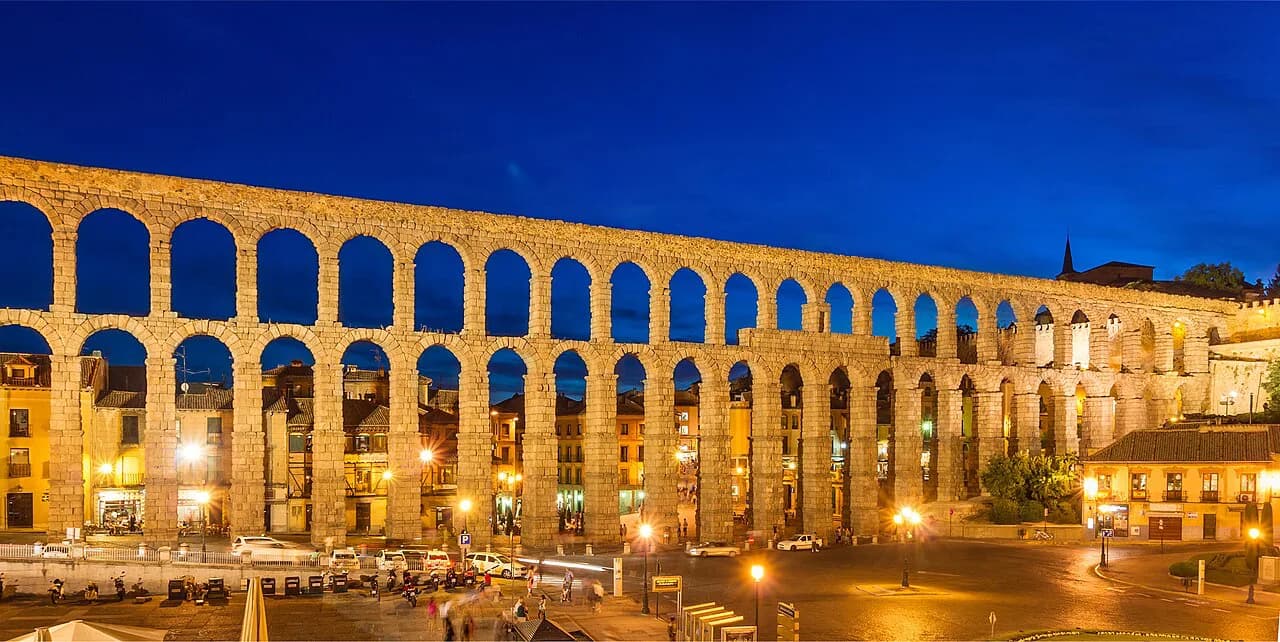
The Aqueduct of Segovia is a free, open-air Roman monument, and the Plaza del Azoguejo is where you measure it: almost 29 metres of granite blocks stacked without mortar at the point where the arcades cut through the city. You do not buy a ticket or queue at a gate to see it; you walk beneath and alongside it, then decide whether to add any of the paid monuments that sit within minutes. This guide covers what the structure is, where to stand, how the route works on foot, how much time to allow and how it slots into a Segovia break.
Granite blocks, no mortar: what the structure actually is
The aqueduct is built of granite sillares laid without argamasa — coursed blocks that hold themselves in place by weight and cut rather than by any binding agent. That absence of mortar is the detail worth carrying away: the joints you see between blocks are simply dressed stone meeting dressed stone. Stand at the Azoguejo and the double-tier arcade rises almost 29 metres overhead, with the pillars set on sturdy bases at street level.
The official Segovia tourism site lists the Acueducto alongside the Catedral, the Real Alcázar and the Real Casa de Moneda as the city's headline sights, which tells you how central it is to any visit. Treat it as the anchor of a morning rather than a stop squeezed between museums. If you want the wider set of monuments laid out, the main Segovia Attractions: 6 Visitor Guides page maps them against each other.

Where it stands and how to reach it on foot
The aqueduct runs into the historic centre along the Plaza del Azoguejo, the open square at its foot, and continues uphill towards the Plaza Mayor. If you arrive on foot from the old town, you meet it from above: walk down Calle Real or the streets off the Plaza Mayor and the arcades appear framed by buildings before the square opens out. Coming from the bus or train side of the city, the Azoguejo is the natural first encounter because it faces the lower historic town.
The centre is compact and pedestrian in the streets around the monument, so shoes matter more than transport. The official tourism site publishes maps, leaflets and a planifica tu visita section covering how to arrive and how to move around the city.

Can you walk on the aqueduct in Segovia?
No — you walk under and beside the aqueduct, not along its top. The water channel sits in the upper tier, far above street level. The visitable ground is the square and the streets the pillars march through, which is why the monument rewards slow circling rather than a single vantage point.
A dedicated walk does exist, but it follows the water's source rather than the arcades. Segovia tourism has run a special guided visit to the azud, the intake on the Río Frío, departing from Revenga and heading into the Sierra de Guadarrama — in 2020 that ran on 11 October, lasted about four hours and carried a flat 10 € fee. Treat those details as history, not a booking promise: check the events calendar on the tourism site for what is running now.
Does it still carry water?
The channel you see overhead is a real conduit, and the aqueduct's purpose was always to bring water into the city from the sierra. What you will not find is a spout pouring at the Azoguejo; the structure is a monument in the middle of a working city, not a fountain display. Read the arcades as infrastructure — a gradient carried on stone legs across a dip in the land — and the engineering becomes the attraction.
How it was built, and the legend
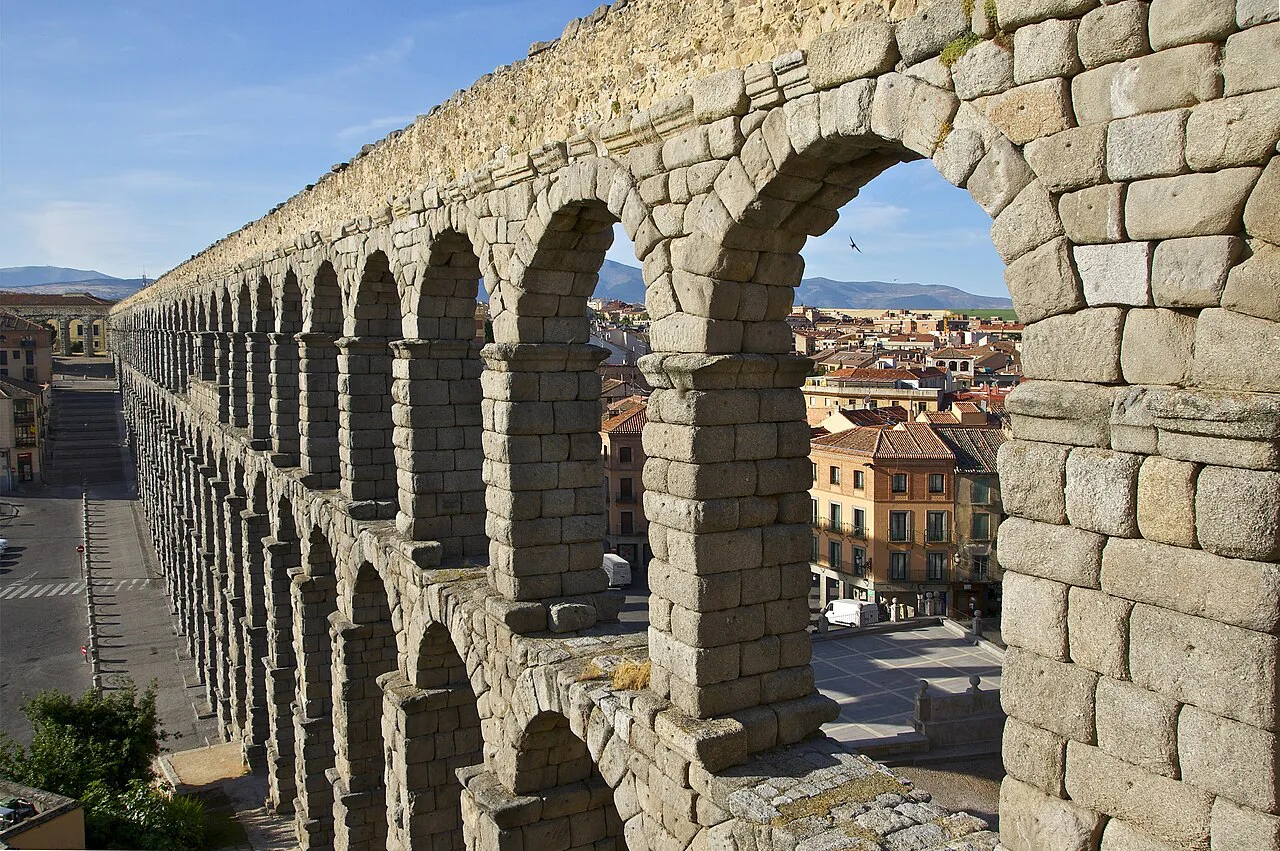
The construction answer is visible in the fabric: granite quarried and dressed into blocks, lifted into piers and arches that lean slightly inward, with the taller section carried on two tiers of arcades where the ground falls away at the Azoguejo. The blocks are laid dry, so the whole thing relies on precision cutting and the load path down through the piers into their bases.
Ask in Segovia about who built it and you get the folk answer before the Roman one: the devil is said to have raised it overnight in exchange for a soul. It is a good story to know while you stand under the arches, and it says something about how completely the structure dominates the city's imagination.
What to see along the route
Start at the Azoguejo for the height and the full double arcade, then walk uphill and watch how the piers shorten as the ground rises, until the channel runs level with the rooftops. Look at the bases of the pillars where centuries of street traffic have worn the stone, and at the joints between blocks for the absence of mortar. The stretch beside the Plaza Mayor is the calmer end, with the arcade threaded between buildings rather than standing free.
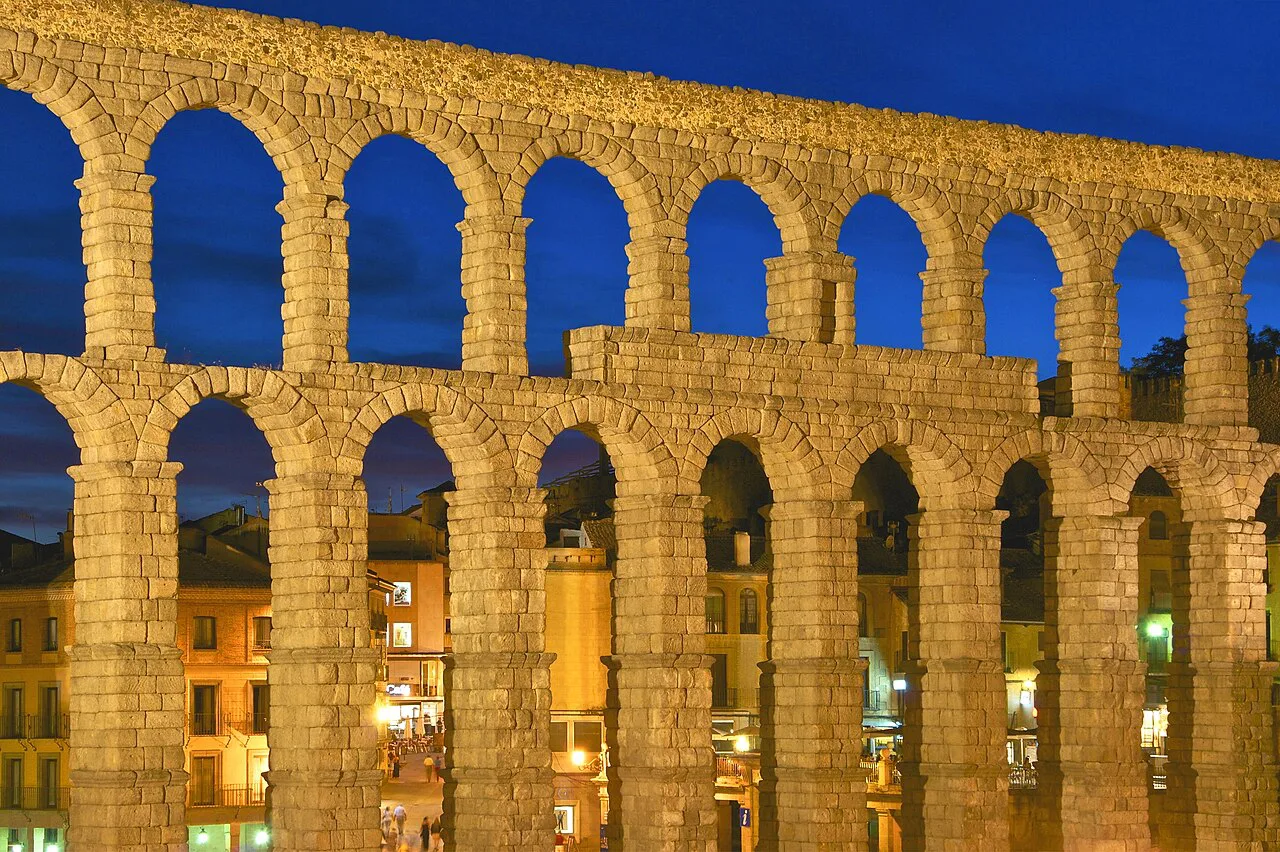
Photography is easiest from the open width of the Azoguejo, where you can back off far enough to fit the arcade in frame. Closer in, the pillars themselves frame the old town streets behind them, which is the shot that shows the aqueduct as part of the city rather than an isolated ruin.
How much time to allow
Allow about an hour for the aqueduct itself, walking the Azoguejo, following the arcade uphill and pausing at the viewpoints along the way. That is enough to see it from both ends and read the structure without rushing, and it leaves the rest of the day free for the paid monuments. If you only want the classic view, fifteen minutes at the Azoguejo covers it.
For quieter viewing, aim for early morning on a weekday, when the square is at its emptiest and the light falls along the arcade rather than behind it. Spring and autumn give the most comfortable conditions for lingering outdoors, while midday in summer on this exposed granite is better spent inside a monument.
Nearby: the Alcázar, the cathedral and the old town
From the aqueduct the historic centre stacks up conveniently: the Plaza Mayor sits a short climb above, the Catedral de Segovia stands beside it, and the Alcázar waits at the far end of the old town. All three are ticketed interiors with their own opening times and admission prices, which the tourism site publishes in its monument and museum timetable section.
The Alcázar of Segovia is the big set-piece at the western tip of the old town, a fortress-palace with towers that rewarded a separate visit rather than a glance. The cathedral, raised on the Plaza Mayor, is the other anchor of the upper town and the natural pairing with a morning at the aqueduct.
Which Segovia morning to build around the aqueduct
Build the morning around the Azoguejo, walk the arcade uphill to the Plaza Mayor, then choose one paid monument rather than trying to collect them all. One hour on the aqueduct plus one interior is a realistic half-day, and it keeps the free spectacle and the ticketed sights in proportion.
Explore more Segovia guides
Frequently Asked Questions
Is the Aqueduct of Segovia free to visit?
You view the aqueduct from public streets and squares, so there is no gate or ticket for the monument itself. The nearby monuments such as the cathedral and the Alcázar charge separately, and their published admission details are the ones to check before you go.
How tall is the Aqueduct of Segovia at its highest point?
At the Plaza del Azoguejo the structure reaches almost 29 metres, which is where most visitors gauge its scale. The arcades get lower as the ground rises towards the Plaza Mayor.
How do you reach the aqueduct from the rest of Segovia?
The Plaza del Azoguejo at its foot is the natural arrival point from the lower town, and it is a short uphill walk from the Plaza Mayor in the historic centre. Streets around the monument are pedestrian, so the final approach is on foot.