
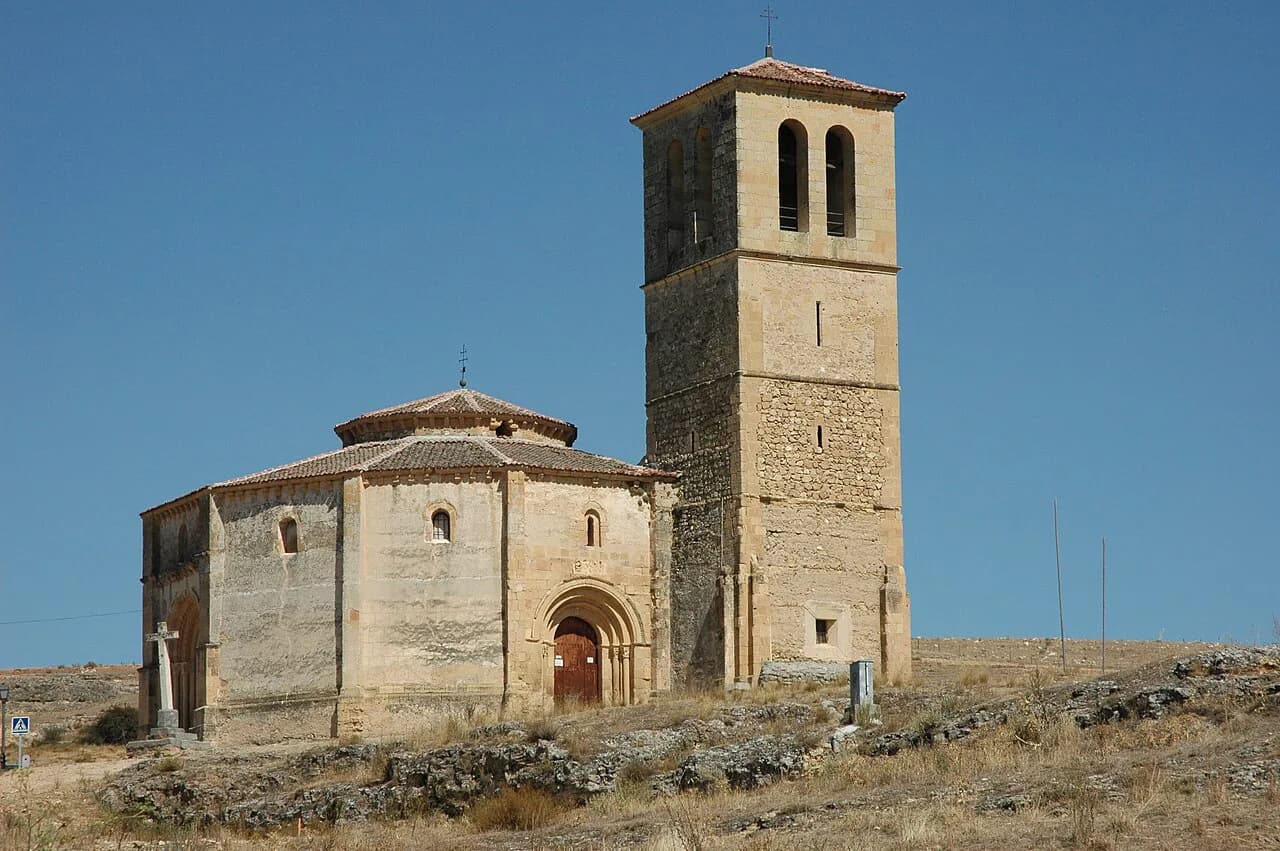
Vera Cruz Church, Segovia: A Twelve-Sided Romanesque Chapel

The Church of Vera Cruz is a twelve-sided Romanesque chapel on the Carretera de Zamarramala, just outside Segovia's old town, and it takes about an hour to see properly. It was founded in 1208 by the Knights of the Order of the Holy Sepulchre, though popular tradition has long credited the Templars, and the building's odd geometry and fortified look are the reasons it draws visitors away from the aqueduct for an afternoon.
This guide covers where the church sits, how to get there from the old town, what to look for on the austere exterior and inside the central edicule, and how to slot it into a Segovia break alongside San Marcos and the old-town sights.
What the Church of Vera Cruz is
Vera Cruz is a central-plan church: a dodecagonal shell wrapped around a two-storey edicule, a small temple-like structure at the centre that supports twelve round arches and the vaults over the ambulatory that runs between it and the outer wall. Conceived as a reliquary church rather than a parish for ordinary worship, it still belongs to the Order of Malta, whose Castile delegation is the contact point for visits.
Turismo de Segovia lists it as a Site of Cultural Interest and describes the interior as austere and moving, with two storeys, a Muslim-style ribbed vault and traces of paintings. That combination of a defensive-looking exterior and a jewel-like centre is what makes the building worth the walk out of the city.

Where it is: the Zamarramala road, outside the walls
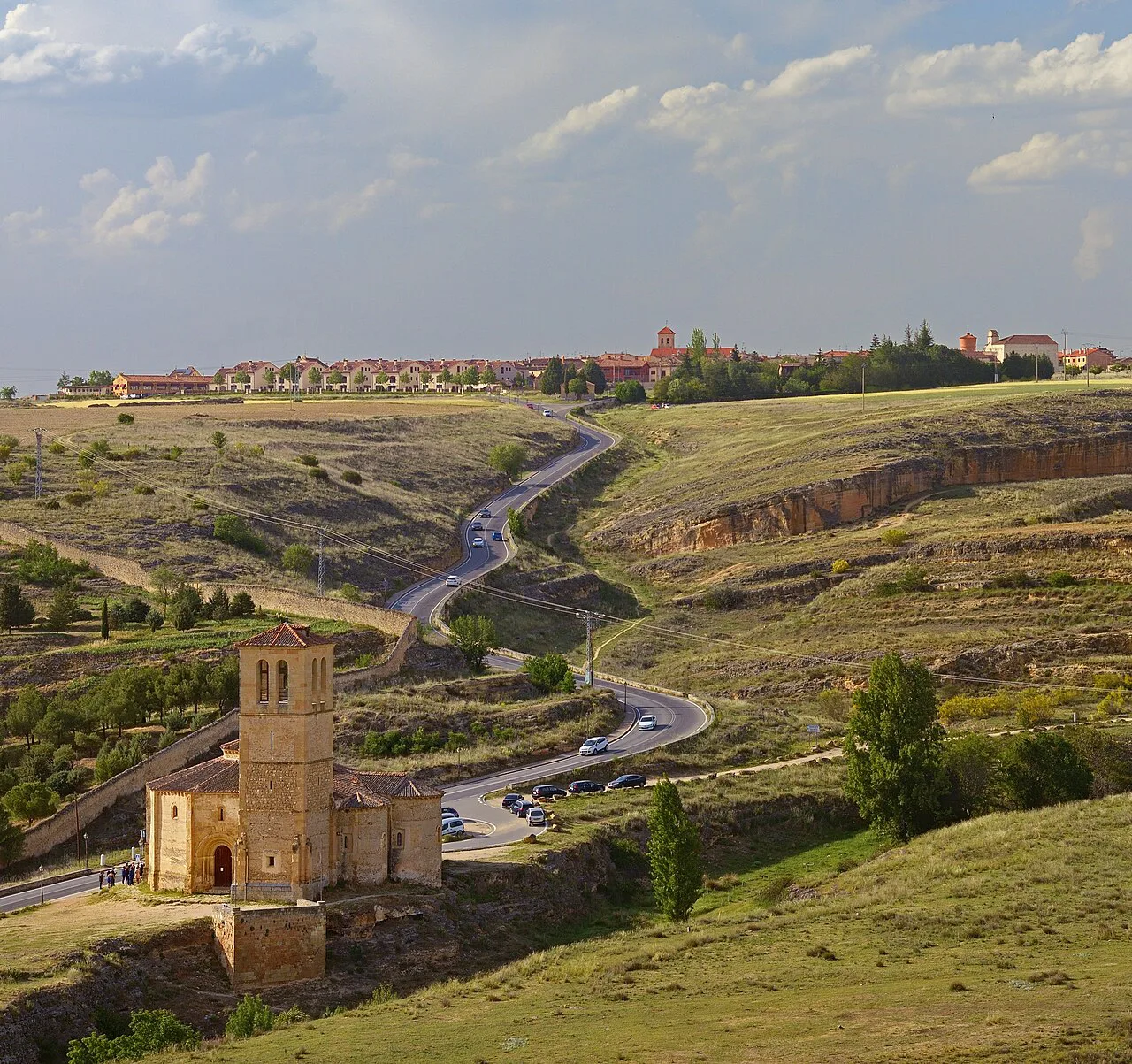
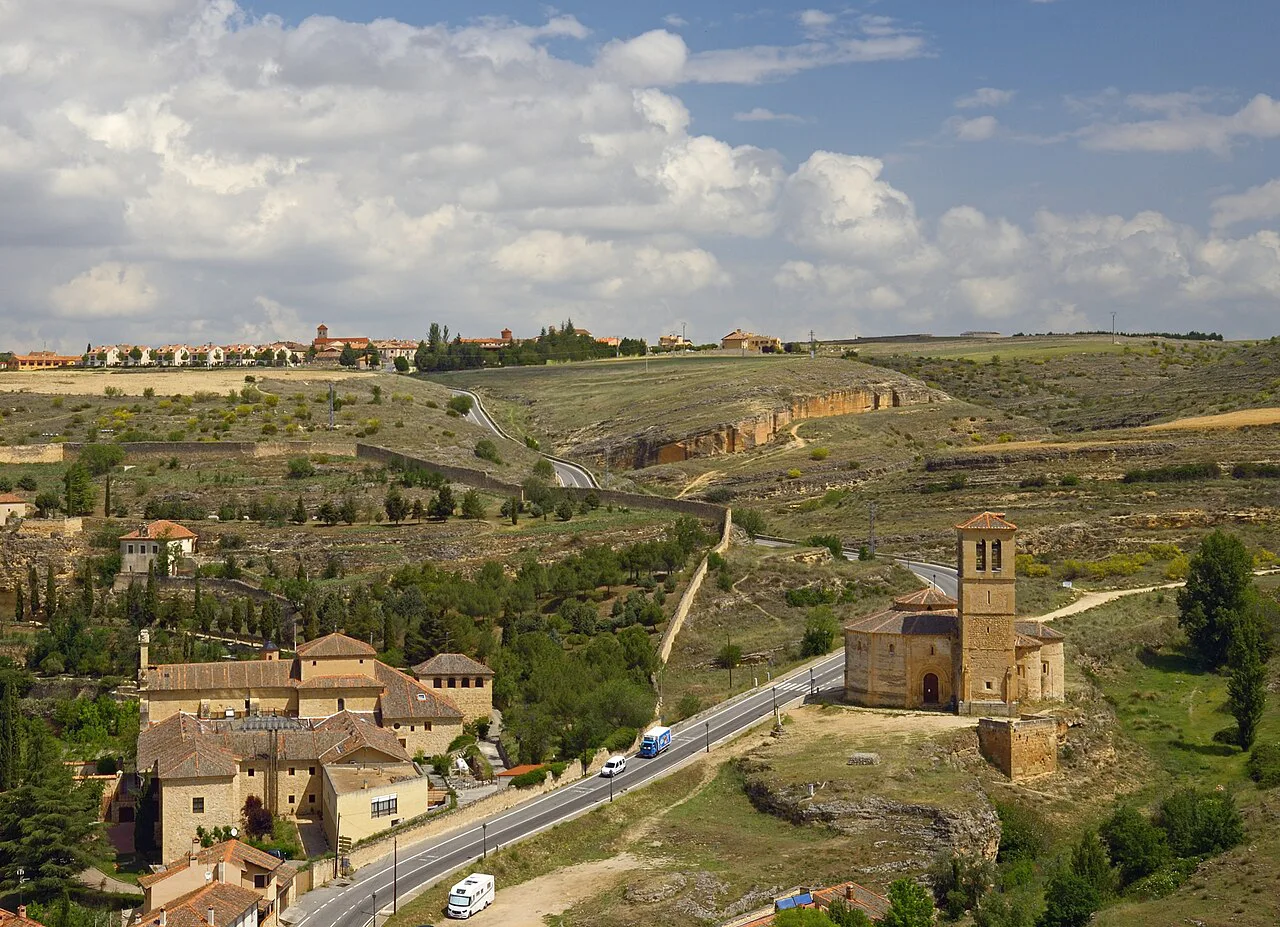
The church stands on the Carretera de Zamarramala in the San Marcos suburb, on the road out towards the village of Zamarramala, isolated on a rocky slope and historically always outside the city walls. That extramural setting explains much of its introverted, bastion-like character: this was never a building woven into the streets of the old town.
The official listing gives the address as Carretera de Zamarramala, s/n, 40003 Segovia, with a telephone number and email for the Order of Malta's Castile delegation. Note the location before you set out: it is a separate stop from the cathedral and Plaza Mayor, not something you pass on a circuit of the historic centre.

How to get there from the old town
From the aqueduct or the old town, the simplest approach is on foot or by local bus along the Zamarramala road; the church sits beyond San Marcos, out past the Acueducto Romano de Segovia. Allow for the slope and the exposed position, and treat the walk as one leg of an afternoon rather than a quick detour.
Opening times and admission prices are set by the Order of Malta and are not fixed in tourist listings, so confirm them through Turismo de Segovia before making the walk. The Turismo de Segovia page for the church carries the contact details and a link to current visiting information.
The exterior: twelve sides, three apses and arrow slits
Outside, the church reads as a twelve-sided polygon of rough calicanto masonry, its corners reinforced with buttresses and its surfaces almost undecorated. Three semicircular apses face east, with a later sacristy added against the north side showing some Mudéjar traits, and a square bell tower rises from the volume.
Some guides call the plan octagonal because only eight sides are visible, four being hidden by the tower and the triple apse, but the geometry is dodecagonal. The small openings in the walls look more like arrow slits than windows, which is why the building is often compared to a fortress rather than a church.
There are two doorways, one to the west and one to the south. The west portal is the principal one, set under a projecting tiled eaves canopy with corbels and metopes that tie it to the wider Romanesque tradition of Segovia, and it is the detail to look at before you go in.
Inside: the edicule, the arches and the vault
Inside, the surprise is the two-storey edicule at the centre, a small temple supporting twelve round arches from which the vaults of the ambulatory spring. The axis from the main entrance terminates in three side chapels acting as an apse, and the effect is of a building designed around a relic rather than around a congregation.
Turismo de Segovia notes the ribbed vault of Muslim style and surviving traces of painting, so look up rather than only at eye level. The interior is small; most of your time will be spent reading the space rather than covering distance.
Templars or the Holy Sepulchre?
The Templar association is a legend that hardened into fact after the Segovian chronicler Diego de Colmenares attributed the foundation to the order in 1636. Since 1919 the prevailing view has been that the church belonged to the Knights of the Holy Sepulchre, supported by an internal inscription naming the church of the Holy Sepulchre and by double-barred crosses, the order's symbol, visible outside and found in restorations, though these crosses may be later additions.
The architectural argument rests on comparisons with other central-plan churches associated with the Holy Sepulchre, including Torres del Río and Eunate in Navarre, whose plans are polygonal though octagonal rather than twelve-sided. The Templar church at Tomar in Portugal has sixteen sides and is evidently similar, but the Segovian building's closest conceptual model is the rotunda and edicule over Christ's tomb in Jerusalem.
From Santo Sepulcro to Vera Cruz: the relic
The church was consecrated on 13 April 1208 as the Church of the Holy Sepulchre, and a slab inside records the dedication. In 1224 Pope Honorius III donated a fragment of the True Cross, the Lignum Crucis, and the church took its later name of Vera Cruz, the True Cross, from the relic.
Ownership passed to the Order of St John of Jerusalem, Rhodes and Malta in 1531. The church later served the nearby village of Zamarramala as a parish, then fell into disrepair across the eighteenth, nineteenth and twentieth centuries before being restored in 1949 by the architect Cabello y Dodero and transferred to the Order of Malta.
Rock-cut tombs in the slope
The rocky, bare slope around the church is pitted with tombs excavated into the stone, a detail worth noticing on the approach. It reinforces the funerary, relic-centred purpose of the building and gives the setting a character quite different from the streets inside the walls.
Because the church sits alone on this slope, there is little shade and no urban cover; on a hot inland afternoon, plan the visit for the earlier or later part of the day. The exposed position also means the walk back is as long as the walk out.
How long to allow and what to combine it with
Allow about an hour at the church itself and around two hours for the round trip on foot from the old town, more if you linger at San Marcos on the way. Vera Cruz is best treated as a half-afternoon out of the centre rather than a stop squeezed between the cathedral and the Alcázar.
If you are working through the old town on another day, the Casa de los Picos, the cathedral and the Plaza Mayor sit within a short walk of one another, so keep the walled centre for a separate block of time. The full set of Segovia Attractions: 6 Visitor Guides helps you plan which days take which sights.
Is Vera Cruz worth the walk out of town?
Yes, if you want the strangest Romanesque building in Segovia rather than another stop on the old-town circuit. The twelve-sided plan, the central edicule and the Templar-vs-Holy-Sepulchre story give it a character no other monument in the city matches, and an hour is enough to take it in.
Check the visiting arrangements through Turismo de Segovia or the Order of Malta before setting out, since the church is not a through-route sight and a wasted walk is a real risk. Pair it with San Marcos on the way back and leave the Alcázar de Segovia and the Segovia cathedral for the walled centre.
Frequently Asked Questions
Do I need to book to visit the Church of Vera Cruz?
Booking arrangements are set by the Order of Malta, which owns the church. Contact the delegation through the Turismo de Segovia page before travelling, particularly if you are making a special trip from the old town.
Why do some guides describe the Church of Vera Cruz as octagonal?
Only eight of the twelve sides are visible from outside, because the tower and the three apses mask the rest. The underlying plan is a dodecagon, and that distinction is one of the details worth knowing before you look at the building.
Are the Knights Templar actually connected to Vera Cruz?
The Templar link is a legend popularised by a seventeenth-century chronicler. The dedication inscription, the double-barred crosses and the comparison with other Holy Sepulchre churches point to the Knights of the Holy Sepulchre as the founders in 1208.