
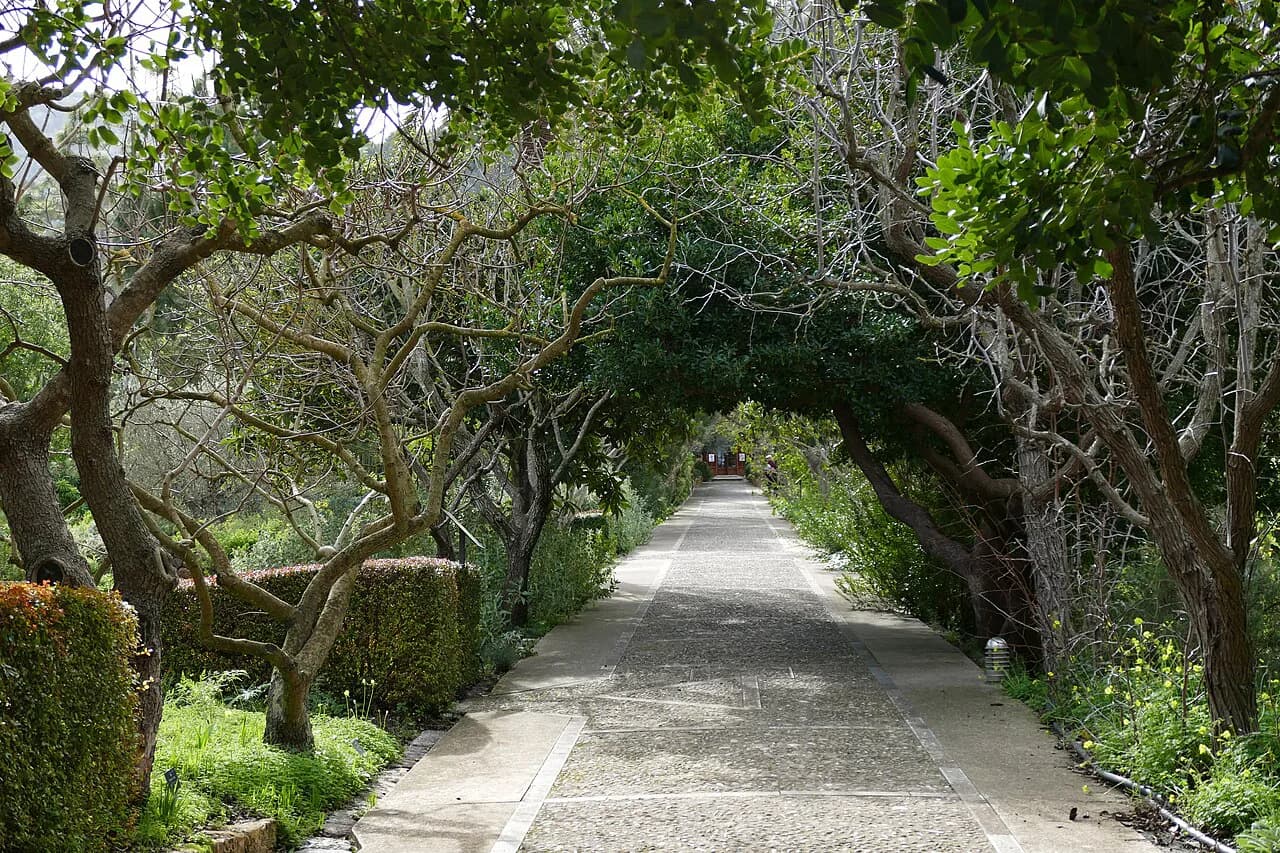
Jardí Botànic de Sóller: What to See and How to Visit

The Jardí Botànic de Sóller is a small, purposeful botanical garden devoted to Mediterranean and Balearic flora, and it rewards a focused hour or two rather than a whole afternoon. Early work began in 1985 and the garden opened to the public in 1992 as a conservation, research and education centre, and it became a foundation in April 1997 with the Balearic government, the Consell de Mallorca, Sóller council and the University of the Balearic Islands among its patrons. This guide covers where the garden sits on the Palma to Port de Sóller road, how to reach it, what grows inside, what tickets and hours apply, and the natural sciences museum nearby.
What the Jardí Botànic de Sóller is and why it draws a visit
The garden exists to conserve endemic, rare and endangered plants of the Balearics, other Mediterranean islands and their continental fringes, and that conservation purpose shapes what you actually see. Beds are grouped by use and origin rather than arranged as a decorative pleasure garden, so the visit reads as a living collection: wild Balearic species, a Canary Islands section, medicinal plants, and plots of local fruit and vegetables. If you want a shaded stroll with café stops, this is not that kind of garden; if you want to put names to the flora you have been walking past across Mallorca, it is exactly the right stop.
The garden's setting in the Sóller valley, ringed by the Serra de Tramuntana, frames the collections: the valley's sheltered position supports plants that struggle elsewhere on the island. Allow time to read the labelling, because the interest is in the identification rather than in sweeping design.

Where the garden is: the Palma–Port de Sóller road
The garden stands on the Carretera Palma – Port de Sóller, on the main road through the valley rather than in Sóller's old town. That road route places it between Sóller town and Port de Sóller, so anyone arriving by road from Palma passes it before reaching the town centre. Watch for the garden entrance along the road, and treat it as a stop on the valley road rather than a square you stumble into.

Getting there from Sóller town and Port de Sóller
From Sóller town or the port, the garden is a stop along the same road that links the two, which makes it easy to fold into a journey rather than a separate outing. If you are using the valley's rail and tram lines, plan the garden as a break in that journey and confirm the current service pattern before you travel. The historic train and tram are attractions in their own right, and the ferrocarril de Sóller page sets out what is known about the Palma line and the port tram, so read it before fixing your day.
If you are coming from Palma, the road route through the valley brings you past the garden before Sóller; from the port, you approach from the opposite direction. Either way, the roadside entrance is the thing to watch for. The Sóller Attractions: 5 Visitor Guides hub shows how the garden sits alongside the town's other sights so you can sequence them.
Opening hours: winter, summer, Sundays and December
Hours are seasonal and there are some full closures. From March to October, Monday to Saturday, the garden runs 10.00–18.00; in November, January and February it opens 10.00–14.00 from Tuesday to Saturday. It is closed on Sundays, public holidays and for the whole of December, so a Sunday in Sóller is not the day for this visit.
A spring schedule reported for the garden sets 10.00–18.00 from March to October and 10.00–14.00 from November to March, with Sundays and public holidays closed. On the broad pattern the accounts agree: mornings are always the safe window, afternoons only in the longer season, and December is out. Confirm the exact month-by-month times before you travel, because the winter months are not consistently reported.
Tickets: adult, resident, group and child prices in euros
Adults pay 8€, Balearic residents pay 6€ on production of a DNI or passport, groups of more than twelve pay 6€ per person, under-sixes go free and members go free. The resident rate is worth knowing if you live in the Illes Balears, because it is a straightforward identification check at the desk rather than a special arrangement. Carry the document you would use for any other resident discount, and confirm the current tariff before you set out.
Because the garden is a foundation with public patrons, the ticket tiers are part of its funding model rather than a tourist pricing ladder, and the group rate applies to ordinary visiting parties above twelve people. The natural sciences museum on the same road publishes its own separate tariff, so expect to pay the garden desk on the garden's terms and the museum desk on its own.
What to see: Balearic and Mediterranean flora, Canary Islands, medicinal plants and plots
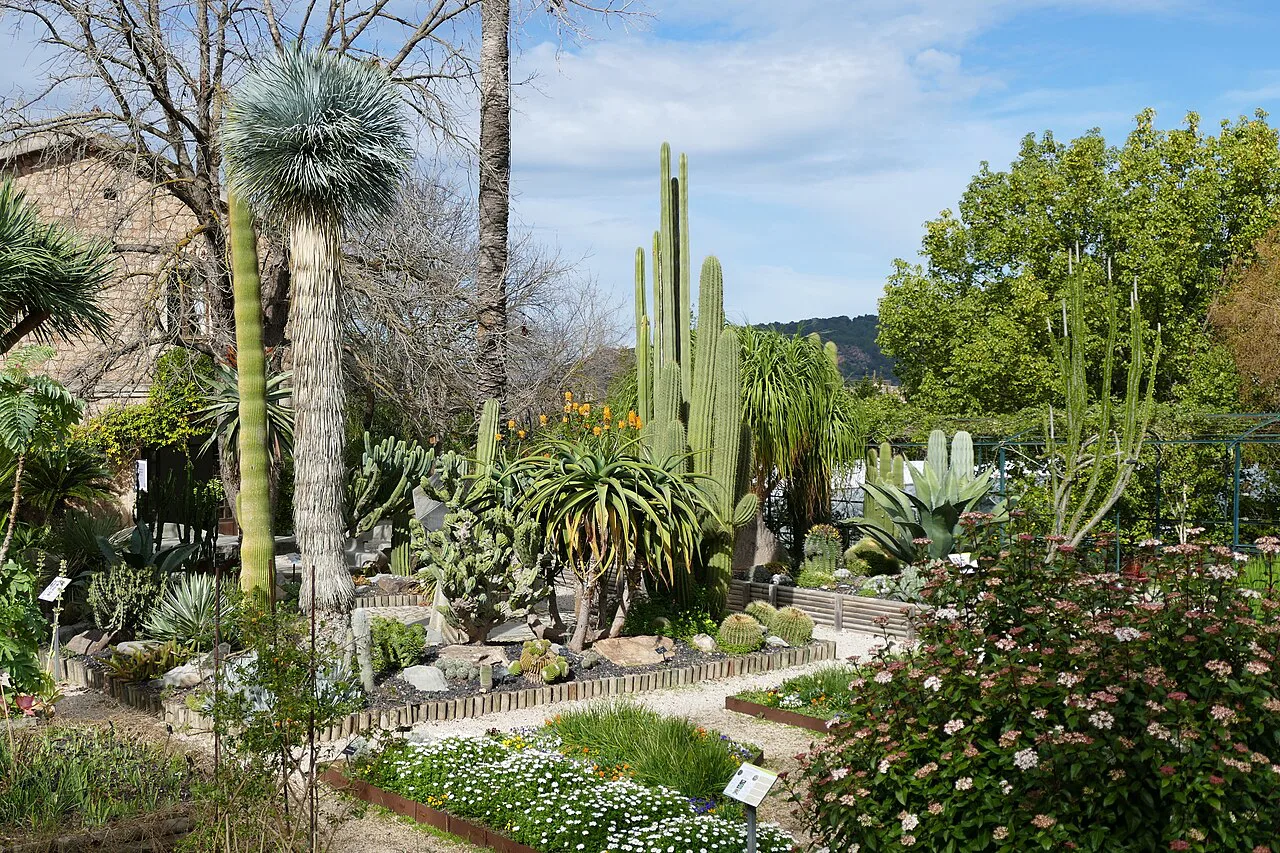
The core of the collection is Balearic and wider Mediterranean flora, and the garden's stated aims include conserving species that are endemic, rare or in danger of extinction across the Balearics and other Mediterranean islands. Look for the labelling that ties each bed to its origin, because that is where the value lies. A dedicated Canary Islands section extends the range beyond the Mediterranean basin, and it is the part that most rewards a slower read.
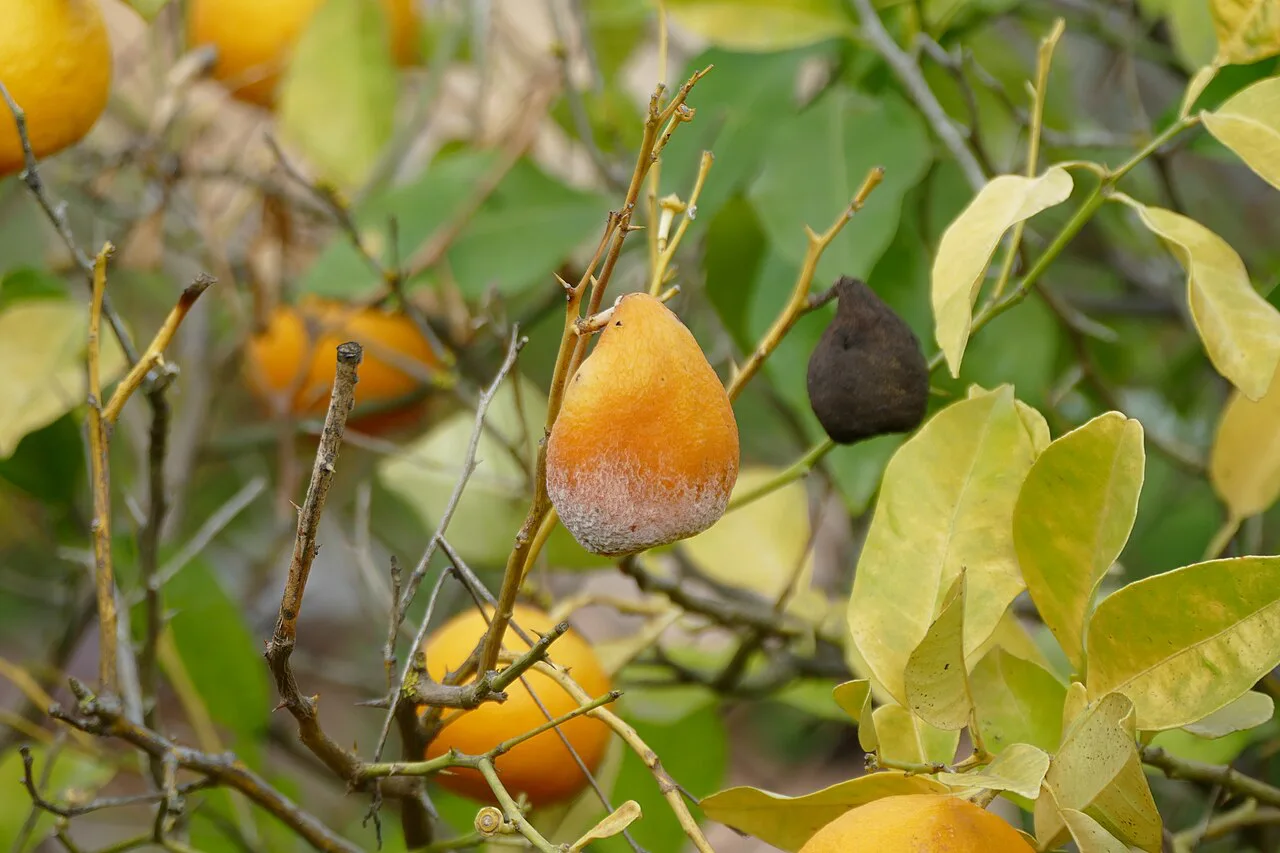
Separate areas cover medicinal plants and the fruit and vegetables of the Balearic community, which makes the garden as much an ethnographic record of valley cultivation as a wild-flora collection. The research work runs alongside the beds a visitor actually sees, so enjoy the living collection, the centrepiece of any visit, at the level of the display beds and labelling. Give the productive plots a few minutes: they explain what the Sóller valley has grown and eaten.
How long to allow and when the garden is at its best
Allow roughly an hour for a first walk and up to two if you read labels and linger in the Canary Islands and medicinal sections. The garden is compact, so it works well as a morning stop before or after the town, and a morning start also protects you from the worst midday heat in the valley in high summer. Outside the long season, plan the visit before 14.00, since that is when the gates close.
Spring is the season the garden's own reporting singles out, when the collections are at their most fragrant and colourful. Winter visits still work within the shorter morning window, but the short daylight hours and the December closure narrow your options, so build the garden into a morning rather than an afternoon.
The natural sciences museum (MUCBO) on the same road
The Museu Balear de Ciències Naturals (MUCBO) has its address on the same Palma to Port de Sóller road, and its own hours and prices are separate from the garden's, so do not assume one ticket or one timetable covers both. In winter, November to February, the museum opens 10.00–17.00 Monday to Saturday and 10.00–14.00 on Sundays; from March to October it opens 10.00–18.00 Monday to Saturday with the same 10.00–14.00 Sunday.
Museum admission is 9€ general, 4€ for children aged six to twelve, free for under-sixes, and 4€ for the long-term unemployed and for people with accredited functional diversity. Residents of the Illes Balears, accredited students, teachers and pensioners get a cumulative 2€ reduction down to a 2.50€ minimum, and residents of Sóller or Fornalutx enter free with DNI. Because the museum opens on Sundays when the garden does not, it is the fallback if the garden's opening days do not fit your stay.
The two institutions are close enough to pair sensibly, but the mismatch is the planning point: the garden closes on Sundays and in December, while the museum keeps Sunday morning hours. If your group spans both a plant-lover and a natural-history enthusiast, check both timetables before committing to a single day.
Nearby: what else fits around a garden visit in Sóller
Back in Sóller town, the modernista manor of Can Prunera, Sóller makes a natural counterpart to the garden's botanical focus, moving from plants to the valley's bourgeois architecture and art collection. Both are the kind of small, well-defined visit that fits neatly into a morning and early afternoon, and the Can Prunera museum Sóller page sets out what is inside.
The Església de Sant Bartomeu, Sóller cathedral, anchors the old town's main square and makes a short stop on the same circuit, once services have finished. Pair it with a walk through the lanes around the square rather than treating it as a standalone destination.
The Tranvía de Sóller links the town with the port and gives a straightforward way to split a day between the garden on the valley road and the waterfront. Use it to avoid retracing the same stretch of road on foot, and check the current running pattern before relying on it late in the day.
For the wider picture of what else Sóller holds, from the church square to the modernista houses and the rail heritage, the Sóller guide is the place to build the rest of the day. See the Sóller Attractions: 5 Visitor Guides hub for the town and the valley, and treat the garden as one element of a valley itinerary rather than the whole reason for the trip.
Is the garden worth building into your Sóller day?
Yes, if you are interested in plants and want a compact, inexpensive stop on the valley road; no, if you are after a long, ornamental afternoon out. The deciding factors are simple: the garden is closed on Sundays, public holidays and all of December, it shuts at 14.00 outside the March to October season, and an adult ticket costs 8€.
Slot the garden into a morning with the town's modernista sights and the port tram, and keep the MUCBO hours and prices distinct in your planning, since the museum opens on Sundays when the garden does not. Confirm the day's opening times and tariffs before you set out, then give the garden the hour it deserves.