
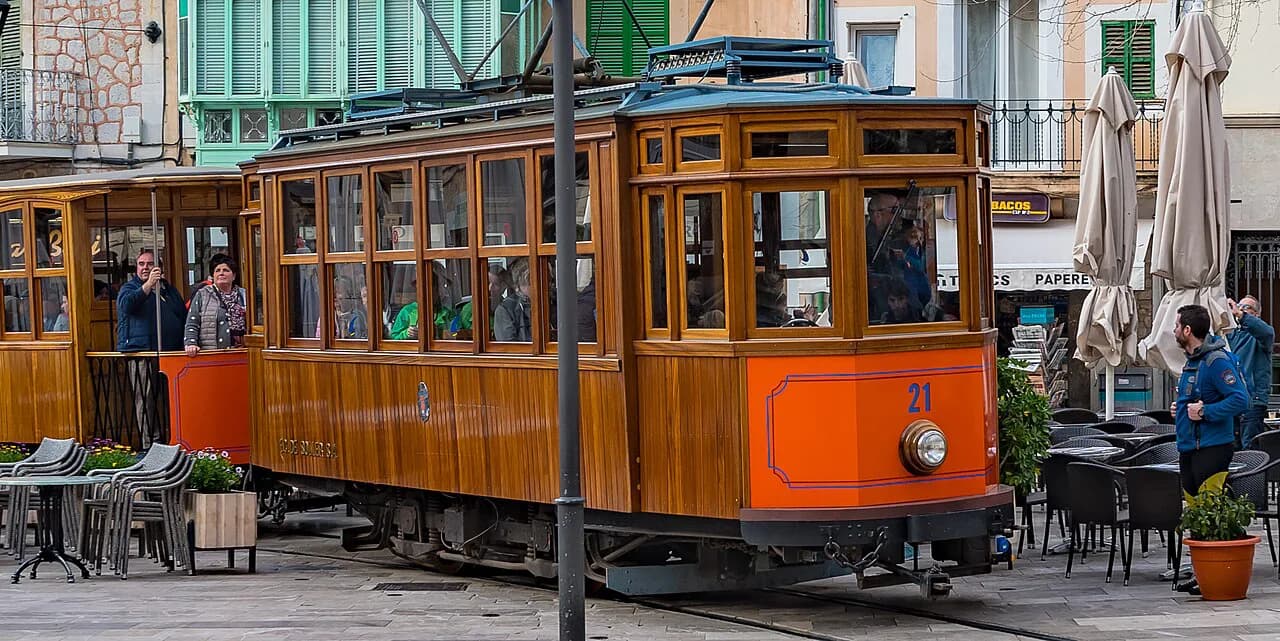
Tranvía de Sóller: the Tram from Sóller to Port de Sóller

The Tranvía de Sóller links Sóller town with Port de Sóller, running on an hourly timetable that saves you the walk or the bus down to the coast. Treat it as a link rather than a sight: you board, ride to the port, and plan the return around the published departures. This guide covers where each end sits, what the operator charges, how the timetable shifts with the season, and how the tram fits with the wooden train from Palma.
Where the tram runs: Sóller town to Port de Sóller
The line has two ends: Sóller, where the operator's station address is Plaça d'Espanya number 6, and Port de Sóller on the coast. Aim for Plaça d'Espanya if you are arriving on foot through the town, since the stop sits by the station area rather than out on the edge. The tram is a separate service from the train, with its own timetable, and it is the simplest way to move between the two halves of the municipality without a car. For the train side of the trip, see the Ferrocarril de Sóller guide.
At the port end the tram terminates in Port de Sóller, the waterfront settlement below the Serra de Tramuntana where the bay and harbour sit. Both stops are central to their settlements, so the tram works as a straightforward transfer rather than something you need to plan a walk to. If you are staying in the town and want time by the water, the sensible decision is to go down and come back on a listed departure.

How to get to Sóller first: the wooden train from Palma
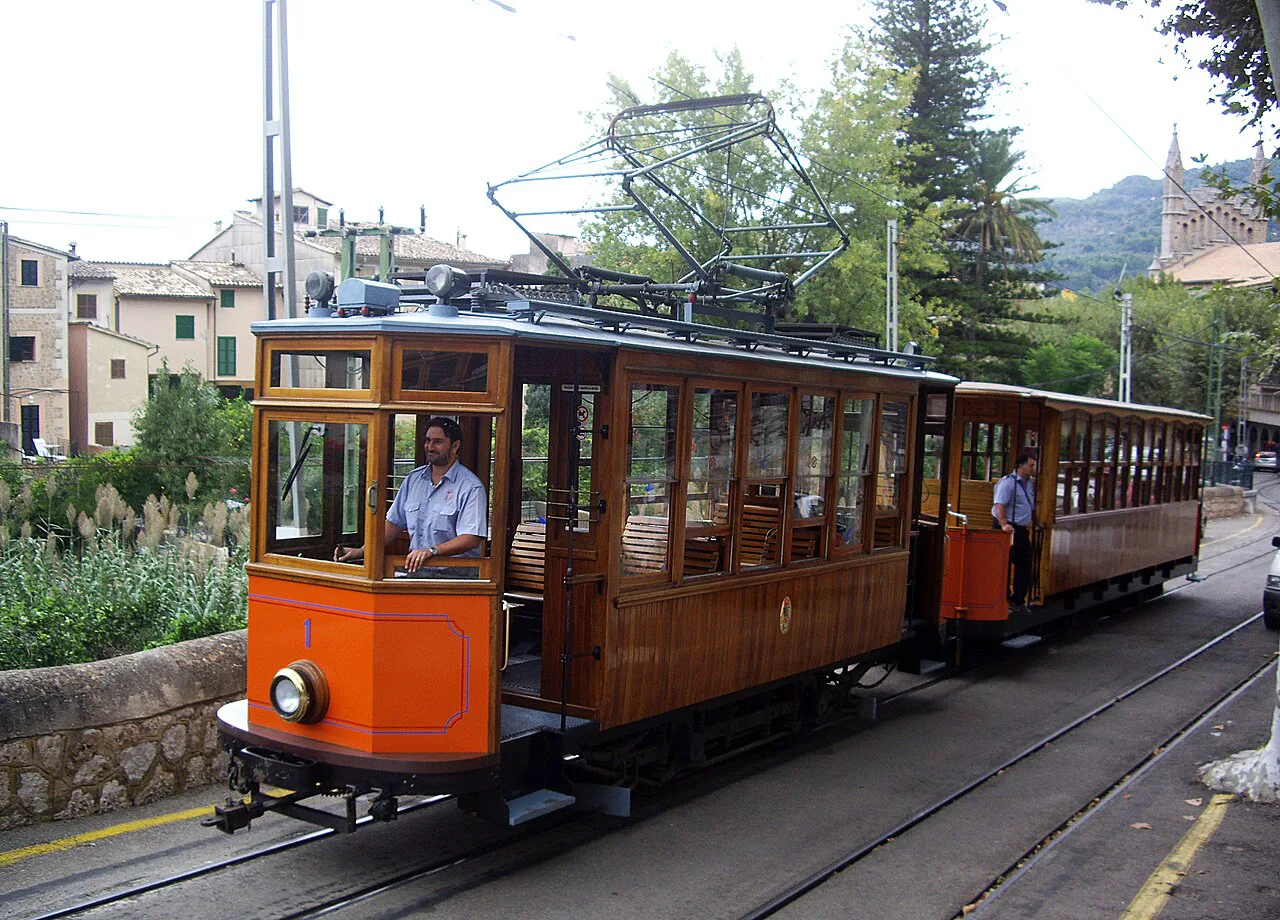
Most visitors reach the tram by train. The Tren de Sóller is the operator's wooden train, inaugurated in 1912, running from Palma through Bunyola to Sóller through the Serra de Tramuntana; the Sóller station is where you change to the tram for the coast. Palma departures include a first service at 10:10 with later ones through the afternoon, and Sóller-to-Palma services start at 09:00.
The Palma station is on Carrer d'Eusebi Estada, and the operator's customer service line there runs daily from 08:00 to 20:00, which matters if you want to confirm a connection before setting out. Bunyola is an intermediate stop on the same line, useful if you are based in the village. Treat the train and tram as two timetables to line up, because the connection at Sóller decides whether the day works.

Tram fares and the combined train-and-tram ticket
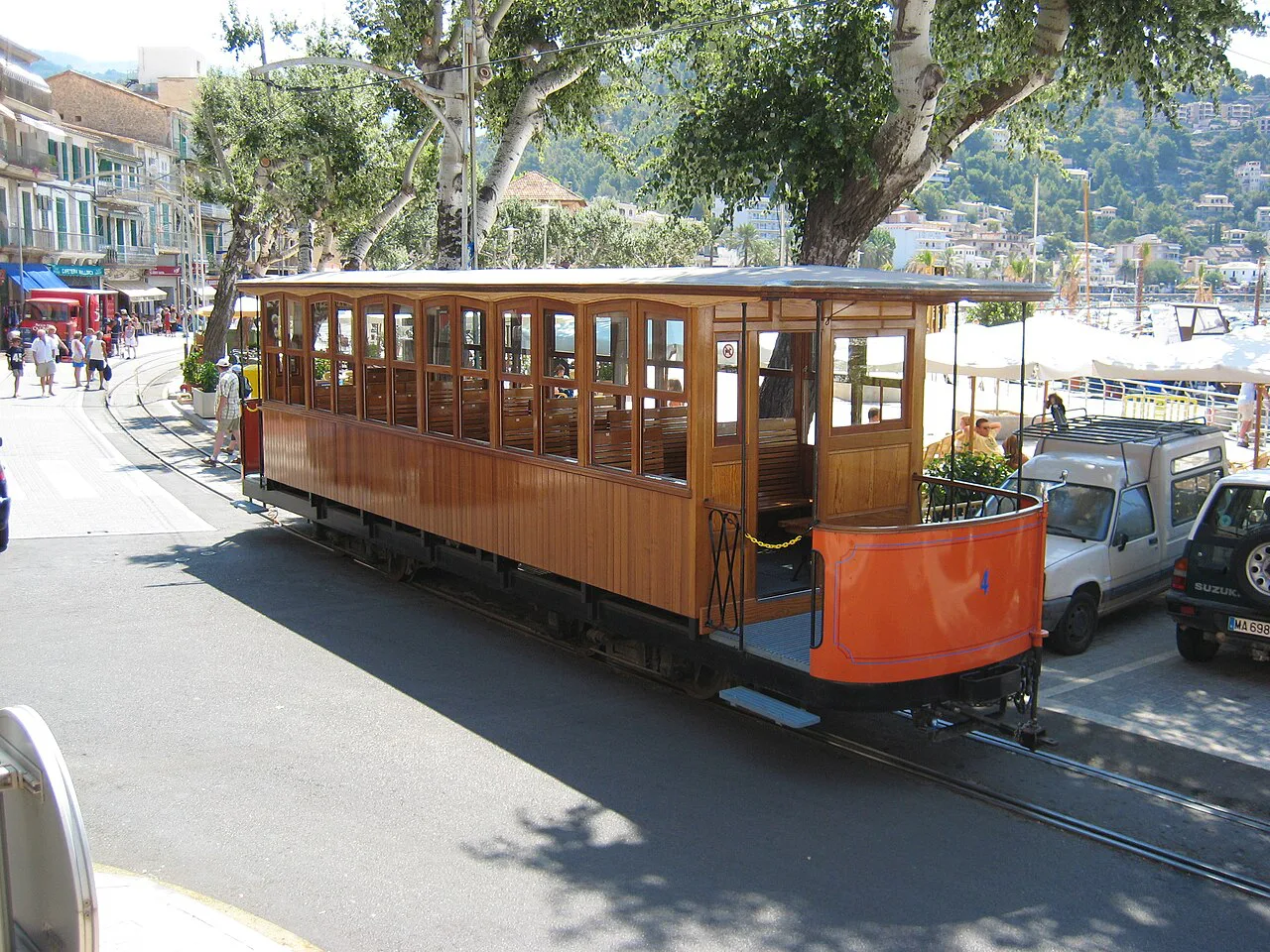
Tram tickets are sold on board, and the operator lists a single fare of 10€ for Sóller to Port de Sóller and the same 10€ in the other direction. That is a separate purchase from the train, where Palma to Sóller is listed at 23€ one way and 30€ return, and Palma to Bunyola at 11€ one way. If you only want the tram, budget the 10€ each way and ignore the train fares entirely.
For a day trip from Palma, the operator sells a combined Palma / Port de Sóller / Palma ticket covering train plus tram at 40€. Compare that with buying separately: the train return at 30€ plus two tram singles at 10€ each comes to the same 40€, so the combined ticket is about convenience rather than saving. The real decision is whether one ticket for everything suits you better than keeping the tram fare flexible in case plans change at the port.
Train tickets are sold at the stations: Palma station for Palma-origin journeys, Sóller station for Sóller-origin journeys and Bunyola station for Bunyola-origin journeys. Tram fares are paid on board rather than at a window, so you do not need to queue at the station before boarding the tram. That difference matters if you are running for a departure: buy the train leg at the station, then settle the tram fare once you are on.
Timetables: how often the tram runs and the 2 November 2026 change
The tram runs hourly for most of the day. On the timetable in force until 1 November 2026, Sóller departures to Port de Sóller begin at 08:00 and continue on the hour through 19:00, with a final listed departure at 20:35. Return journeys from Port de Sóller start at 08:30 and run to a last listed departure at 21:05, so the last run back is roughly half an hour after the last run down.
From 2 November 2026 the tram switches to its winter pattern, with Sóller departures from 08:00 to 19:00 on the hour and Port de Sóller returns from 08:30 to 19:30. The shape of the day stays hourly, but the evening extras disappear, which changes the trade-off if you were counting on a late afternoon at the port. Plan the return leg first and build the rest of the day around it.
The train timetable carries the same seasonal split, and departures marked with an asterisk are listed as requiring confirmation at the ticket office. Check the operator's timetable page against your travel date before booking, since the times are published as date-banded tables rather than a year-round schedule.
How long the tram takes and how much of the day it uses
The operator publishes the tram as a timetable of departures rather than a journey duration, so treat the ride as a short hop between two points in the same municipality and plan around the hourly frequency. What the timetable does tell you is the shape of your day: with departures on the hour, missing one costs you an hour at the port or in the town.
In practice the tram itself takes a small slice of the day and the rest is yours. Arrive on a mid-morning train and you can be at the port well before lunch; take a later train and the hourly return rhythm becomes the constraint. Work backwards from the last listed departure rather than forwards from arrival, and the day organises itself.
Buying tickets and boarding at each end
Because tram fares are collected on board, boarding is simple: turn up at the stop and pay as you ride. The train is the opposite, with tickets bought at the station you depart from, so a Palma day trip involves two purchases at two points in the journey. Keep some cash or a working card to hand for the on-board fare.
If you need to confirm anything before travelling, the operator lists phone lines for Palma, Sóller and Bunyola, each staffed daily from 08:00 to 20:00. The Sóller line is the relevant one for the tram end of the trip, and the Palma line covers the station where most day-trippers start. Use those numbers for timetable queries rather than turning up and hoping the next departure suits.
What you see on the way to the coast
The operator describes the journey as running from the interior down through the mountains, natural scenery and coast of northern Mallorca, with the historic tramway presented as part of the same experience as the 1912 wooden train. The route between Sóller and Port de Sóller drops from the town in its valley bowl to the bay. Where you sit matters less than when you ride, since the winter timetable removes the evening options.
Using the tram as a link, not a sight
The most common mistake on this line is treating the tram as an attraction and the timetable as an afterthought. It is the reverse: the tram is the transport decision, and the last listed departure from Port de Sóller is the hard edge of your afternoon. In the summer timetable that edge sits at 21:05; from 2 November 2026 it moves to 19:30.
Build the day around that return. If you want a long afternoon at the port, take an early tram down and bank the hours; if you are coming off a late-morning train from Palma, accept a shorter stay at the water and use the town end of the line for the rest of your time. Note the departure you intend to catch before you leave the stop.
Nearby: Sóller town and the port once you arrive
At the Sóller end, the town's sights sit within easy reach of Plaça d'Espanya. The Església de Sant Bartomeu, known as the Sóller cathedral, is the central monument, and the Can Prunera, Sóller is a modernista house museum that gives the town its artistic anchor. Both fit around a tram departure rather than competing with it.
The Jardí Botànic de Sóller is another option for the hours before or after the port run, and it works well as a slow counterpoint to the tram ride. At the port end, the waterfront and harbour are the draw, and the tram drops you in the middle of them. Plan the port as a wander followed by a return departure rather than a checklist of stops.
Which ticket and which departure should you book?
If you are starting in Palma and want the full experience, the combined train-and-tram ticket at 40€ covers the run to the port and back in one purchase. If you are already in Sóller, pay the 10€ tram fare on board each way and keep the train out of the equation entirely.
Then pick your return before you pick your outbound. With hourly departures and a seasonal cut-off on 2 November 2026, the last tram back from Port de Sóller is the fact that shapes the day, not the first one down.
Frequently Asked Questions
¿Dónde se coge el tranvía de Sóller?
In Sóller the tram stop is by the station area at Plaça d'Espanya, where the operator lists its Sóller office at number 6. At the coast end it terminates in Port de Sóller, the waterfront settlement below the Serra de Tramuntana.
¿Cuánto tarda el tranvía de Sóller a Puerto de Sóller?
The operator publishes a departure timetable for the tram rather than a stated journey duration, so plan around the hourly frequency. Until 1 November 2026 departures from Sóller run on the hour from 08:00 to 19:00 with a final service at 20:35; from 2 November 2026 they run hourly from 08:00 to 19:00, and returns from Port de Sóller continue to 19:30.