
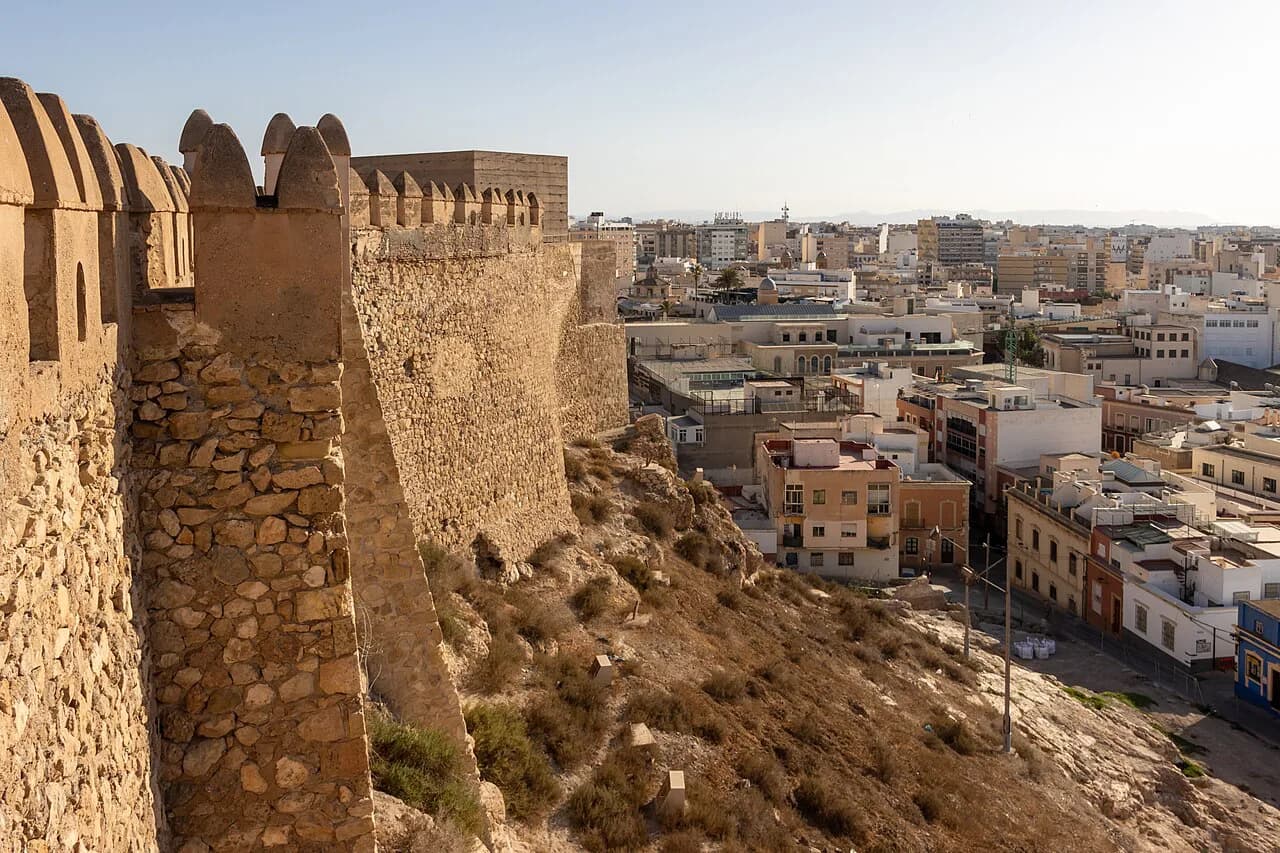
Alcazaba de Almería: Spain's Largest Muslim Fortress After the Alhambra

The Alcazaba de Almería is the fortress on the hill above the old medina, and entry is free. Allow roughly two hours to walk its three enclosures at an unhurried pace, more if you stop for the displays and the views. This guide follows the route from the Puerta de la Justicia upwards, names what survives in each enclosure, and explains how the climb and the summer heat shape the timing.
Turismo de Almería describes the complex as spanning 1,430 metres of walled perimeter and, after the Alhambra, the largest Muslim construction in Spain. It was begun in the tenth century at the wish of Abderramán III, after the city's foundation, and two of its three enclosures are Muslim while the third is a Christian castle added after the Reyes Católicos took the city in 1489.
Where the Alcazaba sits and how to reach it
The address is Calle Almanzor, on the hill that dominates the primitive core of the city, the medina. That position is the whole point of the monument and also the main practical obstacle: you arrive by walking up, so build the ascent into your plan rather than treating it as an afterthought.
Treat the approach as part of the visit and set off with water and comfortable shoes, because the route inside continues climbing between enclosures. In summer, go early or late; the inland Almería midday sun makes the exposed stretches of wall and path hard work. The reward for the climb is the position itself, looking down over the rooftops of the oldest part of the city.

Getting in through the Puerta de la Justicia
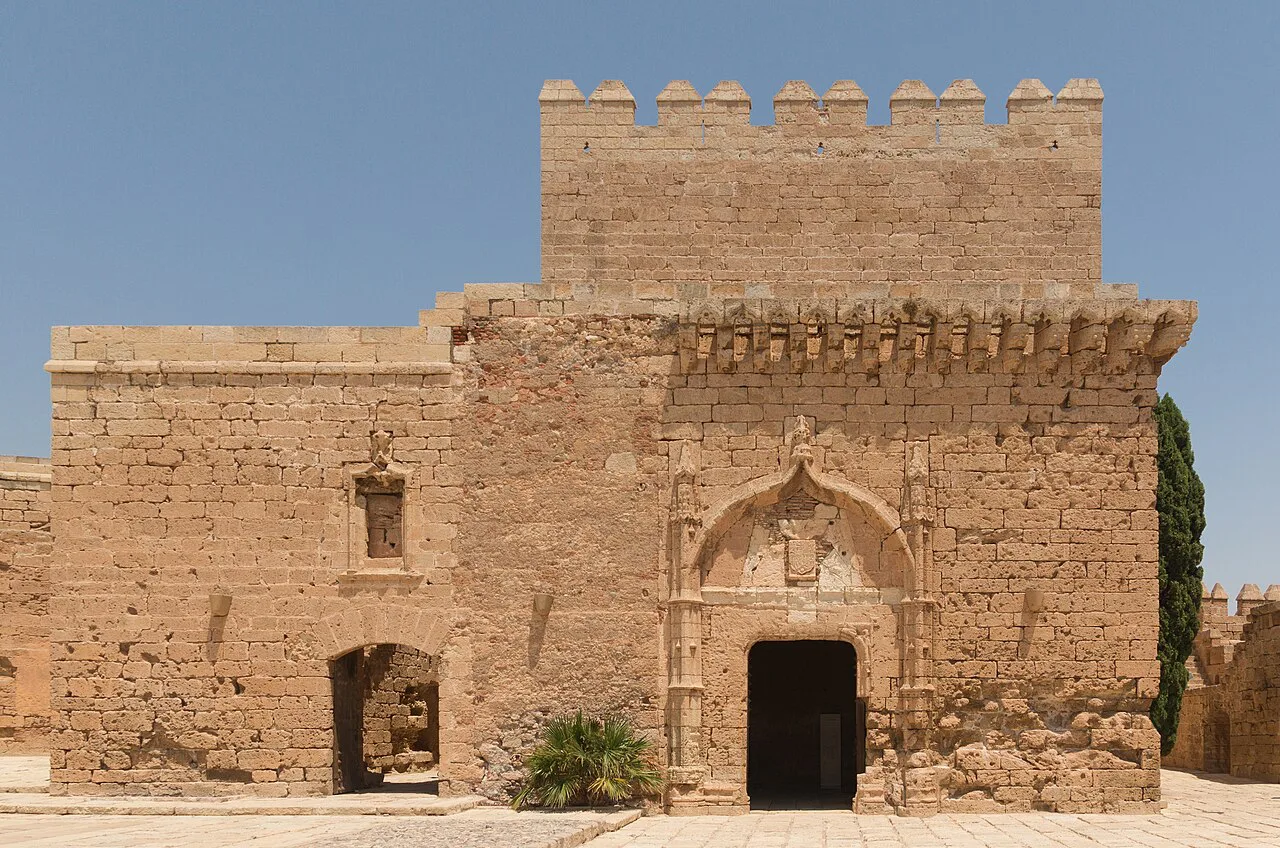
The Puerta de la Justicia is the gateway from which a visit begins, and the Alcazaba's own guided walk starts there before crossing the three enclosures. Understanding that sequence matters more than any list of features: you pass from gardens and cisterns, through the palace zone, and finish in the Christian castle at the top.
Entry is free, as published by Turismo de Almería, so there is no ticket to buy for the standard visit. Check the current opening hours on the Junta de Andalucía's Alcazaba pages before you set out.

The first enclosure: gardens and Muslim cisterns
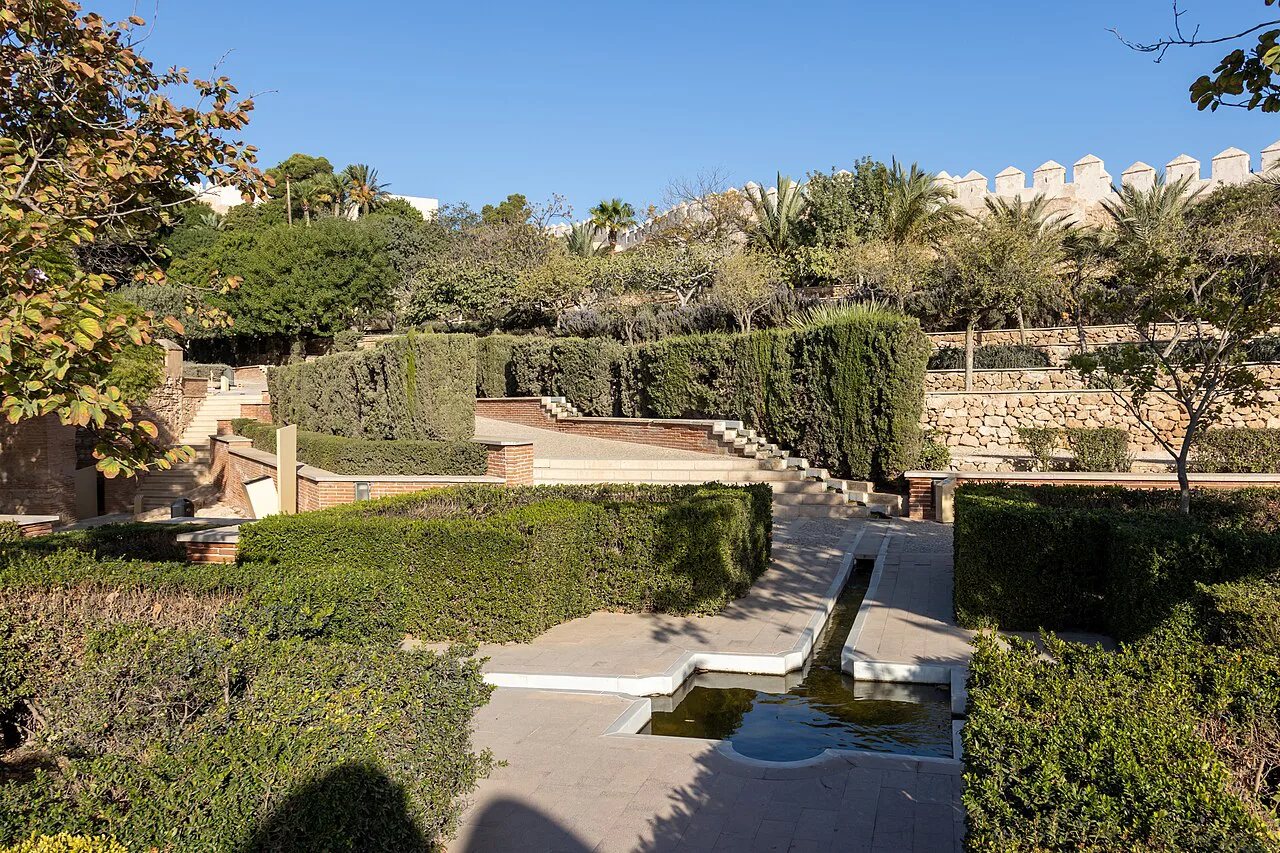
The first enclosure holds an extensive garden zone, reconstructed, along with aljibes from the Muslim period. It is the gentlest stretch of the route and sets the tone: this is a fortress built around water storage, not just walls. Take your time here rather than rushing towards the top, because the shade and planting make it the most restful part of the climb.
The second enclosure: Almotacín's palace and the Ventana de la Odalisca
The second enclosure contained the great palace residence of King Almotacín in the eleventh century, divided into a public area and a private one higher up. In the public zone you now find tenth-century caliphal cisterns, a sixteenth-century Christian arch from the residence of the city's first Christian governor, two reconstructed houses, the Múdejar Ermita of San Juan and reconstructed public baths.
Of Almotacín's private palace only the remains of the private baths survive, plus the single wall left standing, known as the Mirador or Ventana de la Odalisca. It carries a legend about a captive Christian prisoner and the king's favourite slave, which is the kind of detail that makes the second enclosure worth slow reading rather than a quick pass.
The third enclosure: the Christian castle and its towers
The third enclosure is a Christian castle built inside the Muslim fortification on the orders of the Reyes Católicos after the conquest. Its large Patio de Armas is flanked by three characteristic towers: the Torre del Homenaje, the Torre de la Noria and the Torre de la Pólvora. This is the highest and most exposed part of the route, and the views back over the city are the reason to linger.
The Torre del Homenaje and its restoration display
The Torre del Homenaje stands at the western end of the Alcazaba, inside the castle, and was commissioned by the Reyes Católicos at the end of the fifteenth century to house the guard and serve as the governor's residence. After years closed to the public it has been restored, and an exhibition in the upper room sets out the restoration process and the state before and after the works, with no need to book.
How long to allow and how to pace the climb
Two hours covers the three enclosures and the Torre del Homenaje display at a steady pace; add half an hour if you read the panels and want the viewpoints. The climb is continuous, so the honest trade-off is that a rushed visit in high summer feels harder than it looks on a map. Start early in the morning, carry water, and treat the garden enclosure as a genuine pause rather than a corridor.
Free entry and confirming hours before you go
There is no admission charge, which makes the Alcazaba an easy anchor for a half-day in the city. Hours are the variable to check, since they sit on a separate page from the main monument description, and the fortress runs evening and early-morning programmes that change its normal rhythm; check the Junta's listings for the day you plan.
Guided visits and the Alcazaba's own programme
The Alcazaba runs guided visits called Conoce tu Alcazaba, led by the site's information staff and covering the history of the fortress from the birth of Almariya to the present. They are capped at 30 people and require booking in advance by email to the address the Junta publishes on the activity listing. That cap is the reason to book rather than turn up hoping for a place.
In 2026 the fortress also ran Noches de Alcazaba, extending its hours from mid-July to mid-August with free concerts, theatrical visits and a dawn photography workshop, some requiring prior booking through the Junta's reservation platform. Treat those dates as a record of the 2026 programme and check the current edition rather than assuming the same line-up.
What is nearby on the same half-day
Coming down from the Alcazaba puts you back in the medina streets of the old centre, which is the natural continuation of the visit. Almería cathedral is within the same compact core, and its fortified, cathedral-as-fortress character makes a useful contrast with the hilltop defences you have just walked.
Towards the port, the Cable Inglés, Almería's iron ore loading pier, is a short continuation for anyone wanting a second, very different piece of the city's history in the same outing. If you prefer underground to industrial heritage, the refugios Guerra civil Almería add a twentieth-century layer within walking distance of the centre.
Should you climb the Alcazaba first?
Make the Alcazaba your first stop of the day. Entry is free, the route through the three enclosures is logical once you start at the Puerta de la Justicia, and finishing at the Christian castle leaves you walking downhill into the medina and the cathedral quarter rather than up. Two hours is a fair allowance, and the Torre del Homenaje's restoration display is the one interior worth planning around.
Check the day's opening hours before leaving and book the guided visit by email if you want the history explained rather than pieced together from panels. Avoid the midday heat in summer by starting early, and keep an eye on the fortress's own evening programme if your trip falls in the weeks when it runs.