
Refugios de la Guerra Civil, Almería: what you see underground

The Refugios de la Guerra Civil in Almería are closed for restoration and museum redevelopment, and the city council expects to reopen them as a renewed visitor attraction around midsummer 2026. Until then, the tunnels under the Paseo de Almería cannot be visited, so this page explains what the network is, where its entrances sit at street level and what the guided route involved when the shelters were last open.
Treat the reopening as an aim rather than a fixed date: the council has spoken of finishing the museum work towards the middle of the first half of the year, with a summer reopening in view. Anyone planning a trip around the shelters should confirm the status before travelling, and should not build a short break on the assumption that they will be open.
What the Refugios de la Guerra Civil are
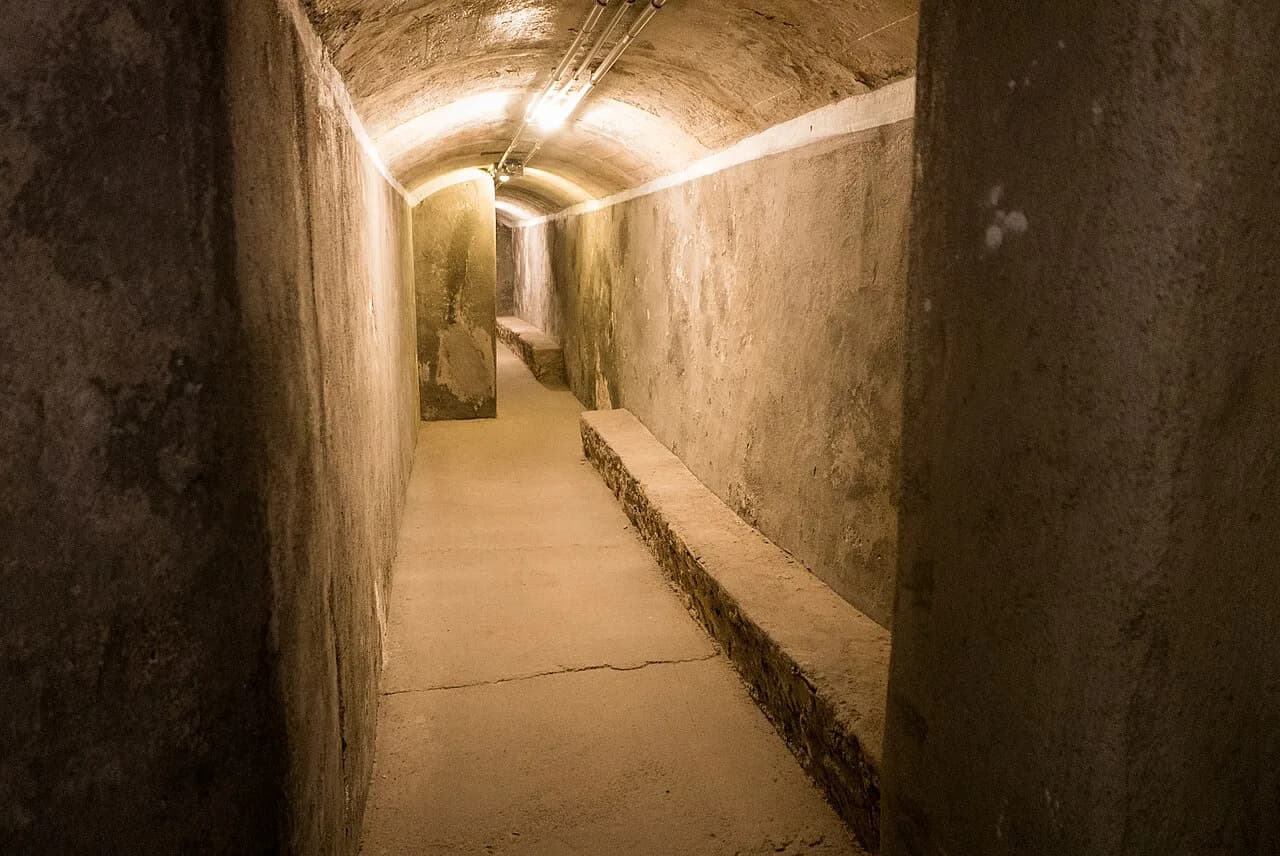
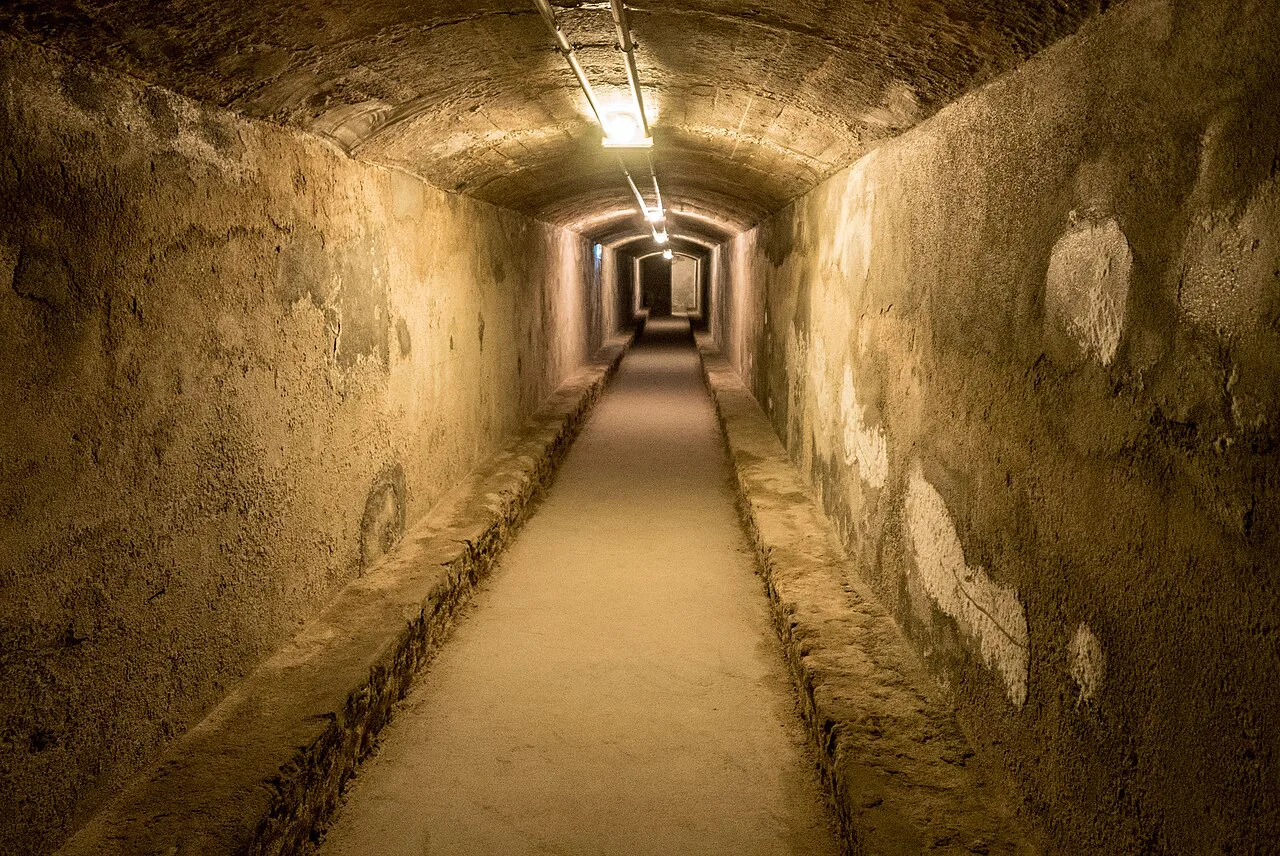
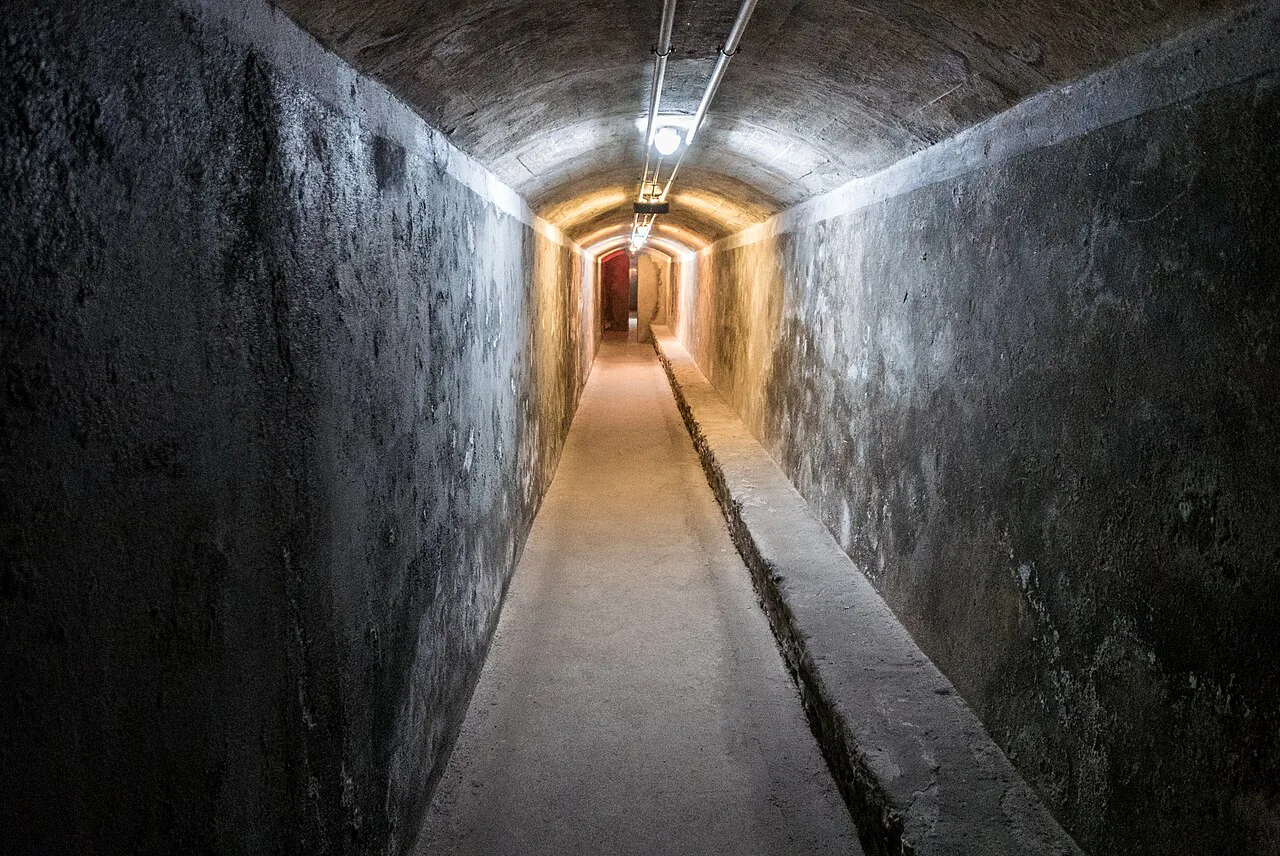
The shelters are a network of subterranean galleries running beneath the Paseo de Almería and part of the historic centre, dug as civilian protection during the Spanish Civil War. The guided visit formerly described a system of more than 4 kilometres of tunnels, designed by the architect Guillermo Langle Rubio and built in response to the 754 bombs that fell on the city between 1936 and 1937.
Construction was a major civic undertaking rather than a hurried improvisation. The city signed a formal shelter project in January 1937 with a budget of 4.5 million pesetas, part of it subsidised by the central government, and funded the rest partly through a 1% levy on purchases; building took up to sixteen months and reused material from the abandoned Sierra Alhamilla railway.
The galleries were forgotten for decades after the war and were rediscovered by chance in 2001 during work on an underground car park near the Rambla Obispo Orberá. Rehabilitation followed, and the shelters opened to the public in December 2006.

Why the shelters are closed now
The closure followed a fire in an electrical box next to the visitor reception building. A viability study had already warned that the advanced deterioration of the space put some of its most valuable period graffiti at risk, so the enforced shutdown was used to carry out a full programme of cleaning, structural consolidation, damp repair and work on water filtration and corrosion.
Work is also going on behind the scenes on the visitor experience itself, with new audioguides and videoguides planned and emergency, access, ventilation and communications systems being reinforced. The council has framed the reopening in terms of the summer campaign, so late spring and early summer 2026 are the period to watch rather than a date to book around.

Where the entrances are
The surface points are what you can still locate on foot while the site is shut. The visitor pavilion sits on Plaza Manuel Pérez García, from where guided groups walked a few metres to the shelter entrance; the exit was on Plaza Pablo Cazard, reached by stairs and a lift, with three former entrances kept as emergency exits.
The entrance hall is worth knowing about for its archaeology as much as its access role. The floor was covered in armoured glass so visitors could see the remains of the Muralla de Jairán below, and work on the shelters uncovered traces of the old Puerta de Pechina, one of the gates in Almería's walled perimeter.
Because the tunnels run under the Paseo and the fringes of the old town, both plazas are easy to fold into a walk between the modern centre and the streets around the cathedral. For the wider set of monuments within that walk, see the [Almería Attractions: 4 Visitor Guides] page.
What the guided route covered
Of the network of more than 4 kilometres, only the longest shelter was opened to the public. The guided visit covered about 1 kilometre of passageways, beginning with an information video, and took roughly an hour and a quarter from meeting point back to meeting point.
The route descended to 9 metres, with the deepest section at 16 metres, and passed an operating theatre and a private room. Children's drawings survive on the walls, and one old cupboard connected directly with the market so that food could be brought in during an attack, though the visit description notes it was never needed.
Rules inside were strict and are part of what the interpretation sets out to convey: no smoking, children kept with an adult at all times, no talk of religion or politics and no weapons. The shelters were built on a scale to hold tens of thousands of people, and private entrances opened from houses and public buildings; some residents left their doors open with a black flag and signs reading refugio during raids.
What will change when it reopens
The most visible change will be the interpretation. The council plans 360-degree video and photography, interactive graphics and costumed figures showing period clothing, utensils and materials, alongside sound and scenes recreating the atmosphere inside the galleries during the war.
Central to that is a virtual-reality recreation of a bombing and a two-minute evacuation, delivered through three VR units the tourism department was still acquiring at the time of the report. The stated aim is to put the visitor at the centre of the event in first person rather than as a spectator of a display case.
Tickets, times and what to confirm
The shelters are closed while restoration and museum work continues, and no reopened ticket price or opening timetable has been announced. When the site is running again, check the council's tourism pages for the current price, the days it opens and whether entry is by timed guided slot only; the route is underground and capacity is limited by group size rather than by the size of the network.
What to do while the shelters are shut
The Alcazaba is the obvious substitute for anyone drawn to Almería's layered history: a walled fortress on the hill above the centre, with gardens, courtyards and views back over the city and the port. It occupies a half-day comfortably and pairs well with the old town streets below.
The Almería cathedral is the other near-centre option, a short walk from the Paseo and its surroundings. Both sit within the sort of compact circuit that makes the centre manageable on foot, even if the shelters themselves stay off the list for now.
If you want a waterfront marker to orient the walk, the Cable Inglés, the old ore-loading jetty on the harbour, is a distinctive landmark to head for at the end of a circuit through the centre.
Should you plan around the shelters?
Not yet. Build an Almería break around the Alcazaba, the cathedral and the old town, and treat the Refugios as a bonus that may or may not be running when you arrive, given the council's summer 2026 target.
If the tunnels are the reason for your trip, wait until the visitor timetable and prices are published rather than booking flights around an expected date. The scale of the network and the depth of the descent are genuinely unusual, but the site rewards a confirmed booking far more than an optimistic one.
Frequently Asked Questions
Are the Refugios de la Guerra Civil in Almería open to visitors?
They are closed while restoration and museum work is completed. The city council has said it hopes to reopen them as a renewed attraction around midsummer 2026, but that is a target rather than a confirmed date, so check the current status before planning around them.
Where are the Civil War shelters in Almería?
The galleries run under the Paseo de Almería and part of the historic centre. The visitor pavilion was on Plaza Manuel Pérez García, the exit on Plaza Pablo Cazard, and the entrance hall exposed remains of the Muralla de Jairán beneath a glass floor.
How deep do the shelters go and how much of the network can you see?
The guided route formerly covered about 1 kilometre of a network of more than 4 kilometres, descending to 9 metres with the deepest point at 16 metres. The visit took roughly an hour and a quarter and included an operating theatre, a private room and children's drawings on the walls.