
Almería Cathedral: What to See Inside the Fortress-Church

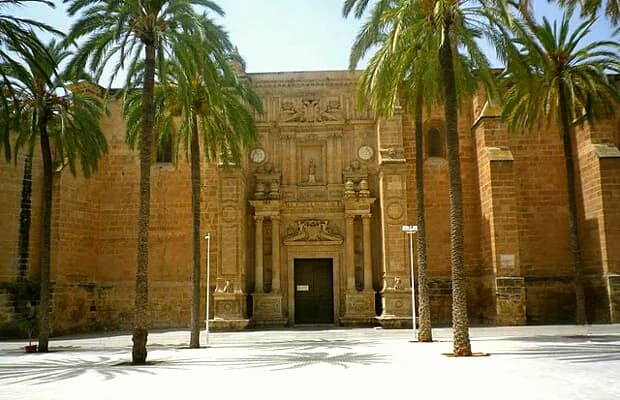
Almería Cathedral is worth an hour of your time, and it is unlike most Spanish cathedrals because it was built to defend as much as to pray. The fortress character shows in the thick walls, the austere exterior and the bell tower finished in 1613 as the church's tower of homage. This guide covers where it stands in the old centre, what the cultural visit includes, how tickets and the tower climb work, and what to look for once you are inside.
Go for the interior rather than the facade: the three naves, the carved choir stalls and the Renaissance lantern over the crossing carry the visit. The east wall's carved sun is free to see from the street, so you can save it for after you come out. The rest of Almería's sights fit easily around it, as the wider set of Almería Attractions guides shows.
Why Almería Cathedral looks like a fortress
The cathedral was conceived as a church-fortress, and the robust bell tower doubled as the tower of homage, completed in 1613. Inside, the building opens into three naves of equal height with three chapels at the head and ambulatory, giving a broad rectangular plan rather than the tall, narrow nave you might expect. Reading the exterior first makes sense of the plain walls: they were part of the design, not a later addition.
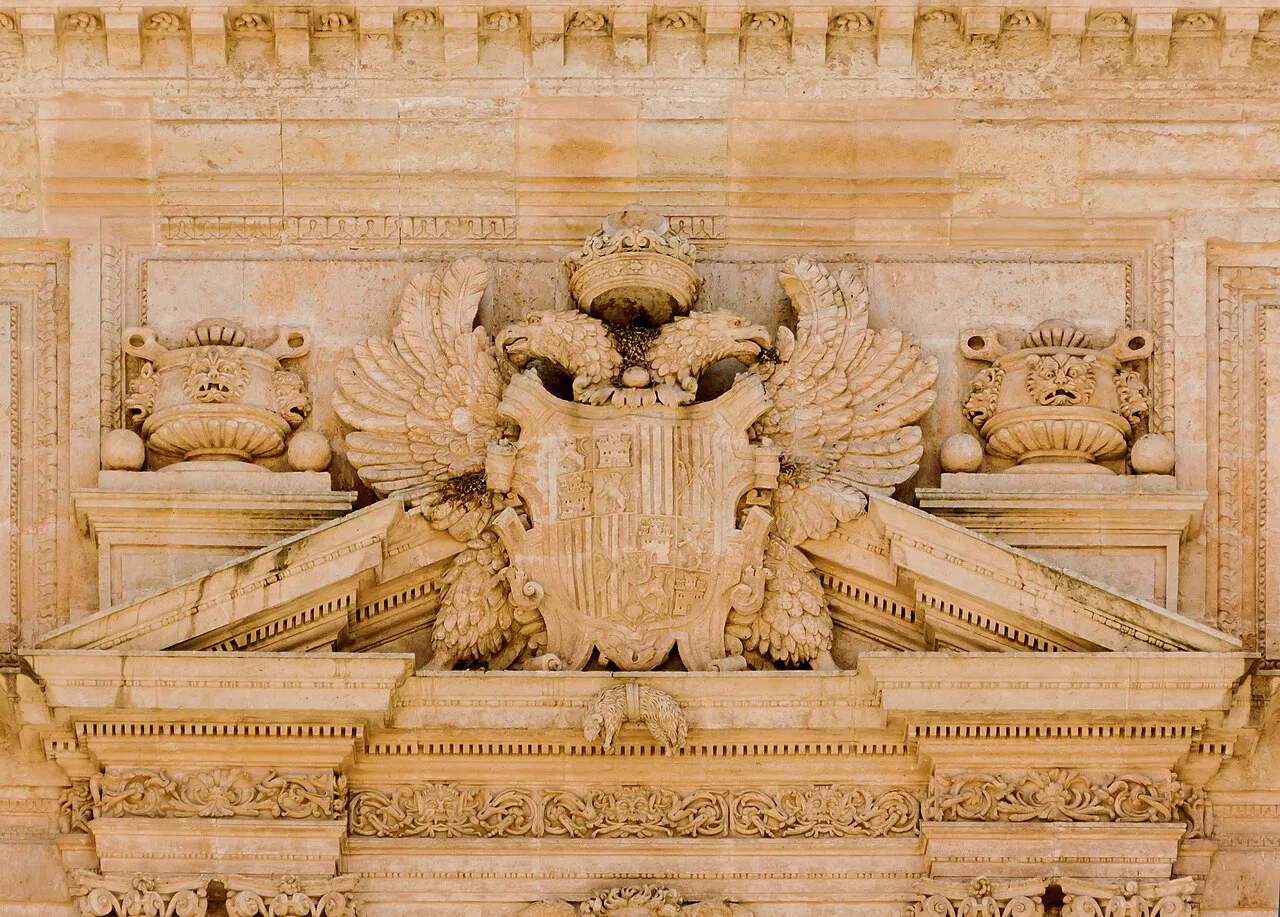
Look for the relief known as the Sol de Portocarrero on the eastern facade, a radiant sun with a human face bordered by ribbons. It has become a symbol of the city, even though the bishop whose name it carries held office long after the carving was made. You do not need a ticket to see it, which makes it a good stop if your timing inside the building is tight.

Where it is in Almería's old centre
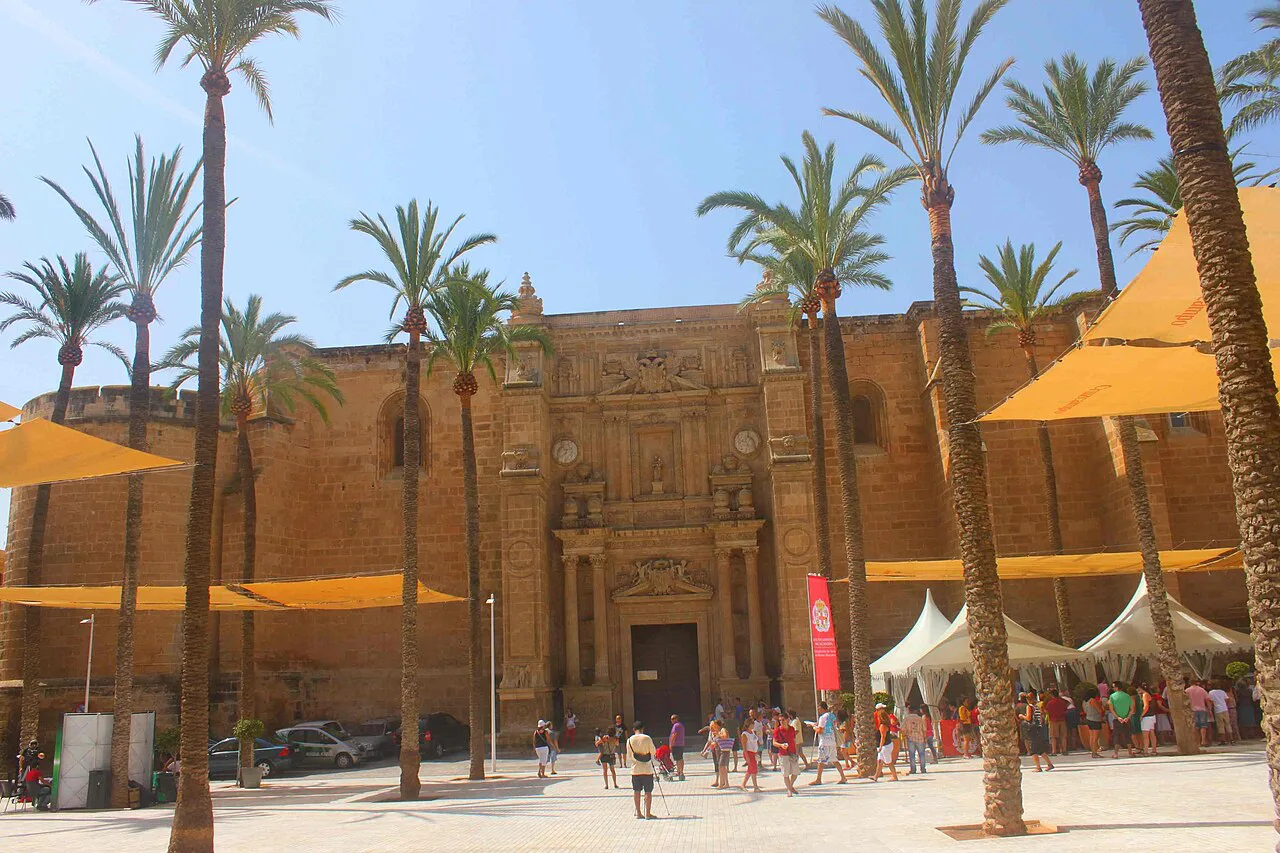
The cathedral stands at Plaza de la Catedral, 8, in the historic centre, with the square itself forming a small forecourt in front. It is the natural anchor for a morning in the old town, and the Alcazaba de Almería sits on the hill above, close enough to combine with the cathedral in one outing. Both reward different things: the cathedral for its interior and the Alcazaba for its walls and views.
Further down towards the water, the Cable Inglés mineral loading jetty is a short walk from the cathedral square and gives you a contrasting look at the city's industrial past. The Refugios de la Guerra Civil, Almería's civil war air-raid shelters, are another old-centre option worth pairing with the cathedral on the same day.

Opening hours and the last entry cut-off
The standard schedule runs from 10.00 to 14.30 and 16.00 to 19.00 Monday to Friday, with Saturday open continuously from 10.00 to 19.00 and Sunday from 15.00 to 18.00. Last entry is 45 minutes before closing, which matters on weekday afternoons: if you arrive after 18.15 you will not get in.
The cathedral also publishes special opening notices for individual dates, and those posted for June and October are dated exceptions rather than the regular timetable. Treat them as a reminder to check the day you plan to visit, especially if your trip falls near a public holiday or a Sunday.
Ticket prices, free entry and the Las Puras combination
The general ticket for adults aged 18 to 64 is 8.00€, with a reduced 7.00€ for visitors aged 65 and over and 6.00€ for young people and students aged 13 to 17 or holders of a youth or university card up to 25. Groups of 20 or more pay 5.00€. A free audioguide comes with a paid ticket.
Free entry applies to children up to 12 accompanied by an adult, people with a disability of more than 63 per cent, children of large families up to 17 accompanied by an adult, and residents registered in the city of Almería. Residents must show their ID at the ticket desk, and the free ticket does not include the audioguide.
A combined ticket with the Monasterio de Las Puras costs 12.00€ general, 11.00€ for visitors aged 65 and over and 9.00€ for young people, students and group bookings, with a 9.00€ rate for disabled and unemployed visitors. Choose it only if you want a second religious interior in the same outing; otherwise the single ticket leaves you free to spend the difference on the tower.
Climbing the campanario tower
The tower is a separate guided visit, open to children from six years up, costing 5.00€ on its own or 2.00€ for Almería residents, or a 2.00€ supplement when bought with a general monument ticket. Climbs run on Fridays and Saturdays at 13.00 and 17.30.
Two slots a day on two days of the week makes the tower the part of the visit most likely to slip if you leave it to chance. If the climb matters to you, plan your day around a Friday or Saturday and book the slot that suits you before you travel.
The interior: three naves and the Renaissance lantern
Inside, the equal-height naves give a hall-like space, and over the crossing sits the Renaissance lantern by Juan de Orea, who also built the sacristy and the patio de armas, later converted into a cloister in the eighteenth century. Walk the full rectangle of the plan before settling on details; the symmetry is the point.
The cloister and chapter house sit at the end of the circuit, and the sacristy is worth a pause for its carvings. Photography rules inside are not something to assume either way, so follow what the staff tell you at the desk.
Coro, carved stalls and the organs
The choir stalls are the highlight for many visitors: a double row of seating carved with saints, prophets and martyrs on the upper level and medallions with human faces below, all in a strongly classical Renaissance idiom. The organs close the space, and their old baroque cases deserve as much attention as the sound they would make.
Give the choir ten minutes rather than a glance, because the carving repays close looking and the space itself is quiet. It sits opposite the main chapel, so you pass it on the standard route without detouring.
The chapel of the Santo Cristo de la Escucha
The chapel of the Santo Cristo de la Escucha holds the alabaster tomb of Bishop Fray Diego de Villalán, carved by Juan de Orea in the sixteenth century and a reference point for funerary sculpture in the south-east of the peninsula. The chapel is much venerated locally, so expect visitors to be using it for its religious purpose as well as sightseeing.
Keep voices low and let other visitors finish before you approach; it is the one part of the building where tourism and devotion occupy the same floor. A few minutes here is enough for most people, and it sits within the main circuit.
How long to allow and when it is quiet
Allow about an hour for the cultural visit at an unhurried pace, or ninety minutes if you add the guided tower climb and the combined Las Puras ticket. The audioguide is included in the paid ticket, so use it rather than reading labels in a rush.
Weekday mornings and the long Saturday opening tend to give you the most room, while Sunday afternoon has only a three-hour window. Inland Almería gets hot at midday, so a 10.00 start lets you finish before the worst of it and still reach the Alcazaba while it is comfortable.
What is nearby in the old town
The Alcazaba is the obvious follow-on, a hilltop fortress whose walls and gardens give views back over the cathedral and the city. Combine the two and you have a solid half-day without leaving the centre, with the cathedral as the lower, shaded stop and the Alcazaba as the exposed one.
Towards the port, the Cable Inglés, Almería's iron ore loading jetty, is a short walk and a free look at the city's industrial heritage. The civil war shelters are another nearby option if you want a second indoor stop out of the heat.
Which ticket should you buy?
Buy the general ticket for the cathedral alone unless the choir, the cloister and a second monastery interior both appeal; then the combined Las Puras ticket is the better value. Add the tower supplement only if you can be there on a Friday or Saturday, because the guided climbs run twice on those days.
If you are a resident of Almería, bring your ID and claim the free ticket at the desk rather than paying online. Everyone else should book ahead for the tower and check the schedule for the specific dates of their trip.
Frequently Asked Questions
What airport do you fly to for Almería?
Almería has its own airport, and Málaga is the other common arrival point for the province. Compare transfers into the city centre before booking, since the journey from Málaga is considerably longer.
Is Almería Cathedral the same as the Alcazaba?
No. The cathedral is a church-fortress on Plaza de la Catedral, while the Alcazaba is a separate hilltop fortress above the old town. They are close enough to visit on the same morning, and each has its own ticket.