
Burgos Cathedral: what to see inside the Catedral de Burgos

Burgos Cathedral is worth setting aside two hours, and three if you want the Museo Catedralicio and the cloisters at an unhurried pace. The cathedral's own visitor pages list the interior space by space, which lets you plan a route rather than wander.
This guide covers where the building stands, the daily opening window, the Mass schedule in the Capilla de Santa Tecla, the chapels and artworks to prioritise, and how the visit fits a short break in the city. Ticket prices, free-entry slots and group booking rules sit on the cathedral's tickets page, so buy or check there before you travel.
Where Burgos Cathedral stands and how to reach it
The cathedral occupies the north side of the Plaza de Santa María in the old town, with its postal address given as Pl. Sta. María, s/n, 09003 Burgos. If you arrive by train or bus, head for the river and climb into the historic centre; the towers are visible from most of the old town and make a reliable landmark.
Burgos is a stop on the Camino de Santiago, and pilgrims walk into the square from the river side. For the wider set of sights within walking distance, see the Burgos Attractions guide before fixing a route through town.

Opening hours and Mass times at the cathedral
The cathedral's site gives its advertised opening as Monday to Sunday, with one page showing 09:30 to 18:30 and another 09:30 to 18:00. Plan to be inside in the morning so the chapels and cloisters fit comfortably before the advertised closing time.
Mass shapes the day. On working days and vigil days there is a 09:00 capitular Mass with Lauds and sung Mass in the Capilla de Santa Tecla, a 10:00 Mass in the Capilla del Santo Cristo, and an evening Mass at 19:30 with the rosary at 19:00. On feast days the pattern runs 09:00, 10:30, 12:00 and 13:30 in Santa Tecla, plus the 19:30 evening Mass.
The evening Mass moves with the season: in the Capilla del Santo Cristo from October to May and in the Capilla de Santa Tecla from June to September. Group tourism Masses are arranged separately by phone or email.
The west front and the Puertas on the Plaza de Santa María
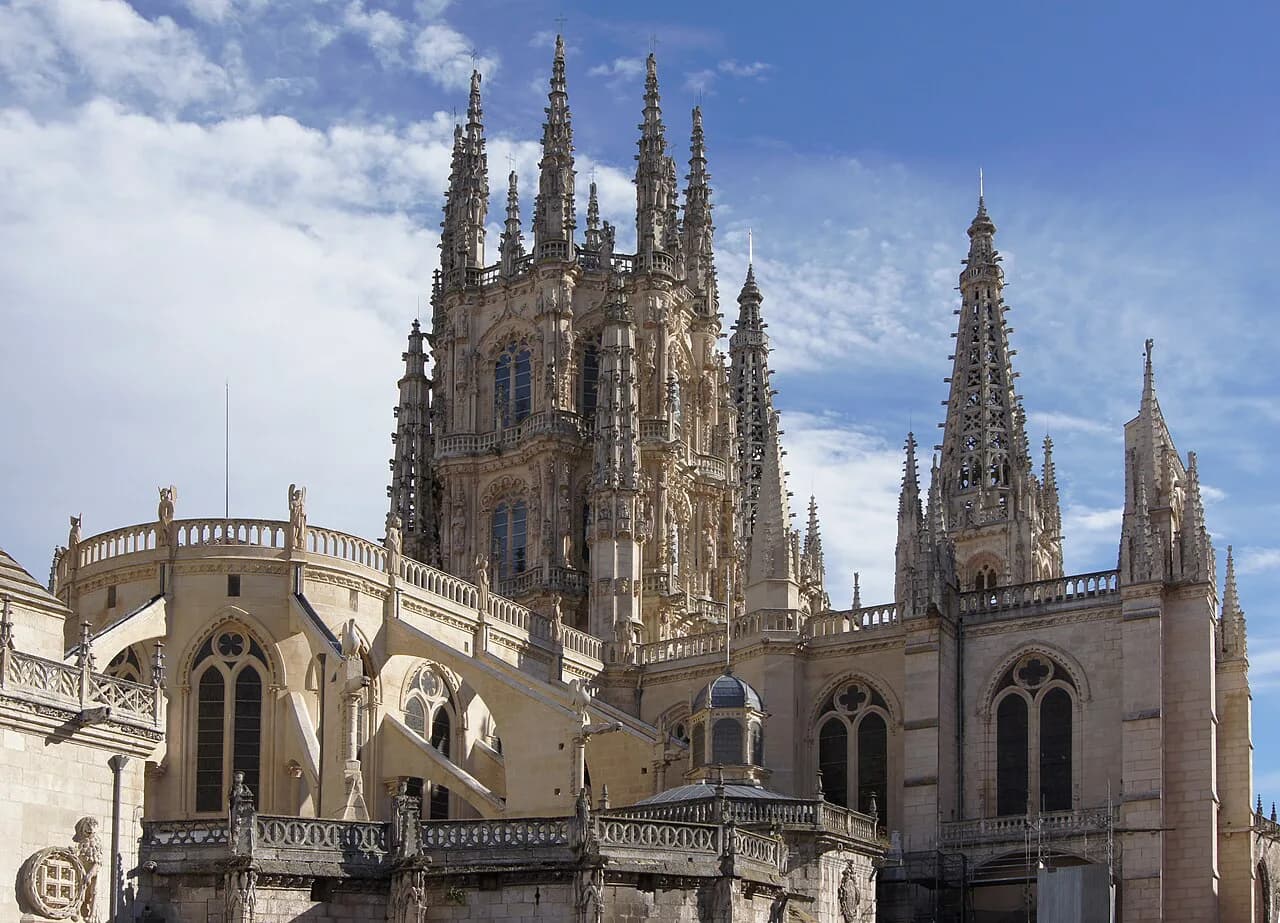
Start outside. The Puertas and the west front facing the Plaza de Santa María set the scale of the building, and the square itself gives the best straight-on view of the spires without stepping back into traffic. The cathedral's own architecture section runs through the portals in photographs before you go in, useful for spotting the programme of sculpture above the doors.
Allow ten minutes on the square before entering. Morning light falls on the façade and the square is quieter then; by mid-afternoon the front is in shadow and the detail is harder to read.
The Capilla de los Condestables and the Capilla de Santa Tecla
The Capilla de los Condestables is the interior highlight for most visitors and one of the spaces the cathedral itself singles out. Give it fifteen minutes and walk round the whole chapel rather than stopping at the entrance grille.
The Capilla de Santa Tecla serves as the weekday Mass chapel, so it doubles as worship space and sight. Visit it outside the 09:00 and 19:30 Masses if you want to look rather than pray, and keep voices low when a service is running.
The Capilla del Santo Cristo and the Capilla de San Enrique organ
The Capilla del Santo Cristo hosts the 10:00 weekday Mass and the evening Mass from October to May, so it is the second chapel where worship and sightseeing overlap. Check the day's pattern before planning photographs inside.
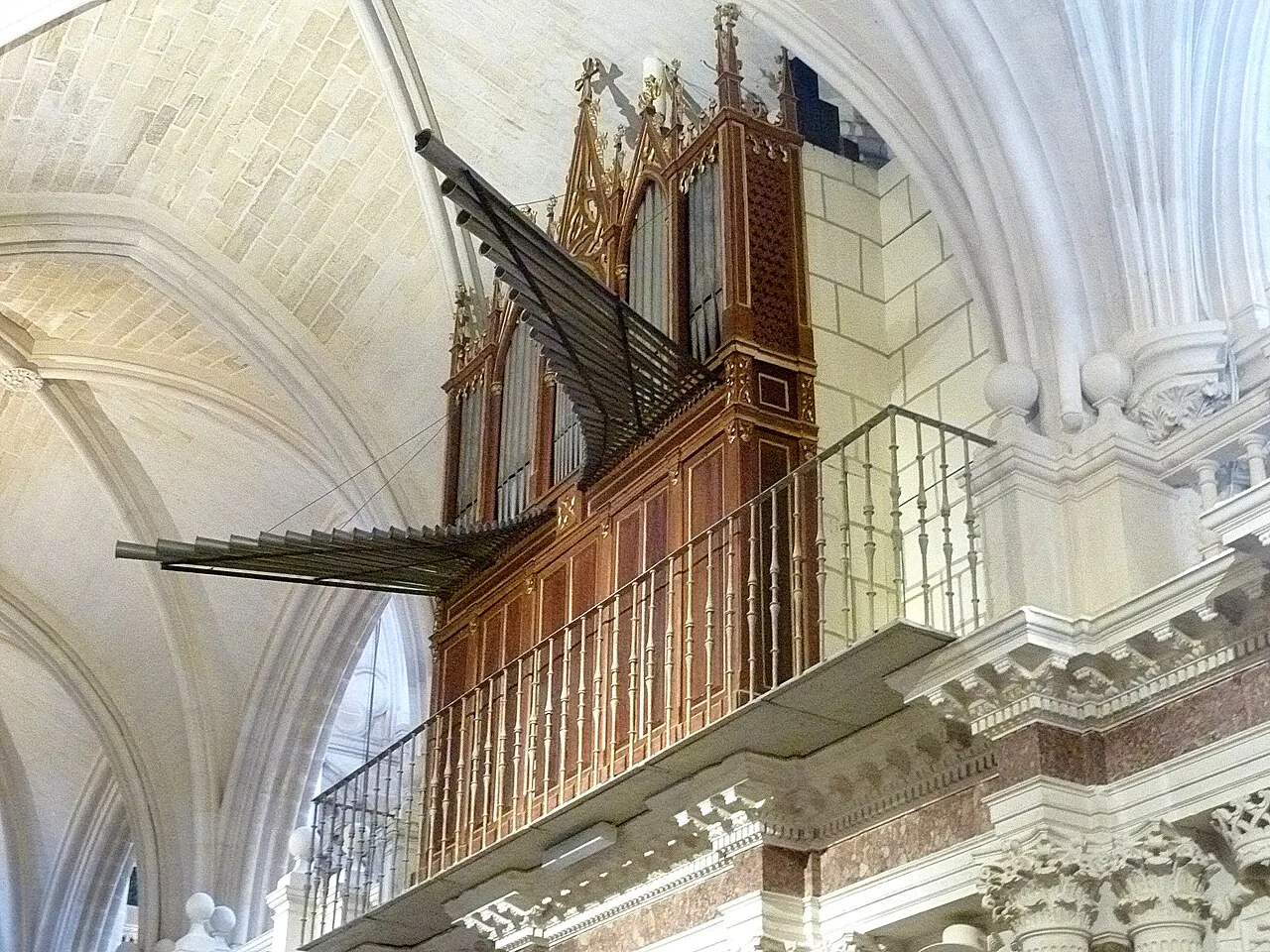
The Capilla de San Enrique holds a baroque organ built around 1670, described by the Ministry of Culture's heritage programme as possibly the most important instrument in the temple. Organ enthusiasts should fold it into the chapel circuit rather than treat it as a separate stop.
The Capilla Mayor, the Retablo Mayor and the Trasaltar
The Capilla Mayor centres on the Retablo Mayor, and the Trasaltar behind it is a separate carved ensemble worth walking round to see from the reverse side. The cathedral's own architecture pages cover both, and they are close enough together to take in one sweep.
Stand well back to read the retablo: the lowest panels are hard to see from directly beneath. The transept gives the distance you need.
The Coro and the Capilla de Santa Catalina
The Coro occupies the centre of the nave, with carved stalls and a reja closing it off. The Capilla de Santa Catalina sits close by and carries its own altarpiece and tombs, so pair the two in a single pass down the middle of the church.
Access to the Coro depends on services and stewarding on the day. If the gate is shut, continue round the ambulatory and come back rather than waiting.
The Claustro bajo and Claustro Alto with the Flemish tapestries
The lower cloister gives the quietest walking of the visit, with the chapters and tombs opening off it. The upper cloister displays two Flemish tapestries from Brussels donated by Bishop Juan Rodríguez de Fonseca in the early sixteenth century, restored and hung there for visitors to see.
Tapestries fade, so the light is kept low and you will need to let your eyes adjust. Allow ten minutes on the upper level and resist using a flash.
The Escalera Dorada and the Museo Catedralicio
The Escalera Dorada is the celebrated golden stair, its gilded ironwork and carved steps making it the most photographed interior detail after the Condestables chapel. The Museo Catedralicio gathers the cathedral's treasury and liturgical objects, and the cathedral's own pages list it as a distinct stop.
If time is short, take the Escalera Dorada and skip the museum; if you have the full three hours, the museum rewards a slower look.
The Capilla de la Natividad and the Capilla de la Concepción
The Capilla de la Natividad and the Capilla de la Concepción fill out the ring of chapels around the ambulatory, each with its own altarpiece and burial sculpture. Both are listed among the cathedral's own selection of spaces, which is a sensible order to follow if you want to be systematic.
These chapels are often empty while crowds gather at the Condestables. Take them slowly, and use them as breathing space between the busier stops.
The Sacristía Mayor
The Sacristía Mayor is a room of display as much as storage, with vestments, silver and painting hung around the walls. It sits among the spaces the cathedral itself highlights, so it is not a behind-the-scenes extra.
Give it ten minutes. The room is small and a coach group passing through can fill it quickly, so visit before the late-morning rush if you can.
The Crucero and Cimborrio
The Crucero and Cimborrio form the crossing under the star-shaped lantern, and the cathedral's own architecture pages treat them as one of the building's defining spaces. Look up: the void above the crossing is the reason many visitors rate the interior above the façade.
The crossing is where the crowds gather, so pass through early and return later if you want it quiet.
How much time to allow, and Mass in the church
Two hours covers the chapels, the Coro, the cloisters and the Escalera Dorada at a normal pace; three hours adds the Museo Catedralicio and the Sacristía Mayor without rushing. The 09:00, 10:00 and 19:30 weekday Masses and the feast-day sequence in Santa Tecla will close or restrict the chapels in use, so plan the sightseeing around them rather than the other way round.
Visit in the morning if you can. Warm afternoon light in the cloister lifts the stonework, but the chapels themselves stay dim all day and the square outside becomes crowded.
What else is nearby in Burgos
On the Cerro de San Miguel above the city, the Castillo de Burgos gives the panorama back over the cathedral spires and the old town roofscape, a sensible pairing with an afternoon in the centre. The Cartuja de Miraflores lies outside the centre and needs its own transport plan, so keep it for a separate half-day.
The Museo de Burgos, in the Casa de Miranda, covers the province's archaeology and fine art, and the Museo de la Evolución Humana, Burgos covers the Atapuerca finds in a modern building near the river. Both are indoor options when the weather turns.
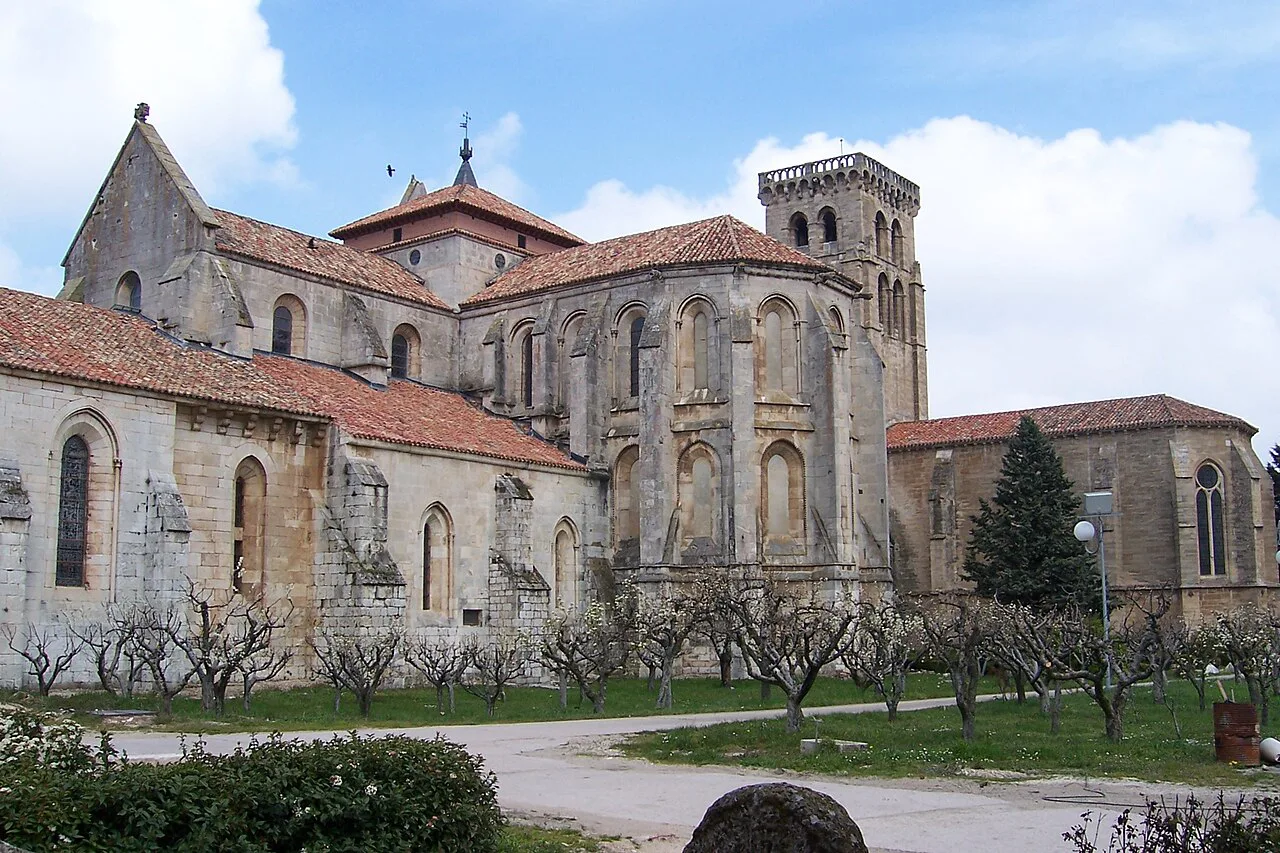
Las Huelgas Abbey, Burgos is a Cistercian foundation with royal tombs, a short trip from the centre and worth checking opening times for before you set out.

Whether to build the day around the cathedral
Yes: Burgos Cathedral earns its place as the anchor of a day in the city, and two hours inside plus time on the Plaza de Santa María is the sensible minimum. Book or check tickets, then plan your entry around the Mass schedule so the chapels you came for are open when you arrive.
Castilla y León rewards a second day here, with the castle, the abbey and the city's museums filling it out without leaving town.
Frequently Asked Questions
What are the Mass times at Burgos Cathedral?
On working days and vigil days there is a 09:00 capitular Mass in the Capilla de Santa Tecla, a 10:00 Mass in the Capilla del Santo Cristo and an evening Mass at 19:30 with the rosary at 19:00. The evening Mass is held in the Capilla del Santo Cristo from October to May and in the Capilla de Santa Tecla from June to September. Feast days follow a different sequence in Santa Tecla.
Can I visit the cathedral while Mass is being held?
Parts of the church are in use during services, so the chapels named for a given Mass are not sightseeing space at that time. Plan your route round the 09:00, 10:00 and 19:30 slots on weekdays and the feast-day sequence in Santa Tecla.
How long does a visit to Burgos Cathedral take?
Two hours covers the principal chapels, the Coro, the cloisters and the Escalera Dorada. Allow three hours to add the Museo Catedralicio and the Sacristía Mayor without hurrying.
Sources
- Catedral – La Santa Iglesia Catedral Basílica Metropolitana de Santa María es un templo Catedralicio de culto católico dedicado a la Virgen María, en la Ciudad española de Burgos.
- Horarios de misa – Catedral
- Programación actividades Catedral de Burgos - 50 aniversario de la Convención de Patrimonio Mundial | Ministerio de Cultura