
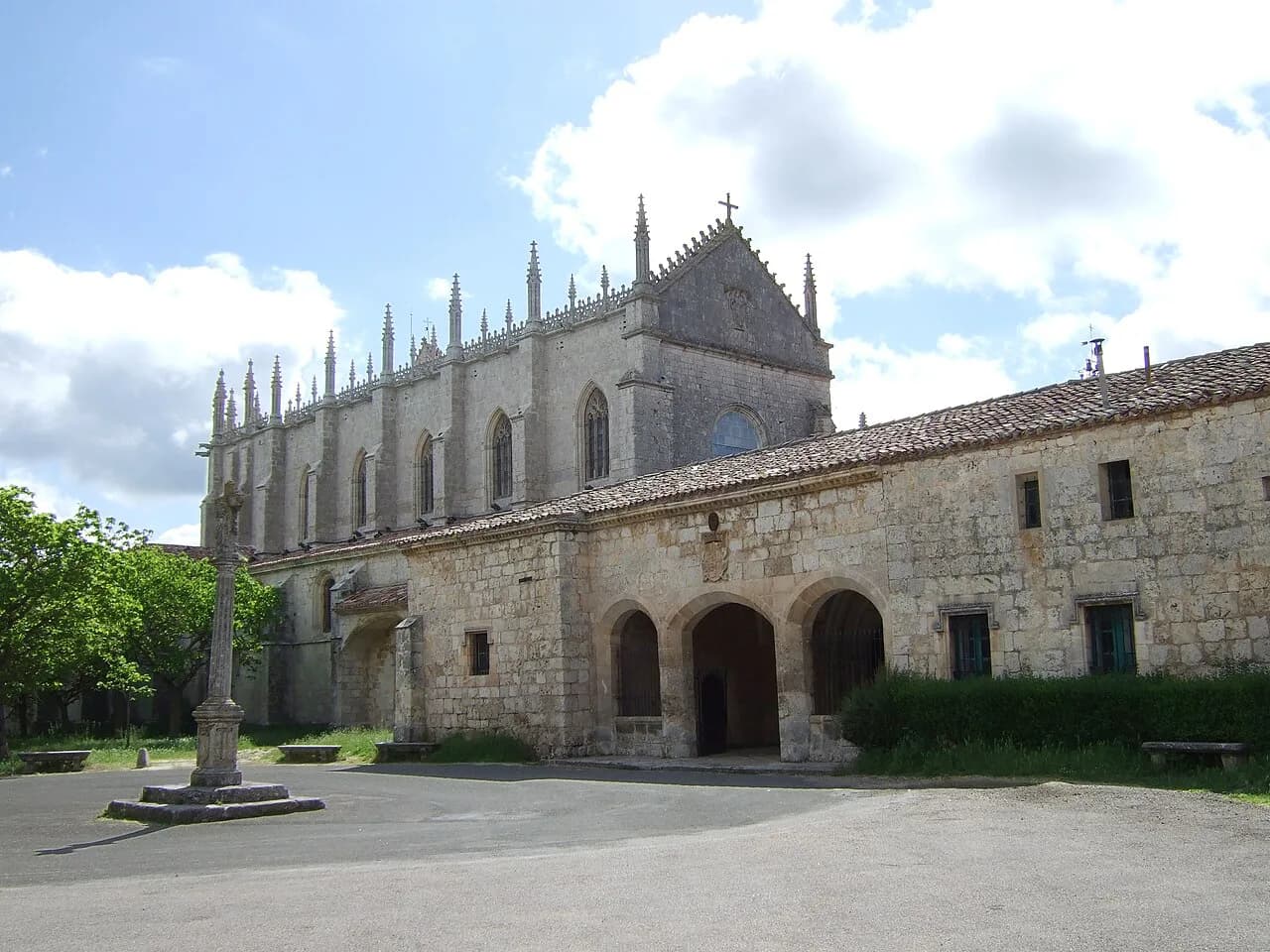
Cartuja de Miraflores: Burgos' Gothic Charterhouse

The Cartuja de Miraflores is a fifteenth-century Gothic monastery on the edge of Burgos, and it is worth the short trip out of the centre for two things above all: the retablo and royal tombs carved by Gil de Siloé, and Pedro Berruguete's painting of the Anunciación. The Castilla y León tourism portal records that Isabel la Católica raised the monastery as a burial place for her parents, Juan II de Castilla and Isabel de Portugal, which is why the interior reads as a royal chapel as much as a working charterhouse. This page covers where it stands, how to get there, the artworks to look for, how long to allow, and the opening and ticket arrangements.
What the Cartuja de Miraflores is
Miraflores is a Carthusian monastery founded in the fifteenth century and rebuilt under royal patronage, with a Gothic church whose interior is dominated by funerary sculpture. The tourism portal for Castilla y León describes it as a monastery of the fifteenth century erected by Isabel la Católica for the tomb of her parents, Juan II de Castilla and Isabel de Portugal, and that royal purpose explains the density of carved stone and gilded wood inside. It is an active religious house rather than a museum, so you visit the church and its artworks rather than wandering through monastic rooms.
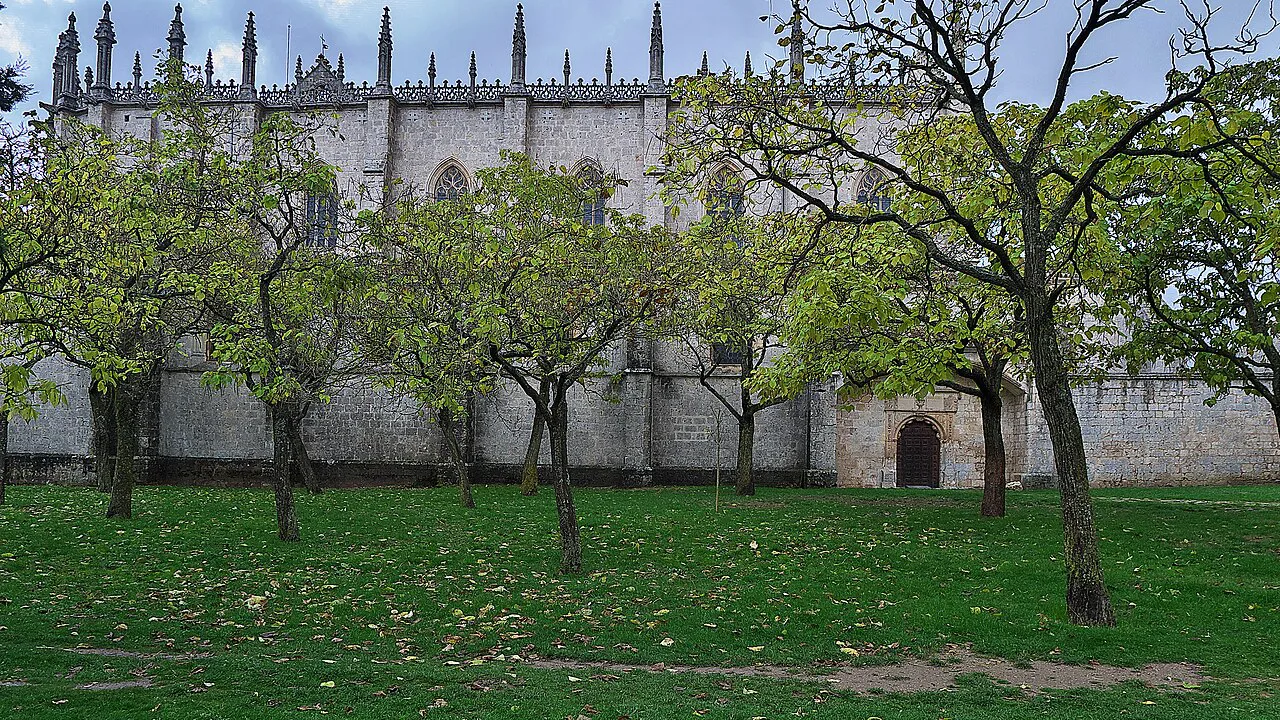

Where it is: Carretera de Fuentes Blancas, Km 3.5
The monastery stands outside the historic centre on the Carretera de Fuentes Blancas, Km 3.5, in the 09080 Burgos postal area, near the Fuentes Blancas park. Treat it as a separate excursion from the old town rather than something you pass on a city walk: the approach is along a road, and the reward at the top includes views back over Burgos. For orientation within the city and the other monuments that fill a Burgos break, see Burgos Attractions: 6 Visitor Guides.
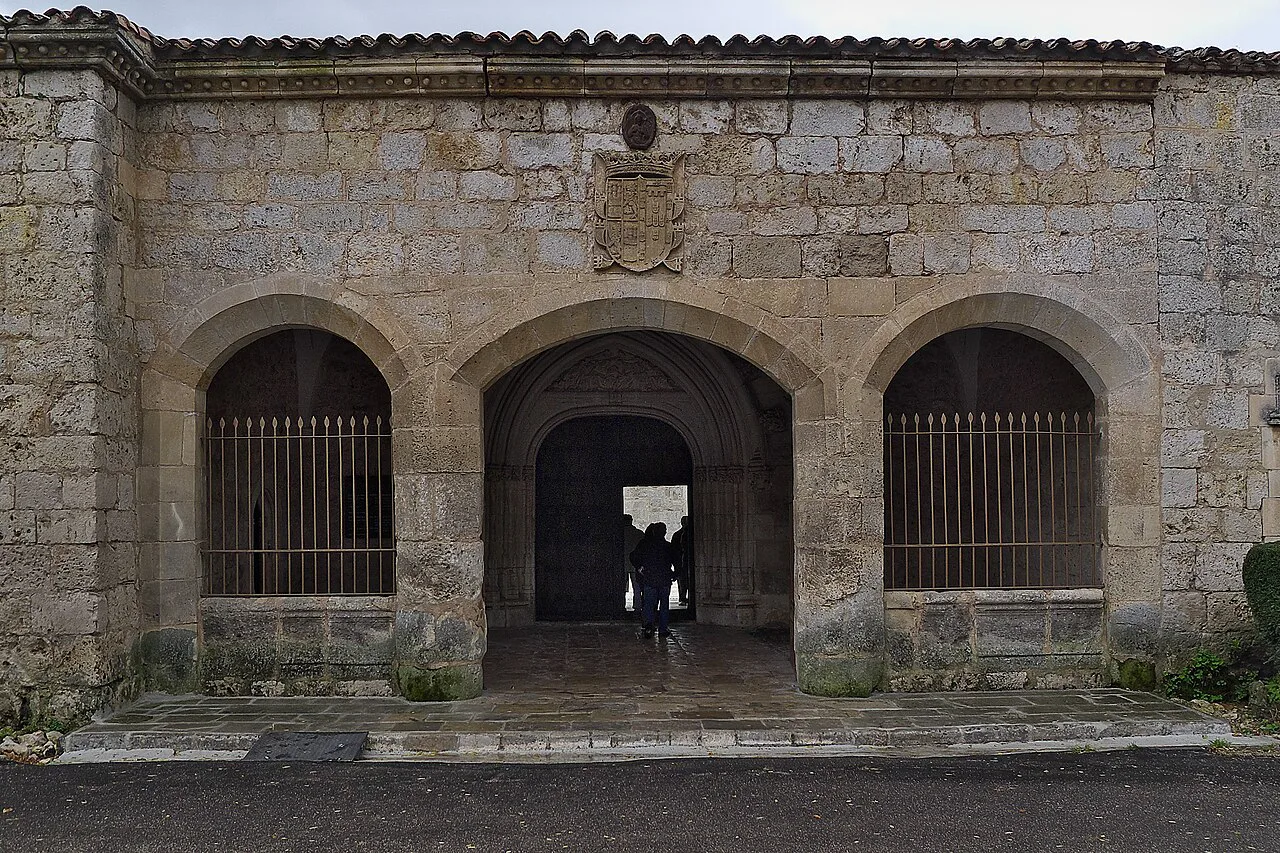

How to get there from Burgos
The monastery's position on the Fuentes Blancas road means the simplest approach is a short taxi or bus ride from the centre rather than a walk through streets, and the final stretch climbs. Plan the trip around the opening interval rather than the other way round: arrive in good time for the morning or late-afternoon session so you are not turned away at the door. The tourist offices in Burgos can confirm the current local transport options. Local bus numbers and frequencies change, so confirm the route and timetable with the tourist office on Pza. Alonso Martínez or the CITUR visitor centre before setting out.
Opening hours and ticket prices
The Castilla y León tourism portal lists visits Monday to Saturday from 10:15 to 15:00 and 16:00 to 18:00, and on Sundays and public holidays from 11:00 to 15:00 and 16:00 to 18:00. General admission is 5 € and the reduced rate 4 €. The same page records that the monastery closes on 25 December and on 1 and 6 January, so a Christmas-period trip needs checking against those dates. Note the long midday break, which applies even on Saturdays: the church shuts between 15:00 and 16:00, and arriving in that gap means waiting outside.
Entrance is free on Tuesday afternoons according to the Castilla y León tourism portal, which makes Tuesday the obvious budgeting choice if your dates are flexible. Check the free slot's exact start against the published afternoon session before you travel, since the free period applies to the afternoon opening rather than the whole Tuesday. Outside that window, the difference between the 5 € general and 4 € reduced fare is small, so the concession is worth claiming only if you clearly qualify.
Inside: the retablo and royal tombs by Gil de Siloé
The high point of the interior is the carved retablo and the tombs of the kings and of the Infante Don Alfonso by Gil de Siloé, as the Castilla y León tourism portal describes them. Look at the polychrome stone carving as a single ensemble: the retablo above and the burial monuments below were conceived together for the same royal chapel. Give this area the bulk of your time; it is the reason the detour from the city centre pays off, and the detail rewards slow looking rather than a quick circuit.
The Anunciación and the Flemish Calvary triptych
The tourism portal also singles out Pedro Berruguete's painting of the Anunciación and a sixteenth-century Flemish triptych of the Calvary. These are the counterpoint to the sculpture: painting of a different scale and mood, hung within the same church, and easy to miss if you concentrate only on the tombs. Plan to see the church interior as a whole rather than rushing from the entrance to the retablo and back out.
How long a visit takes
Allow around an hour for the church and its artworks, plus travel time from the centre each way; the visit itself is compact and focused rather than sprawling. The main constraints are the opening blocks and the midday closure, which shape how the trip sits in a day. Pair Miraflores with Burgos Cathedral in the old town rather than trying to fit both into the same tight window: the cathedral alone takes a solid stretch of time, and the two are in different parts of the city.
What to see nearby: Fuentes Blancas and the city's museums
After Miraflores, the adjoining Fuentes Blancas park is the natural place to stretch the visit rather than heading straight back into traffic. In the city itself, the Museo de la Evolución Humana, Burgos is the other major museum draw, and the Museo de Burgos covers provincial archaeology and fine art in the Casa de Miranda. For a monastery of a different kind, Las Huelgas Abbey in Burgos is the city's other great religious foundation and sits on the western side of the centre, so it pairs more naturally with the cathedral than with Miraflores.
Practical constraints: closures, etiquette and the climb
The two things most likely to upset a plan are the midday closure and the Christmas-period dates recorded by the Castilla y León tourism portal: 25 December, 1 January and 6 January. Because this is a working monastery, visitors should dress and behave as they would in any active church, keeping voices low and respecting any area set aside for prayer. The approach up the Fuentes Blancas road involves a climb, and the views back over Burgos are part of the experience; if you are combining the trip with Castillo de Burgos on the Cerro de San Miguel, do them on separate outings rather than trying to link them on foot.
Should the charterhouse be on your Burgos shortlist?
Yes, if you care about late Gothic sculpture: Gil de Siloé's retablo and royal tombs and Berruguete's Anunciación justify the short trip from the centre, and the Tuesday afternoon free entry keeps the cost down. Skip it if your time in Burgos is very short and the cathedral is your priority, since the monastery's opening blocks and midday closure eat into a tight schedule. Build the visit around a morning or late-afternoon session, confirm the day's opening with the tourist office, and leave the middle of the day for the old town.
Explore more Burgos guides
Frequently Asked Questions
Which kings are buried at the Cartuja de Miraflores?
The tombs are those of Juan II de Castilla and Isabel de Portugal, for whom Isabel la Católica raised the monastery, together with the Infante Don Alfonso. The carved monuments by Gil de Siloé form the centrepiece of the church interior.
Is there free entry to the Cartuja de Miraflores?
Yes, entry is free on Tuesday afternoons according to the Castilla y León tourism portal. The published price list on that page sets out the general and reduced admission rates for other days, so Tuesday is the obvious day to choose if your dates are flexible.
How do I get to the Cartuja de Miraflores from central Burgos?
The monastery sits on the Carretera de Fuentes Blancas, Km 3.5, outside the historic centre, so the usual approach is a short taxi or bus ride rather than a walk. Local transport options change, so confirm the current route and timetable at the tourist office before setting out.